Home
Class 12
CHEMISTRY
When C6 H5N2Cl is reduced with Na 2 Sn...

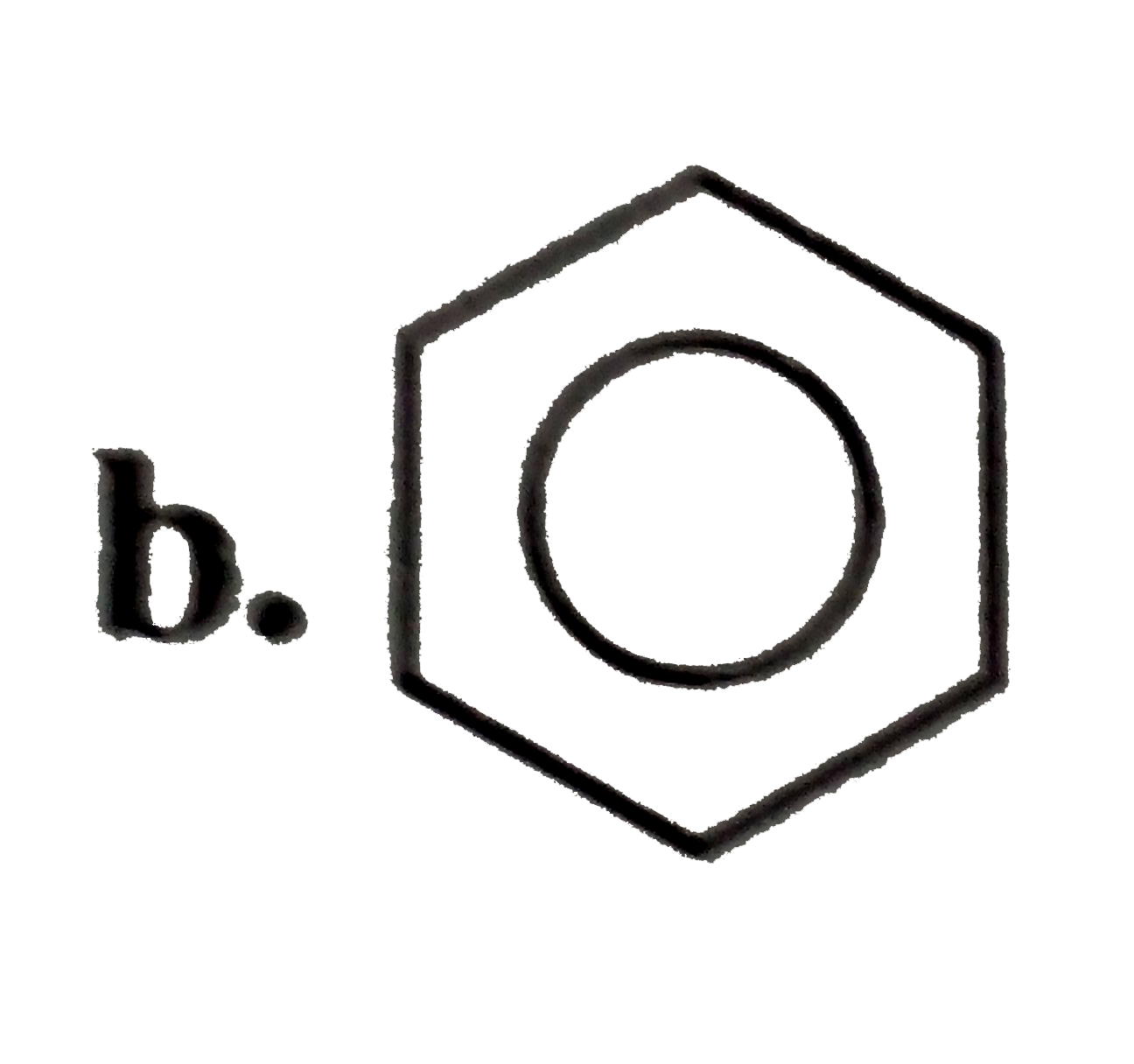
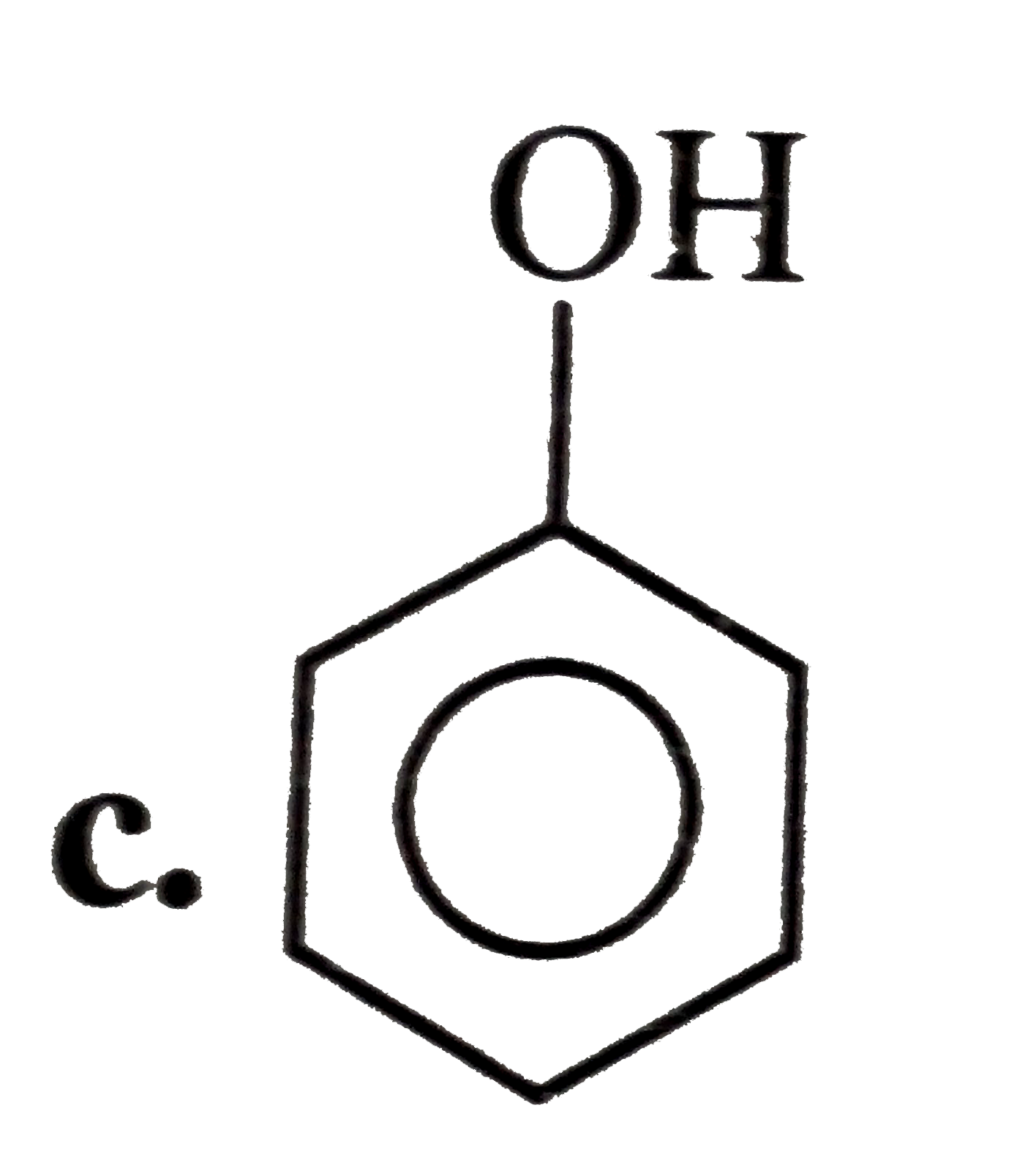
When ` C_6 H_5N_2Cl` is reduced with ` Na _2 SnOO_2`, the product is :

A

` (##KSV_CHM_ORG_P2_C15_E01_128_O01.png" width="30%">

B

C

D

Text Solution

AI Generated Solution

The correct Answer is:

To solve the question of what product is formed when C6H5N2Cl is reduced with Na2SnO2, we can follow these steps: ### Step 1: Identify the Reactants The compound C6H5N2Cl is known as benzenediazonium chloride. It consists of a benzene ring (C6H5) with a diazonium group (N2+) and a chloride ion (Cl-). **Hint:** Recognize the structure of benzenediazonium chloride and its functional groups. ### Step 2: Understand the Reduction Process The reduction of benzenediazonium chloride can occur through various reducing agents. In this case, we are using sodium stannite (Na2SnO2). This reducing agent can convert the diazonium group (N2+) into a hydrogen atom (H) by replacing it. **Hint:** Remember that reducing agents often convert functional groups into less oxidized forms. ### Step 3: Write the Reaction When benzenediazonium chloride is treated with Na2SnO2, the diazonium group is reduced to a hydrogen atom, and the chloride ion remains unchanged. The reaction can be summarized as follows: C6H5N2Cl + Na2SnO2 → C6H6 + NaCl + N2 Here, C6H6 represents benzene, which is the product of the reduction. **Hint:** Focus on the transformation of the diazonium group into a hydrogen atom. ### Step 4: Identify the Product The final product of this reaction is benzene (C6H6). The chloride ion (Cl-) and nitrogen gas (N2) are byproducts of the reaction. **Hint:** Always confirm the final product by checking the molecular formula. ### Conclusion When C6H5N2Cl is reduced with Na2SnO2, the product formed is benzene (C6H6). **Final Answer:** Benzene (C6H6) ---

To solve the question of what product is formed when C6H5N2Cl is reduced with Na2SnO2, we can follow these steps: ### Step 1: Identify the Reactants The compound C6H5N2Cl is known as benzenediazonium chloride. It consists of a benzene ring (C6H5) with a diazonium group (N2+) and a chloride ion (Cl-). **Hint:** Recognize the structure of benzenediazonium chloride and its functional groups. ### Step 2: Understand the Reduction Process ...
Promotional Banner

Topper's Solved these Questions

  • ORGANIC COMPOUNDS WITH FUNCTIONAL GROUP

    CENGAGE CHEMISTRY ENGLISH|Exercise Exercises Assertion And Reasoning|9 Videos
  • ORGANIC COMPOUNDS WITH FUNCTIONAL GROUP

    CENGAGE CHEMISTRY ENGLISH|Exercise Archives Single Correct|10 Videos
  • ORGANIC COMPOUNDS WITH FUNCTIONAL GROUP

    CENGAGE CHEMISTRY ENGLISH|Exercise Exercises Multiple Correct|18 Videos
  • NUCLEAR CHEMISTRY

    CENGAGE CHEMISTRY ENGLISH|Exercise Archives Subjective|13 Videos
  • P-BLOCK GROUP 15 ELEMENTS - THE NITROGEN FAMILY

    CENGAGE CHEMISTRY ENGLISH|Exercise Exercises Archives (Subjective)|28 Videos

Similar Questions

Explore conceptually related problems

When the all-cis isomer of C_6H_6Cl_6 (1,2,3,4,5,6 -Hexachlorohexane) is heated with alc. KOH, the most probable product is :

When SO_(2)Cl_(2) reacts with H_(2)O products formed is/are:

What happens when : methyl cyanide is reduced with Na//C_2 H_5 OH

When B_2H_6 react with Cl_2 it produce:

C_(6)H_(5)CH_(2)CH_(2)CH_(3) is when oxidised in the presence of alk. KMnO_(4) the product obtained is

An amine reacts with C_(6)H_(5)SO_(2)Cl and the product is soluble in alkali, amine is

C_6 H_5 N_2 Cl underset( " Pyridine ") overset ( Cu_2 (CN ) _2 ) to A overset( H_3 O^(+) ) to B . Here [B] is

In acid medium nitrobenzene is reduced to aniline as shown in the reaction C_6H_5-NO_2+6[H]rarrC_6H_5-NH_2+2H_2O The reducing agent used in this reaction is…

What is the charge involved when 0.1 " mol of " C_6H_5NO_2 is reduced to C_6H_5 NHOH?

CENGAGE CHEMISTRY ENGLISH-ORGANIC COMPOUNDS WITH FUNCTIONAL GROUP-Exercises Single Correct
  1. Which of the following is formed when RNH2 reacts with RCHO?

    Text Solution

    |

  2. Which of the following represents the poinsonous gas which caused the ...

    Text Solution

    |

  3. The conjugate base of (CH3) NH2^(o+) is :

    Text Solution

    |

  4. Which of the following is the weakest base ?

    Text Solution

    |

  5. Which of the following reaction does not yield amine?

    Text Solution

    |

  6. Primary and secondary amines are distinguished by :

    Text Solution

    |

  7. Indicate which nitrogen compound amongst the following would undergo H...

    Text Solution

    |

  8. Pick up the correct stament :

    Text Solution

    |

  9. The producet of the reaction of alcoholic silver nitrite with ethyl br...

    Text Solution

    |

  10. The electrolytic reduction of nitrobenzene in strongly acidic medium p...

    Text Solution

    |

  11. Azoxybenzene can be obtained by the treatment of mitro-benzene with :

    Text Solution

    |

  12. Tertiary nitro compounds cannot show tautomerism becauses :

    Text Solution

    |

  13. Diazo coupling is useful to prepare some

    Text Solution

    |

  14. The following reaction constituts : RNH2 + S=C=S overset (HgCl2) (r...

    Text Solution

    |

  15. Primary , secondary , tertiary amines can be separated by the followin...

    Text Solution

    |

  16. When C6 H5N2Cl is reduced with Na 2 SnOO2, the product is :

    Text Solution

    |

  17. Nitrogen is likely to be evolved when NaNO2 in dilute HCl warmed with...

    Text Solution

    |

  18. A compound X has the molecular formula C(7)H(7)NO. On treatment with B...

    Text Solution

    |

  19. A compound (X) has the molecular formula C3 H7 NO . With Br2 and KO...

    Text Solution

    |

  20. An amine on treatment with HNO2 evolved N2 The amine on exhaustive me...

    Text Solution

    |
