Home
Class 12
CHEMISTRY
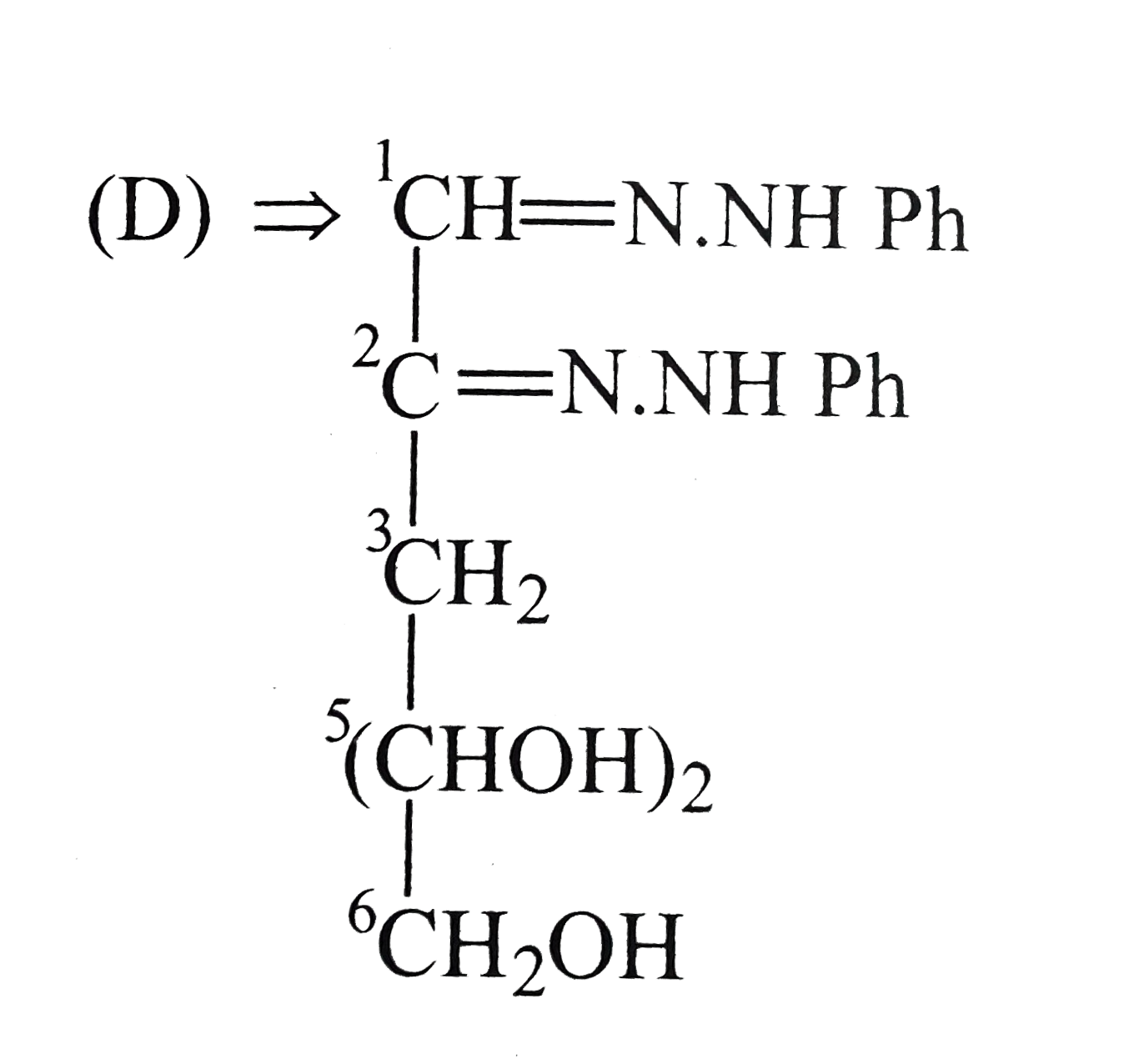
The compound (D) is:...


The compound `(D)` is:

A

Phenylhydrazone of (C )

B

Osazone of (C )

C

Both

D

None

Text Solution

Verified by Experts

The correct Answer is:
B

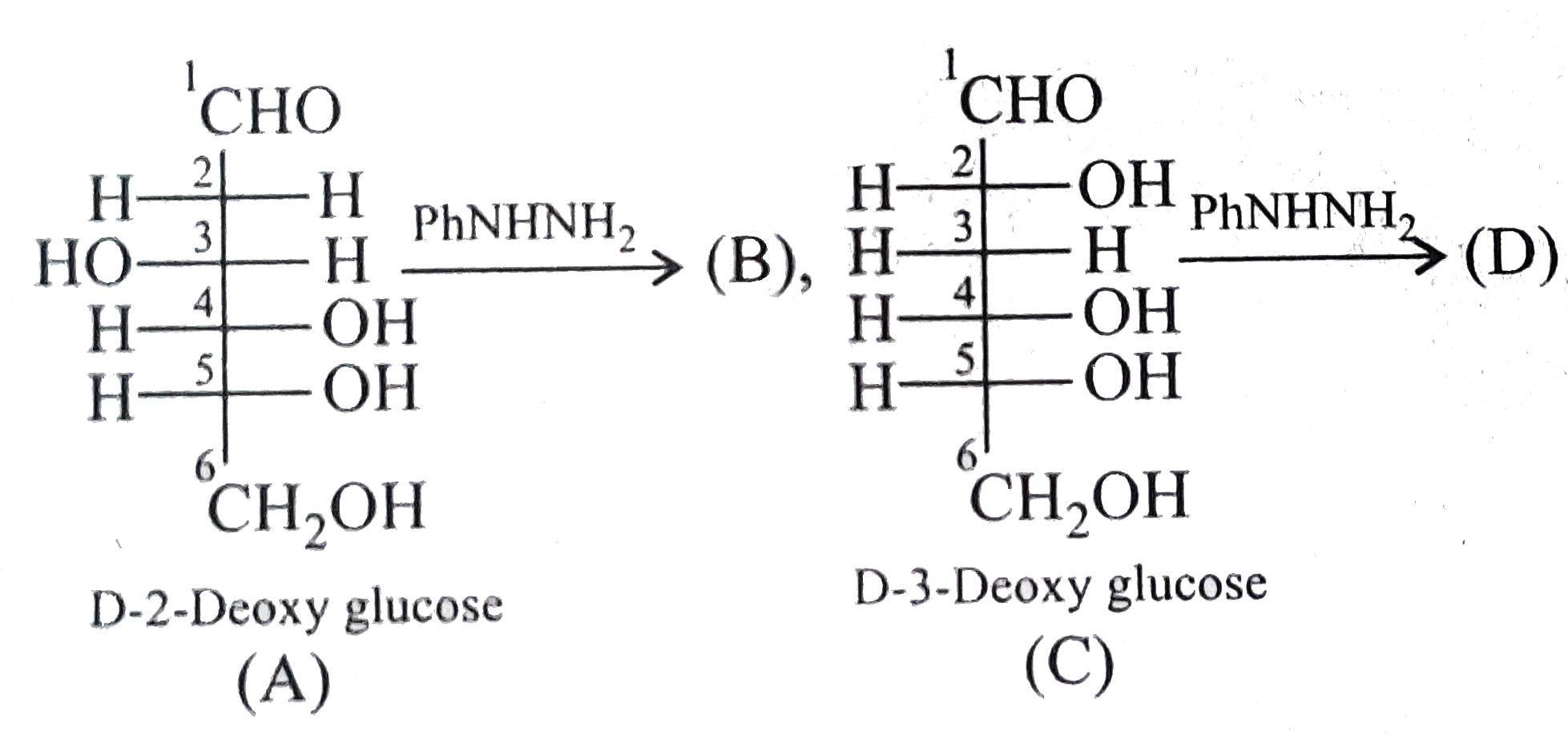
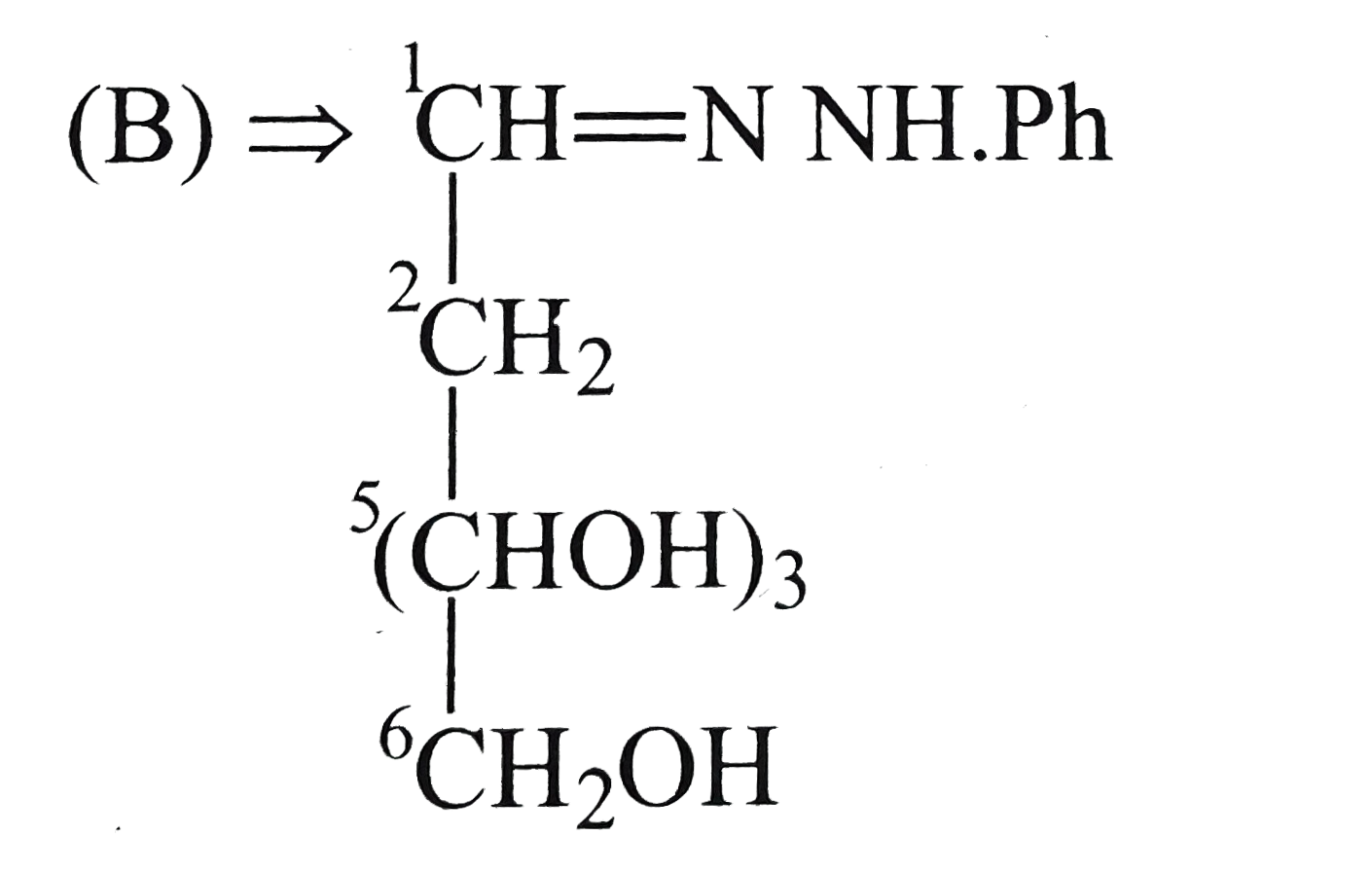
Compound `(A)` has no `(C-OH)` group `alpha` to the `(CH=O)` group. So it forms only phenylhydrazone with `1 mol` of `PhNHNH_(2)`.

(ii). Compound `(B)` has `(C-OH)` group `alpha` to the `(CH=O)` group. So it forms only osazone by reacting with `3 mol PhNHNH_(2)`.
`:. 3 mol PhNHNH_(2)` reacts with `1 mol (C )`. `1 mol PhNHNH_(2)` reacts with `(1)/(3)mol (C )`.
Promotional Banner

Topper's Solved these Questions

  • BIOMOLECULES

    CENGAGE CHEMISTRY ENGLISH|Exercise Exercises (Multiple Correcttype)|30 Videos
  • BIOMOLECULES

    CENGAGE CHEMISTRY ENGLISH|Exercise Exercises (Single Correcttype)|80 Videos
  • BIOMOLECULES

    CENGAGE CHEMISTRY ENGLISH|Exercise Exercises (Concept Application)|25 Videos
  • AROMATIC COMPOUNDS AND ALKYL AND ARYL HALIDES

    CENGAGE CHEMISTRY ENGLISH|Exercise Archives Subjective Type|4 Videos
  • CARBOXYLIC ACIDS AND THEIR DERIVATIVES

    CENGAGE CHEMISTRY ENGLISH|Exercise Exercises Archives (Analytical And Descriptive)|34 Videos

Similar Questions

Explore conceptually related problems

Twenty millilitres of a gaseous hydrocarbon (A) was exploded with excess of oxygen in eudiometer tube. On cooling, the volume was reduced by 50ml. On further treatement with KOH solution, there was a further contraction of 40 ml. Compound (D) is:

The compounds (D) and (E) respectively are:

Paragraph for problems 9-15 Compound (D) is:

Match each of the following four structures with one of the compound A-D on the basis of the following experimental facts Compound (A),(B) and ( C ) are optically active, but compound (D) is not Compound (C ) gives the same products as compound (D) on treatment with periodic acid, But compound (B) gives a different product. Compound (A) does not react with periodic acid. Compound A-D are respectively?

A compound (A) on heating in Busen flame imparts brick red colouration. (A) on heating gives CO_(2) gas and a residue (B) . The residue (B) when treated with water gives (c ) . On passing an excess of CO_(2) through (C ) in water, a clear solution (D) is obtained. On boiling (D) , compound (A) is reformed. Compound (D) is

Black solid underset(Delta)overset(KOH+Air)to underset(("green"))((A))overset(H_(2)SO_(4))to underset(("purple"))((B))+(C) (i) KI on reaction with alkali solution of (B) changes into a compound (D). (ii) The colour of the compound (B) disappears on treatment with the acidic solution of FeSO_(4) (iii) With cold conc. H_(2)SO_(4) compound (B) gives (E), which being explosive decomposes to yield (F) and oxygen. ltBrgt Q. Type of hybridization in compound (D) is:

(A) light blue coloured compound on heating will convert into black (B) which reacts with glucose gives red compound (C) and (A) reacts with ammonium hdyroxide in excess in presence of ammonium sulphate give blue compound (D). What is (A), (B), (C) and (D)?

ZnCI_(2)+NaHCO_(3)overset("Heat")rarr (A)overset("Heat")rarr (B)+(C )+H_(2)O (B)+NaOH rarr (D) Identify the compound (D) present in the solution.

An organic compound (A) C_(4)H_(9)Cl on reacting with aqueous KOH gives (B) and on reaction with alcoholic KOH gives (C ), which is also formed on passing the vapours of (B) over the heated copper. The compound (C ) readily decolourises bromine water. Ozonolysis of (C ) gives two compounds (D) and (E ). Compound (D) reacts with NH_(2)OH to give (F) and compound (E ) reacts with NaOH to have an alcohol (G) and sodium salt (H) of an acid. (D) can also be prepared form propyne on treatment with water in the presence of Hg^(2+) and H_(2)SO_(4) . Identify (A) to (H) with proper reasoning.

Four isomeric optically active compounds overset (NaHCO_3) rarr CO_2 (g) (A, B , C, D) (C_4 H_8 O_3) Compound (A) overset (LAH) rarr ( E) (Archiral compound) Compound (B) overset (KMnO_4) underset (or CrO_3) rarr Inert to oxidation. Compound ( C) underset (NaOI//H_3 O^(oplus)) rarr CHI_3 (Yellow ppt.) + Compound (F) . Compound (D) is :