Home
Class 11
CHEMISTRY
Refer to Question. When the compound (B)...

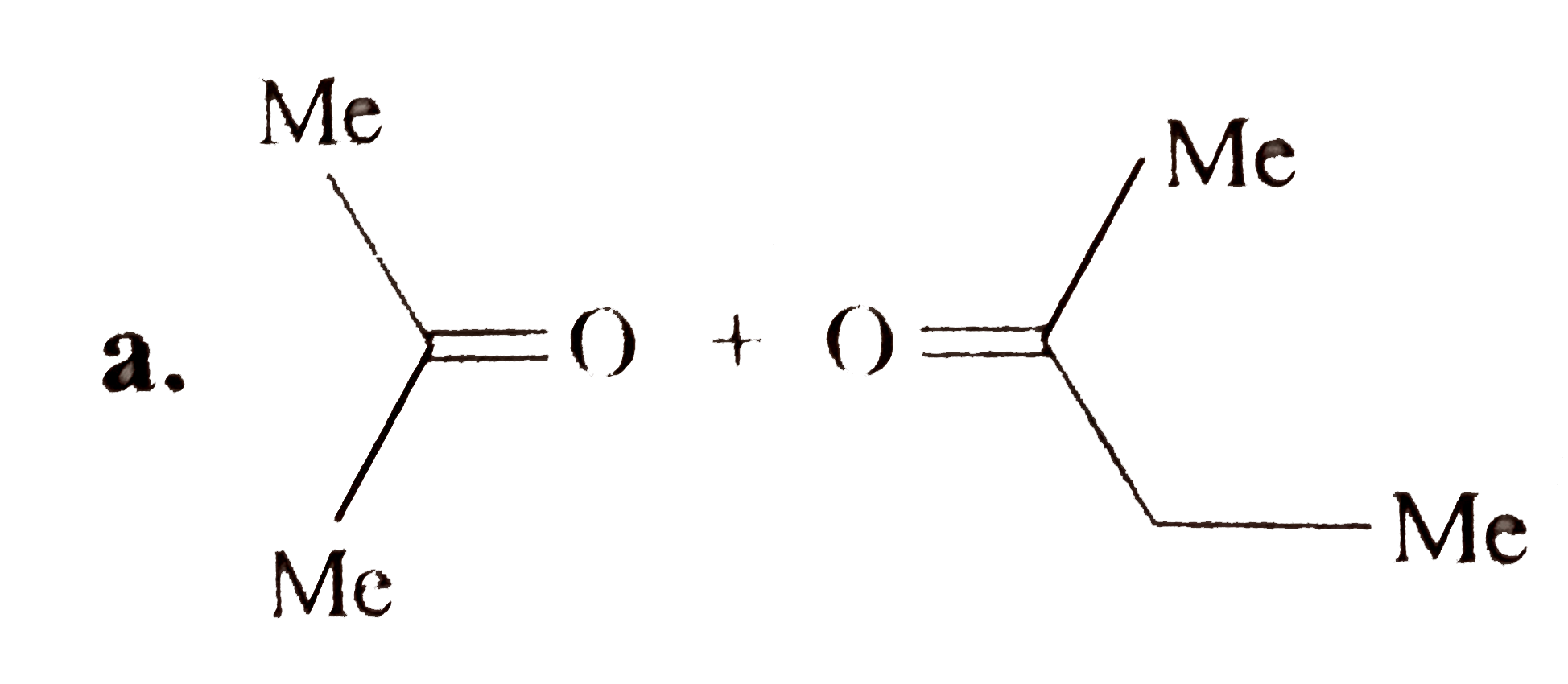
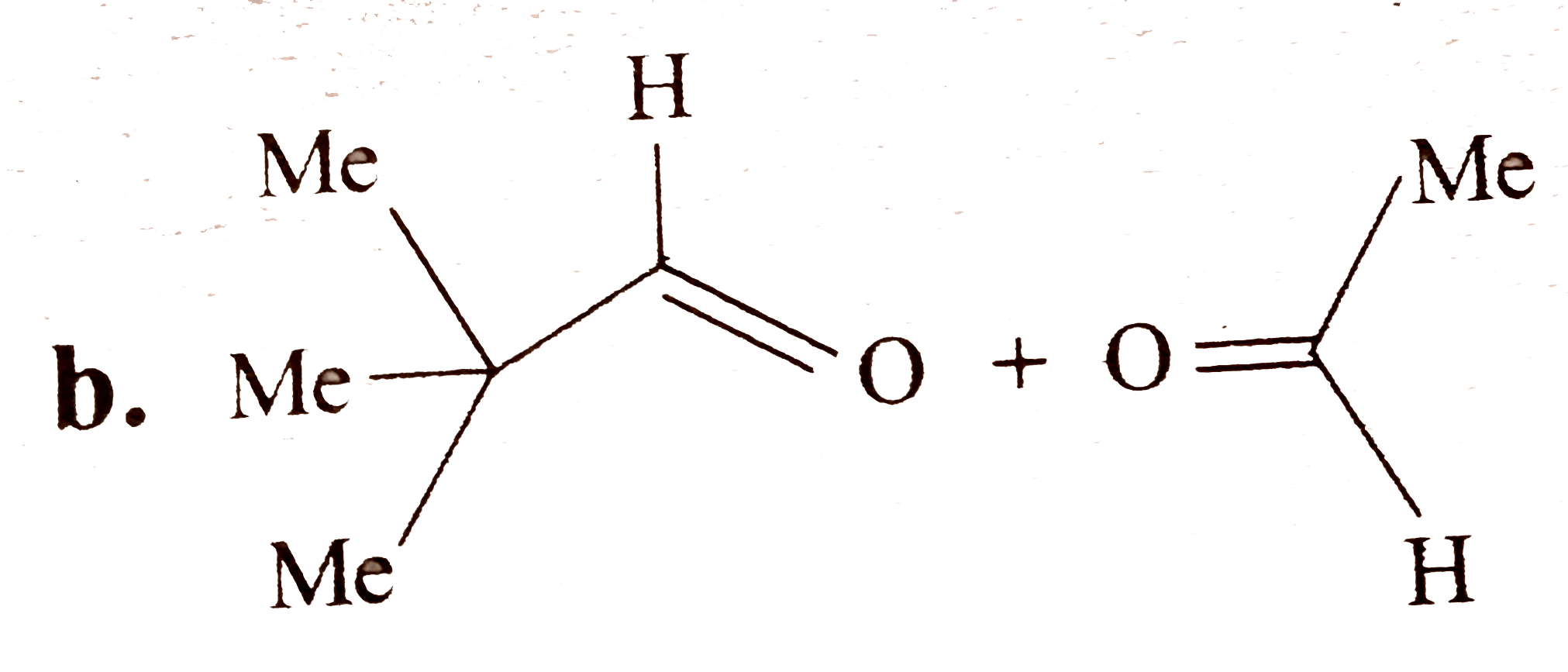
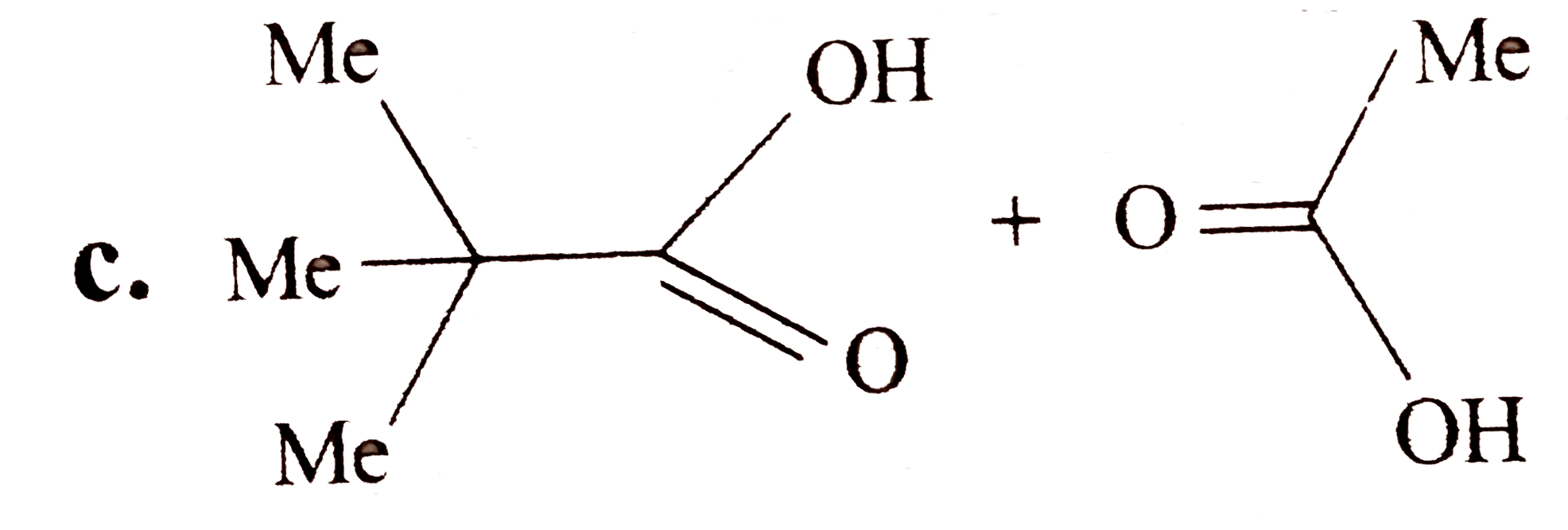
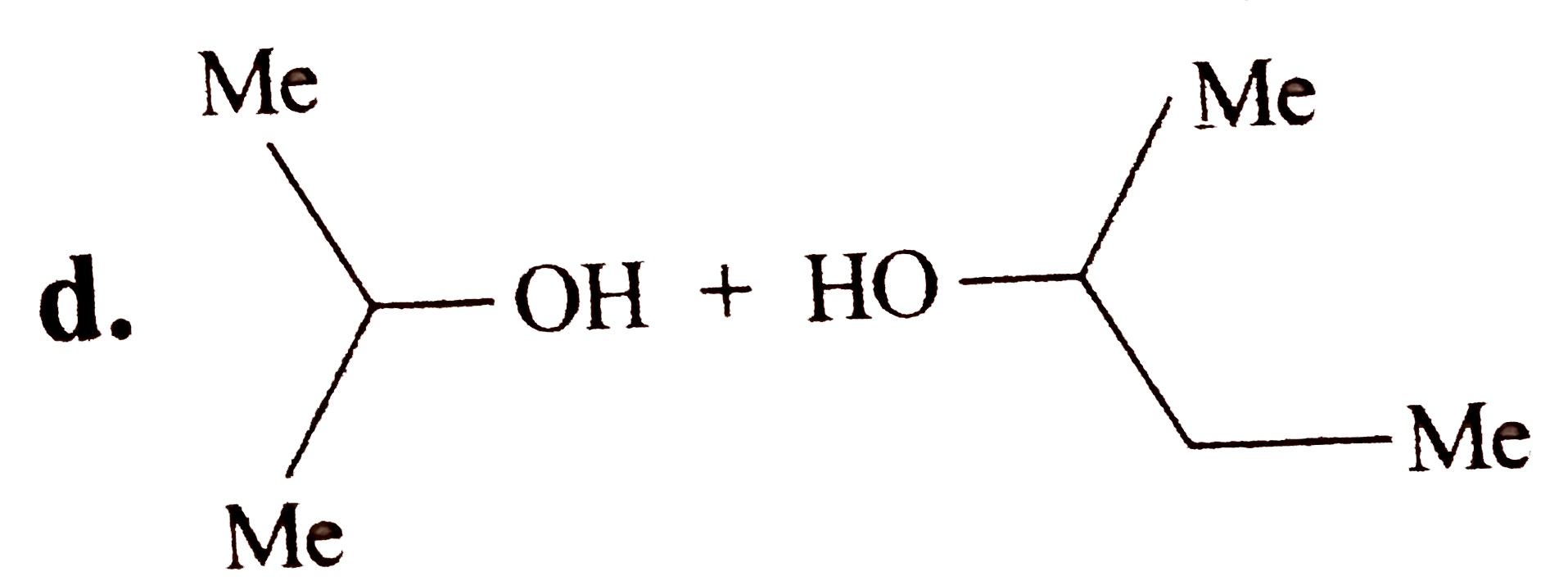
Refer to Question. When the compound `(B)` on ozonolysis is followed by oxidation with `H_(2)O_(2)`, the products are `:`

A

B

C

D

Text Solution

AI Generated Solution

The correct Answer is:

To solve the problem, we need to analyze the ozonolysis of compound (B) and the subsequent oxidation with H₂O₂. Here’s a step-by-step breakdown of the solution: ### Step 1: Understand Ozonolysis Ozonolysis is a reaction where an alkene is cleaved by ozone (O₃) to form carbonyl compounds. This process involves breaking the carbon-carbon double bond and adding oxygen to the resulting fragments. **Hint:** Remember that ozonolysis typically results in the formation of aldehydes or ketones. ### Step 2: Identify the Structure of Compound (B) Assuming compound (B) is an alkene, we need to visualize its structure. For this example, let’s consider a simple alkene like 2-butene (CH₃-CH=CH-CH₃). **Hint:** Draw the structure of the alkene you are considering to visualize the double bond. ### Step 3: Perform Ozonolysis When 2-butene undergoes ozonolysis, the double bond is broken, and oxygen is added to the fragments. This results in the formation of two carbonyl compounds: 1. Acetone (CH₃-C(=O)-CH₃) 2. Acetaldehyde (CH₃-CH₂-C(=O)-H) **Hint:** After breaking the double bond, remember to add oxygen to both ends of the broken bond. ### Step 4: Identify the Products The products of ozonolysis from 2-butene are acetone (a ketone) and acetaldehyde (an aldehyde). **Hint:** Identify whether the carbonyl compounds formed are aldehydes or ketones, as this will affect the next step. ### Step 5: Oxidation with H₂O₂ Now, we need to consider the oxidation of the products with hydrogen peroxide (H₂O₂). - **Aldehyde (Acetaldehyde)**: This will be oxidized to a carboxylic acid (acetic acid). - **Ketone (Acetone)**: Ketones generally do not undergo oxidation with H₂O₂. Thus, after oxidation, we will have: 1. Acetic acid (from acetaldehyde) 2. Acetone remains unchanged. **Hint:** Remember that aldehydes are more easily oxidized than ketones. ### Step 6: Final Products The final products after ozonolysis followed by oxidation with H₂O₂ are acetic acid and acetone. **Hint:** Summarize the final products clearly to ensure you understand the outcome of the reactions. ### Conclusion The products obtained from the ozonolysis of compound (B) followed by oxidation with H₂O₂ are acetic acid and acetone.

To solve the problem, we need to analyze the ozonolysis of compound (B) and the subsequent oxidation with H₂O₂. Here’s a step-by-step breakdown of the solution: ### Step 1: Understand Ozonolysis Ozonolysis is a reaction where an alkene is cleaved by ozone (O₃) to form carbonyl compounds. This process involves breaking the carbon-carbon double bond and adding oxygen to the resulting fragments. **Hint:** Remember that ozonolysis typically results in the formation of aldehydes or ketones. ### Step 2: Identify the Structure of Compound (B) ...
Promotional Banner

Topper's Solved these Questions

  • ALKENES AND ALKADIENES

    CENGAGE CHEMISTRY ENGLISH|Exercise Archives(ASSERTION-REASIOING)|4 Videos
  • ALKENES AND ALKADIENES

    CENGAGE CHEMISTRY ENGLISH|Exercise Fill in the Blanks|3 Videos
  • ALKENES AND ALKADIENES

    CENGAGE CHEMISTRY ENGLISH|Exercise Multiple Correct Answer Type|41 Videos
  • ALKANES AND CYCLOALKANES

    CENGAGE CHEMISTRY ENGLISH|Exercise Archives|13 Videos
  • ALKYNES

    CENGAGE CHEMISTRY ENGLISH|Exercise Exercises (Archives - Analytical and Desriptive Type)|4 Videos

Similar Questions

Explore conceptually related problems

A compound 'X' on ozonolysis followed by reduction gives an aldehyde, C_(2)H_(4)O and 2-butanone. Compound 'X' is:

When H_(2)O_(2) is oxidesed, the product is

Give the products formed on reduction with LAH and oxidation with H_(2)O_(2) , of the compound butan-2-one.

An alkene (A)C_(16)H_(16) on ozonolysis gives only one product (B)(C_(8)H_(8)O) . Compound (B) on reaction with NH_(2)OH followed by reaction with H_(2)SO_(4), Delta gives N - methyl benzamide the compound 'A' is -

When SOCl_(2) reacts with H_(2)O products formed is/are:

When POCl_(3) reacts with H_(2)O products formed is/are:

Oxidation number of O in H_(2)O_(2) will be

Which of the following compound on oxidative ozonolysis give malonic acid as only product ?

Hydrocarbon (A) C_(6)H_(10) on treatment with H_(2)/Ni, H_(2)// Lindlar's catalyst or Na// liq. NH_(3) forms three different reduction products (B), (C), (D) respectively. (A) does not form any salt with ammonical AgNO_(3) solution, but (E) forms salt on heating with NaNH_(2) in an inert solvent. Compound (E) reacts with CH_(3)l to give (F). Compound (D) on oxidative ozonolysis gives n-butanoic acid along with other product. (F) on ozonolysis will produce -

Observe the following reactions and answer the following questions The product B on heating with H_(2)O produces :

CENGAGE CHEMISTRY ENGLISH-ALKENES AND ALKADIENES-Single Correct Answer Type
  1. Out of the following compounds . I. Pent -1-ene, II. Pent -2-ene ...

    Text Solution

    |

  2. Compound (C) is:

    Text Solution

    |

  3. Refer to Question. When the compound (B) on ozonolysis is followed by ...

    Text Solution

    |

  4. trans -3,6-Dimethyl oct-4ene (A) exists in two diasteromer (I) and (II...

    Text Solution

    |

  5. The total number of stereoisomers for (A) is :

    Text Solution

    |

  6. An organic compound (A) (C(10)H(20))on reductive ozonolysis gives 2- m...

    Text Solution

    |

  7. If the stereochemistry about the double bond in (A) is trans, two dias...

    Text Solution

    |

  8. Compounds (B) and (C) are :

    Text Solution

    |

  9. Compound (B) and (C) are :

    Text Solution

    |

  10. The three compounds (A),(B),and (C) on hydrogenation with H(2)+Pd give...

    Text Solution

    |

  11. Which of the following will have lower pK(a) value ?

    Text Solution

    |

  12. The decreasing order of acidic character is :

    Text Solution

    |

  13. Which of the following is the correct order of stability of the foll...

    Text Solution

    |

  14. Which of the following is the most stable species ?

    Text Solution

    |

  15. Which of the following is non - aromatic in nature ?

    Text Solution

    |

  16. Which of the following species is least stable ?

    Text Solution

    |

  17. Which of the following is anti- aromatic in nature ?

    Text Solution

    |

  18. Intermediate (B) and Product (C) are :

    Text Solution

    |

  19. Which statement is correct about cyclopentadienyl anion ?

    Text Solution

    |

  20. In which of the following, the DeltaH(h)^(@) is maximum ?

    Text Solution

    |
