Home
Class 12
CHEMISTRY
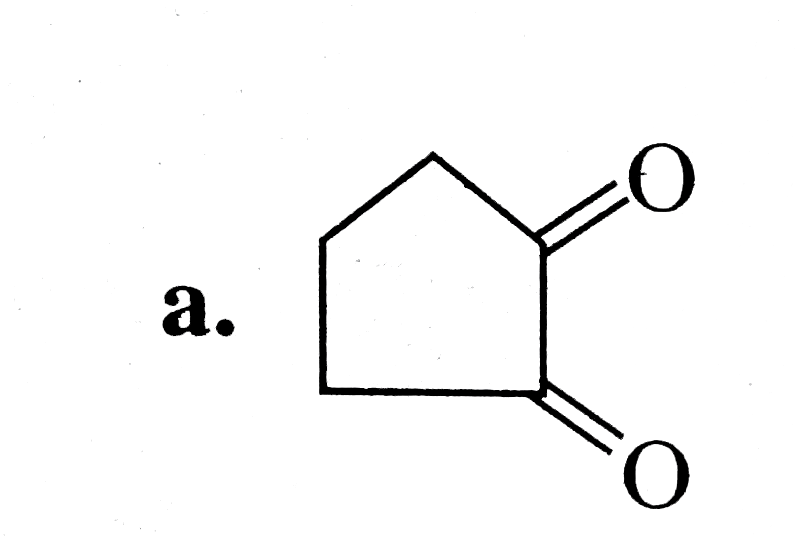
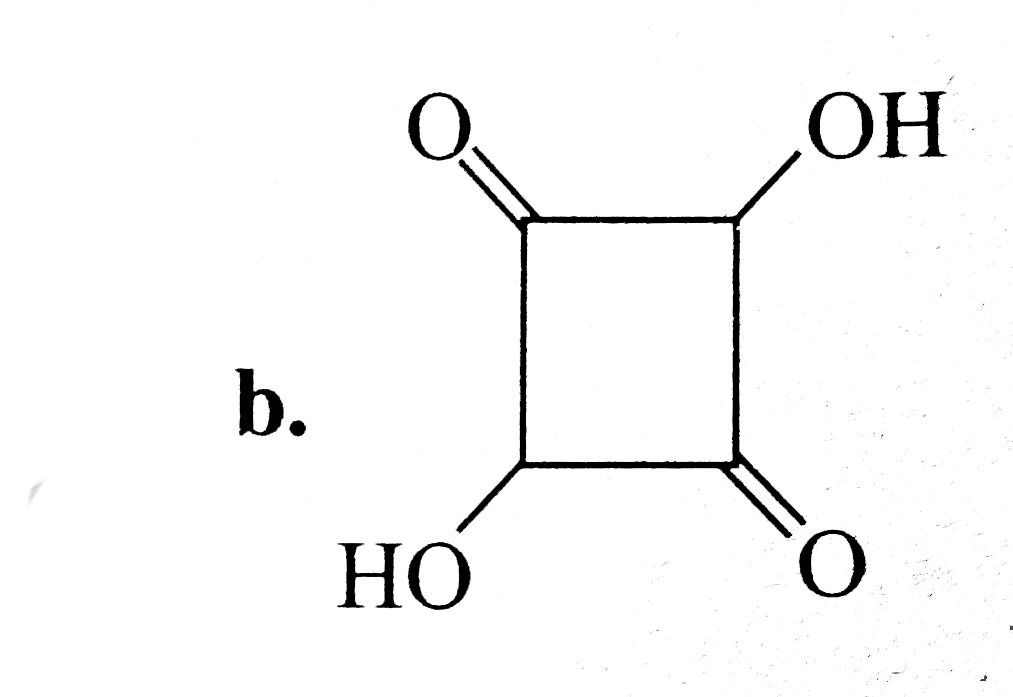
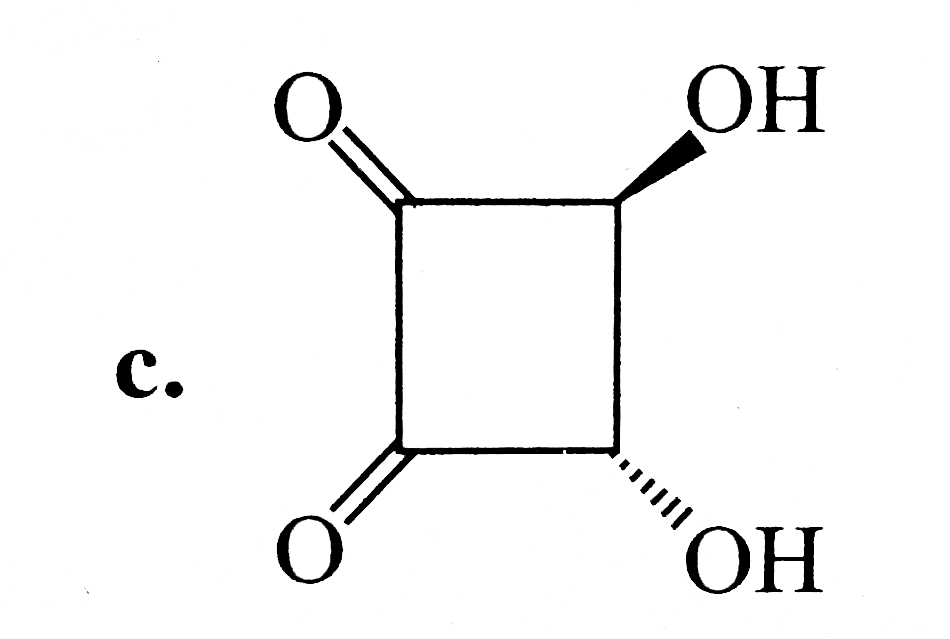
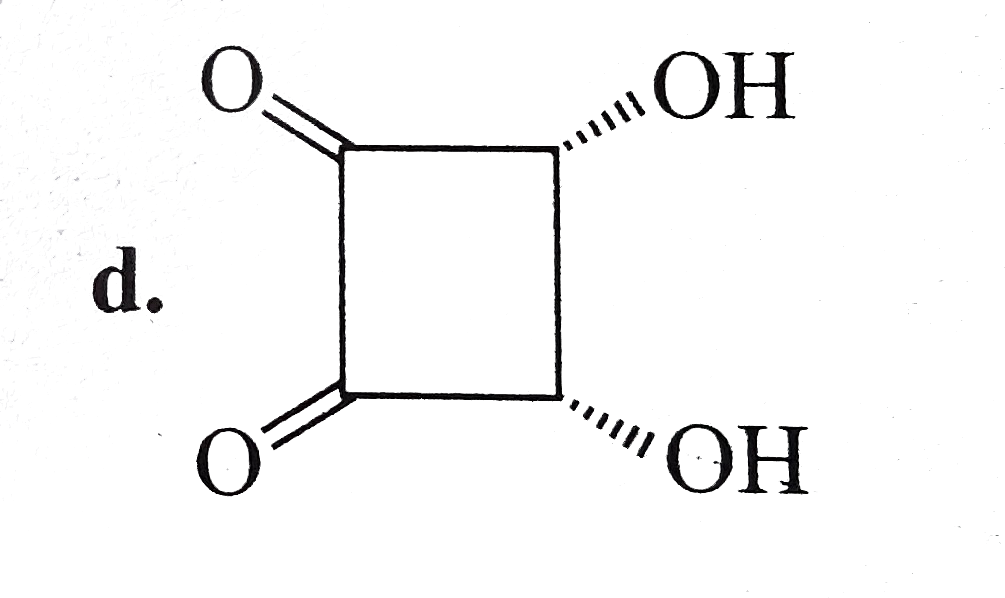
Conpound (A) underset(HIO(4))overset(2 m...

Conpound `(A) underset(HIO_(4))overset(2 mol of)(rarr) 2` mol of glyoxalic acid.
The compound `(A)` is:

A

a.

B

b.

C

c.

D

d.

Text Solution

AI Generated Solution

The correct Answer is:

To determine the compound (A) that reacts with 2 moles of periodic acid (HIO₄) to produce 2 moles of glyoxylic acid, we can follow these steps: ### Step-by-Step Solution: 1. **Identify the Product Structure**: Glyoxylic acid has the structure of an aldehyde and a carboxylic acid on a two-carbon chain. Its chemical formula is C₂H₂O₃. 2. **Understanding the Reaction**: The reaction with periodic acid typically involves the cleavage of vicinal diols (two hydroxyl groups on adjacent carbons) to yield carbonyl compounds. Since we are producing 2 moles of glyoxylic acid, we need to consider what compound could yield this upon oxidation. 3. **Construct the Precursor**: To produce 2 moles of glyoxylic acid, we can start with a compound that has two hydroxyl groups on adjacent carbons (a vicinal diol). Therefore, we can visualize a compound that has the following structure: - Two carbon atoms, each with a hydroxyl group (OH). - The structure can be represented as HO-CH(OH)-C(=O)-C(=O)-OH. 4. **Remove Hydroxyl Groups**: If we consider removing one hydroxyl group from each carbon, we can visualize that we will be left with a compound that has a four-membered ring structure. This compound will have two carbonyl groups (C=O) and two hydroxyl groups (OH). 5. **Final Structure of Compound (A)**: The final structure of compound (A) will be a cyclic compound where the two hydroxyl groups are positioned cis to each other. This is crucial because the reaction with periodic acid requires the hydroxyl groups to be in the same direction (cis) for the reaction to proceed correctly. 6. **Identify the Correct Compound**: Among the options provided, we need to select the compound that has the correct arrangement of hydroxyl groups (cis) and matches the structure we deduced. The correct compound (A) will be option D, which has the hydroxyl groups in the same direction. ### Conclusion: The compound (A) that reacts with 2 moles of periodic acid to yield 2 moles of glyoxylic acid is option D. ---

To determine the compound (A) that reacts with 2 moles of periodic acid (HIO₄) to produce 2 moles of glyoxylic acid, we can follow these steps: ### Step-by-Step Solution: 1. **Identify the Product Structure**: Glyoxylic acid has the structure of an aldehyde and a carboxylic acid on a two-carbon chain. Its chemical formula is C₂H₂O₃. 2. **Understanding the Reaction**: ...
Promotional Banner

Topper's Solved these Questions

  • REDUCTION AND OXIDATION REACTION OF ORGANIC COMPOUNDS

    CENGAGE CHEMISTRY ENGLISH|Exercise Exercise (Assertion And Reasoning)|10 Videos
  • REDUCTION AND OXIDATION REACTION OF ORGANIC COMPOUNDS

    CENGAGE CHEMISTRY ENGLISH|Exercise Exercise Archives (Subjective)|26 Videos
  • REDUCTION AND OXIDATION REACTION OF ORGANIC COMPOUNDS

    CENGAGE CHEMISTRY ENGLISH|Exercise Exercise (Multiple Correct)|35 Videos
  • QUALITATIVE INORGANIC SALT ANALYSIS

    CENGAGE CHEMISTRY ENGLISH|Exercise Viva Voce Questions And Part-C (Analysis Of Cations)|42 Videos
  • SOLID STATE

    CENGAGE CHEMISTRY ENGLISH|Exercise Ex 1.2 (Objective)|9 Videos

Similar Questions

Explore conceptually related problems

Compound (A) underset(HIO_(4))overset(1 mol of)(rarr) The compound (A) is:

Et-N^(o+)-=C^(ɵ) underset(or HgO or O_(3))overset(Cl_(2)+DMSO)(rarr) . The compound (A) is:

Four isomeric optically active compounds overset (NaHCO_3) rarr CO_2 (g) (A, B , C, D) (C_4 H_8 O_3) Compound (A) overset (LAH) rarr ( E) (Archiral compound) Compound (B) overset (KMnO_4) underset (or CrO_3) rarr Inert to oxidation. Compound ( C) underset (NaOI//H_3 O^(oplus)) rarr CHI_3 (Yellow ppt.) + Compound (F) . Compound (B) is :

Four isomeric optically active compounds overset (NaHCO_3) rarr CO_2 (g) (A, B , C, D) (C_4 H_8 O_3) Compound (A) overset (LAH) rarr ( E) (Archiral compound) Compound (B) overset (KMnO_4) underset (or CrO_3) rarr Inert to oxidation. Compound ( C) underset (NaOI//H_3 O^(oplus)) rarr CHI_3 (Yellow ppt.) + Compound (F) . Compound (D) is :

Four isomeric optically active compounds overset (NaHCO_3) rarr CO_2 (g) (A, B , C, D) (C_4 H_8 O_3) Compound (A) overset (LAH) rarr ( E) (Archiral compound) Compound (B) overset (KMnO_4) underset (or CrO_3) rarr Inert to oxidation. Compound ( C) underset (NaOI//H_3 O^(oplus)) rarr CHI_3 (Yellow ppt.) + Compound (F) . Compound ( C) is :

In the following sequence of reactions, the products (A) to (G) are formed: i. 2CH_4(g)overset(Delta)underset(1773K)rarr(A)(g)+B(g) ii. 4 mol of (A) overset(Delta)underset(Ni(CN)_4+THF)rarr(C)overset(O_3//o x id.)rarr(D) only iii. (A)overset((1) 1 mol of NaNH_2)underset((2) C_2H_5I)rarr(E)underset(Red hot tube)overset(3 mol of E)rarrunderset((G) only)underset(darr O_3//Red.)F Compounds (A) and (B), respectively, are:

In the following sequence of reactions, the products (A) to (G) are formed: i. 2CH_4(g)overset(Delta)underset(1773K)rarr(A)(g)+B(g) ii. 4 mol of (A) overset(Delta)underset(Ni(CN)_4+THF)rarr(C)overset(O_3//o x id.)rarr(D) only iii. (A)overset((1) 1 mol of NaNH_2)underset((2) C_2H_5I)rarr(E)underset(Red hot tube)overset(3 mol of E)rarrunderset((G) only)underset(darr O_3//Red.)F Compound D is:

In the following sequence of reactions, the products (A) to (G) are formed: i. 2CH_4(g)overset(Delta)underset(1773K)rarr(A)(g)+B(g) ii. 4 mol of (A) overset(Delta)underset(Ni(CN)_4+THF)rarr(C)overset(O_3//o x id.)rarr(D) only iii. (A)overset((1) 1 mol of NaNH_2)underset((2) C_2H_5I)rarr(E)underset(Red hot tube)overset(3 mol of E)rarrunderset((G) only)underset(darr O_3//Red.)F Compound (E) is

Red precipitate underset(NH_(4)OH)overset(Cu_(2)Cl_(2))larrP(C_(5)H_(8))overset("Ozonolysis")rarr2 -Methylpropanoic acid + compound (Q) structure of P can be-

2HC-=CHoverset(CH_2Cl_2)underset(+NH_4Cl)rarr(A)overset(1 mol)underset(HCl)rarr(B) Compounds (A) and (B) are:
