Home
Class 12
CHEMISTRY
PhC-=CMeoverset(Hg^(2+)+H^(o+))to(A). T...

`PhC-=CMeoverset(Hg^(2+)+H^(o+))to(A).
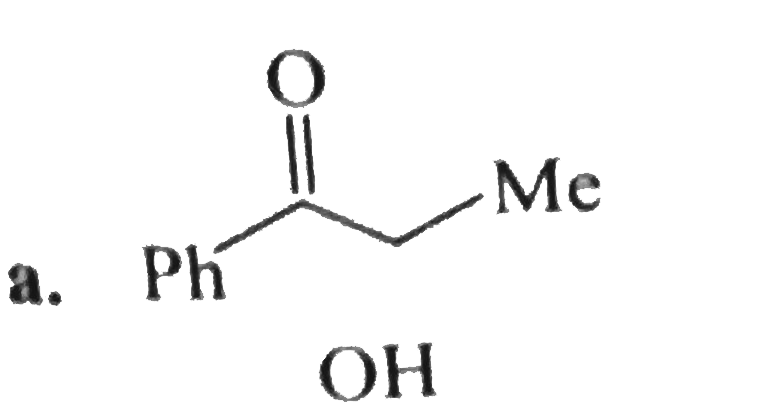
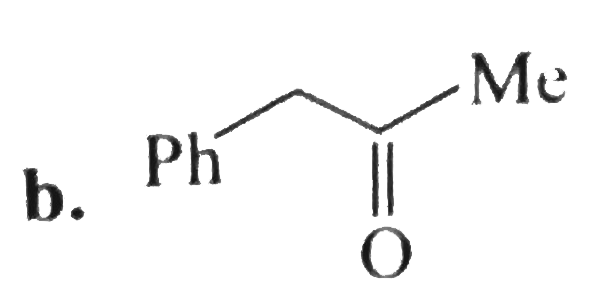
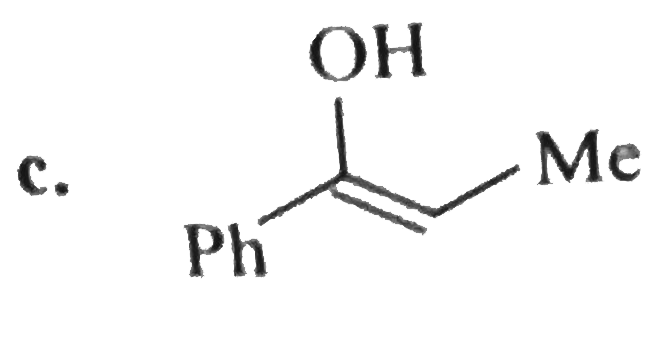
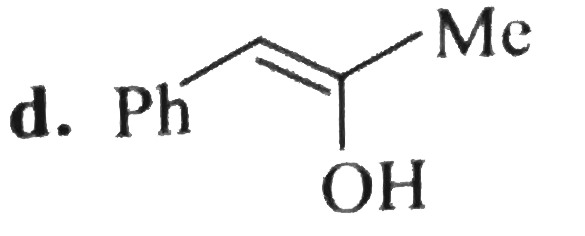
The compound `(A)` is:

A

a.

B

b.

C

c.

D

d.

Text Solution

AI Generated Solution

The correct Answer is:

To solve the given question, we need to analyze the reaction of the unsymmetrical alkyne with mercuric ion (Hg²⁺) in the presence of an acidic medium. The alkyne in question is PhC≡CMe (phenylacetylene). Here’s a step-by-step breakdown of the reaction: ### Step 1: Formation of the Mercuric Ion Complex The first step involves the attack of the mercuric ion (Hg²⁺) on the triple bond of the alkyne. This results in the formation of a mercuric alkyne complex. The triple bond between the carbon atoms (C≡C) converts to a double bond (C=C) as the mercuric ion forms a bond with one of the carbon atoms. **Hint:** Remember that the mercuric ion acts as an electrophile and will preferentially bond to the carbon that can stabilize the resulting positive charge. ### Step 2: Hydrolysis of the Complex Next, we perform hydrolysis of the mercuric complex. Water (H₂O) acts as a nucleophile and attacks the carbon atom that is bonded to the mercuric ion. Due to resonance stabilization from the phenyl group (Ph), the oxygen in water donates its lone pair to the carbon atom that is more stabilized by the adjacent phenyl group. **Hint:** Consider the stability of the carbocation formed during this step; resonance stabilization plays a crucial role. ### Step 3: Formation of the Intermediate After hydrolysis, we will have an intermediate compound where one carbon has an -OH group (from water) and the other carbon is still bonded to the mercuric ion. The structure at this point is a vinyl alcohol (enol) form. **Hint:** Focus on the structure of the intermediate; it will have an -OH group and a double bond. ### Step 4: Protonation and Rearrangement In the next step, we add an acid (H⁺) which will protonate the -OH group, making it a better leaving group. The mercuric ion (Hg) will be replaced by a hydrogen atom, leading to the formation of a double bond between the two carbon atoms. **Hint:** Understand that this step involves the loss of the mercuric ion and the formation of a more stable alkene. ### Step 5: Tautomerization to Form the Final Product Finally, the compound undergoes tautomerization, where the hydrogen atom shifts to the adjacent carbon atom, resulting in the formation of a ketone. The final product (compound A) is thus a ketone with a phenyl group and an ethyl group. **Hint:** Tautomerization is key in converting the enol form to the more stable ketone form. ### Conclusion The final compound A is a ketone with the structure PhC(=O)CMe, which corresponds to the option given in the question. **Final Answer:** The compound (A) is a ketone, specifically phenylacetone.

To solve the given question, we need to analyze the reaction of the unsymmetrical alkyne with mercuric ion (Hg²⁺) in the presence of an acidic medium. The alkyne in question is PhC≡CMe (phenylacetylene). Here’s a step-by-step breakdown of the reaction: ### Step 1: Formation of the Mercuric Ion Complex The first step involves the attack of the mercuric ion (Hg²⁺) on the triple bond of the alkyne. This results in the formation of a mercuric alkyne complex. The triple bond between the carbon atoms (C≡C) converts to a double bond (C=C) as the mercuric ion forms a bond with one of the carbon atoms. **Hint:** Remember that the mercuric ion acts as an electrophile and will preferentially bond to the carbon that can stabilize the resulting positive charge. ### Step 2: Hydrolysis of the Complex ...
Promotional Banner

Topper's Solved these Questions

  • REDUCTION AND OXIDATION REACTION OF ORGANIC COMPOUNDS

    CENGAGE CHEMISTRY ENGLISH|Exercise SUBJECTIVE TYPE|4 Videos
  • REDUCTION AND OXIDATION REACTION OF ORGANIC COMPOUNDS

    CENGAGE CHEMISTRY ENGLISH|Exercise Exercise (Assertion And Reasoning)|10 Videos
  • QUALITATIVE INORGANIC SALT ANALYSIS

    CENGAGE CHEMISTRY ENGLISH|Exercise Viva Voce Questions And Part-C (Analysis Of Cations)|42 Videos
  • SOLID STATE

    CENGAGE CHEMISTRY ENGLISH|Exercise Ex 1.2 (Objective)|9 Videos

Similar Questions

Explore conceptually related problems

Ph-C-=CH overset(Hg^(+),H^(+)//H_(2)O)to A Aditon of H_(2)O in the reaction is an example of

In the series, C_2H_2 underset(2.0 eq.)overset(NaNH_2)to X underset(2.0 eq.)overset(CH_3 I)to Y underset(H_2 SO_4 ,H_2O )overset(Hg SO_4)to Z the compound Z is :

On heating ZnCl_(2).2H_(2)O , the compounds obtained is:

In the reaction H-C=C-H overset(NaNH_(2))to A overset(CH_(3)I)to B overset(Hg^(2+))underset(H_(3)O^(+))to C the final product 'C' is :

On heating ZnCl_(2).2H_(2)O , the compounds obtained is

A compound 'X' (C_(2)H_(4)O) on oxidation gives 'Y' (C_(2)H_(4)O_(2)) . The compound 'X' undergoes haloform reaction. Write the structure of 'X' and 'Y'.

Na_(2)B_(4)O_(7)overset(Delta)toNaBO_(2)+B_(2)O_(3) NaBO_(2)+H_(2)O_(2)+H_(2)O to compound A(aq) The compound A the sum of oxidation states of all the oxygen atoms is X . Then the value of (X) is

CENGAGE CHEMISTRY ENGLISH-REDUCTION AND OXIDATION REACTION OF ORGANIC COMPOUNDS-Exercise Archives (Subjective)
  1. The appropriate reagent for the following transformation is

    Text Solution

    |

  2. Which one of the following will most readily be dehydrated in acidic c...

    Text Solution

    |

  3. 1-Propanol and 2- propanol can be distinguished by:

    Text Solution

    |

  4. Compound (X) with molecular formula C(3)H(8)O is treated with acidifie...

    Text Solution

    |

  5. PhC-=CMeoverset(Hg^(2+)+H^(o+))to(A). The compound (A) is:

    Text Solution

    |

  6. The products of acid hydrolysis of P and Q can be distinguished by

    Text Solution

    |

  7. How will you convert butan -2-one to propanoic acid ?

    Text Solution

    |

  8. Which of the following compound will give a yellow precipitate with io...

    Text Solution

    |

  9. Under Wolff-Kishner reduction conditions, the conversion which may be ...

    Text Solution

    |

  10. Fehling's solution 'A' consists of an aqueous solution of copper sulph...

    Text Solution

    |

  11. The yield of ketone is oxidised is more than the yield of aldeyde whe...

    Text Solution

    |

  12. Statement-1: Acetic acid does not undergo haloform test. and State...

    Text Solution

    |

  13. Give a chemical test to distinguish between methanol and ethanol.

    Text Solution

    |

  14. Answer the following with suitable equation wherever necessary : Sug...

    Text Solution

    |

  15. A ketone [A] which undergoes haloform reactions gives compound [B] on ...

    Text Solution

    |

  16. Give reasons: iodoform is obtained by the reaction of acetone with h...

    Text Solution

    |

  17. When t-butanol and n-butanol are separately treated with a few drops o...

    Text Solution

    |

  18. A compund X(C8H10O) upon treatment with alkaline solution of iodine gi...

    Text Solution

    |

  19. Identify (A), (B), and (C ) and give their strucyures.

    Text Solution

    |

  20. An alkene (A) C(16)H(16) on ozonolysis gives only one product (B) (C(8...

    Text Solution

    |
