Home
Class 12
CHEMISTRY
SN reaction is given by these compounds...

`SN` reaction is given by these compounds, which have a nuclophilic group and a good leaving `EWG`. It should be stable after leaving with bonding pair of `overline(e)'s` and it should have high polarisability.
Nucliphilic aliphatic substituion reaction is mainly of two types `SN^(-1)` and `SN^(2). SN^(-1)` mechanism is a two step process. Reaction velocity of `SN^(-1)` depends only on the concentration of the subtrate. It proceeds via the formation of carbocation, optically active substrate gives `(o+)` and `(o-)` froms of the product.
In most of the cases, the product usually consists of `5-20%` inverted and `(95-80%)` racemised species. The more stable is the carbocation, the greater is the propotion of racemission. In solvolysis reaction, the more nucleophillic is the solvent, the greater is the proportion of inversion.
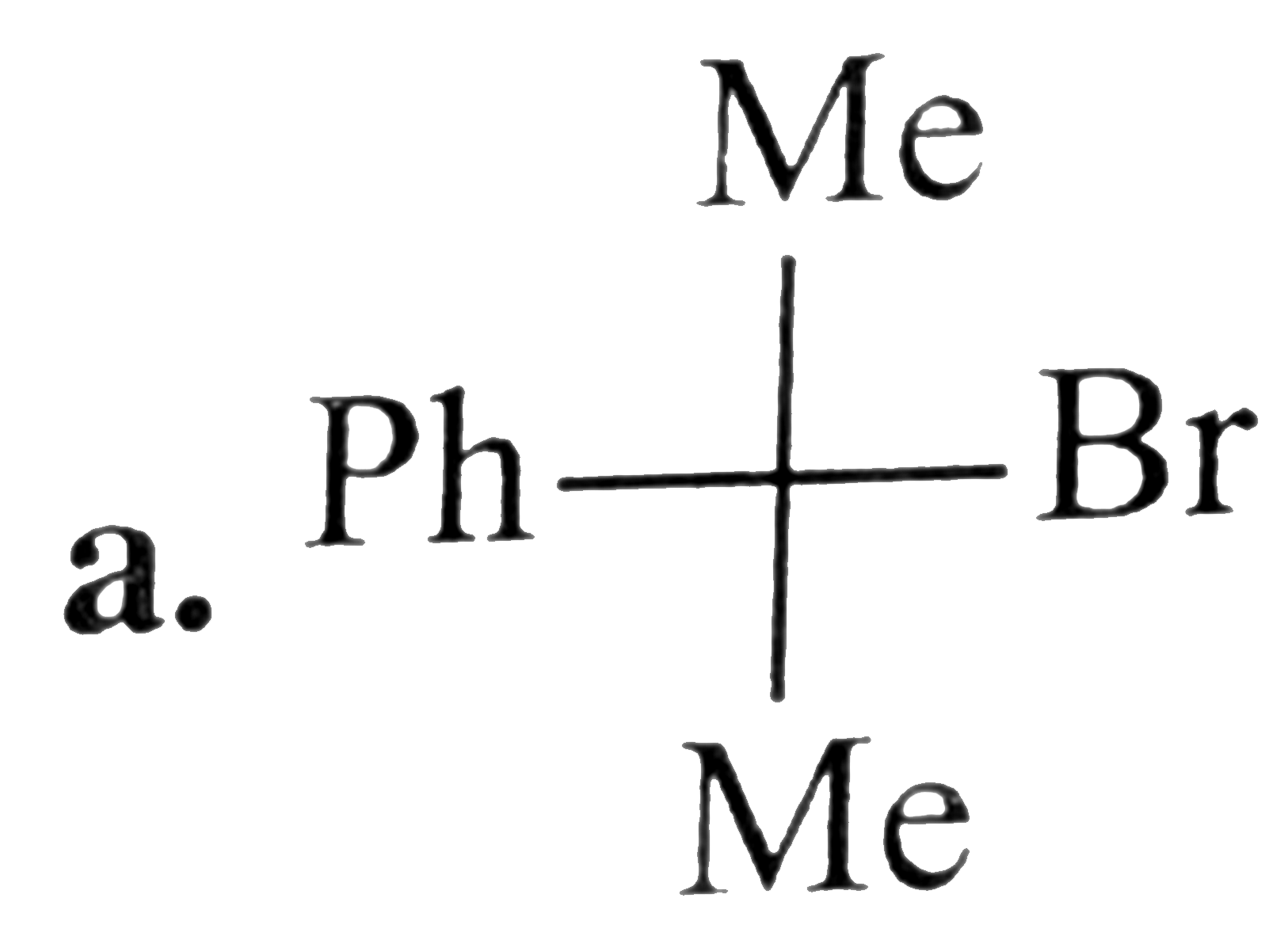
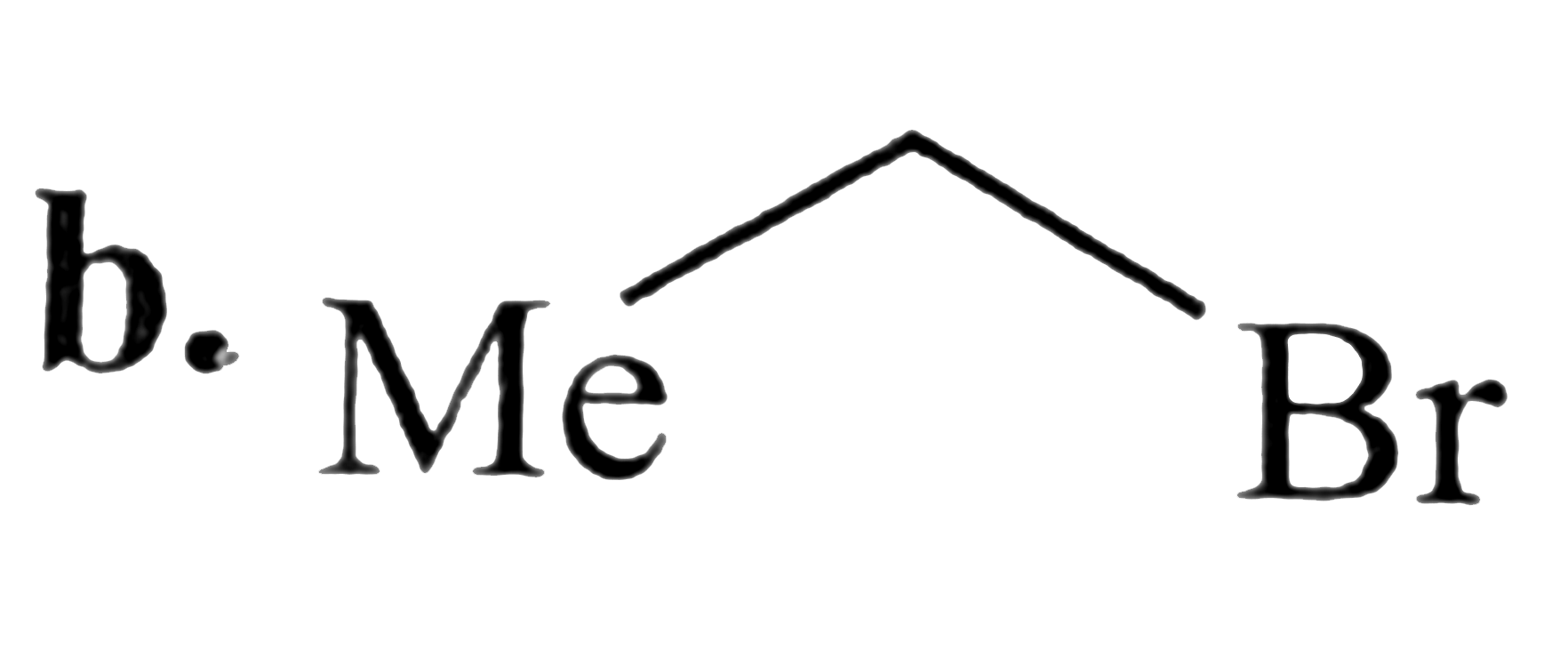
Which of the following gives `SN^(1)` reaction?

A

B

C

`MeBr`

D

All

Text Solution

AI Generated Solution

The correct Answer is:

To determine which compound gives an SN1 reaction, we need to analyze the stability of the carbocations formed during the reaction. The SN1 mechanism involves the formation of a carbocation intermediate, and the stability of this carbocation is crucial for the reaction to proceed via this pathway. ### Step-by-Step Solution: 1. **Understanding SN1 Mechanism**: - The SN1 reaction is a two-step process where the first step involves the formation of a carbocation. The stability of this carbocation is key to whether the reaction will proceed via the SN1 mechanism. 2. **Identify the Compounds**: - We need to analyze the given compounds (let’s denote them as A, B, and C) to see which one can form a stable carbocation. 3. **Analyze Compound A**: - Compound A forms a carbocation that is resonance stabilized due to the presence of a phenyl ring and two methyl groups. The positive charge on the carbocation can be delocalized through resonance, making it highly stable. - **Conclusion**: Compound A is likely to undergo an SN1 reaction due to the stability of its carbocation. 4. **Analyze Compound B**: - Compound B is a primary alkyl halide. When it forms a carbocation, it results in a primary carbocation, which is not stable. - **Conclusion**: Compound B will not undergo an SN1 reaction; instead, it will favor an SN2 reaction. 5. **Analyze Compound C**: - Compound C forms a methyl carbocation upon leaving the leaving group. Methyl carbocations are highly unstable. - **Conclusion**: Compound C will also not undergo an SN1 reaction and will favor an SN2 mechanism. 6. **Final Decision**: - Based on the analysis, only Compound A forms a stable carbocation and is capable of undergoing an SN1 reaction. ### Answer: The compound that gives an SN1 reaction is **Compound A**.

To determine which compound gives an SN1 reaction, we need to analyze the stability of the carbocations formed during the reaction. The SN1 mechanism involves the formation of a carbocation intermediate, and the stability of this carbocation is crucial for the reaction to proceed via this pathway. ### Step-by-Step Solution: 1. **Understanding SN1 Mechanism**: - The SN1 reaction is a two-step process where the first step involves the formation of a carbocation. The stability of this carbocation is key to whether the reaction will proceed via the SN1 mechanism. 2. **Identify the Compounds**: ...
Promotional Banner

Topper's Solved these Questions

  • AROMATIC COMPOUNDS AND ALKYL AND ARYL HALIDES

    CENGAGE CHEMISTRY ENGLISH|Exercise Exercises Linked Compreshension Type|11 Videos
  • AROMATIC COMPOUNDS AND ALKYL AND ARYL HALIDES

    CENGAGE CHEMISTRY ENGLISH|Exercise Exercises Multiple Correct|32 Videos
  • AROMATIC COMPOUNDS AND ALKYL AND ARYL HALIDES

    CENGAGE CHEMISTRY ENGLISH|Exercise Exercises Concept Application|4 Videos
  • APPENDIX INORGANIC VOLUME 2

    CENGAGE CHEMISTRY ENGLISH|Exercise Short Answer Type|179 Videos
  • BIOMOLECULES

    CENGAGE CHEMISTRY ENGLISH|Exercise Exercises Archives (Analytical And Descriptive)|8 Videos

Similar Questions

Explore conceptually related problems

SN reaction is given by these compounds, which have a nuclophilic group and a good leaving EWG . It should be stable after leaving with bonding pair of overline(e)'s and it should have high polarisability. Nucliphilic aliphatic substituion reaction is mainly of two types SN^(-1) and SN^(2). SN^(-1) mechanism is a two step process. Reaction velocity of SN^(-1) depends only on the concentration of the subtrate. It proceeds via the formation of carbocation, optically active substrate gives (o+) and (o-) froms of the product. In most of the cases, the product usually consists of 5-20% inverted and (95-80%) racemised species. The more stable is the carbocation, the greater is the propotion of racemission. In solvolysis reaction, the more nucleophillic is the solvent, the greater is the proportion of inversion. Which of the following will give SN reaction?

SN reaction is given by these compounds, which have a nuclophilic group and a good leaving EWG . It should be stable after leaving with bonding pair of overline(e)'s and it should have high polarisability. Nucliphilic aliphatic substituion reaction is mainly of two types SN^(-1) and SN^(2). SN^(-1) mechanism is a two step process. Reaction velocity of SN^(-1) depends only on the concentration of the subtrate. It proceeds via the formation of carbocation, optically active substrate gives (o+) and (o-) froms of the product. In most of the cases, the product usually consists of 5-20% inverted and (95-80%) racemised species. The more stable is the carbocation, the greater is the propotion of racemisation. In solvolysis reaction, the more nucleophillic is the solvent, the greater is the proportion of inversion. For the reaction which substrate will give maximum racemismision ?

Which of the following are SN^2 reactions ?

Which of the following will give SN^(2) mechanism?

Which of the following reactions represents SN reaction ?

Write the products of the following SN reactions. .

Which of the following will not undergo S_N^1 reaction with OH^-

Which of the following alkyl halide will undergo S_N 1 reaction is

The correct order of reactivity of the following bromides towards S_N 1 reaction is

Predicrt the order of reactivity of the following compounds in SN^(1) and SN^(2) reactions.

CENGAGE CHEMISTRY ENGLISH-AROMATIC COMPOUNDS AND ALKYL AND ARYL HALIDES -Exercises Linked Compreshension
  1. In the conversion of (C) to (E) , (E) is Bu - NH(2). This reaction is ...

    Text Solution

    |

  2. Compound (G) is:

    Text Solution

    |

  3. Compound (H) is:

    Text Solution

    |

  4. The compounds (I) and (J) are respectively:

    Text Solution

    |

  5. Which statement is wrong about the hydrolysis of R - overset(o+)(N) -...

    Text Solution

    |

  6. Compound (B) is:

    Text Solution

    |

  7. Compound (C) is:

    Text Solution

    |

  8. Compound (E) is:

    Text Solution

    |

  9. Compound (F) is:

    Text Solution

    |

  10. SN reaction is given by these compounds, which have a nuclophilic gr...

    Text Solution

    |

  11. SN reaction is given by these compounds, which have a nuclophilic gr...

    Text Solution

    |

  12. SN reaction is given by these compounds, which have a nuclophilic gr...

    Text Solution

    |

  13. SN^(2) reaction is a bimolecular reaction which takes places by the fo...

    Text Solution

    |

  14. SN^(2) reaction is a bimolecular reaction which takes places by the fo...

    Text Solution

    |

  15. SN^(2) reaction is a bimolecular reaction which takes places by the fo...

    Text Solution

    |

  16. SN^(2) reaction is a bimolecular reaction which takes places by the fo...

    Text Solution

    |

  17. IsoprophI bromide was treated separately with sodium ethoxide under t...

    Text Solution

    |

  18. IsoprophI bromide was treated separately with sodium ethoxide under t...

    Text Solution

    |

  19. IsoprophI bromide was treated separately with sodium ethoxide under t...

    Text Solution

    |

  20. IsoprophI bromide was treated separately with sodium ethoxide under t...

    Text Solution

    |
