Home
Class 12
CHEMISTRY
SN^(2) reaction is a bimolecular reactio...

`SN^(2)` reaction is a bimolecular reaction which takes places by the formation of `T.S.` Veolcity of the reaction depends on the concentration of the substrate as well as the nucleophile.
The reaction is favoureed by strong `Nu^(o-)` and in the presence of polar aprotic sovlent, optically active halides give. Walken inversion by `SN^(2)` mechanism. The presence of hero group (atom) at `beta-C` atom, unsaturation at `beta-C` and `(-overset(O)overset(||)(C)-)` group at `alpha-C` atomn favor `SN^(2)` mechanism.
Allyl halides and benzyl halides give `SN^(1)` and `SN^(2)` reactions. Allyl halides alos give `SN^(2)` mechanism `EDG` at ortho- and para- postions in benzyl halides favors `SN^(1)` mechanism, wheras `EWG` favors `SN^(2)` mechanism.
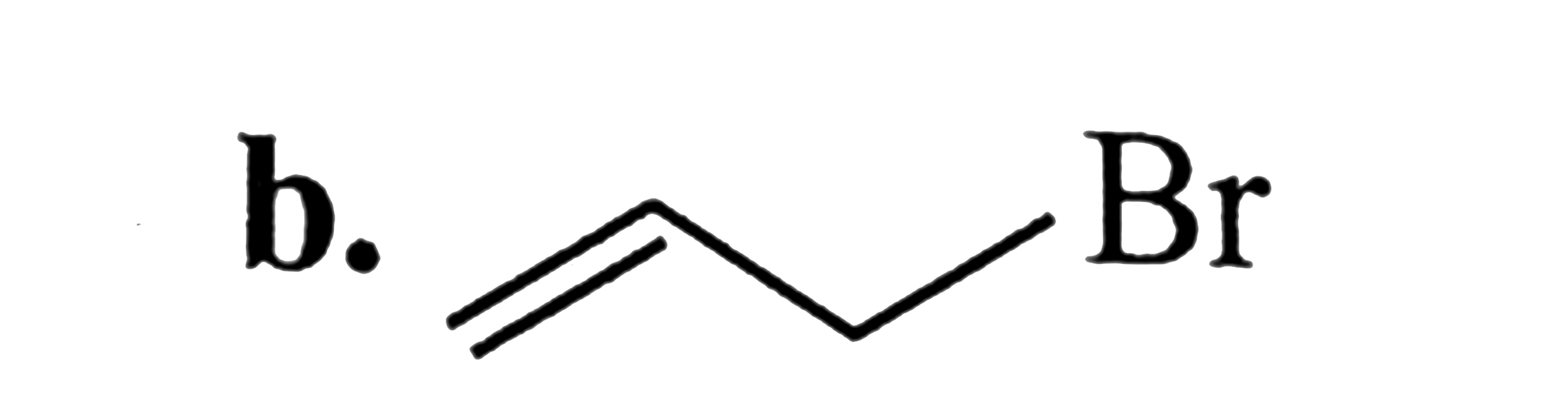
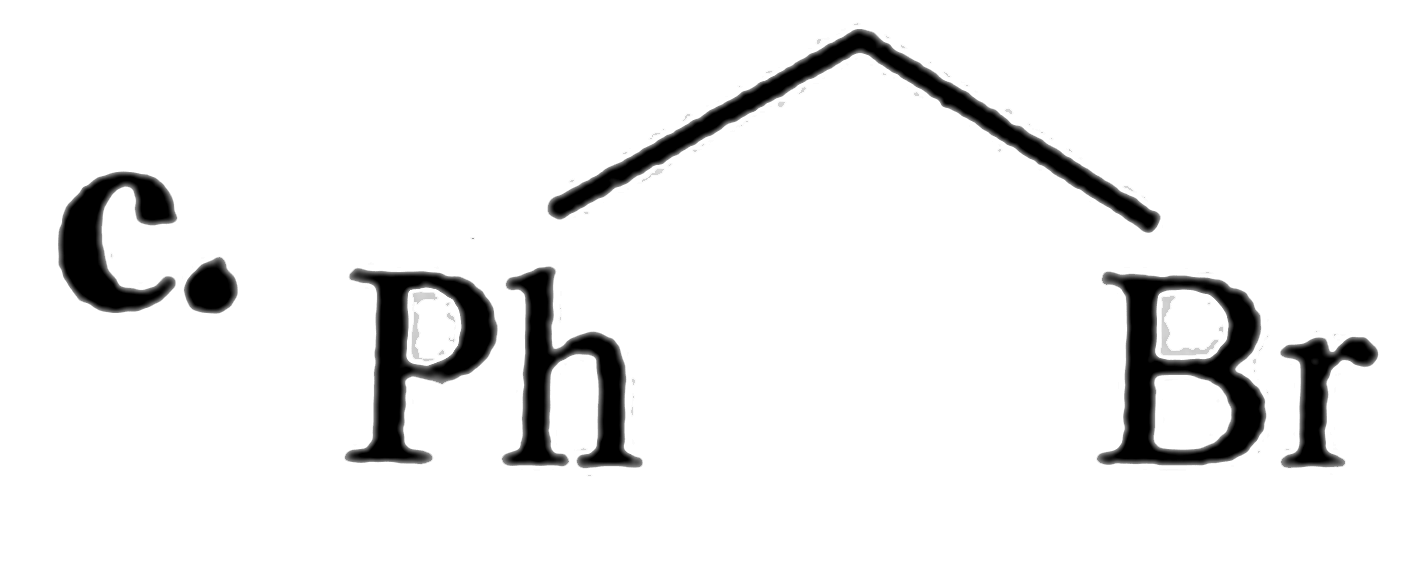
Which of the following will give `SN^(2)` mechanism?

A

`MeBr`

B

C

D

All

Text Solution

AI Generated Solution

The correct Answer is:

To determine which of the given compounds will undergo an SN2 mechanism, we need to analyze the structure of each compound based on the characteristics of the SN2 reaction. Here's a step-by-step solution: ### Step 1: Understand the SN2 Mechanism The SN2 (Substitution Nucleophilic Bimolecular) mechanism is characterized by: - A bimolecular reaction where both the substrate (alkyl halide) and the nucleophile are involved in the rate-determining step. - The reaction rate depends on the concentration of both the substrate and the nucleophile. - It is favored by strong nucleophiles and polar aprotic solvents. - The reaction involves a backside attack leading to inversion of configuration at the carbon center. ### Step 2: Identify the Key Factors Favoring SN2 - **Steric Hindrance**: SN2 reactions are favored by substrates with less steric hindrance. Typically, primary (1°) alkyl halides react via SN2, while tertiary (3°) alkyl halides do not. - **Presence of Nucleophiles**: Strong nucleophiles are essential for the SN2 mechanism. - **Substituents**: The presence of electron-withdrawing groups (EWG) can favor SN2, while electron-donating groups (EDG) at ortho and para positions can favor SN1. ### Step 3: Analyze Each Compound 1. **Allylic Halide**: If the allylic halide is a primary halide, it will favor SN2 due to low steric hindrance. 2. **Methyl Bromide**: This is a primary alkyl halide (1°), which has very low steric hindrance, thus it will undergo SN2. 3. **Benzyl Halide**: If the benzyl halide is attached to a primary carbon (1°), it will also favor SN2 due to low steric hindrance. ### Step 4: Conclusion Based on the analysis, all the compounds mentioned (the allylic halide, methyl bromide, and benzyl halide) are primary or have low steric hindrance. Therefore, they will all undergo the SN2 mechanism. ### Final Answer All the compounds will give the SN2 mechanism. ---

To determine which of the given compounds will undergo an SN2 mechanism, we need to analyze the structure of each compound based on the characteristics of the SN2 reaction. Here's a step-by-step solution: ### Step 1: Understand the SN2 Mechanism The SN2 (Substitution Nucleophilic Bimolecular) mechanism is characterized by: - A bimolecular reaction where both the substrate (alkyl halide) and the nucleophile are involved in the rate-determining step. - The reaction rate depends on the concentration of both the substrate and the nucleophile. - It is favored by strong nucleophiles and polar aprotic solvents. - The reaction involves a backside attack leading to inversion of configuration at the carbon center. ...
Promotional Banner

Topper's Solved these Questions

  • AROMATIC COMPOUNDS AND ALKYL AND ARYL HALIDES

    CENGAGE CHEMISTRY ENGLISH|Exercise Exercises Linked Compreshension Type|11 Videos
  • AROMATIC COMPOUNDS AND ALKYL AND ARYL HALIDES

    CENGAGE CHEMISTRY ENGLISH|Exercise Exercises Multiple Correct|32 Videos
  • AROMATIC COMPOUNDS AND ALKYL AND ARYL HALIDES

    CENGAGE CHEMISTRY ENGLISH|Exercise Exercises Concept Application|4 Videos
  • APPENDIX INORGANIC VOLUME 2

    CENGAGE CHEMISTRY ENGLISH|Exercise Short Answer Type|179 Videos
  • BIOMOLECULES

    CENGAGE CHEMISTRY ENGLISH|Exercise Exercises Archives (Analytical And Descriptive)|8 Videos

Similar Questions

Explore conceptually related problems

SN^(2) reaction is a bimolecular reaction which takes places by the formation of T.S. Veolcity of the reaction depends on the concentration of the substrate as well as the nucleophile. The reaction is favoureed by strong Nu^(o-) and in the presence of polar aprotic sovlent, optically active halides give. Walken inversion by SN^(2) mechanism. The presence of hero group (atom) at beta-C atom, unsaturation at beta-C and (-overset(O)overset(||)(C)-) group at alpha-C atomn favor SN^(2) mechanism. Allyl halides and benzyl halides give SN^(1) and SN^(2) reactions. Allyl halides alos give SN^(2) mechanism EDG at ortho- and para- postions in benzyl halides favors SN^(1) mechanism, wheras EWG favors SN^(2) mechanism. Which of the following will give SN^(1) reaction?

SN^(2) reaction is a bimolecular reaction which takes places by the formation of T.S. Veolcity of the reaction depends on the concentration of the substrate as well as the nucleophile. The reaction is favoureed by strong Nu^(o-) and in the presence of polar aprotic sovlent, optically active halides give. Walken inversion by SN^(2) mechanism. The presence of hero group (atom) at beta-C atom, unsaturation at beta-C and (-overset(O)overset(||)(C)-) group at alpha-C atomn favor SN^(2) mechanism. Allyl halides and benzyl halides give SN^(1) and SN^(2) reactions. Allyl halides alos give SN^(2) mechanism EDG at ortho- and para- postions in benzyl halides favors SN^(1) mechanism, wheras EWG favors SN^(2) mechanism. Which of the following will give Walden inversion ?

E_(2) reaction (Elimination bimolecular reaction)

SN^(1) reaction is feasable in-

Walden inversion takes place in SN^2 reaction. Half-life period of SN^2 reaction is inversely proportional to the concentration of the substrate or nucleophile or both.

Which of the following compounds gives SN^(1), SN^(2) and SN^(2) mechanisms?

Which of the following are SN^2 reactions ?

Which of the following reactions represents SN reaction ?

CENGAGE CHEMISTRY ENGLISH-AROMATIC COMPOUNDS AND ALKYL AND ARYL HALIDES -Exercises Linked Compreshension
  1. In the conversion of (C) to (E) , (E) is Bu - NH(2). This reaction is ...

    Text Solution

    |

  2. Compound (G) is:

    Text Solution

    |

  3. Compound (H) is:

    Text Solution

    |

  4. The compounds (I) and (J) are respectively:

    Text Solution

    |

  5. Which statement is wrong about the hydrolysis of R - overset(o+)(N) -...

    Text Solution

    |

  6. Compound (B) is:

    Text Solution

    |

  7. Compound (C) is:

    Text Solution

    |

  8. Compound (E) is:

    Text Solution

    |

  9. Compound (F) is:

    Text Solution

    |

  10. SN reaction is given by these compounds, which have a nuclophilic gr...

    Text Solution

    |

  11. SN reaction is given by these compounds, which have a nuclophilic gr...

    Text Solution

    |

  12. SN reaction is given by these compounds, which have a nuclophilic gr...

    Text Solution

    |

  13. SN^(2) reaction is a bimolecular reaction which takes places by the fo...

    Text Solution

    |

  14. SN^(2) reaction is a bimolecular reaction which takes places by the fo...

    Text Solution

    |

  15. SN^(2) reaction is a bimolecular reaction which takes places by the fo...

    Text Solution

    |

  16. SN^(2) reaction is a bimolecular reaction which takes places by the fo...

    Text Solution

    |

  17. IsoprophI bromide was treated separately with sodium ethoxide under t...

    Text Solution

    |

  18. IsoprophI bromide was treated separately with sodium ethoxide under t...

    Text Solution

    |

  19. IsoprophI bromide was treated separately with sodium ethoxide under t...

    Text Solution

    |

  20. IsoprophI bromide was treated separately with sodium ethoxide under t...

    Text Solution

    |
