Home
Class 12
CHEMISTRY
IsoprophI bromide was treated separately...

IsoprophI bromide was treated separately with sodium ethoxide under two different conditions.
Reaction I:
Treatment of isopropyI bromide with `(Me_(3)CONa)` at `40^(@)C` gave almost exclusively compound `(A) (C_(3)H_(6))`.
Reaction II:
Treatment of `(i-PrBr)` with `NaOC_(2)H_(5)` at `30^(@)C` yileled compound `(A) (C_(3)H_(6))` along with a small amount of an ether `(B) (C_(5)H_(12)O)`.
Compound `(A)` was readily oxidised by a neutral solution of cold dil. `KMnO_(4)` to give a brown preciptate.
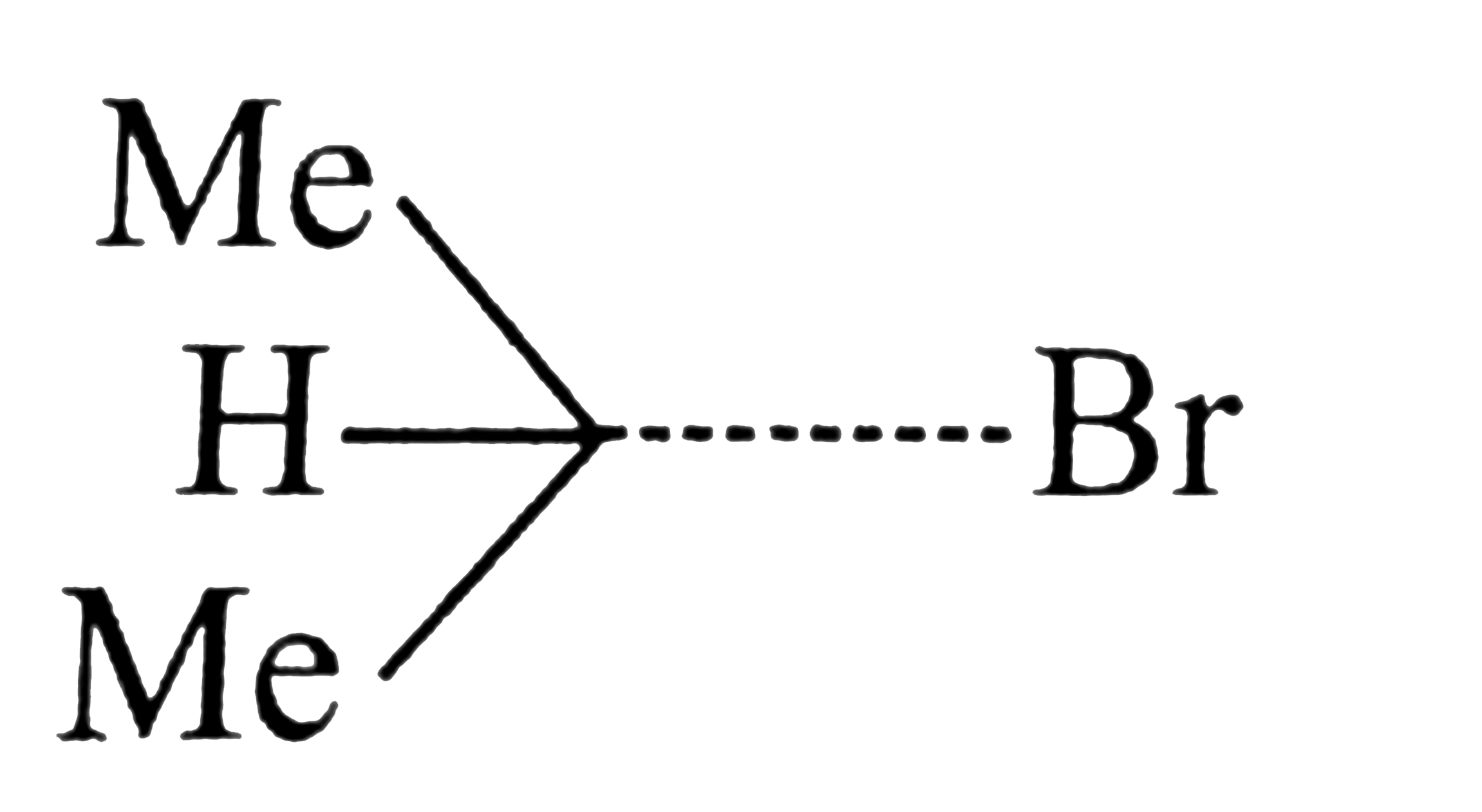
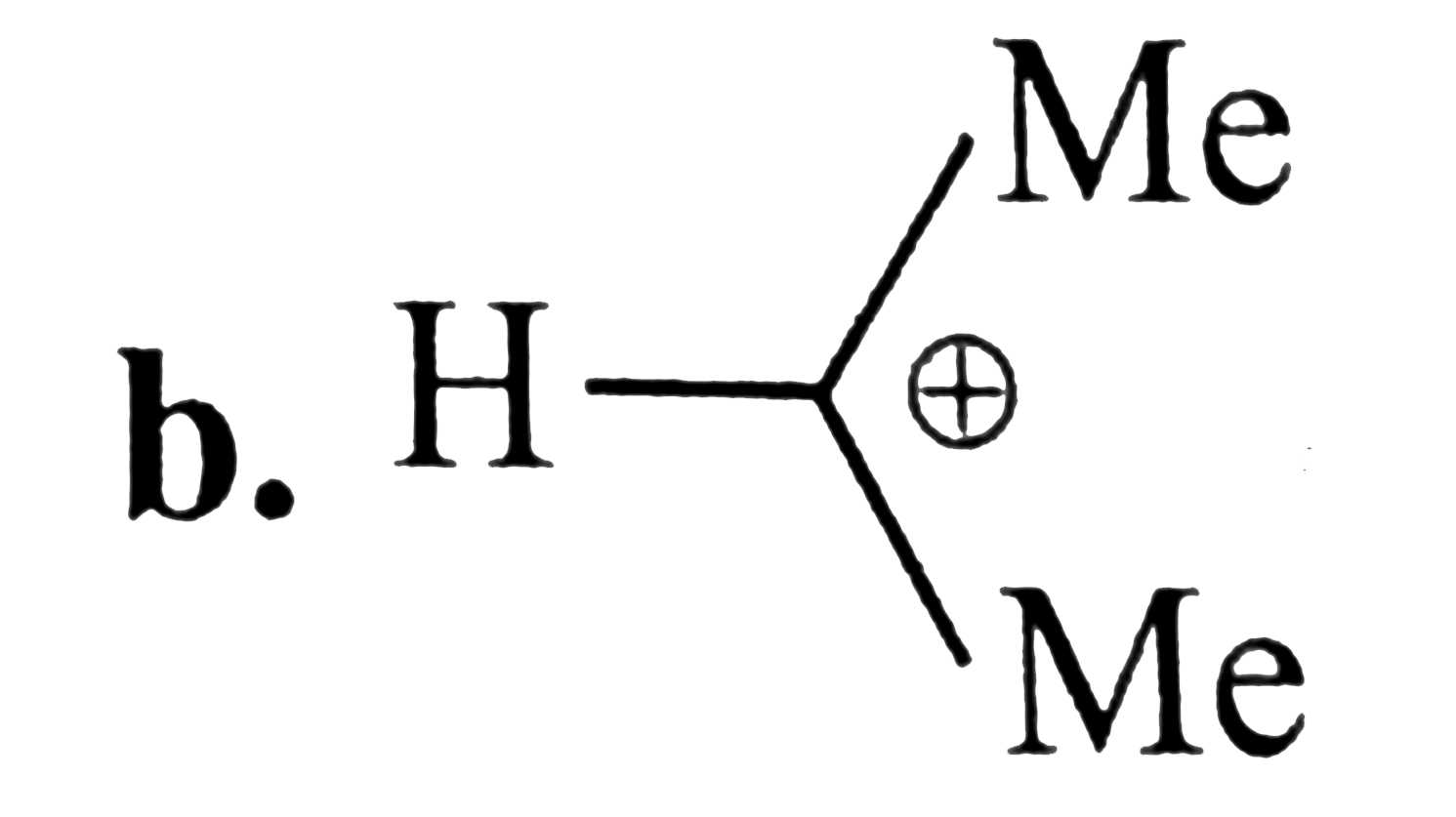
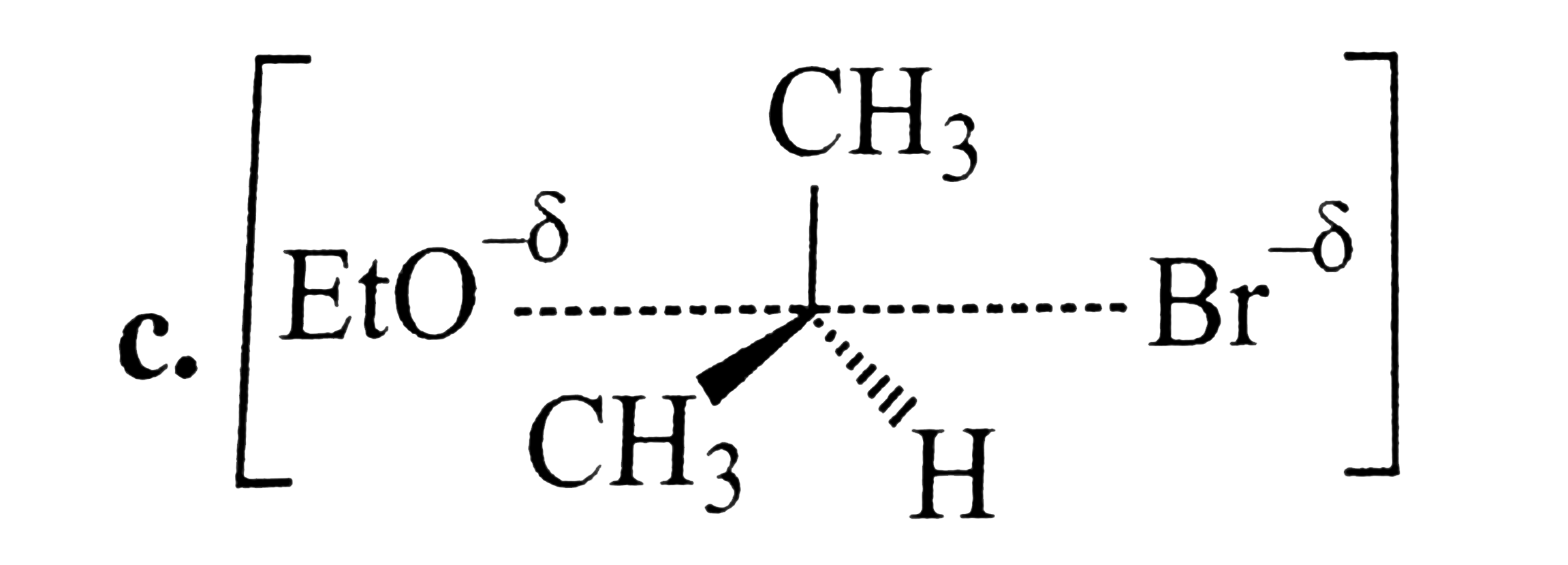
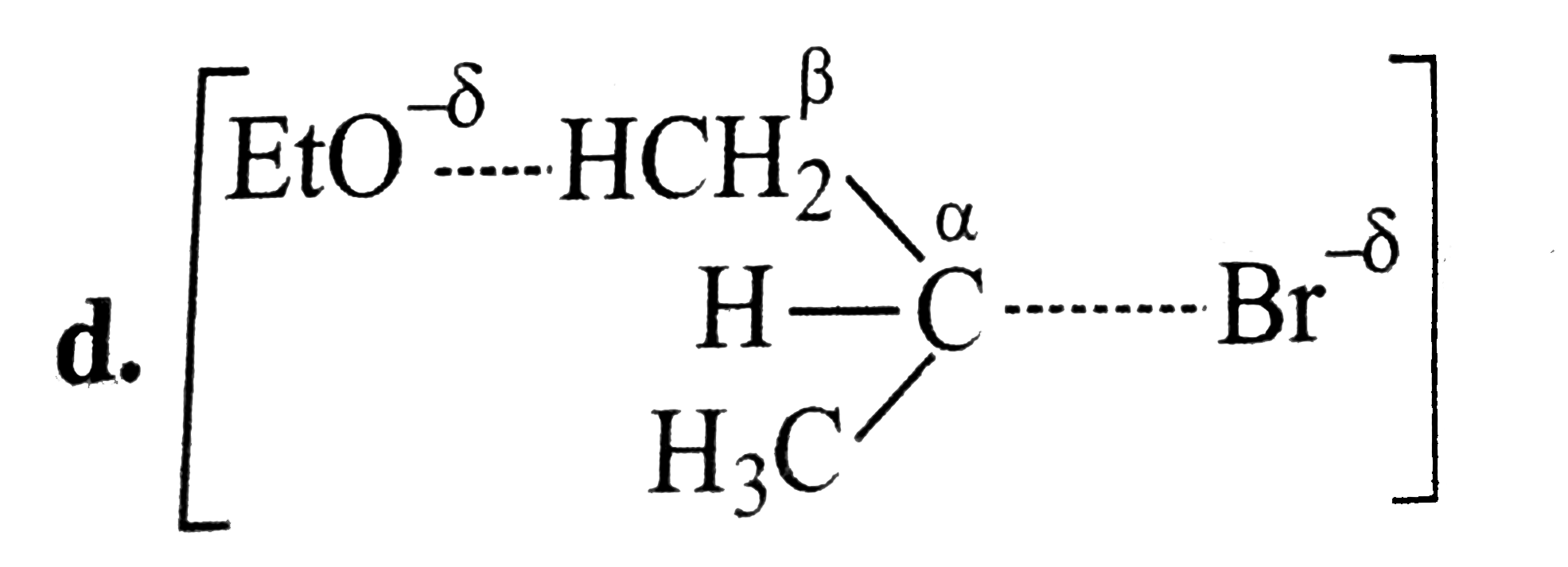
Which of the following most accureately repreasents the activated complex formed in reaction `(II)` that leads to compound `(A)` ?

A

B

C

D

Text Solution

AI Generated Solution

The correct Answer is:

To solve the question regarding the activated complex formed in reaction II that leads to compound A, we will follow a systematic approach. ### Step-by-Step Solution: 1. **Identify the Reactants**: - The reactant in reaction II is isopropyl bromide (i-PrBr) and sodium ethoxide (NaOC2H5). 2. **Understand the Reaction Conditions**: - The reaction is conducted at 30°C, which suggests that we are likely dealing with a reaction that can proceed via an elimination mechanism rather than substitution due to the presence of a strong base (NaOC2H5). 3. **Determine the Product**: - The product A is identified as an alkene (C3H6). Given that isopropyl bromide has two methyl groups, the likely alkene product is propene (C3H6). 4. **Mechanism of Reaction**: - The formation of compound A (alkene) from isopropyl bromide and sodium ethoxide suggests an E2 elimination mechanism. In this mechanism, the base (ethoxide ion) abstracts a proton from the β-carbon while the leaving group (bromine) departs from the α-carbon. 5. **Identify the Transition State**: - In the E2 mechanism, the transition state involves the simultaneous removal of a hydrogen atom and the departure of the bromine atom. This transition state can be depicted as having partial charges: the ethoxide ion will have a partial negative charge as it is abstracting a proton, and the bromine will have a partial negative charge as it is leaving. 6. **Draw the Transition State**: - The transition state can be represented with the isopropyl structure, showing the ethoxide ion attacking the hydrogen on the β-carbon, while the bromine is leaving. The transition state will have a partially formed double bond between the α and β carbons, and the ethoxide ion will be positioned close to the hydrogen being removed. 7. **Conclusion**: - Based on the above analysis, the activated complex formed in reaction II that leads to compound A can be accurately represented by the transition state structure that shows the ethoxide ion, the leaving bromine, and the developing double bond.

To solve the question regarding the activated complex formed in reaction II that leads to compound A, we will follow a systematic approach. ### Step-by-Step Solution: 1. **Identify the Reactants**: - The reactant in reaction II is isopropyl bromide (i-PrBr) and sodium ethoxide (NaOC2H5). 2. **Understand the Reaction Conditions**: ...
Promotional Banner

Topper's Solved these Questions

  • AROMATIC COMPOUNDS AND ALKYL AND ARYL HALIDES

    CENGAGE CHEMISTRY ENGLISH|Exercise Exercises Linked Compreshension Type|11 Videos
  • AROMATIC COMPOUNDS AND ALKYL AND ARYL HALIDES

    CENGAGE CHEMISTRY ENGLISH|Exercise Exercises Multiple Correct|32 Videos
  • AROMATIC COMPOUNDS AND ALKYL AND ARYL HALIDES

    CENGAGE CHEMISTRY ENGLISH|Exercise Exercises Concept Application|4 Videos
  • APPENDIX INORGANIC VOLUME 2

    CENGAGE CHEMISTRY ENGLISH|Exercise Short Answer Type|179 Videos
  • BIOMOLECULES

    CENGAGE CHEMISTRY ENGLISH|Exercise Exercises Archives (Analytical And Descriptive)|8 Videos

Similar Questions

Explore conceptually related problems

IsoprophI bromide was treated separately with sodium ethoxide under two different conditions. Reaction I: Treatment of isopropyI bromide with (Me_(3)CONa) at 40^(@)C gave almost exclusively compound (A) (C_(3)H_(6)) . Reaction II: Treatment of (i-PrBr) with NaOC_(2)H_(5) at 30^(@)C yileled compound (A) (C_(3)H_(6)) along with a small amount of an ether (B) (C_(5)H_(12)O) . Compound (A) was readily oxidised by a neutral solution of cold dil. KMnO_(4) to give a brown preciptate. Which of the following is an accurate representations of compound (B) ?

IsoprophI bromide was treated separately with sodium ethoxide under two different conditions. Reaction I: Treatment of isopropyI bromide with (Me_(3)CONa) at 40^(@)C gave almost exclusively compound (A) (C_(3)H_(6)) . Reaction II: Treatment of (i-PrBr) with NaOC_(2)H_(5) at 30^(@)C yileled compound (A) (C_(3)H_(6)) along with a small amount of an ether (B) (C_(5)H_(12)O) . Compound (A) was readily oxidised by a neutral solution of cold dil. KMnO_(4) to give a brown preciptate. The formations of (A) and (B) are best explained by:

IsoprophI bromide was treated separately with sodium ethoxide under two different conditions. Reaction I: Treatment of isopropyI bromide with (Me_(3)CONa) at 40^(@)C gave almost exclusively compound (A) (C_(3)H_(6)) . Reaction II: Treatment of (i-PrBr) with NaOC_(2)H_(5) at 30^(@)C yileled compound (A) (C_(3)H_(6)) along with a small amount of an ether (B) (C_(5)H_(12)O) . Compound (A) was readily oxidised by a neutral solution of cold dil. KMnO_(4) to give a brown preciptate. Referring to Q. No. 67 which of the following represents the intermediate T.S for the formation of compound (B) ?

An optically active compound H(C_(5)H_(6)O) on treatment with H_(2) in the presence of Lindlar's catalyst gave a compound I (C_(5)H_(8)O) . Upon hydrogenation with H_(2) and Pd/C, Compound H gave J (C_(5)H_(12)O) . Both I and J were found to b optically inactive. Select the correct statements.

Optically active isomer (A) of (C_(5)H_(9)Cl) on treatment with one mole of H_(2) gives an optically inactive compound (B) compound (A) will be :

Compound 'A' with the formula C_(3)H_(8)O on vigorous oxidation produces an acid C_(3)H_(6)O_(2) . 'A' is

Compound (A) C_(5)H_(8)O_(2) liberated CO_(2) on reaction with sodium bicarbonate. It exists in two forms neither of which is optically active. It yielded compound (B) C_(5)H_(10)O_(2) on hydrogenation. Compound (B) can be separated into enantiomorphs. Write structures of (A) and (B).

A compound X of formula C_(3)H_(8)O yields a compound C_(3)H_(6)O , on oxidation. To which of the following classes of compounds could X being

CENGAGE CHEMISTRY ENGLISH-AROMATIC COMPOUNDS AND ALKYL AND ARYL HALIDES -Exercises Linked Compreshension
  1. In the conversion of (C) to (E) , (E) is Bu - NH(2). This reaction is ...

    Text Solution

    |

  2. Compound (G) is:

    Text Solution

    |

  3. Compound (H) is:

    Text Solution

    |

  4. The compounds (I) and (J) are respectively:

    Text Solution

    |

  5. Which statement is wrong about the hydrolysis of R - overset(o+)(N) -...

    Text Solution

    |

  6. Compound (B) is:

    Text Solution

    |

  7. Compound (C) is:

    Text Solution

    |

  8. Compound (E) is:

    Text Solution

    |

  9. Compound (F) is:

    Text Solution

    |

  10. SN reaction is given by these compounds, which have a nuclophilic gr...

    Text Solution

    |

  11. SN reaction is given by these compounds, which have a nuclophilic gr...

    Text Solution

    |

  12. SN reaction is given by these compounds, which have a nuclophilic gr...

    Text Solution

    |

  13. SN^(2) reaction is a bimolecular reaction which takes places by the fo...

    Text Solution

    |

  14. SN^(2) reaction is a bimolecular reaction which takes places by the fo...

    Text Solution

    |

  15. SN^(2) reaction is a bimolecular reaction which takes places by the fo...

    Text Solution

    |

  16. SN^(2) reaction is a bimolecular reaction which takes places by the fo...

    Text Solution

    |

  17. IsoprophI bromide was treated separately with sodium ethoxide under t...

    Text Solution

    |

  18. IsoprophI bromide was treated separately with sodium ethoxide under t...

    Text Solution

    |

  19. IsoprophI bromide was treated separately with sodium ethoxide under t...

    Text Solution

    |

  20. IsoprophI bromide was treated separately with sodium ethoxide under t...

    Text Solution

    |
