Home
Class 12
CHEMISTRY
Which of the following will give SN^(2) ...

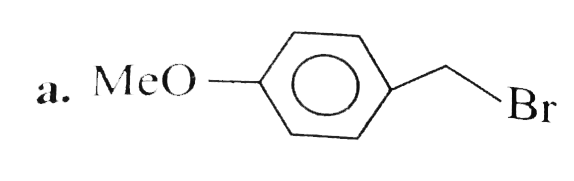
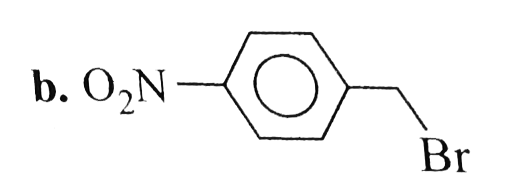
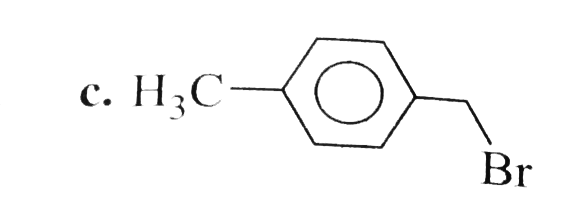
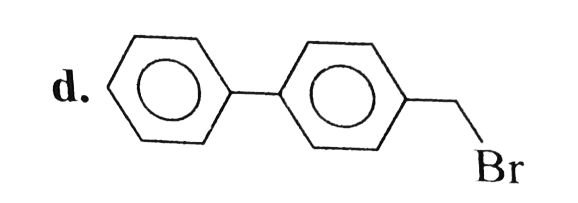
Which of the following will give `SN^(2)` mechanism?

A

B

C

D

Text Solution

AI Generated Solution

The correct Answer is:

To determine which of the given compounds will undergo an SN2 mechanism, we need to analyze the nature of each substituent on the carbon atom where the nucleophilic substitution is taking place. The SN2 mechanism is characterized by a single-step reaction where a nucleophile attacks the electrophilic carbon from the opposite side of the leaving group, leading to a transition state where both the nucleophile and the leaving group are partially bonded to the carbon. ### Step-by-Step Solution: 1. **Identify the Nature of Substituents**: - Examine each compound and identify the substituents attached to the carbon that will undergo substitution. - Look for electron-withdrawing groups (EWGs) and electron-donating groups (EDGs). 2. **Evaluate Electron-Withdrawing and Electron-Donating Effects**: - **Methoxy Group (−OCH3)**: This group is an electron-donating group due to its +M (mesomeric) effect. It increases electron density on the carbon, making it less favorable for nucleophilic attack. Therefore, this compound will not undergo SN2. - **Nitro Group (−NO2)**: This is a strong electron-withdrawing group (−M effect). It decreases electron density on the carbon, making it more electrophilic and favorable for nucleophilic attack. This compound is likely to undergo SN2. - **Methyl Group (−CH3)**: The methyl group is an electron-donating group due to its +I (inductive) effect. It also increases electron density, which is not favorable for SN2. Thus, this compound will not undergo SN2. - **Phenyl Group (−C6H5)**: The phenyl group exhibits a −I effect, but it also introduces significant steric hindrance. The presence of two bulky phenyl groups will hinder the approach of the nucleophile, making SN2 less favorable. 3. **Assess Steric Hindrance**: - In SN2 reactions, steric hindrance is a critical factor. The more crowded the carbon atom is, the less likely it is for the nucleophile to successfully attack. - The compound with the nitro group has less steric hindrance compared to the others, making it the most favorable for SN2. 4. **Conclusion**: - Based on the analysis, the only compound that will undergo an SN2 mechanism is the one with the nitro group (−NO2). ### Final Answer: The compound that will give an SN2 mechanism is the one with the nitro group (−NO2).

To determine which of the given compounds will undergo an SN2 mechanism, we need to analyze the nature of each substituent on the carbon atom where the nucleophilic substitution is taking place. The SN2 mechanism is characterized by a single-step reaction where a nucleophile attacks the electrophilic carbon from the opposite side of the leaving group, leading to a transition state where both the nucleophile and the leaving group are partially bonded to the carbon. ### Step-by-Step Solution: 1. **Identify the Nature of Substituents**: - Examine each compound and identify the substituents attached to the carbon that will undergo substitution. - Look for electron-withdrawing groups (EWGs) and electron-donating groups (EDGs). ...
Promotional Banner

Topper's Solved these Questions

  • AROMATIC COMPOUNDS AND ALKYL AND ARYL HALIDES

    CENGAGE CHEMISTRY ENGLISH|Exercise Exercises Assertion-Resoning Type|1 Videos
  • AROMATIC COMPOUNDS AND ALKYL AND ARYL HALIDES

    CENGAGE CHEMISTRY ENGLISH|Exercise Exercises Assertion-Resoning|11 Videos
  • AROMATIC COMPOUNDS AND ALKYL AND ARYL HALIDES

    CENGAGE CHEMISTRY ENGLISH|Exercise Exercises Single Correct Answer Type|28 Videos
  • APPENDIX INORGANIC VOLUME 2

    CENGAGE CHEMISTRY ENGLISH|Exercise Short Answer Type|179 Videos
  • BIOMOLECULES

    CENGAGE CHEMISTRY ENGLISH|Exercise Exercises Archives (Analytical And Descriptive)|8 Videos

Similar Questions

Explore conceptually related problems

SN^(2) reaction is a bimolecular reaction which takes places by the formation of T.S. Veolcity of the reaction depends on the concentration of the substrate as well as the nucleophile. The reaction is favoureed by strong Nu^(o-) and in the presence of polar aprotic sovlent, optically active halides give. Walden inversion by SN^(2) mechanism. The presence of hetro group (atom) at beta-C atom, unsaturation at beta-C and (-overset(O)overset(||)(C)-) group at alpha-C atomn favor SN^(2) mechanism. Allyl halides and benzyl halides give SN^(1) and SN^(2) reactions. Allyl halides alos give SN^(2) mechanism EDG at ortho- and para- postions in benzyl halides favors SN^(1) mechanism, wheras EWG favors SN^(2) mechanism. Which of the following will gives SN^(2) mechanism gt

SN^(2) reaction is a bimolecular reaction which takes places by the formation of T.S. Veolcity of the reaction depends on the concentration of the substrate as well as the nucleophile. The reaction is favoureed by strong Nu^(o-) and in the presence of polar aprotic sovlent, optically active halides give. Walken inversion by SN^(2) mechanism. The presence of hero group (atom) at beta-C atom, unsaturation at beta-C and (-overset(O)overset(||)(C)-) group at alpha-C atomn favor SN^(2) mechanism. Allyl halides and benzyl halides give SN^(1) and SN^(2) reactions. Allyl halides alos give SN^(2) mechanism EDG at ortho- and para- postions in benzyl halides favors SN^(1) mechanism, wheras EWG favors SN^(2) mechanism. Which of the following will give SN^(1) reaction?

SN reaction is given by these compounds, which have a nuclophilic group and a good leaving EWG . It should be stable after leaving with bonding pair of overline(e)'s and it should have high polarisability. Nucliphilic aliphatic substituion reaction is mainly of two types SN^(-1) and SN^(2). SN^(-1) mechanism is a two step process. Reaction velocity of SN^(-1) depends only on the concentration of the subtrate. It proceeds via the formation of carbocation, optically active substrate gives (o+) and (o-) froms of the product. In most of the cases, the product usually consists of 5-20% inverted and (95-80%) racemised species. The more stable is the carbocation, the greater is the propotion of racemission. In solvolysis reaction, the more nucleophillic is the solvent, the greater is the proportion of inversion. Which of the following will give SN reaction?

SN^(2) reaction is a bimolecular reaction which takes places by the formation of T.S. Veolcity of the reaction depends on the concentration of the substrate as well as the nucleophile. The reaction is favoureed by strong Nu^(o-) and in the presence of polar aprotic sovlent, optically active halides give. Walken inversion by SN^(2) mechanism. The presence of hero group (atom) at beta-C atom, unsaturation at beta-C and (-overset(O)overset(||)(C)-) group at alpha-C atomn favor SN^(2) mechanism. Allyl halides and benzyl halides give SN^(1) and SN^(2) reactions. Allyl halides alos give SN^(2) mechanism EDG at ortho- and para- postions in benzyl halides favors SN^(1) mechanism, wheras EWG favors SN^(2) mechanism. Which of the following will give Walden inversion ?

Which of the folliwning ether wil always give SN^(2) mechanism in acidic as well as basic conditions?

SN reaction is given by these compounds, which have a nuclophilic group and a good leaving EWG . It should be stable after leaving with bonding pair of overline(e)'s and it should have high polarisability. Nucliphilic aliphatic substituion reaction is mainly of two types SN^(-1) and SN^(2). SN^(-1) mechanism is a two step process. Reaction velocity of SN^(-1) depends only on the concentration of the subtrate. It proceeds via the formation of carbocation, optically active substrate gives (o+) and (o-) froms of the product. In most of the cases, the product usually consists of 5-20% inverted and (95-80%) racemised species. The more stable is the carbocation, the greater is the propotion of racemission. In solvolysis reaction, the more nucleophillic is the solvent, the greater is the proportion of inversion. Which of the following gives SN^(1) reaction?

SN reaction is given by these compounds, which have a nuclophilic group and a good leaving EWG . It should be stable after leaving with bonding pair of overline(e)'s and it should have high polarisability. Nucliphilic aliphatic substituion reaction is mainly of two types SN^(-1) and SN^(2). SN^(-1) mechanism is a two step process. Reaction velocity of SN^(-1) depends only on the concentration of the subtrate. It proceeds via the formation of carbocation, optically active substrate gives (o+) and (o-) froms of the product. In most of the cases, the product usually consists of 5-20% inverted and (95-80%) racemised species. The more stable is the carbocation, the greater is the propotion of racemission. In solvolysis reaction, the more nucleophillic is the solvent, the greater is the proportion of inversion. Which of the following gives SN^(1) reaction? Select the correct answer.

Which of the following will not undergo S_N^1 reaction with OH^-

Which of the following are SN^2 reactions ?

Which of the following compounds gives SN^(1), SN^(2) and SN^(2) mechanisms?

CENGAGE CHEMISTRY ENGLISH-AROMATIC COMPOUNDS AND ALKYL AND ARYL HALIDES -Exercises Single Correct
  1. Which of the folliwng is the order of the rate of reaction of C(6)H(6)...

    Text Solution

    |

  2. Which of the folliwng is the correct order of the order of the rate of...

    Text Solution

    |

  3. Which of the following will give SN^(2) mechanism?

    Text Solution

    |

  4. Which of the following compounds gives SN^(1), SN^(2) and SN^(2) mecha...

    Text Solution

    |

  5. Which of the folliwning ether wil always give SN^(2) mechanism in acid...

    Text Solution

    |

  6. Which of the follwoign ether will always give SN^(2) mechanism in acid...

    Text Solution

    |

  7. Which of the following substrates will gave racemised product?

    Text Solution

    |

  8. The energy of activation is lowest for which reaction?

    Text Solution

    |

  9. Isopentane on monochlorination gives....isomers and out of them .........

    Text Solution

    |

  10. Propane on dichlorinatin gives......isomers and out of them .....are o...

    Text Solution

    |

  11. A solution of (+)2-chloro-2-phenylethane in toluene racemises slowly i...

    Text Solution

    |

  12. The number of isomers for the compounds with molecular formula C(2)B...

    Text Solution

    |

  13. The decreasing basic order of the following compounds is: i. NH(3)...

    Text Solution

    |

  14. The decreasing nucleophilic order of the following compounds is: i...

    Text Solution

    |

  15. The decreasing nucleophilic order of the following compounds is: i...

    Text Solution

    |

  16. The decreasing basic order of the following is: i. F^(o-), ii. Cl^(o...

    Text Solution

    |

  17. The decreasing nucleophillic order fo the following compounds is: i...

    Text Solution

    |

  18. The decreasing leaving group order of the following is: i. F^(o-), i...

    Text Solution

    |

  19. The decreasing basic order of the following is: i. overset(o-)(C)H(...

    Text Solution

    |

  20. The decreasing nucleophilic oder of the following compounds is: i. o...

    Text Solution

    |
