

Home
Class 10
BIOLOGY
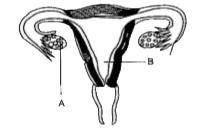
Study the diagram given alongside and an...

Study the diagram given alongside and answer the questions that follow:

Draw a neat diagram of the human sperm as seen under high magnification and label the following parts.
(a) Acrosome
(b) Mitochondria

Promotional Banner

Topper's Solved these Questions

  • SELF ASSESSMENT PAPER 2

    ICSE|Exercise SECTION II 3. (b) |5 Videos
  • SELF ASSESSMENT PAPER 2

    ICSE|Exercise SECTION II 4. (a) |4 Videos
  • SELF ASSESSMENT PAPER 2

    ICSE|Exercise SECTION II 2. (b)|10 Videos
  • SELF ASSESSMENT PAPER 1

    ICSE|Exercise SECTION - II 7. (b) |5 Videos
  • SELF ASSESSMENT PAPER 3

    ICSE|Exercise SECTION - II|59 Videos

Similar Questions

Explore conceptually related problems

Study the diagram given below and answer the questions that follow: Draw a neat, labelled diagram of the human lungs.

Study the diagram and answer the questions that follow : Draw a neat, labelled diagram of a human tooth

Study the diagram given below and answer the questions that follow : Draw a neat, labelled diagram of a meristematic cell.

Study the diagram and answer the questions that follow : Label the parts 1-5

Study the diagram given below and answer the questions that follow : Label the parts 1 - 4.

Study the diagram given below and answer the questions that follow : Label the parts 1 - 4.

Study the diagram and answer the questions that follow : Label the parts 1 - 4

Study the diagram and answer the questions that follow: Label the parts 1 - 4.

Study the diagram given below and answer the questions that follow : Label the parts 1 and 2.

Study the diagram given below and then answer the questions that follow : (i) Name the part labelled A. Name any two hormones produced by the part labelled A. (ii) What happens to the part labelled B if : (1) fertilisation takes place? (2) fertilisation does not take place ? (iii) Where does fertilisation occur ? (iv) Draw a neat diagram of the human sperm as seen under high magnification and label the following parts: (a) Acrosome (b) Mitochondria.