Home
Class 12
MATHS
The reliability of a COVID PCR test is s...

The reliability of a COVID PCR test is specified as follows
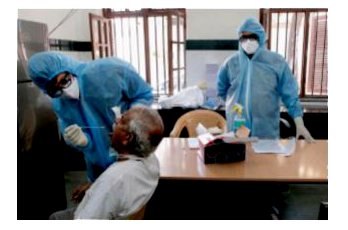
Of people having COVID, 90% of the test detects the disease but 10% goes undetected. Of people free of COVID, 99% of the test is judged COVID negative but 1% are diagnosed as showing COVID positive. From a large population of which only 0.1% have COVID, one person is selected at random, given the COVID PCR test, and the pathologist reports him/her as COVID positive.

Based on the above information, answer the following
What is the probability of the ‘person to be tested as COVID positive’ given that ‘he is actually not having COVID’?

A

0.01

B

0.99

C

0.1

D

0.001

Text Solution

Verified by Experts

The correct Answer is:

A
Promotional Banner

Topper's Solved these Questions

  • QUESTION BANK 2021

    CBSE MODEL PAPER|Exercise QUESTIONS|9 Videos
  • Additional Practice Questions

    CBSE MODEL PAPER|Exercise Question|87 Videos
  • SAMPLE QUESTION PAPER ( MATHEMATICS )

    CBSE MODEL PAPER|Exercise QUESTION|60 Videos

Similar Questions

Explore conceptually related problems

The reliability of a COVID PCR test is specified as follows Of people having COVID, 90% of the test detects the disease but 10% goes undetected. Of people free of COVID, 99% of the test is judged COVID negative but 1% are diagnosed as showing COVID positive. From a large population of which only 0.1% have COVID, one person is selected at random, given the COVID PCR test, and the pathologist reports him/her as COVID positive. Based on the above information, answer the following What is the probability of the ‘person to be tested as COVID positive’ given that ‘he is actually having COVID?

The reliability of a COVID PCR test is specified as follows Of people having COVID, 90% of the test detects the disease but 10% goes undetected. Of people free of COVID, 99% of the test is judged COVID negative but 1% are diagnosed as showing COVID positive. From a large population of which only 0.1% have COVID, one person is selected at random, given the COVID PCR test, and the pathologist reports him/her as COVID positive. Based on the above information, answer the following What is the probability that the ‘person selected will be diagnosed as COVID positive’?

The reliability of a COVID PCR test is specified as follows Of people having COVID, 90% of the test detects the disease but 10% goes undetected. Of people free of COVID, 99% of the test is judged COVID negative but 1% are diagnosed as showing COVID positive. From a large population of which only 0.1% have COVID, one person is selected at random, given the COVID PCR test, and the pathologist reports him/her as COVID positive. Based on the above information, answer the following What is the probability that the ‘person is actually not having COVID?

The reliability of a COVID PCR test is specified as follows Of people having COVID, 90% of the test detects the disease but 10% goes undetected. Of people free of COVID, 99% of the test is judged COVID negative but 1% are diagnosed as showing COVID positive. From a large population of which only 0.1% have COVID, one person is selected at random, given the COVID PCR test, and the pathologist reports him/her as COVID positive. Based on the above information, answer the following What is the probability that the ‘person is actually having COVID given that ‘he is tested as COVID positive’?

Suppose that the reliability of a HIV test is specified as follows: Of people having HIV. 90% of the test detects the disease but 10% go undetected. Of people free of HIV, 99% of the test are judged HTV-ive but 1% are diagnosed as showing H3V+ive. From a large population of which only 0.1% have HIV one person is selected at random, given the HIV test, and the pathologist reports him/her as HIV+ive. What is the probability that the person actually has HIV?

A test for detection of a particular disease is not fool proof. The test will correctly detect the disease 90% of the time, but will incorrectly detect the disease 1% of the time. For a large population of which an estimated 0.2% have the disease, a person is selected at random, given the test, and tod that he has the disease. What are the chances that the person actually have the disease?

The percentage of marks of 50 students in a test is given in the following table. Find the mean of the percentage.

Which of the following disease is diagnosed by Australian antigen test
