
Home
Class 12
CHEMISTRY
Species in which all C-C bonds are not e...

Species in which all C-C bonds are not equal is/are

A

B

C

D

Text Solution

AI Generated Solution

The correct Answer is:

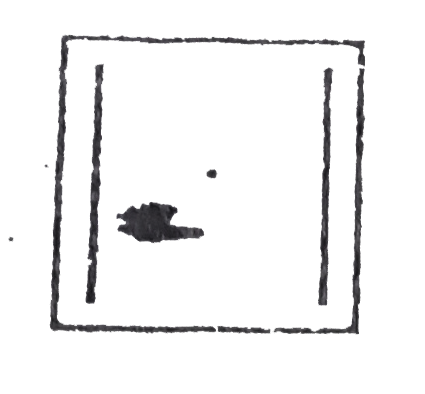
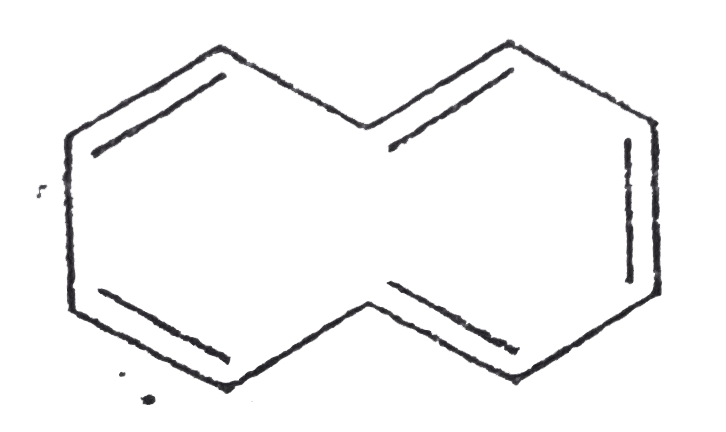
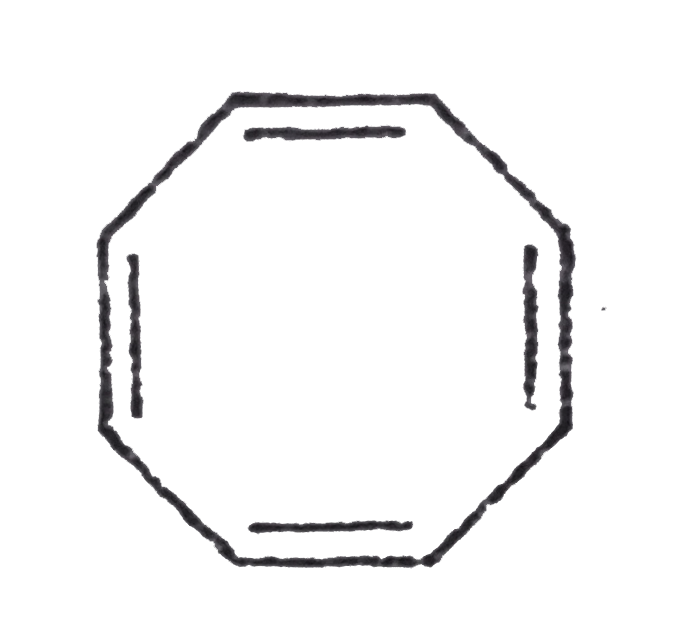
To determine which species have unequal C-C bonds, we need to analyze each of the given options based on their structural characteristics and resonance behavior. Here’s a step-by-step breakdown of the solution: ### Step 1: Understand the Concept of Resonance - Resonance occurs in compounds where there are multiple valid Lewis structures (resonance structures) that contribute to the overall structure. In such cases, the bonds become equivalent due to delocalization of electrons. - If a compound does not exhibit resonance, the C-C bonds may be unequal. ### Step 2: Analyze Each Option 1. **Option 1**: - The structure has 4 pi electrons (cyclic and planar). - It follows the 4n pi electron rule, indicating it is anti-aromatic. - Anti-aromatic compounds do not exhibit resonance. - **Conclusion**: C-C bonds are not equal. (This option is correct.) 2. **Option 2**: - This structure is benzene, which has 6 pi electrons (cyclic, planar, and fully conjugated). - It follows the 4n + 2 pi electron rule (Hückel's rule), making it aromatic. - Aromatic compounds exhibit resonance. - **Conclusion**: C-C bonds are equal. (This option is incorrect.) 3. **Option 3**: - This structure has 10 pi electrons (cyclic but not planar due to steric repulsion). - Although it follows the 4n + 2 pi electron rule, it is non-aromatic because it is not planar. - Non-aromatic compounds do not exhibit resonance. - **Conclusion**: C-C bonds are not equal. (This option is correct.) 4. **Option 4**: - This structure has 8 pi electrons (cyclic and planar). - It follows the 4n pi electron rule, indicating it is anti-aromatic. - Anti-aromatic compounds do not exhibit resonance. - **Conclusion**: C-C bonds are not equal. (This option is correct.) ### Final Answer The species in which all C-C bonds are not equal are **Option 1, Option 3, and Option 4**. ---
Promotional Banner

Topper's Solved these Questions

  • ORGANIC CHEMISTRY: SOME BASIC PRINCIPLE AND TECHNIQUES

    AAKASH INSTITUTE ENGLISH|Exercise TRY YOURSELF|28 Videos
  • ORGANIC CHEMISTRY: SOME BASIC PRINCIPLE AND TECHNIQUES

    AAKASH INSTITUTE ENGLISH|Exercise SECTION-I SUBJECTIVE TYPE QUESTIONS|8 Videos
  • ORGANIC CHEMISTRY : SOME BASIC PRINCIPLES AND TECHNIQUES

    AAKASH INSTITUTE ENGLISH|Exercise Assignment(Section-D)(Assertion - Reason Type Questions)|15 Videos
  • POLYMERS

    AAKASH INSTITUTE ENGLISH|Exercise ASSIGNMENT (SECTION-D)|13 Videos

Similar Questions

Explore conceptually related problems

In which of the following molecule/ion all the bonds are not equal? A XeF_(4) B BF_(4)^(-) C C_(2)H_(4) D SiF_(4)

In which of the following molecules/ions all the bond angles are not equal ?

In which of the following molecule/ion all the bonds are not equal?

In which of the following molecules /ions , are all the bonds not equal ?

A new C-C bond is formed in-

In which of the following molecules all the bonds are not equal:-

In which molecule C-N bond length is maximum ?

The C-C-C bond angle in benzene is
