A
B
C
D
Text Solution
Verified by Experts
The correct Answer is:



Topper's Solved these Questions
MOTION IN A PLANE
AAKASH INSTITUTE ENGLISH|Exercise Assignement section -E (Assertion-Reason)|4 VideosMOTION IN A PLANE
AAKASH INSTITUTE ENGLISH|Exercise Assignement section -F (Matrix-Match)|2 VideosMOTION IN A PLANE
AAKASH INSTITUTE ENGLISH|Exercise Assignement section -C Objective (More than one option is correct)|7 VideosMOCK_TEST_17
AAKASH INSTITUTE ENGLISH|Exercise Example|15 VideosMOTION IN A STRAIGHT LINE
AAKASH INSTITUTE ENGLISH|Exercise ASSIGNMENT (SECTION - D)|15 Videos
Similar Questions
Explore conceptually related problems
AAKASH INSTITUTE ENGLISH-MOTION IN A PLANE-Assignement section -D (Linked Comprehension)
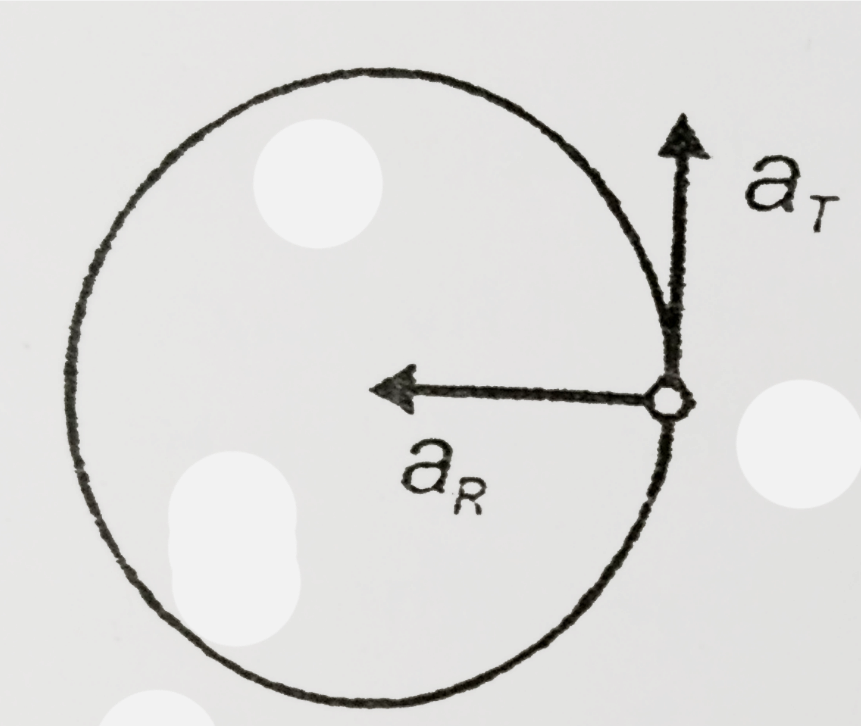
- A particle moves with decreasing speed along the circle of radius R so...
Text Solution
|
- A particle moves with decreasing speed along the circle of radius R so...
Text Solution
|
- A particle moves with decreasing speed along the circle of radius R so...
Text Solution
|
- A particle is projected horizontally with speed u from point A, which ...
Text Solution
|
- A particle is projected horizontally with spee u from point A, which i...
Text Solution
|
- A particle is projected horizontally with speed u from point A, which ...
Text Solution
|
- When a boat travels in a river (strictly in a straight line), it can g...
Text Solution
|
- When a boat travels in a river (strictly in a straight line), it can g...
Text Solution
|
- When a boat travels in a river (strictly in a straight line), it can g...
Text Solution
|
- Raindrops are falling with velocity 10 sqrt2 m/s making and angle 45^(...
Text Solution
|
- Raindrops are falling with velocity 10 sqrt2 m/s making and angle 45^(...
Text Solution
|
- Raindrops are falling with velocity 10 sqrt2 m/s making and angle 45^(...
Text Solution
|