Home
Class 12
PHYSICS
Two ends of a rod of non uniform area of...

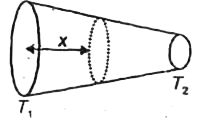
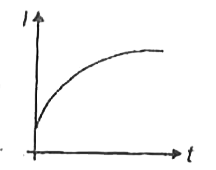
Two ends of a rod of non uniform area of cross section are maintained at temperature `T_(1)`and `T_(2)` `(T_(1)>T_(2))` as shown in the figure
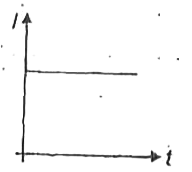
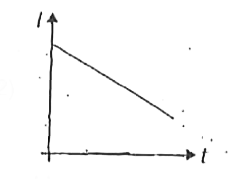
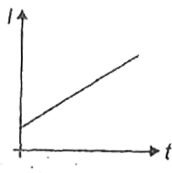
If l is heat current through the cross-section of conductor at distance x from its left face, then the variation of l with x is best represented by

A

B

C

D

Text Solution

Verified by Experts

Promotional Banner

Similar Questions

Explore conceptually related problems

The two ends of a rod of length L and a uniform cross-sectional area A are kept at two temperature T_(1) and T_(2) (T_(1) gt T_(2)) . The rate of heat transfer. (dQ)/(dt) , through the rod in a steady state is given by

If charge through a cross-section of a conductor at timetis q= 2t^(2) +3t+1 . Find the current at t = 2s.

The V - i graph for a conductor at temperature T_(1) and T_(2) are as shown in the figure. ( T_(2) - T_(1)) is proportional to

Two ends of a rod of uniform cross sectional area are kept at temperature 3T_(0) and T_(0) as shown. Thermal conductivity of rod varies as k=alphaT , (where alpha is a constant and T is absolute temperature). In steady state, the temperature of the middle section of the rod is

n electrons flow through a cross section of a conductor in time t. If charge on an electron is e, then write an expression for the current in the conductor.

Two rods A and B are of equal length. Each rod has its ends at temperatures T_1 and T_2 . What is the condition that will ensure equal rate of flow of heat through the rods A and B ?

Three rods of the same length and the same area of the cross-section are joined. The temperature of two ends one T_(1) and T_(2) as shown in the figure. As we move along the rod the variation of temperature are as shown in the following [Rods are insulated from the surrounding except at the faces]

All the rods have same conductance 'K' and same area of cross section ' A' . If ends A and C are maintained at temperature 2T_(0) and T_(0) respectively then which of the following is // are correct?

Charge through a cross-section of a conductor is given by Q = (2t^(2)+5t)C Find the current through the conductor at the instant t = 2s.

Current l versus time t graph through a conductor is shown in the figure. Average current through the conductor in the interval 0 to 15 s is
