A
B
C
D
Text Solution
Verified by Experts
The correct Answer is:



Similar Questions
Explore conceptually related problems
Recommended Questions
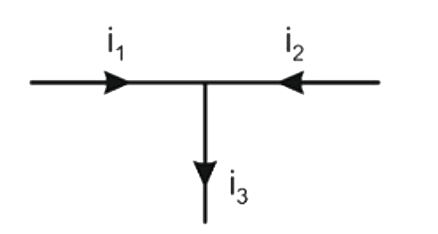
- In the given figure, if i(1)=3 sin omegat and i(2)=4 cos omegat, then ...
Text Solution
|
- I1=int0^(pi/2)(sinx-cosx)/(1+sinxcosx)dx ,I2=int0^(2pi)cos^6xdx ,I3=in...
Text Solution
|
- If I(1)=int(0)^(3 pi)f(cos^(2)x)dx and I(2)=int(0)^( pi)f(cos^(2)x)dx ...
Text Solution
|
- An AC is given by the equation i=i(1)cos omegat+i(2)sin omegat . The r...
Text Solution
|
- Find rms value in the following cases (a) I = 5 +3 sin omegat (b) I = ...
Text Solution
|
- Consider a uniform square plate shown in the figure. I(1), I(2), I(3) ...
Text Solution
|
- Find relation in between current i(1), i(2), i(3), i(4), i(5)" and "i(...
Text Solution
|
- दो प्रत्यावर्ती धाराओं के समीकरण है- i(1) = i(0) sin omegat, i(2) =...
Text Solution
|
- If rArrI(n)= int(a)^(a+pi//2)(cos^(2)nx)/(sinx) dx, "then" I(2)-I(1),I...
Text Solution
|