Home
Class 12
CHEMISTRY
In Dow's process haloarene is converted ...

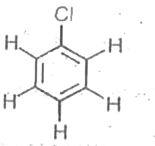
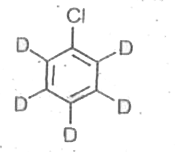
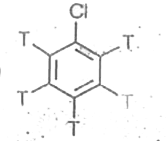
In Dow's process haloarene is converted to phenol with fused NAOH . The most reactive compound is

A

B

C

D

All are equally reactive

Text Solution

AI Generated Solution

The correct Answer is:

To solve the question regarding the most reactive compound in Dow's process where haloarene is converted to phenol using fused NaOH, we can follow these steps: ### Step-by-Step Solution: 1. **Understand Dow's Process**: - Dow's process involves the conversion of haloarenes (aromatic compounds with halogen substituents) to phenols using molten sodium hydroxide (NaOH) at high temperatures (around 370°C). - The reaction mechanism involves the formation of a benzyne intermediate. 2. **Identify the Reaction Mechanism**: - In the presence of NaOH, the hydroxide ion (OH-) abstracts a hydrogen atom from the haloarene, resulting in the formation of a negatively charged intermediate. - The halogen (e.g., Cl) is then eliminated, leading to the formation of the benzyne intermediate, which is highly reactive. 3. **Consider the Types of Bonds**: - The reactivity of haloarenes in this process depends on the strength of the carbon-halogen bond (C-X bond) that needs to break. - The types of bonds that can be present in the haloarene are C-H, C-D (deuterium), and C-T (tritium). 4. **Compare Bond Strengths**: - The bond strengths are as follows: - C-H bond (weakest) - C-D bond (stronger than C-H) - C-T bond (strongest) - Since the C-H bond is the weakest, it will break more easily compared to C-D and C-T bonds. 5. **Determine the Most Reactive Compound**: - The compound with the C-H bond will be the most reactive in the Dow's process because it will cleave faster, leading to the formation of the benzyne intermediate more readily. - Therefore, the haloarene containing the C-H bond will react the quickest and thus be the most reactive. 6. **Conclusion**: - Based on the analysis, the correct answer is the compound that contains the C-H bond, as it will undergo the reaction more rapidly than those containing C-D or C-T bonds. ### Final Answer: The most reactive compound in Dow's process is the one that contains the C-H bond. ---
Promotional Banner

Topper's Solved these Questions

  • ALCOHOLS, PHENOLS AND ETHERS

    AAKASH INSTITUTE ENGLISH|Exercise Assignment Section - C (Previous Years questions)|25 Videos
  • ALCOHOLS, PHENOLS AND ETHERS

    AAKASH INSTITUTE ENGLISH|Exercise Assignment Section - C (Questions asked Prior to medical Ent. Exams. 2005)|13 Videos
  • ALCOHOLS, PHENOLS AND ETHERS

    AAKASH INSTITUTE ENGLISH|Exercise Assignment Section - A (Objective type questions)|45 Videos
  • ALCOHOLS, PHENOLS AND ETHERS

    AAKASH INSTITUTE ENGLISH|Exercise Try Yourself|5 Videos

Similar Questions

Explore conceptually related problems

Process in which light energy is converted into chemical energy (organic compounds) is called

Choose the most reactive among the following compound :

Sodium metal can be extracted by either Castner's Process or Down's process Castner's process. Electrolyte to fused NaOH Cathode and anode are made up of a steel rod and Ni cylinder respectively the reaction takes place as follows : At cathode Na^(+)+e^(-)toNa At anode OH^(-)to(1)/(2)H_(2)O+(1)/(4)O_(2)uarr+e^(-) Down's process : Electrolyte to fused NaCl and CaCl_(2) Cathode and anode are ring shaped iron metal and graphite respectively. The reaction takes place as follows : Na^(+)+e^(-)toNa Cl^(-)to(1)/(2)Cl_(2)uarr+e^(-) CaCl_(2) is used along with NaCl due to

The compound that is most reactive with alcoholic KOH is

The process by which a polar covalent compound is converted into ions in aqueous solution

A Colorless solid A liberates a brown gas B on acidification, a colorless alkaline gas (C) on treatment with NaOH and a colorless non-reactive gas D on heating. If heating of the solid is continued, it completely disappears. The compound A is

A compound has molecular formula C_(6)H_(12)O . It does not reduce Tollens or Fehling's reagent, but gives a crystalline derivative with 2,4-dinitro-phenyl hydrazine. With alkali and I_(2) , it gives yellow solid with a medicinal odour. Clemmensen reduction converts it to 2-methylpentane. The structure formula of the compound is most likely to be:

Which of the following is most reactive towards aqueous NaOH?

Which of the following process is used based on the ability of metal being converted into volatile compound ?
