Home
Class 12
CHEMISTRY
In Bredig's arc method an electric arc i...

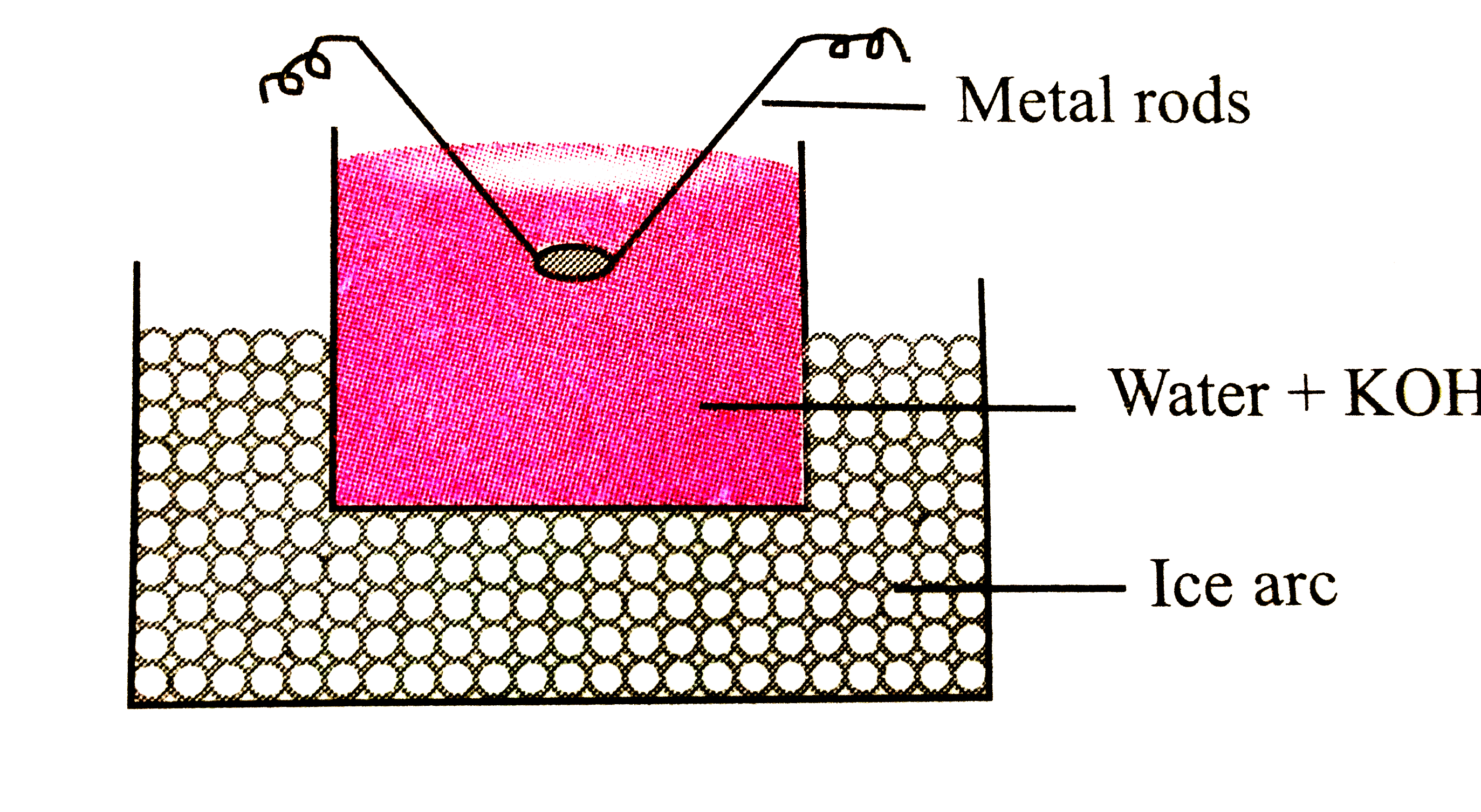
In Bredig's arc method an electric arc is struck between the metal electrodes under the surface of water containing some stabilizing agent . The process involves

A

Only dispersion of metal

B

Only condensation of metal

C

Dispersion as well as condensation

D

Neither dispersion nor condensation

Text Solution

Verified by Experts

The correct Answer is:

C
Promotional Banner

Topper's Solved these Questions

  • MOCK TEST 2

    AAKASH INSTITUTE ENGLISH|Exercise EXAMPLE|30 Videos
  • MOCK TEST 22

    AAKASH INSTITUTE ENGLISH|Exercise Example|21 Videos

Similar Questions

Explore conceptually related problems

Bredigs arc method involves :

The noble gases have closed-shell electronic configuration and are monoatomic gases under normal conditions. The low boiling points of the lighter noble gases are due to weak dispersion forces between the atoms and the absence of other Interatomic Interactions. The direct reaction of xenon with fluorine leads to a series of compounds with oxidation numbers +2,+4 and +6. XeF_4 reacts violently with water to give XeO_3 The compound of xenon exhibit rich stereochemistry and their geometries can be deduced considering the total number of electron pairs in the valence shell. Argon is used In arc welding because of its:

The existence of negatively charged particle in an atom was shown by J.J. Thomson as a result of the studies of the passage of electricity through gases at extremely low pressure known as discharge tube experiments. When a high voltage of the order of 10,000 volts or more was impressed across the electrodes, some sort of invisible rays moved from the negative electrode to the positive electrode these rays are called as cathode rays. Cathode rays travel in straight path in absence of electrical and magnetic field . Cathode rays consist of material part and charged particles? Cathode rays produce X-rays and light is emitted when they strike on ZnS screen. Cathode rays penetrate through thin sheets of aluminium and other metals . They affect the photogenic plate and passes heating effect when they strike on metal foil. The raito of charge to mass i.e charge/mass is same for all the cathode rays irrespective of the gas used in the tube. The existence of positively charged particle in an atom was shown be E. Goldstein. He repeated the same discharge tube experiments by using a perforated cathode. It was observed that when a high potential difference was applied between the electrodes, not only cathode rays were produced but also a new type of rays were produced simultaneoulsy from anode moving towards cathode and passes through the holes or canal of the cathode. These termed as canal rays or anode rays. These rays travel in straight lines and consists of positively charged particles. These rays have kinetic energy and produces heating effect also. The e/m ratio of these rays is smaller than that of electrons. Unlike cathode rays, their e/m value is dependent upon the nature of the gas taken in the tube. These rays produced flashes of light on ZnS screen and can pass throughs thin metal foils. They can produce physical and chemical changes and are capable to produce ionisation in gases. Which is not true with respect to cathode rays?

The existence of negatively charged particle in an atom was shown by J.J. Thomson as a result of the studies of the passage of electricity through gases at extremely low pressure known as discharge tube experiments. When a high voltage of the order of 10,000 volts or more was impressed across the electrodes, some sort of invisible rays moved from the negative electrode to the positive electrode these rays are called as cathode rays. Cathode rays travel in straight path in absence of electrical and magnetic field . Cathode rays consist of material part and charged particles? Cathode rays produce X-rays and light is emitted when they strike on ZnS screen. Cathode rays penetrate through thin sheets of aluminium and other metals . They affect the photogenic plate and passes heating effect when they strike on metal foil. The raito of charge to mass i.e charge/mass is same for all the cathode rays irrespective of the gas used in the tube. The existence of positively charged particle in an atom was shown be E. Goldstein. He repeated the same discharge tube experiments by using a perforated cathode. It was observed that when a high potential difference was applied between the electrodes, not only cathode rays were produced but also a new type of rays were produced simultaneoulsy from anode moving towards cathode and passes through the holes or canal of the cathode. These termed as canal rays or anode rays. These rays travel in straight lines and consists of positively charged particles. These rays have kinetic energy and produces heating effect also. The e/m ratio of these rays is smaller than that of electrons. Unlike cathode rays, their e/m value is dependent upon the nature of the gas taken in the tube. These rays produced flashes of light on ZnS screen and can pass throughs thin metal foils. They can produce physical and chemical changes and are capable to produce ionisation in gases. For cathode rays the value of e/m:

The existence of negatively charged particle in an atom was shown by J.J. Thomson as a result of the studies of the passage of electricity through gases at extremely low pressure known as discharge tube experiments. When a high voltage of the order of 10,000 volts or more was impressed across the electrodes, some sort of invisible rays moved from the negative electrode to the positive electrode these rays are called as cathode rays. Cathode rays travel in straight path in absence of electrical and magnetic field . Cathode rays consist of material part and charged particles? Cathode rays produce X-rays and light is emitted when they strike on ZnS screen. Cathode rays penetrate through thin sheets of aluminium and other metals . They affect the photogenic plate and passes heating effect when they strike on metal foil. The raito of charge to mass i.e charge/mass is same for all the cathode rays irrespective of the gas used in the tube. The existence of positively charged particle in an atom was shown be E. Goldstein. He repeated the same discharge tube experiments by using a perforated cathode. It was observed that when a high potential difference was applied between the electrodes, not only cathode rays were produced but also a new type of rays were produced simultaneoulsy from anode moving towards cathode and passes through the holes or canal of the cathode. These termed as canal rays or anode rays. These rays travel in straight lines and consists of positively charged particles. These rays have kinetic energy and produces heating effect also. The e/m ratio of these rays is smaller than that of electrons. Unlike cathode rays, their e/m value is dependent upon the nature of the gas taken in the tube. These rays produced flashes of light on ZnS screen and can pass throughs thin metal foils. They can produce physical and chemical changes and are capable to produce ionisation in gases. Select the incorrect statement.

The noble gases have closed-shell electronic cordigaration and are monatomic gases under normal condition .The low bolling points of the ligher noble gases aree due to the weak dispersion points of the ligher noble gases an due to the weak dispersion forces between the atoms and the alsence of other interalumic interactions. The direct reaction of xenon with flarine loads to a series of compounds with water oxidation number +2, - 4 and +6, XeF_(4) reactsviolenatly with water to give XeO_(2) .The compound of deduced axbibt nci strouchemistry and their goometries can be deduced considering the total number of electron puirs in the valence shell. Argon is used in arc welding because of its

Name the process associated with the following (a) Dry ice is kept at room temperature and at one atmospheric pressure. (b) A drop of ink placed on the surface of water contained in a glass spreads throughout the water. (c) A potassium permanganate crystal is in a beaker and water is poured into the beaker with stirring. (d) An acetone bottle is left open and the bottle becomes empty. (e) Milk is churned to separate cream from it. (f) Settling of sand when a mixture of sand and water is left undisturbed for some time. (g) Fine beam of light entering through a small hole in a dark room. Illuminates the particles in its paths.

The potential associated. with each electrode is known as electrode potential. If the concentration of each species taking part in the electrode reaction is unity (if any gås appears in the electrode reaction, it is confined to 1 atmospheric pressure) and further the reaction is carried out at 298 K, then the potential of each electrode is said to be the standard electrode potential. By convention, the standard electrode potential of hydrogen electrode is 0:0 volt. The electrode potential value for each electrode process is a measure, of relative tendency of the active species in the process to remain in the oxidized / reduced form. A negative E^@ means that the redox couple is a stronger reducing agent than the H^(+)//H_2 couple. A positive E mears that the redox couple is a weaker reducing agent than. the H^(+)//H couple. The metal with greater positive value of standard reduction potentlal forms the oxide of greater thermal stability: Which of the following metals will not displace hydrogen from water?

The potential associated. with each electrode is known as electrode potential. If the concentration of each species taking part in the electrode reaction is unity (if any gås appears in the electrode reaction, it is confined to 1 atmospheric pressure) and further the reaction is carried out at 298 K, then the potential of each electrode is said to be the standard electrode potential. By convention, the standard electrode potential of hydrogen electrode is 0:0 volt. The electrode potential value for each electrode process is a measure, of relative tendency of the active species in the process to remain in the oxidized / reduced form. A negative E^@ means that the redox couple is a stronger reducing agent than the H^(+)//H_2 couple. A positive E mears that the redox couple is a weaker reducing agent than. the H^(+)//H couple. The metal with greater positive value of standard reduction potentlal forms the oxide of greater thermal stability: Which of the following oxides will be themally most stable?

The potential associated with each electrode is known as electrode potential. If the concentration of each species taking part in the electrode reaction is unity (if any appears in the electrode reaction, it is confined to 1 atmospheric pressure) and further the reaction is carried out at 298 K, then the potential of each electrode is said to the standard electrode potential. By convention, the standard electrode potential of hydrogen electrode is 0.0 volt. The electrode potential value for each electrode process is a measure of relative tendency of the active species in the process to remain in the oxidised/reduced form. A negative E^(@) means that the redox couple is a stronger reducing agent than the H^(+)//H_(2) couple. A positive E^(@) means that the redox couple is a weaker reducing agent than the H^(+)//H_(2) couple. The metal with greater positive value of standard reduction potential forms the oxide of greater thermal stability. Which of the following reactions is not correct ?

AAKASH INSTITUTE ENGLISH-MOCK TEST 21-Example
  1. Which of the following methods could be employed for the preparation ...

    Text Solution

    |

  2. Surface tension of lyophobic sols is usually

    Text Solution

    |

  3. Which of the following is true with respect to chemical adsorption (ch...

    Text Solution

    |

  4. 10 % sites of catalyst bed have adsorbed by H(2) on Heating H(2) gas i...

    Text Solution

    |

  5. In Bredig's arc method an electric arc is struck between the metal ele...

    Text Solution

    |

  6. The electrical charge on the the colloidal particles is indicated by

    Text Solution

    |

  7. The gold number of protective colloids A,B,C and D are 0.02, 0.002, 10...

    Text Solution

    |

  8. For the coagulation of 40ml of ferric hydroxide sol, 10ml of 0.4 M KCI...

    Text Solution

    |

  9. Which of the following given statements is/are correct? (a) cold crea...

    Text Solution

    |

  10. Range the following electrolytes in the increasing order of coagulatin...

    Text Solution

    |

  11. The factors responsible for the stability of lyophilic sols are

    Text Solution

    |

  12. To stop bleeding from an injury ferric chloride can be applied. Which ...

    Text Solution

    |

  13. Match the items given in column-I with that in column-II column-I (I) ...

    Text Solution

    |

  14. A certain metal M ocas in four compounds namely A,B,C and D. A has 20%...

    Text Solution

    |

  15. The incorrect statement regarding forth floatation process is

    Text Solution

    |

  16. Which of the following given properties of colloidal particles is its ...

    Text Solution

    |

  17. Match the methods of concentration of ore given in column-I with the d...

    Text Solution

    |

  18. Oxidation states of the metal in the minerals haematite and magnetite,...

    Text Solution

    |

  19. Which of the following statements is/are incorrect? (a) Cassiterite is...

    Text Solution

    |

  20. On addition of 1 ml of solution of 10% NaCl to 100ml corporate gold so...

    Text Solution

    |
