Home
Class 12
PHYSICS
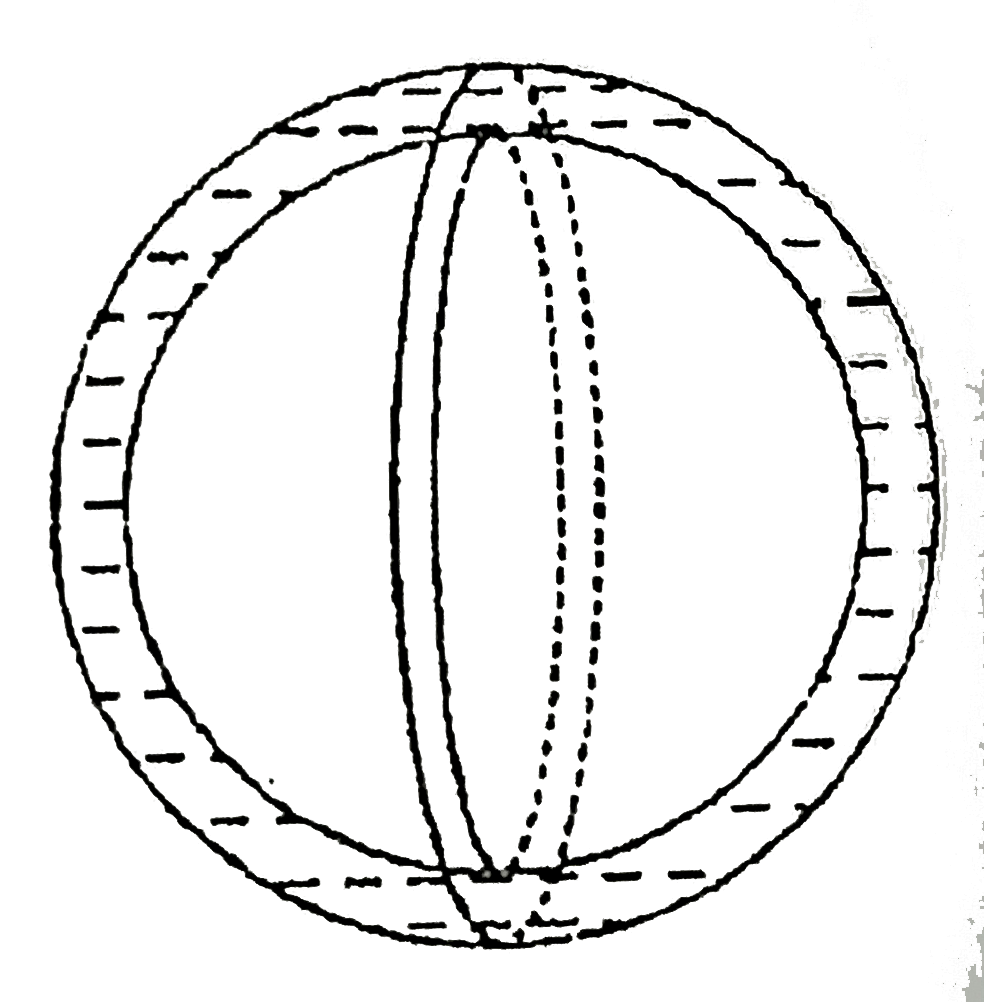
Consider a bubble of soap solution. Find...


Consider a bubble of soap solution. Find the surface tension force between the left half surface and right half surface

A

`2TpiR`

B

TR

C

`TpiR`

D

`TR/2`

Text Solution

Verified by Experts

The correct Answer is:

A
Promotional Banner

Topper's Solved these Questions

  • MOCK TEST 14

    AAKASH INSTITUTE ENGLISH|Exercise Example|20 Videos
  • MOCK TEST 16

    AAKASH INSTITUTE ENGLISH|Exercise Example|18 Videos

Similar Questions

Explore conceptually related problems

Consider the water drop of radius R . Find surface tension force between the left half surface and right half surface ?

Figure shows the container of radius R filled with water. Consider an imaginary diametric line drividing the surface in two parts: Left half and right half. Find surface tansion force between the left half surface and the right half surface.

Statement-1: It is better to wash the clothes in cold soap solution. Statement-2: The surface tension of cold solution is more than the surface tension of hot solution:

If R is the radius of a soap bubble and S its surface tension, then the excess pressure inside is

A uniform vertical tube of circular cross section contains a liquid. The contact angle is 90^@ . Consider a diameter of the tube lying in the surface of the liquid. The surface of the right of this diameter pulls the surface on the left of it. What keeps the surface on the left in equilibrium?

A soap bubble of raidus R is surrounded by another soap bubble of radius 2R , as shown. Take surface tension =S . Then the pressure inside the smaller soap bubble, in excess of the atmosphere presure will be

Surface tension of a liquid is a molecular phenomenon of liquids involving the force of cohesion along the liquid molecules. It is scalar quantity and is numberically equal to the surface energy. Numerically, it is proved that the potential soluble salts and surface active substance. Sparingly soluble salts and surface active substances decrease the surface tension of the liquid. However, the fairly soluble solutes increase the surface tension of the liquid. Surface tension of a liquid is independent of surface area but it depends on the intermolecular forces and the temperature. Which among the following is not the unit of surface tension ?

Surface tension of a liquid is a molecular phenomenon of liquids involving the force of cohesion along the liquid molecules. It is scalar quantity and is numerically equal to the surface energy. Numerically, it is proved that the potential soluble salts and surface active substance. Sparingly soluble salts and surface active substances decrease the surface tension of the liquid. However, the fairly soluble solutes increase the surface tension of the liquid. Surface tension of a liquid is independent of surface area but it depends on the intermolecular forces and the temperature. Surface tension of a liquid does not depend on :

Surface tension of a liquid is a molecular phenomenon of liquids involving the force of cohesion along the liquid molecules. It is scalar quantity and is numerically equal to the surface energy. Numerically, it is proved that the potential soluble salts and surface active substance. Sparingly soluble salts and surface active substances decrease the surface tension of the liquid. However, the fairly soluble solutes increase the surface tension of the liquid. Surface tension of a liquid is independent of surface area but it depends on the intermolecular forces and the temperature. Which of the following has the highest surface tension ?

Consider a small water drop in air . If T is the surface tension , then what is the force due to surface tension acting on the smaller section ABC ?
