

Home
Class 11
MATHS
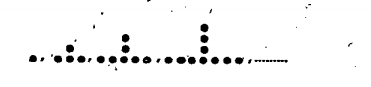
Observe the following pattern of dots ...

Observe the following pattern of dots

i) Find the number of dots in the `n^(th)` pattern.
ii) Find the sum of number of dots upto `n^(th)` pattern and the mathematical statement using these facts.
iii)Prove the statement obtained in question (ii) using principle of mathematical induction.

Promotional Banner

Topper's Solved these Questions

  • PERMUTATIONS AND COMBINATIONS

    V PUBLICATION|Exercise QUESTIONBANK|79 Videos
  • PROBABILITY

    V PUBLICATION|Exercise QUESTION BANK|89 Videos

Similar Questions

Explore conceptually related problems

(a)Prove the following by using the principle of mathematical induction for all n in N:2^n<3^n .

Consider the statement P(n)=3^(2n+2)-8n-9 is divisible by 8 Prove the statement using the principle of mathematical induction for all natural numbers.

(b)Prove the following by using the principle of mathematical induction for all n in N:n^2+n is even.

Consider the statement '' 7^n-3^n is divisible by 4'' Prove the statement using mathematical induction.

Prove the following by using the principle of mathematical induction, n(n+1)(n+5) is a multiple of 3.

Prove that the rule of exponents (a b)^n=a^n b^n by using principle of mathematical induction for every natural number.

Consider the statement '' 10^(2n-1)+1 is divisible by 11''. Verify that P(1) is true and prove the statement by using mathematical induction.

Consider the statement P(n):1/1.2+1/2.3+1/3.4+.....+1/{n(n+1)}=n/(n+1) .Prove that P(n) is true for all n in N using the principle of mathematical induction.

Consider the statement p(n):1^3+2^3+3^3+………..+n^3=[(n(n+1))/2]^-2 Prove the statement using mathematical induction.

Observe the number pattern made using terms of an arithmetic sequence 2, 6,10, ... . Find the first and the last numbers in the 20th line.

V PUBLICATION-PRINCIPLE OF MATHEMATICAL INDUCTION-QUESTION BANK
  1. Using mathematical induction prove that 1/(1.4)+1/(4.7)+1/(7.10)+......

    Text Solution

    |

  2. Using mathematical induction prove that 1/(3.5)+1/(5.7)+1/(7.9)+.......

    Text Solution

    |

  3. For all nge1,prove that 1+2+3+……+nlt1/8(2n+1)^2

    Text Solution

    |

  4. Using principle of mathematical induction prove that n(n+1)(n+5) is a ...

    Text Solution

    |

  5. Using mathematical induction prove that 10^(2n-1)+1 is divisible by 1...

    Text Solution

    |

  6. Using mathematical induction prove that x^(2n)-y^(2n) is divisible by ...

    Text Solution

    |

  7. Consider the statement P(n)=3^(2n+2)-8n-9 is divisible by 8 Verify...

    Text Solution

    |

  8. Using mathematical induction prove that 41^n-14^n is a multiple of 2...

    Text Solution

    |

  9. Using mathematical induction prove that (2n+7) lt (n+3)^2 for all n in...

    Text Solution

    |

  10. Using mathematical induction prove that P(n) = 1+3+5+........... +2n-1...

    Text Solution

    |

  11. Observe the following pattern of dots i) Find the number of dots i...

    Text Solution

    |

  12. If P(n) is the statement n(n+1) is even then what about P(6)?

    Text Solution

    |

  13. If P(n) is the statement n(n+1)(n+2) is divisiblé by 12, prove that P...

    Text Solution

    |

  14. Consider the statement P(n):n(n+1)(2n+1) is divisible by 6. By assum...

    Text Solution

    |

  15. Prove 'that 10^n+3 xx 4^(n+2)+5 is divisible by 9 .

    Text Solution

    |

  16. Prove by mathematical induction. (costheta +i sintheta)^n=(cosntheta...

    Text Solution

    |

  17. Prove that 1(1) !+2(2) !+3(3) !+............ .+n(n) ! = (n+1) !-1

    Text Solution

    |

  18. Prove that 1+(1)/(4)+(1)/(9)+...........+(1)/(n^(2))lt2-(1)/n,(ngt1)

    Text Solution

    |

  19. Using principle of mathematical induction, prove that the product of t...

    Text Solution

    |

  20. Using mathematical induction prove that 1cdot3+3cdot5+5cdot7+.....+(...

    Text Solution

    |