Home
Class 12
PHYSICS
Why does -NH2 group directs the incomin...

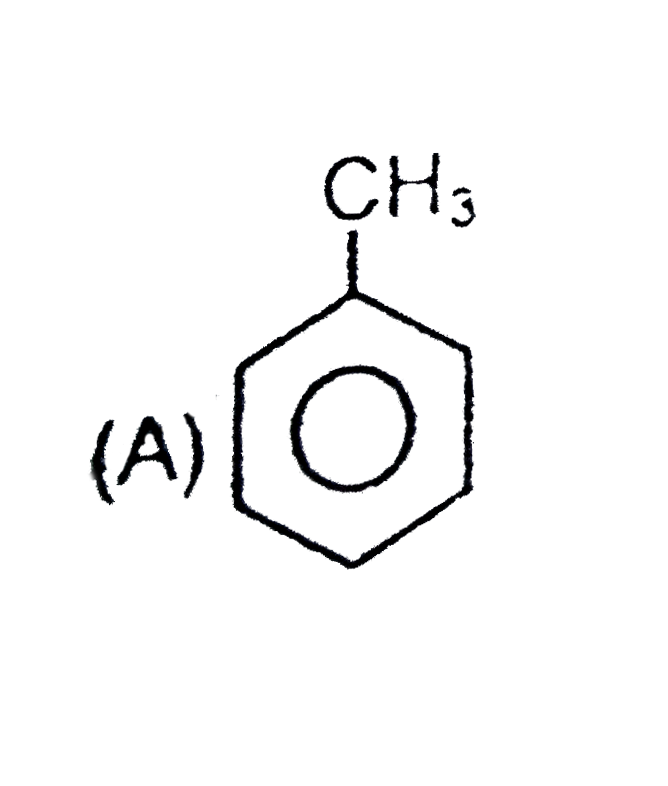
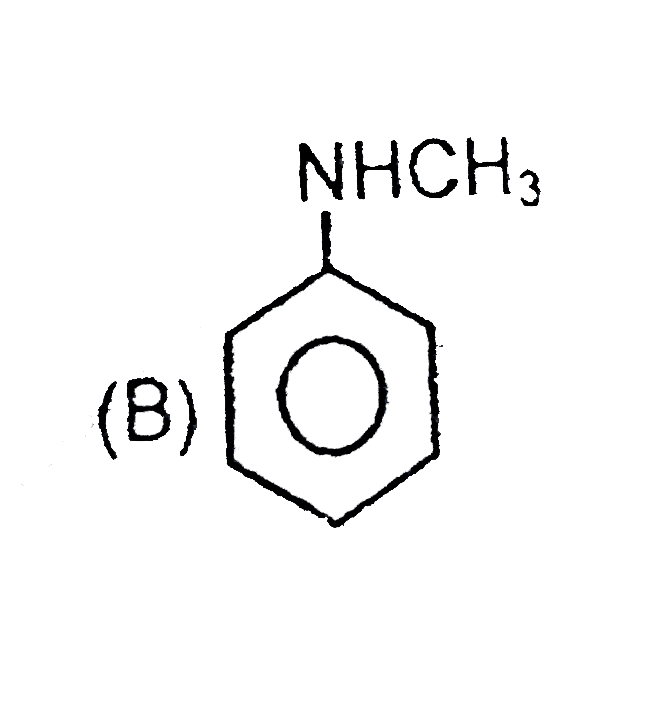
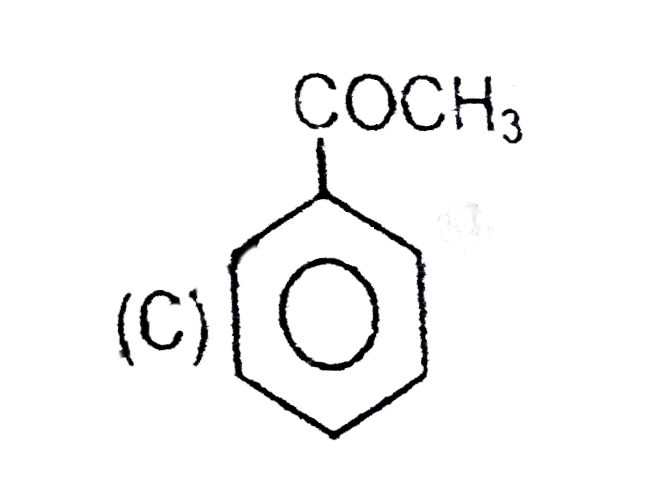
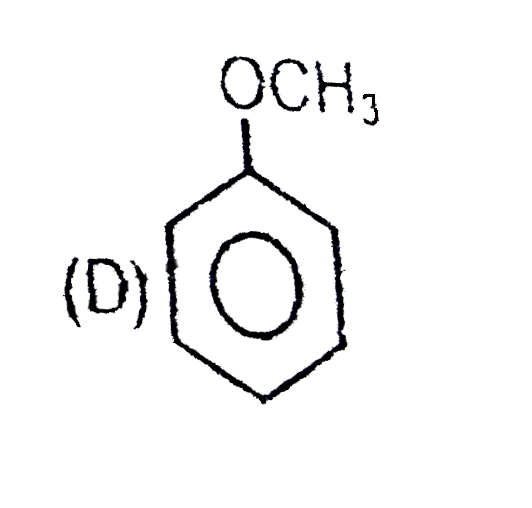
Why does `-NH_2` group directs the incoming group at the ortho and para positions of the ring?

A

B

C

D

Text Solution

Verified by Experts

The correct Answer is:
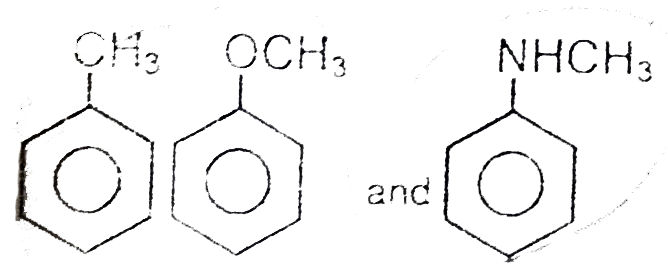
A, B, D

have more `+m` effect
than
Promotional Banner

Topper's Solved these Questions

  • TEST PAPERS

    RESONANCE ENGLISH|Exercise PHYSICS|784 Videos
  • TEST PAPERS

    RESONANCE ENGLISH|Exercise PART - II PHYSICS SEC - 2|20 Videos
  • SIMPLE HARMONIC MOTION

    RESONANCE ENGLISH|Exercise Advanced Level Problems|13 Videos
  • TEST SERIES

    RESONANCE ENGLISH|Exercise PHYSICS|130 Videos

Similar Questions

Explore conceptually related problems

Why does a m-directing group direct the incoming group towards the m-position ?

Explain the fact that in aryl ethers, (i) the alkoxy group activates the benzene ring towards electrophilic substitution and (ii) it directs the incoming substituents to ortho and para positions in benzene ring.

The -NO_(2) group in an aromatic ring deactivates the ortho and para positions for an electrophilic attack. When -NO_(2) group is present at ortho or para positions of a leaving group (Nucleofuge) it activates the ring for nucleophilic attack. The reduction of -NO_(2) group by metal in acid causes its reduction to -NH_(2) group and then the ring becomes strongly activated for a electrophilic attack. The strong activation of -NH_(2) group is moderated by its acylation with CH_(3)COCl to -NHAc group. Deacylation is carried out by hydrolysis with H_(3)O^(+) or OH^(-) . The ring alkylation by using RX//AlX_(3) is not possible in presence of -NO_(2) or -NH_(2) group but is possible in presence of -NHAc group. The product (I) is :

The -NO_(2) group in an aromatic ring deactivates the ortho and para positions for an electrophilic attack. When -NO_(2) group is present at ortho or para positions of a leaving group (Nucleofuge) it activates the ring for nucleophilic attack. The reduction of -NO_(2) group by metal in acid causes its reduction to -NH_(2) group and then the ring becomes strongly activated for a electrophilic attack. The strong activation of -NH_(2) group is moderated by its acylation with CH_(3)COCl to -NHAc group. Deacylation is carried out by hydrolysis with H_(3)O^(+) or OH^(-) . The ring alkylation by using RX//AlX_(3) is not possible in presence of -NO_(2) or -NH_(2) group but is possible in presence of -NHAc group. The product (G) is :

The -NO_(2) group in an aromatic ring deactivates the ortho and para positions for an electrophilic attack. When -NO_(2) group is present at ortho or para positions of a leaving group (Nucleofuge) it activates the ring for nucleophilic attack. The reduction of -NO_(2) group by metal in acid causes its reduction to -NH_(2) group and then the ring becomes strongly activated for a electrophilic attack. The strong activation of -NH_(2) group is moderated by its acylation with CH_(3)COCl to -NHAc group. Deacylation is carried out by hydrolysis with H_(3)O^(+) or OH^(-) . The ring alkylation by using RX//AlX_(3) is not possible in presence of -NO_(2) or -NH_(2) group but is possible in presence of -NHAc group. The product (H) is :

Among the following groups, which one is ortho and para directing?

o,p-directing group are mostly :

A third group is least likely to enter between two groups in the meta relationship. This is the result of steric hindrance and increases in importance with the size of the groups on the ring and with the size of the attacking species. When a Meat-directing group is meta to an ortho-para directing group, the incoming group primarily goes ortho th the meta directing group rather than para. Chlorination of m- chloro nitro benzene gives :

It is not always easy to predict the position of attack on multiply substituted benzene. If the benzene ring bears different ortho//para directing group at the 1 and 4 positions, the position of further substitution is not immediately clear. Sometimes steric effects determine the outcome. In other cases, electronic factors determine the outcome, and further reaction will be at the position activated by the more strongly activating group. Some substituens are so strongly activating that no catalyst is needed, and it is often diffcult to stop substitution after mono substituion. Mild condition are needed to restrict the reaction to mono-substitution. It is possible to reduce the activity such groups by side chain reaction so that the reaction can be stopped use can sometimes be made of removable blocking groups on the ring. Which of the following synthesis could be done in the ring step ?

It is not always easy to predict the position of attack on multiply substituted benzene. If the benzene ring bears different ortho//para directing group at the 1 and 4 positions, the position of further substitution is not immediately clear. Sometimes steric effects determine the outcome. In other cases, electronic factors determine the outcome, and further reaction will be at the position activated by the more strongly activating group. Some substituens are so strongly activating that no catalyst is needed, and it is often diffcult to stop substitution after mono substituion. Mild condition are needed to restrict the reaction to mono-substitution. It is possible to reduce the activity such groups by side chain reaction so that the reaction can be stopped use can sometimes be made of removable blocking groups on the ring. Which of the following side reaction//s can be used to reduce the activity of strongly activating groups like -OH ?

RESONANCE ENGLISH-TEST PAPERS-PART - II PHYSICS
  1. A particle is moving on a circular path of radius R with constant spee...

    Text Solution

    |

  2. A particle is moving on a circular path of radius R with constant spee...

    Text Solution

    |

  3. Why does -NH2 group directs the incoming group at the ortho and para ...

    Text Solution

    |

  4. 1 mol of a real gas obeys P(V(m) - b) = RT , where 'b' and 'R' are con...

    Text Solution

    |

  5. One gram of a metallic chloride was found to contain 0.835 g of chlori...

    Text Solution

    |

  6. The graph of compressibility factor (Z) vs. P for one mole of a real g...

    Text Solution

    |

  7. N(2) undergoes photochemical dissociation into one normal N-atom and o...

    Text Solution

    |

  8. One mole of an ideal gas (C(v,m)=(5)/(2)R) at 300 K and 5 atm is expan...

    Text Solution

    |

  9. The vapour density of the mixture at equilibrium is 38.3 at 33^(@)C ...

    Text Solution

    |

  10. N(2)O(3) dissociates into NO and NO(2). At equilibrium pressure of 3 a...

    Text Solution

    |

  11. The total number of contriburing structures showing hurperconjugation ...

    Text Solution

    |

  12. A particle is moving on a circular path of radius R with constant spee...

    Text Solution

    |

  13. Travelling wave travels in medium '1' and enters into another medium '...

    Text Solution

    |

  14. Name the functional groups present in the following compounds. (a) ...

    Text Solution

    |

  15. Name the functional groups present in the following compounds. (a) ...

    Text Solution

    |

  16. Text Solution

    |

  17. How many alkene/s from following are more stable than

    Text Solution

    |

  18. The system is released from rest with both the springs in unstretched ...

    Text Solution

    |

  19. On a disc of radius R a concentric circle of radius R//2 is drawn. The...

    Text Solution

    |

  20. A ball of mass 1 kg is thrown up with an initial speed of 4 m//s. A se...

    Text Solution

    |

