Home
Class 11
PHYSICS
A particle moves along x- axis. It's vel...

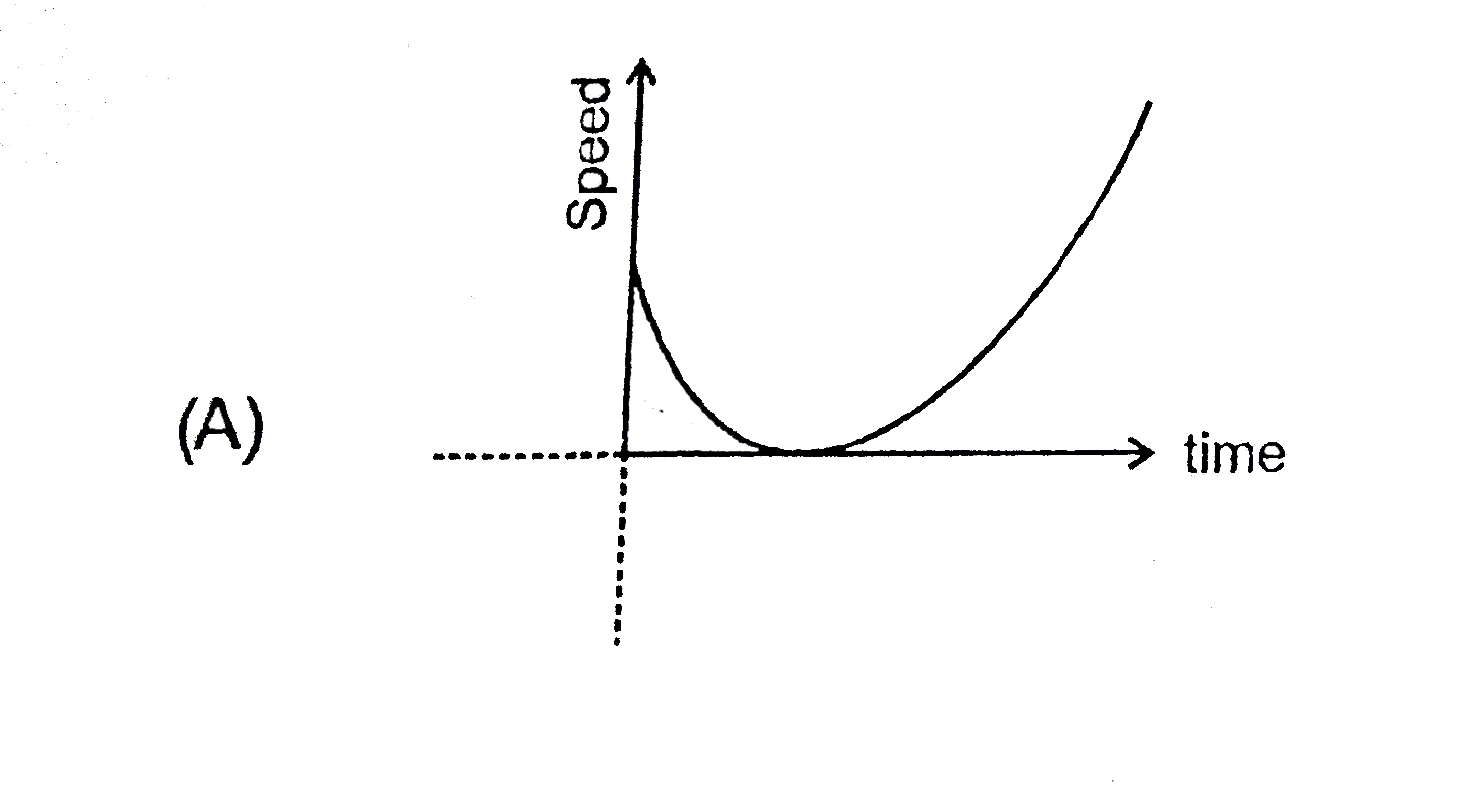
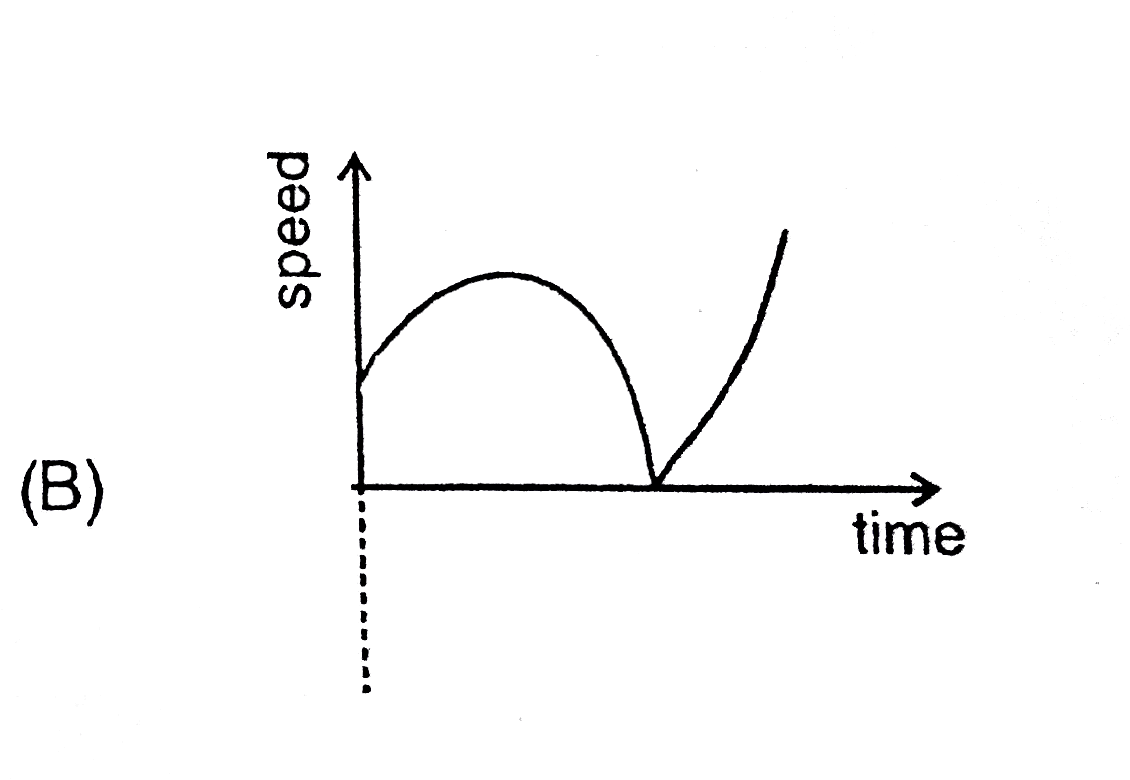
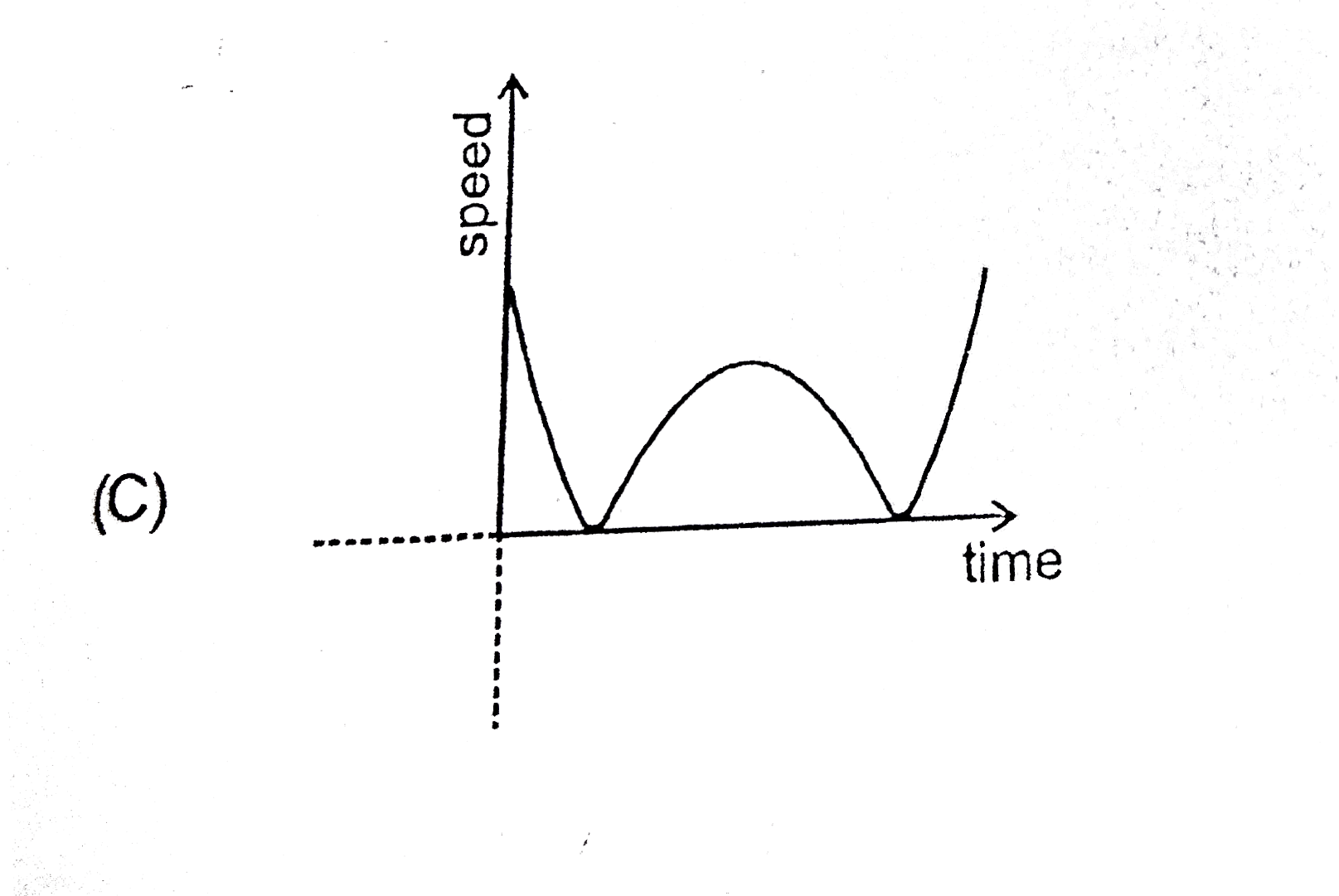
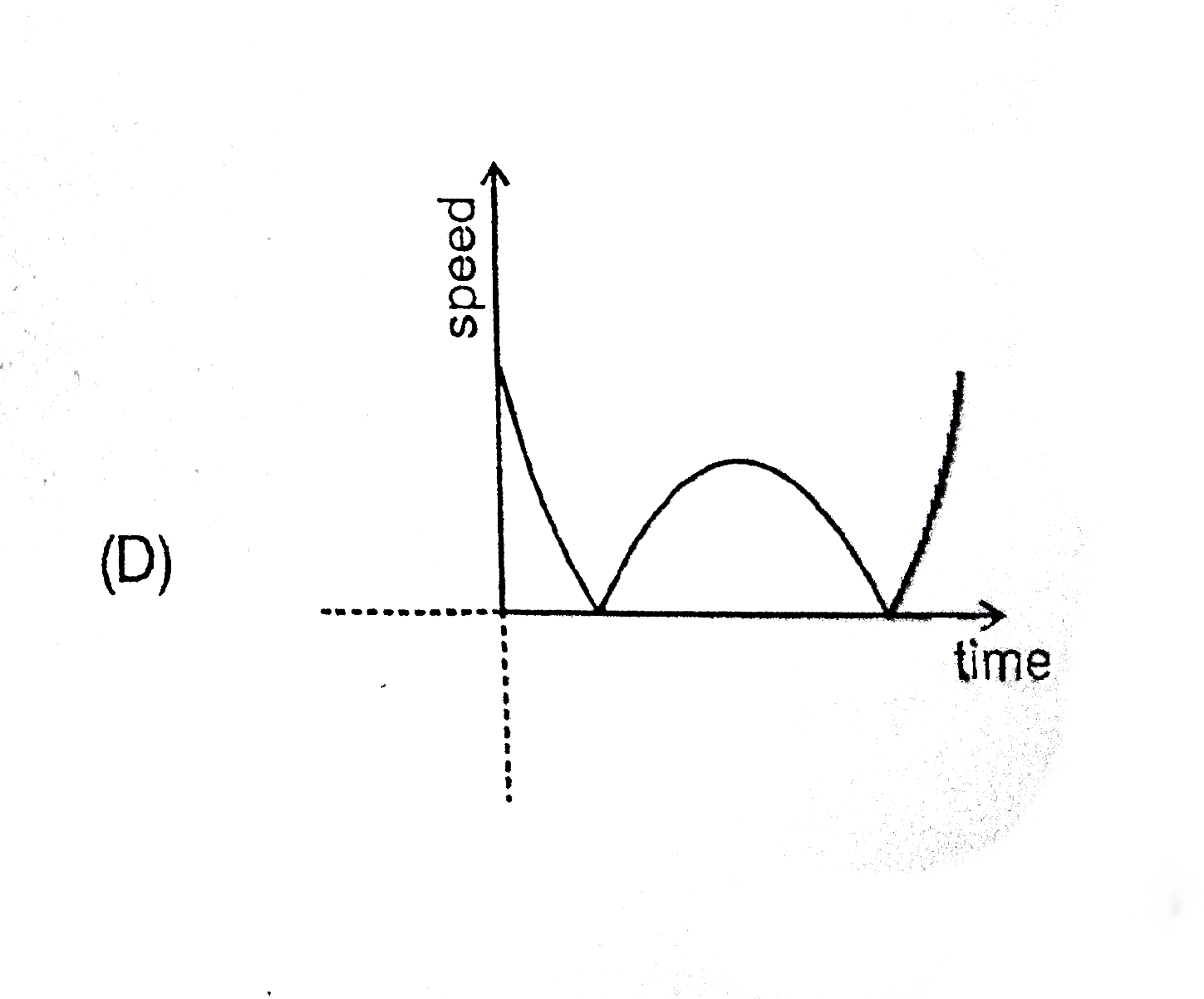
A particle moves along `x-` axis. It's velocity is a function of time according to relation `V=(3t^(2)-18t+24)m//s` assume at `t=0` particle is at origin.
Which of the following graph may be correct for the motion of particle

A

B

C

D

Text Solution

Verified by Experts

The correct Answer is:
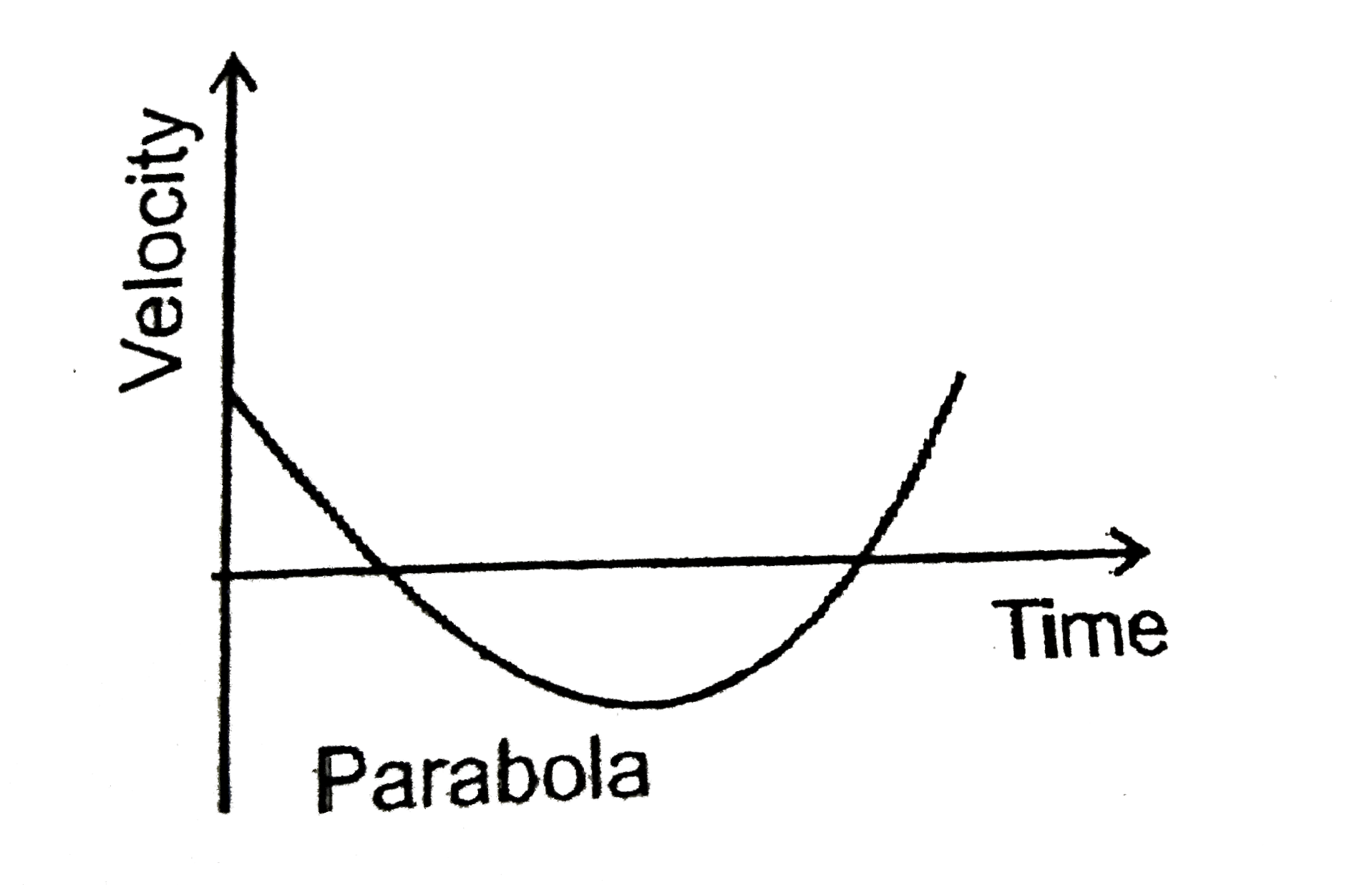
D

Velocity time graph will be

Speed time graph `=|` Velocity time graph `|`
Promotional Banner

Topper's Solved these Questions

  • DAILY PRACTICE PROBLEMS

    RESONANCE ENGLISH|Exercise Dpp no 12 Physics|8 Videos
  • DAILY PRACTICE PROBLEMS

    RESONANCE ENGLISH|Exercise Dpp no. 13 physics|5 Videos
  • DAILY PRACTICE PROBLEMS

    RESONANCE ENGLISH|Exercise Dpp no 11 physics|6 Videos
  • CURRENT ELECTRICITY

    RESONANCE ENGLISH|Exercise Exercise|53 Videos
  • ELASTICITY AND VISCOCITY

    RESONANCE ENGLISH|Exercise Advanced Level Problems|9 Videos

Similar Questions

Explore conceptually related problems

A particle moves along x- axis. It's velocity is a function of time according to relation V=(3t^(2)-18t+24)m//s assume at t=0 particle is at origin. Time interval in which particle speed continuous decreases?

A particle moves along x- axis. It's velocity is a function of time according to relation V=(3t^(2)-18t+24)m//s assume at t=0 particle is at origin. Distance travelled by particle in 0 to 3 second time interval is :

A particle is moving on a straight line with velocity (v) as a function of time (t) according to relation v = (5t^(2) - 3t + 2)m//s . Now give the answer of following questions : Acceleration of particle at the end of 3^(rd) second of motion is :

A particle is moving on a straight line with velocity (v) as a function of time (t) according to relation v = (5t^(2) - 3t + 2)m//s . Now give the answer of following questions : Velocity of particle at t = 3 sec. is :

A particle is moving on a straight line with velocity (v) as a function of time (t) according to relation v = (5t^(2) - 3t + 2)m//s . Now give the answer of following questions : Velocity of particle when acceleration is zero is :

A particle moves along the X-axis as x=u(t-2 s)+a(t-2 s)^2 .

A particle moves along x-axis as x=4(t-2)+a(t-2)^2 Which of the following is true?

A particle moves along x - axis in such a way that its x - co - ordinate varies with time according to the equation x=4-2t+t^(2) . The speed of the particle will vary with time as

A particle is moving with speed v=b sqrt(x) along positive x-axis. Calculate the speed of the particle at time t= tau (assume tha the particle is at origin at t= 0).

A particle moves along X-axis in such a way that its coordinate X varies with time t according to the equation x = (2-5t +6t^(2))m . The initial velocity of the particle is

