Home
Class 11
PHYSICS
A ring of mass M hangs from a thread and...

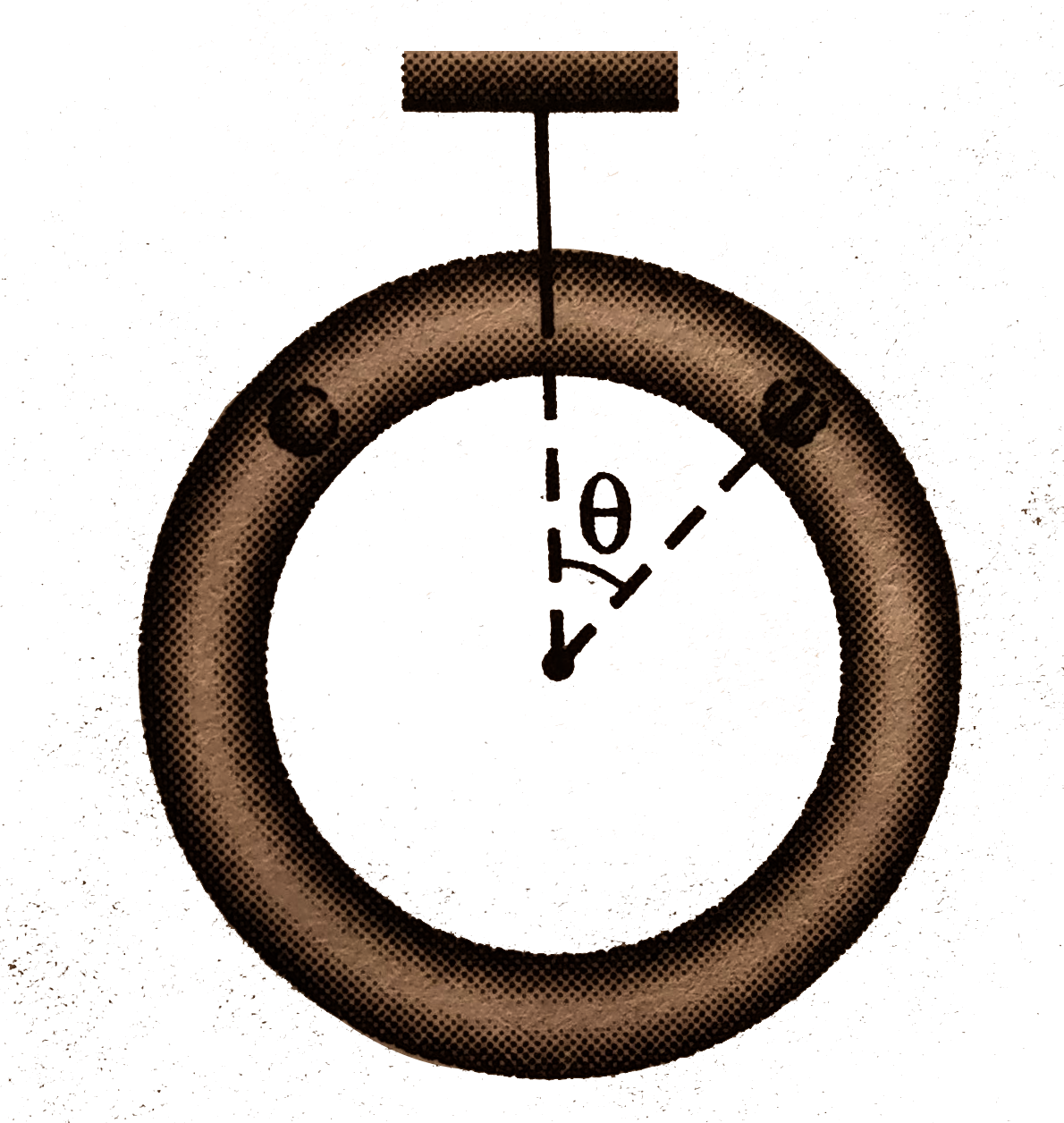
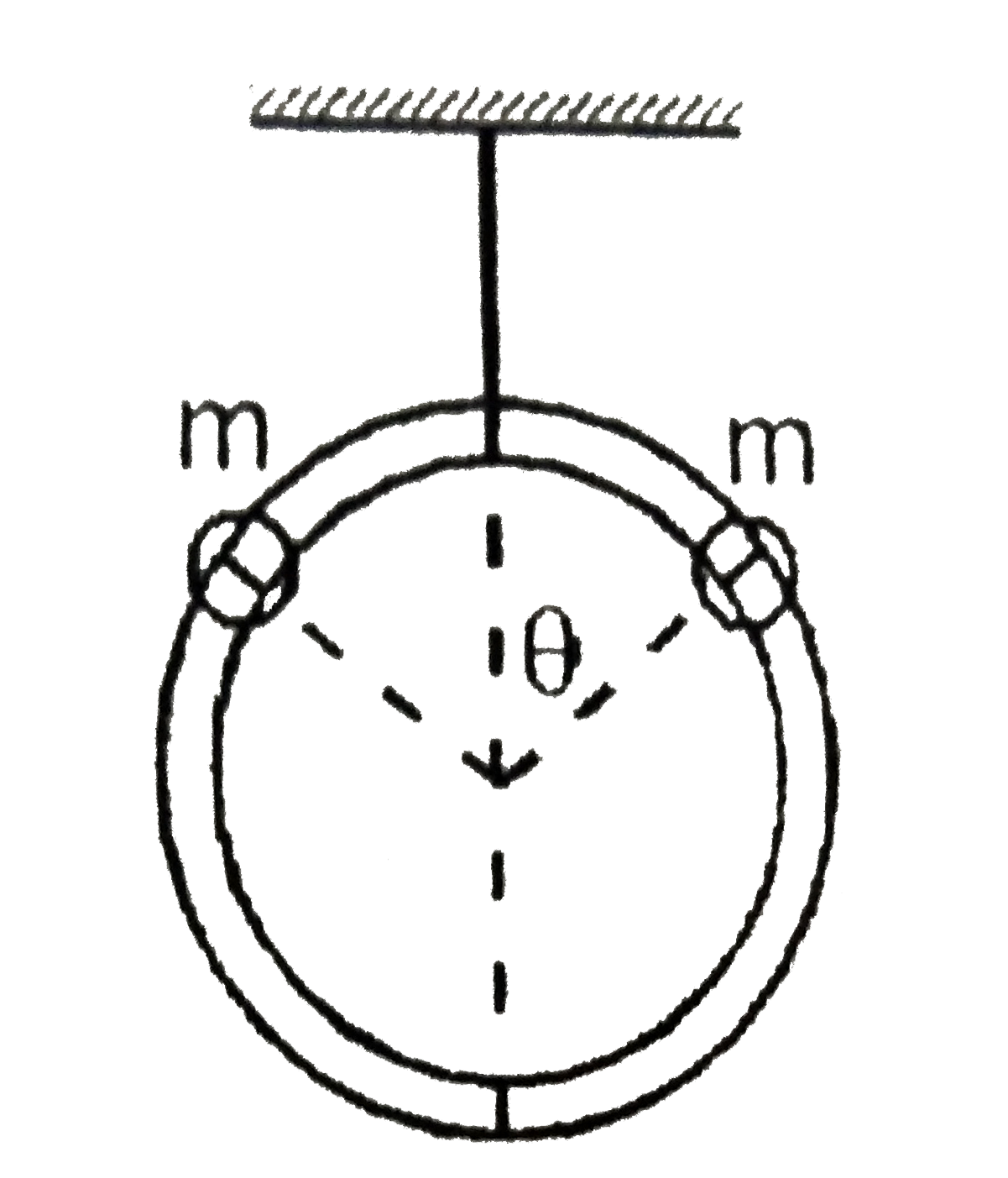
A ring of mass `M` hangs from a thread and two beads of mass `m` slides on it without friction. The beads are released simultaneously from the top of the ring and slides down in opposite sides. Show that the ring will start to rise, if `mgt(3M)/(2)`

Text Solution

Verified by Experts

The correct Answer is:
A, B, C


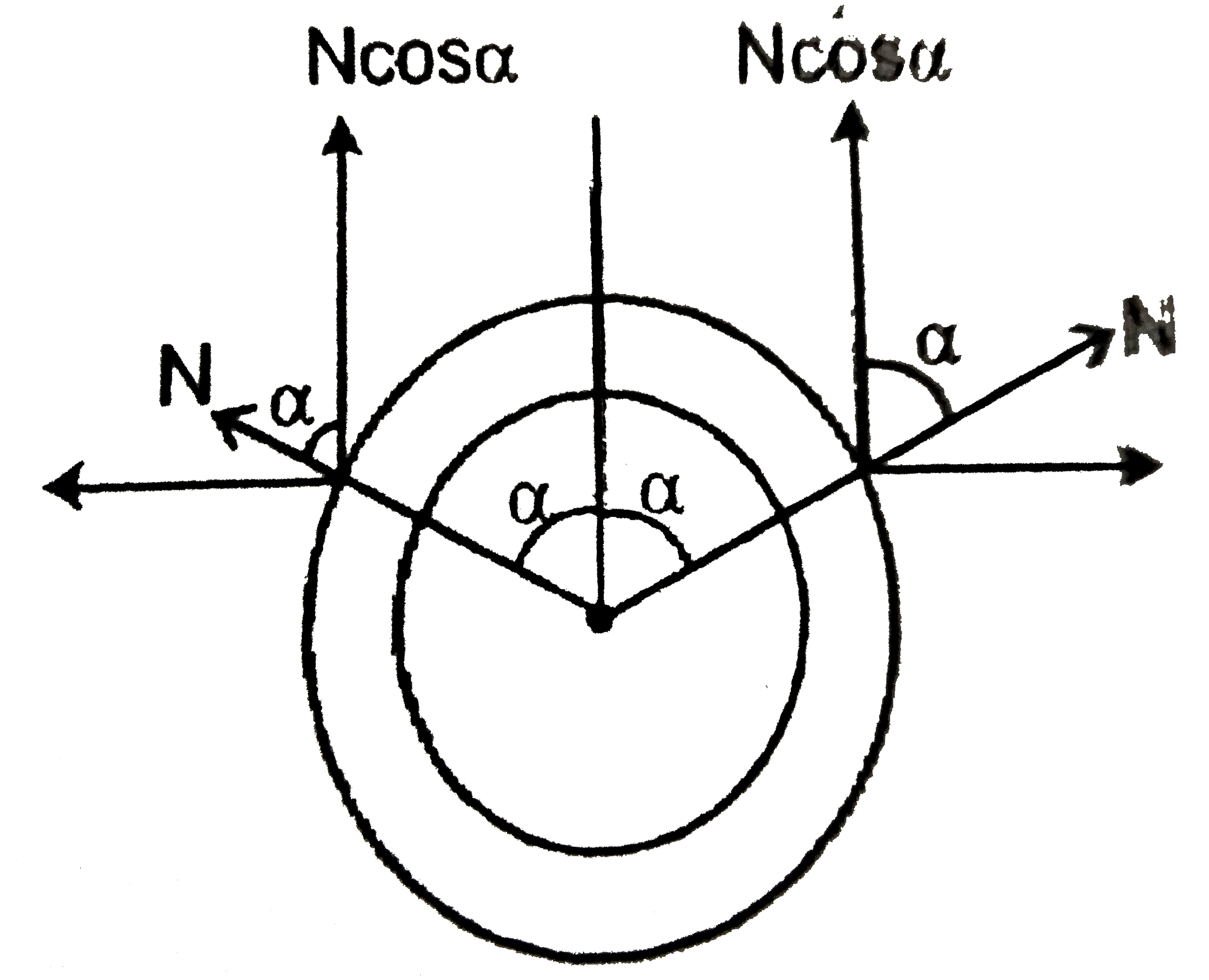
at `alpha=cos^(-1)((2)/(3))` balls will leave contact with inner wall and came in contact with outer wall then force on ring will be `2N cos alpha` in upward direction.

So ring will start rising as it is massless .
Promotional Banner

Topper's Solved these Questions

  • DAILY PRACTICE PROBLEMS

    RESONANCE ENGLISH|Exercise dpp 59|5 Videos
  • DAILY PRACTICE PROBLEMS

    RESONANCE ENGLISH|Exercise dpp 60|5 Videos
  • DAILY PRACTICE PROBLEMS

    RESONANCE ENGLISH|Exercise dpp 57|7 Videos
  • CURRENT ELECTRICITY

    RESONANCE ENGLISH|Exercise Exercise|53 Videos
  • ELASTICITY AND VISCOCITY

    RESONANCE ENGLISH|Exercise Advanced Level Problems|9 Videos

Similar Questions

Explore conceptually related problems

A ring of radius R lies in vertical plane. A bead of mass 'm' can move along the ring without friction. Initially the bead is at rest the bottom most point on ring. The minimum horizontal speed v with which the ring must be pulled such that the bead completes the vertical circle.

A ring of radius R lies in vertical plane. A bead of mass 'm' can move along the ring without friction. Initially the bead is at rest the bottom most point on ring. The minimum horizontal speed v with which the ring must be pulled such that the bead completes the vertical circle.

A small body of mass m slides without friction from the top of a hemisphere of radius r. At what hight will the body be detached from the surface of hemisphere?

For a block of mass m to slide without friction up the rise of height h shown, it must have a minimum initial speed of:

A particle of mass m is rigidly attached at A to a ring of mass 3m and radius r . The system is released from rest and rolls without sliding. The angular acceleration of ring just after release is

An isolated smooth ring of mass M = 2m with two small beads each of mass m is as shown in the figure. Initially both the beads are at diametrically opposite points and have velocity v_(0) (for each) in same direction. The speed of the beads just before they collide for the first time is (complete system is placed on a smooth horizontal surface and assume each point of ring is touching the surface)

A block of mass m slides down on inclined wedge of same mass m as shown in figure . Friction is absent everywhere . Acceleration of centre of mass of the block and wedge is

A block of mass m slides down on inclined wedge of same mass m as shown in figure . Friction is absent everywhere . Acceleration of centre of mass of the block and wedge is

The figure shows a thin ring of mass M=1kg and radius R=0.4m spinning about a vertical diameter (take I=(1)/(2)MR^(2)) A small beam of mass m=0.2kg can slide without friction along the ring When the bead is at the top of the ring the angular velocity is 5rad//s What is the angular velocity when the bead slips halfwat to theta=45^(@) ?