Home
Class 11
PHYSICS
A source of frequency 'f' is stationary ...

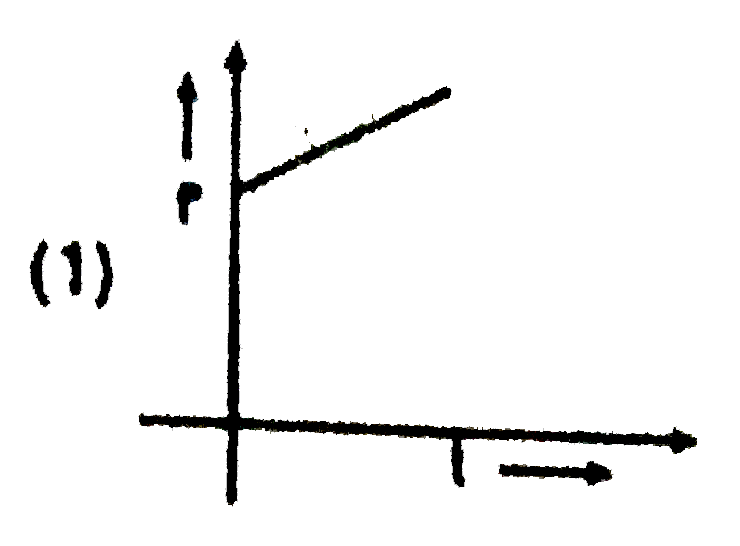
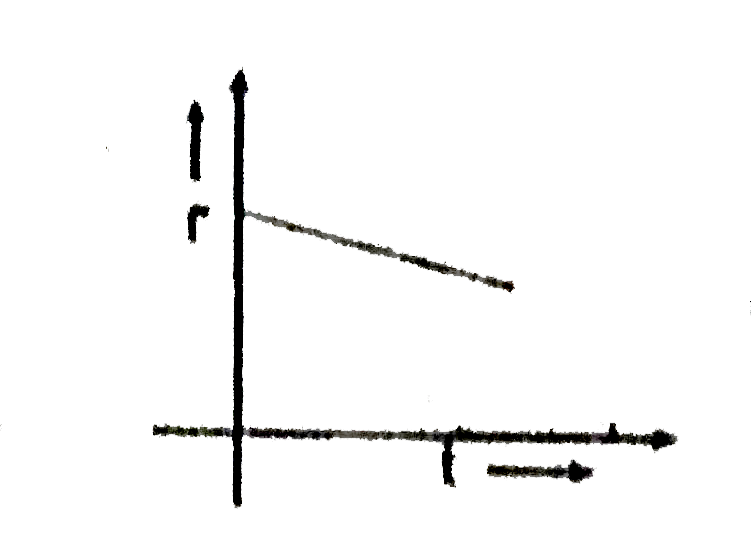
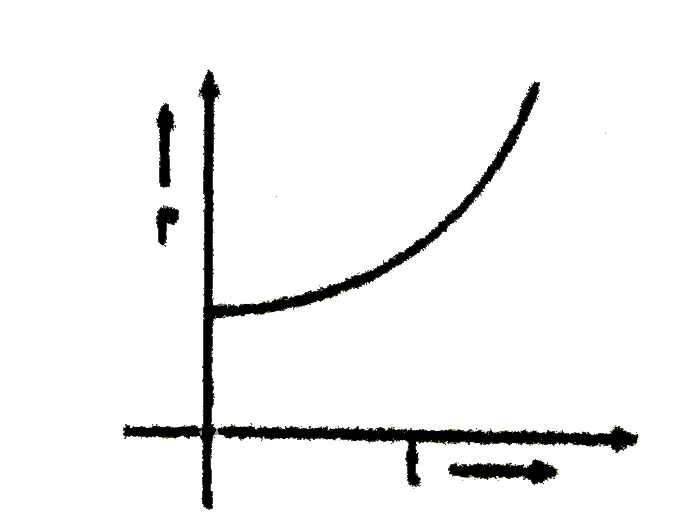
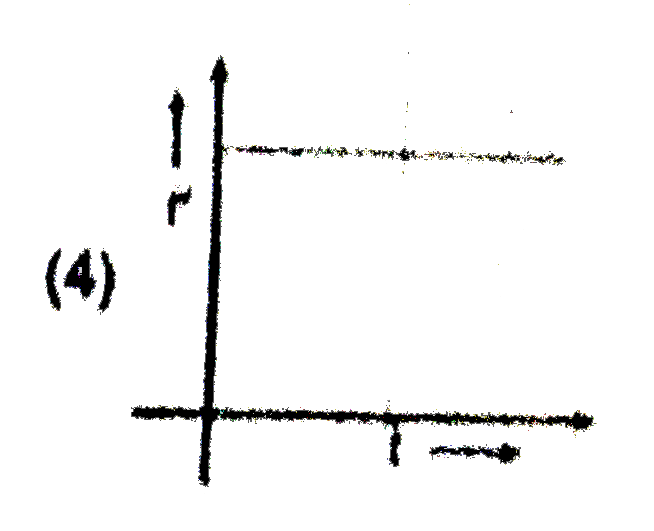
A source of frequency 'f' is stationary and an obsercer starts moving towards it at t=0 with constant small acceleration. Then the variation of observed frequency 'f' registered by the observer with time is best represented as

A

B

C

D

Text Solution

AI Generated Solution

The correct Answer is:

To solve the problem, we need to analyze how the observed frequency changes as the observer moves towards a stationary sound source with constant small acceleration. Here’s a step-by-step breakdown of the solution: ### Step 1: Understand the Doppler Effect The Doppler effect describes how the frequency of a wave changes for an observer moving relative to the source of the wave. In this case, the source is stationary, and the observer is moving towards it. ### Step 2: Define the Variables Let: - \( f \) = frequency of the stationary source - \( v \) = speed of sound in the medium - \( a \) = constant acceleration of the observer - \( t \) = time - \( v_0 \) = velocity of the observer at time \( t \) ### Step 3: Determine the Velocity of the Observer Since the observer starts from rest and accelerates with a constant acceleration \( a \), the velocity of the observer at time \( t \) can be expressed as: \[ v_0 = a \cdot t \] ### Step 4: Apply the Doppler Effect Formula The observed frequency \( f_1 \) when the observer is moving towards the source can be given by the formula: \[ f_1 = f \cdot \frac{v + v_0}{v} \] Substituting \( v_0 \) from Step 3: \[ f_1 = f \cdot \frac{v + a \cdot t}{v} \] ### Step 5: Simplify the Expression This can be simplified to: \[ f_1 = f + \frac{a \cdot f}{v} \cdot t \] This shows that the observed frequency \( f_1 \) is a linear function of time \( t \). ### Step 6: Identify the Relationship The equation \( f_1 = f + \frac{a \cdot f}{v} \cdot t \) indicates that: - The frequency increases linearly with time. - The slope of the line is \( \frac{a \cdot f}{v} \), which is positive since \( a \), \( f \), and \( v \) are all positive. ### Step 7: Graphical Representation The relationship between observed frequency \( f_1 \) and time \( t \) can be represented graphically as a straight line with: - A positive slope (indicating increasing frequency) - A positive intercept (the frequency at \( t = 0 \) is \( f \)) ### Conclusion Thus, the variation of the observed frequency \( f_1 \) registered by the observer with time is best represented as a straight line with a positive slope and a positive intercept.

To solve the problem, we need to analyze how the observed frequency changes as the observer moves towards a stationary sound source with constant small acceleration. Here’s a step-by-step breakdown of the solution: ### Step 1: Understand the Doppler Effect The Doppler effect describes how the frequency of a wave changes for an observer moving relative to the source of the wave. In this case, the source is stationary, and the observer is moving towards it. ### Step 2: Define the Variables Let: - \( f \) = frequency of the stationary source ...
Promotional Banner

Topper's Solved these Questions

  • SOUND WAVES

    RESONANCE ENGLISH|Exercise Solved Examples|24 Videos
  • SOUND WAVES

    RESONANCE ENGLISH|Exercise Board Level Exercise|33 Videos
  • SIMPLE HARMONIC MOTION

    RESONANCE ENGLISH|Exercise Exercise|28 Videos
  • STRING WAVES

    RESONANCE ENGLISH|Exercise Exercise|32 Videos

Similar Questions

Explore conceptually related problems

A source emitting a sound of frequency f is placed at a large distance from an observer. The source starts moving towards the observer with a uniform acceleration a. Find the frequency heard by the observer corresponding to the wave emitted just after the source starts. The speed of sound in the medium is v.

Two identical source moving parallel to each other at seperation 'd' are producing sounds of frequency 'f' and are moving with constant velocity v_(0) . A stationary .observer 'O' is on the line of motion of one of the sources. Then the variation of beat frequency heard by O with time is best represented by: (as they come from large distance and go to a large distance)

A sound source S is moving along a straight track with speed v, and is emitting sound of frequency v_0 (see figure). An observer is standing at a finite distance at the point O, from the track . The time variation of frequency heard by the observer is best respresent by : ( t_0 represents the instant when the distance between the source and observer is minimum )

An observer moves with a constant acceleration towards a fixed source and start decelerating as soon as it passes the sound source. The variation of frequency f by observer with time t is best shown by

A source of frequency f is moving towards the observer along the line SO with a constant velocity upsilon_(s) as shown in figure. Plot f' versus t graph . Where f' is the changed frequency observed by the observer.

A sound source is moving towards a stationary observer with 1/10 of the speed of sound. The ratio of apparent to real frequency is

To a stationary man the frequency of a sound source moving towards the man appears to be

When both the listener and source are moving towards each other, then which of the following is true regarding frequency and wavelength of wave observed by the observer?

A train is moving towards a stationary observer. Which of the following curve best represents the frequency recived by observer f as a function of time?

A train whistling at constant frequency is moving towards a station at a constant speed V. The train goes past a stationary observer on the station. The frequency n^(') of the sound as heard by the observer is plotted as a function of time t, figure. Identify the expected curve.

RESONANCE ENGLISH-SOUND WAVES-Exercise- 3 PART - I
  1. A source of frequency 'f' is stationary and an obsercer starts moving ...

    Text Solution

    |

  2. An observer standing on a railway crossing receives frequencies 2.2 kH...

    Text Solution

    |

  3. An open pipe is in resonance in 2nd harmonic with frequency f(1). Now ...

    Text Solution

    |

  4. Two plane harmonic sound waves are expressed by the equations. y(1)(...

    Text Solution

    |

  5. Two plane harmonic sound waves are expressed by the equations. y(1)(...

    Text Solution

    |

  6. Two plane harmonic sound waves are expressed by the equations. y(1)(...

    Text Solution

    |

  7. Two trains A and B moving with speeds 20m//s and 30m//s respectively i...

    Text Solution

    |

  8. Two trains A and B are moving with speeds 20 m/s and 30 m/s, respectiv...

    Text Solution

    |

  9. Two trains A and B are moving with speeds 20 m//s respectively in the ...

    Text Solution

    |

  10. A vibrating string of certain length l under a tension T resonates wit...

    Text Solution

    |

  11. A student performed the experiment to measure the speed of sound in ai...

    Text Solution

    |

  12. A stationary source is emitting sound at a fixed frequency f(o), which...

    Text Solution

    |

  13. hollow pipe of length 0.8 m is closed at one end. At its open end a 0....

    Text Solution

    |

  14. A police car with a siren of frequency 8 kHz is moving with uniform ve...

    Text Solution

    |

  15. A person blows into the open-end of a long pipe. As a result, a high-p...

    Text Solution

    |

  16. A student is performing the experiment of resonance column. The diamet...

    Text Solution

    |

  17. Two vehicles, each moving with speed u on the same horizontal straight...

    Text Solution

    |

  18. A student is performing an experiment using a resonance column and a t...

    Text Solution

    |

  19. Four harmonic waves of equal frequency and equal intensity I(0) have p...

    Text Solution

    |

  20. An observer moves towards a stationary source of sound with a velocity...

    Text Solution

    |

  21. A whistle producing sound waves of frequencies 9500 Hz and above is ap...

    Text Solution

    |
