Home
Class 12
CHEMISTRY
Decomposition of Hl (g) on Gold surface ...

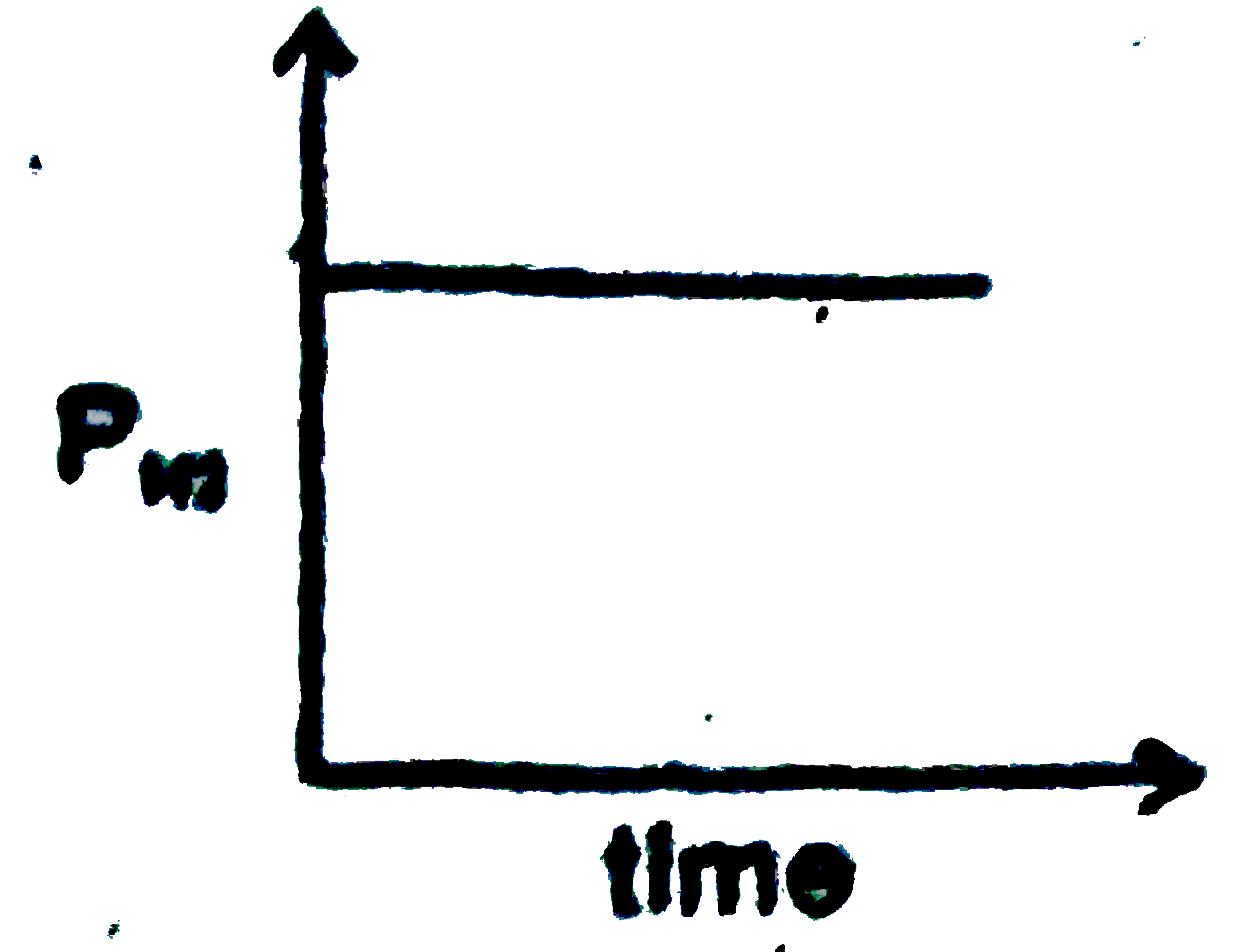
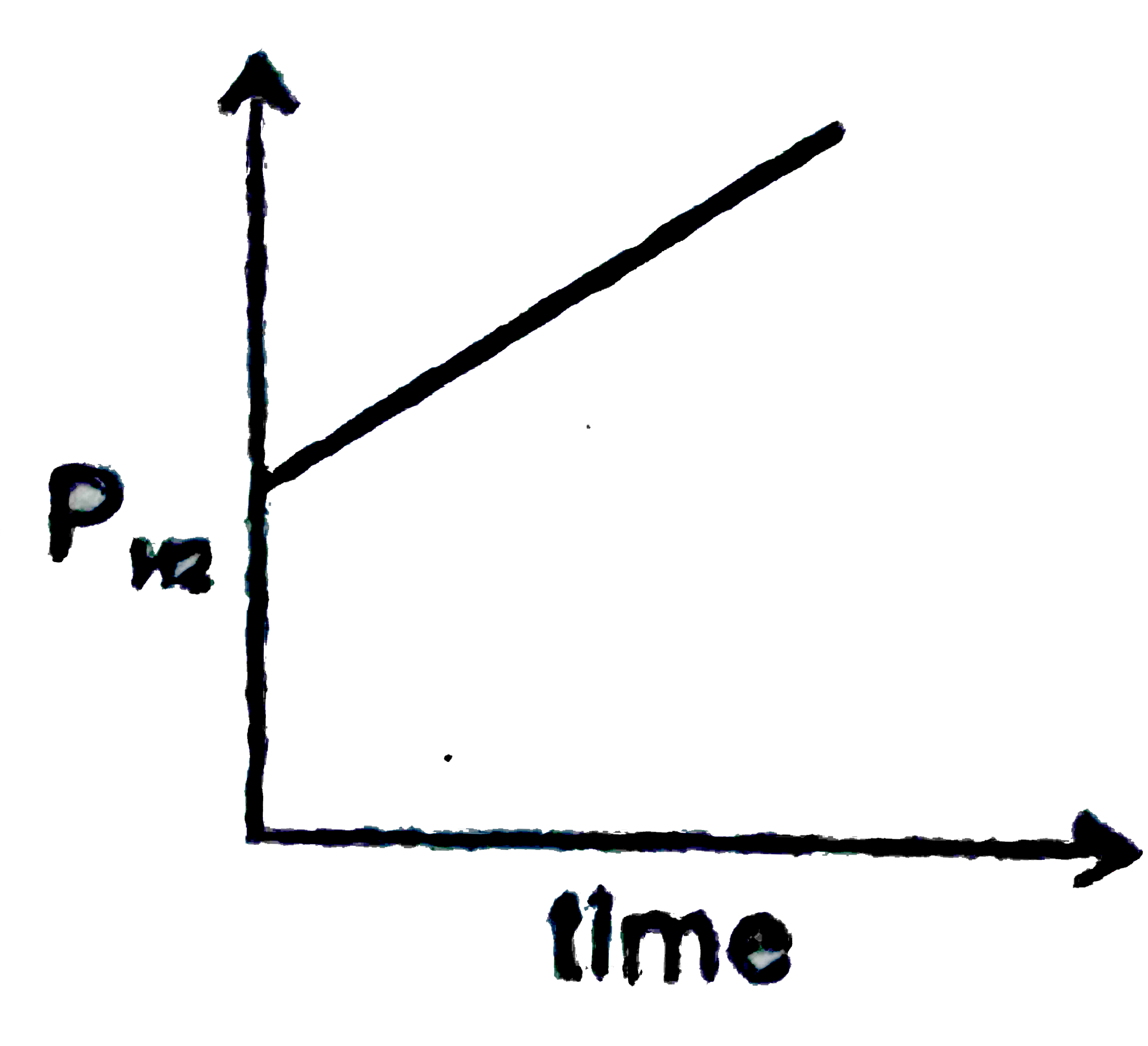
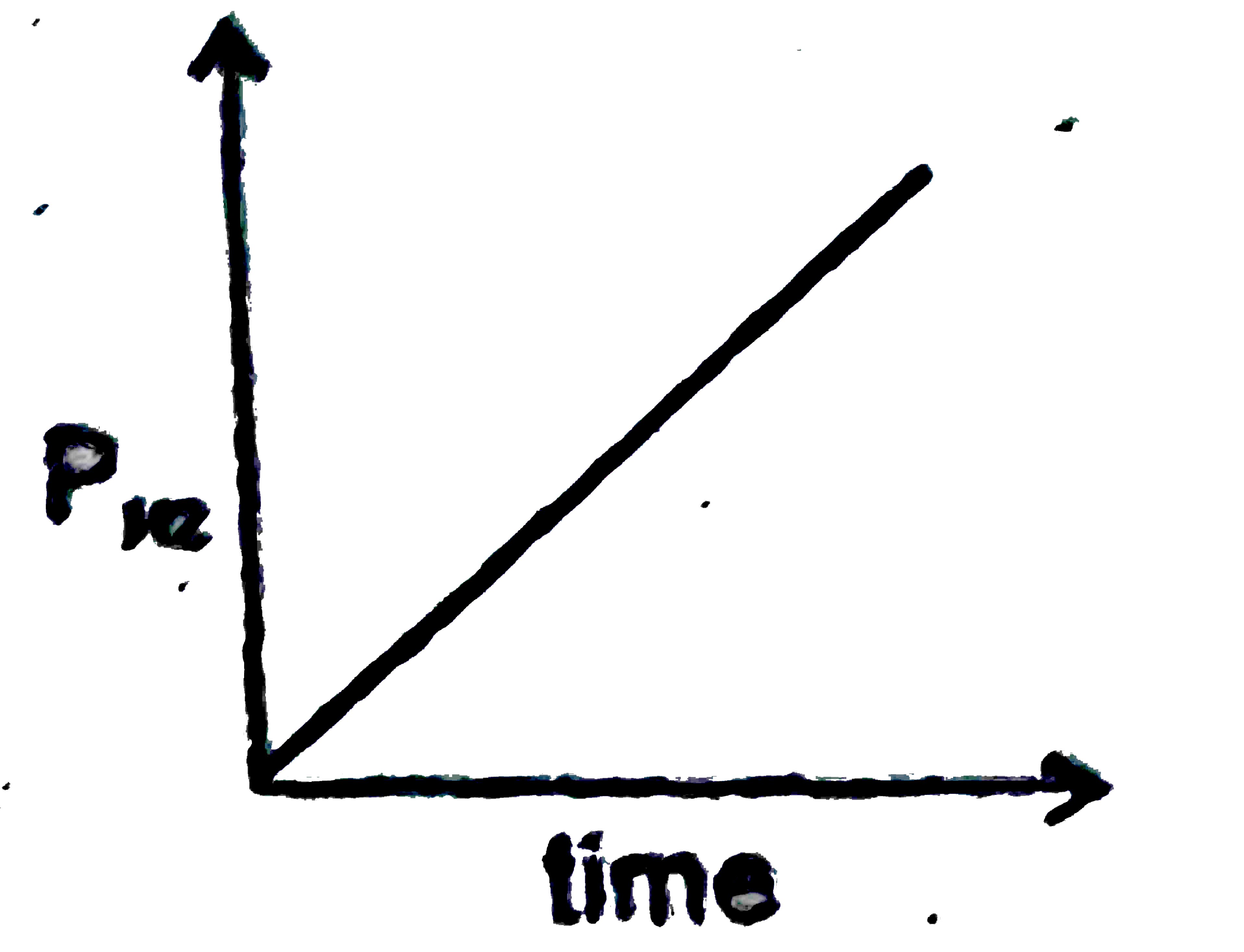
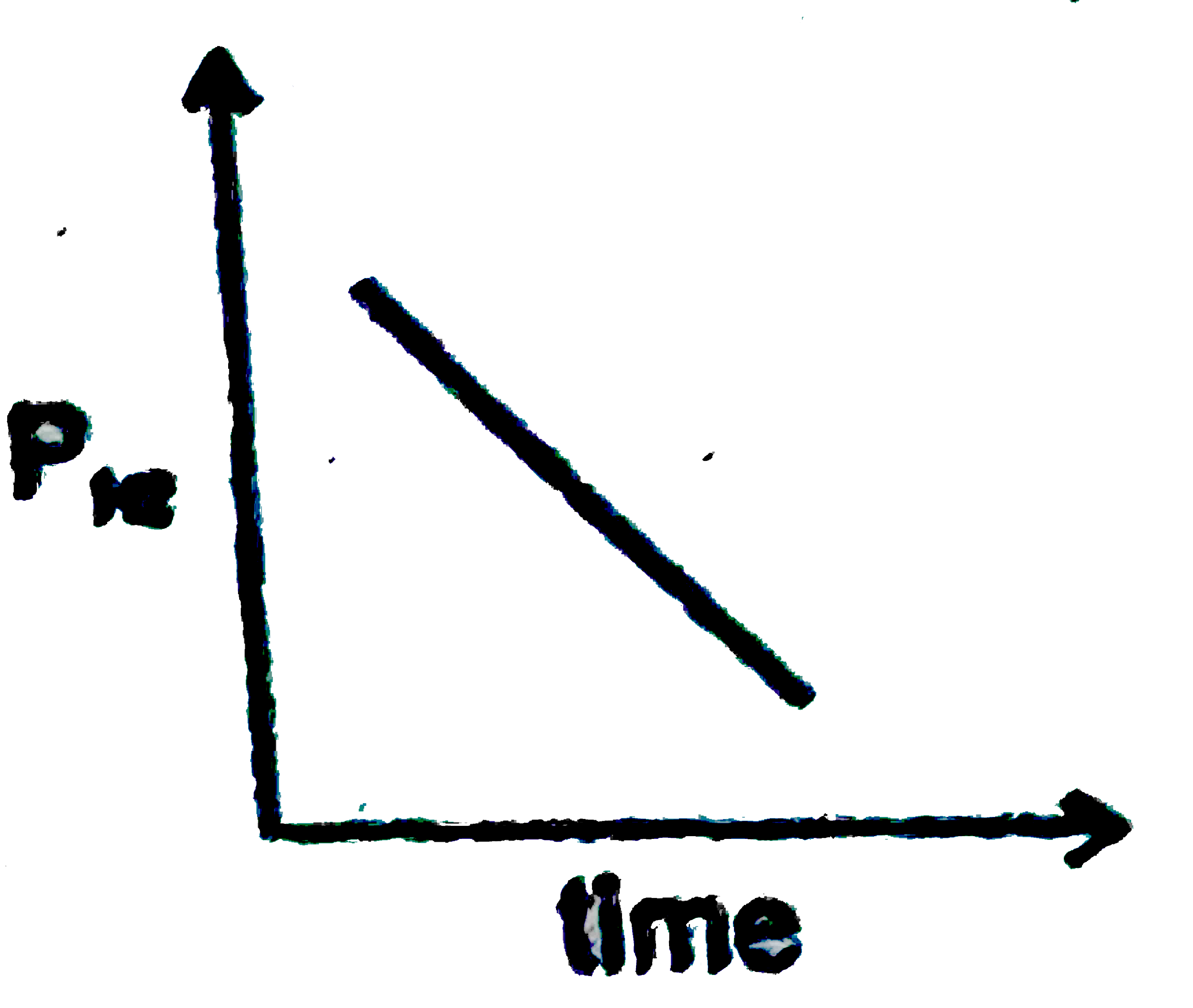
Decomposition of `Hl (g)` on Gold surface is zero order reaction. Initially, few moles of `H_(2)` are present in container then which of the following graph is correct ?

A

B

C

D

Text Solution

AI Generated Solution

The correct Answer is:

To solve the question regarding the decomposition of HI (g) on a gold surface, which is a zero-order reaction, we can follow these steps: ### Step-by-Step Solution: 1. **Understanding Zero-Order Reactions**: - In a zero-order reaction, the rate of reaction is constant and does not depend on the concentration of the reactants. The rate law can be expressed as: \[ \text{Rate} = k \] - The integrated rate law for a zero-order reaction is given by: \[ [A] = [A]_0 - kt \] where \([A]\) is the concentration at time \(t\), \([A]_0\) is the initial concentration, and \(k\) is the rate constant. 2. **Graphical Representation**: - For a zero-order reaction, if we plot the concentration of the reactant (in this case, HI) against time, the graph will be a straight line with a negative slope. This indicates that the concentration decreases linearly over time. 3. **Initial Concentration of H2**: - The problem states that initially, there are a few moles of \(H_2\) present. This means that at \(t = 0\), the concentration of \(H_2\) is not zero. 4. **Analyzing the Options**: - Since the graph of a zero-order reaction will show a linear decrease in concentration, we need to identify which graph correctly represents this behavior while also accounting for the initial concentration of \(H_2\). - The options presented likely include graphs that either start from zero or have a negative slope. Since we have an initial concentration of \(H_2\), the graph must start from a positive value and decrease over time. 5. **Conclusion**: - The correct graph will be the one that starts from a positive concentration of \(H_2\) and shows a linear decrease over time. Therefore, the correct option is **B**, which represents the behavior of a zero-order reaction with an initial concentration of \(H_2\). ### Final Answer: The correct graph is option **B**.

To solve the question regarding the decomposition of HI (g) on a gold surface, which is a zero-order reaction, we can follow these steps: ### Step-by-Step Solution: 1. **Understanding Zero-Order Reactions**: - In a zero-order reaction, the rate of reaction is constant and does not depend on the concentration of the reactants. The rate law can be expressed as: \[ \text{Rate} = k ...
Promotional Banner

Topper's Solved these Questions

  • CARBONYL COMPOUNDS (ALDEHYDES & KETONES ) & CARBOXYLIC ACID

    RESONANCE ENGLISH|Exercise Part -IV|23 Videos
  • CHEMISTRY IN EVERYDAY LIFE

    RESONANCE ENGLISH|Exercise ORGANIC CHEMISTRY(Chemistry in every day life)|31 Videos

Similar Questions

Explore conceptually related problems

Which of the following graphs is for a second order reaction?

Which of the following graph is correct for zero order reaction?

Which of the following is correct graph for the reaction?

In which of the following reactions H_2 (g) is produced?

Which of the following graph is correct for a zero order reaction ?

Which of the following graph is correct for a first order reaction ?

If reaction A+BhArrC+D , taken place in 5 liter close vessel, the rate constant of forward reaction is nine times of rate of backward reaction. If initially one mole of each reactant present in the container, then find the correct option//is.

In a 20 litre vessel at 300 K initially, 1 mole of CO, H_(2)O, CO_(2) are present, then for the equilibrium of CO+H_(2)OhArr CO_(2)+H_(2) which of the following is true?

For the reaction N_(2)(g) + 3H_(2)(g) rarr 2NH_(2)(g) Which of the following is correct?

Assertion : The decomposition of gaseous ammonia on a hot platinum surface is a zero order reaction at high pressure. For a zero order reaction the rate of reaction is independent of initial concentration.

RESONANCE ENGLISH-CHEMICAL KINETICS-PHYSICAL CHEMITRY (CHEMICAL KNIETICS & RADIOACTIVITY)
  1. For the reaction A rarr products , the graph of the fraction of A rema...

    Text Solution

    |

  2. For the zero order reaction A rarr B+C, initial concentration of A is ...

    Text Solution

    |

  3. Decomposition of Hl (g) on Gold surface is zero order reaction. Initia...

    Text Solution

    |

  4. Which of the following statement is incorrect ?

    Text Solution

    |

  5. The rate expression for reaction A(g) +B(g) rarr C(g) is rate =k[A]^(1...

    Text Solution

    |

  6. If rate of diffusion of A is 2 times that of B, what will be the densi...

    Text Solution

    |

  7. If rate of diffusion of A is 10 times that of B, what will be the dens...

    Text Solution

    |

  8. The reaction A(g) + 2B(g) rarr C(g) + D(g) is an elementary process. I...

    Text Solution

    |

  9. If rate of diffusion of A is 11 times that of B, what will be the dens...

    Text Solution

    |

  10. If rate of diffusion of A is 12 times that of B, what will be the dens...

    Text Solution

    |

  11. If rate of diffusion of A is 13 times that of B, what will be the dens...

    Text Solution

    |

  12. The graph between concentration (X) of the Product and time of the rea...

    Text Solution

    |

  13. The rate constant of the reaction A rarr 2B is 1.0 xx 10^(-3) mol "lit...

    Text Solution

    |

  14. At 227^(@)C , the presence of catalyst causes the activation energy of...

    Text Solution

    |

  15. Half life of reaction : H(2)O(2)(aq) rarr H(2)O(l)+(1)/(2)O(2)(g)is in...

    Text Solution

    |

  16. A first order reaction is 20% complete in 10 min. Calculate (a) the sp...

    Text Solution

    |

  17. If rate of diffusion of A is 15 times that of B, what will be the dens...

    Text Solution

    |

  18. Conisder the reaction mechanism: A(2) overset(k(eq))hArr 2A ("fast")...

    Text Solution

    |

  19. In a reaction A rarr produce, when from 8.0xx10^(-2) M of A, half life...

    Text Solution

    |

  20. A catalyst lowers the enrgy of activation by 25%, temperature at which...

    Text Solution

    |
