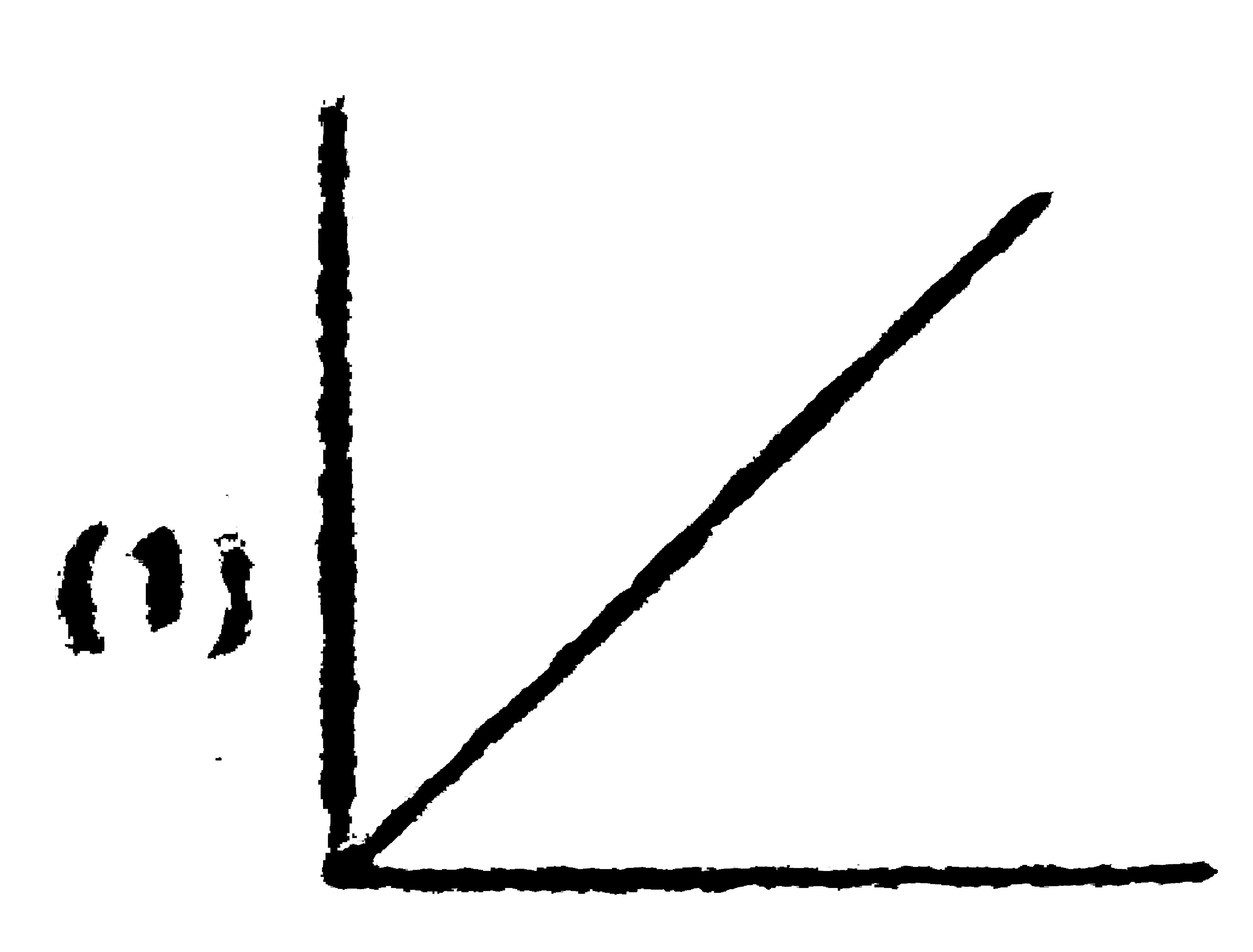
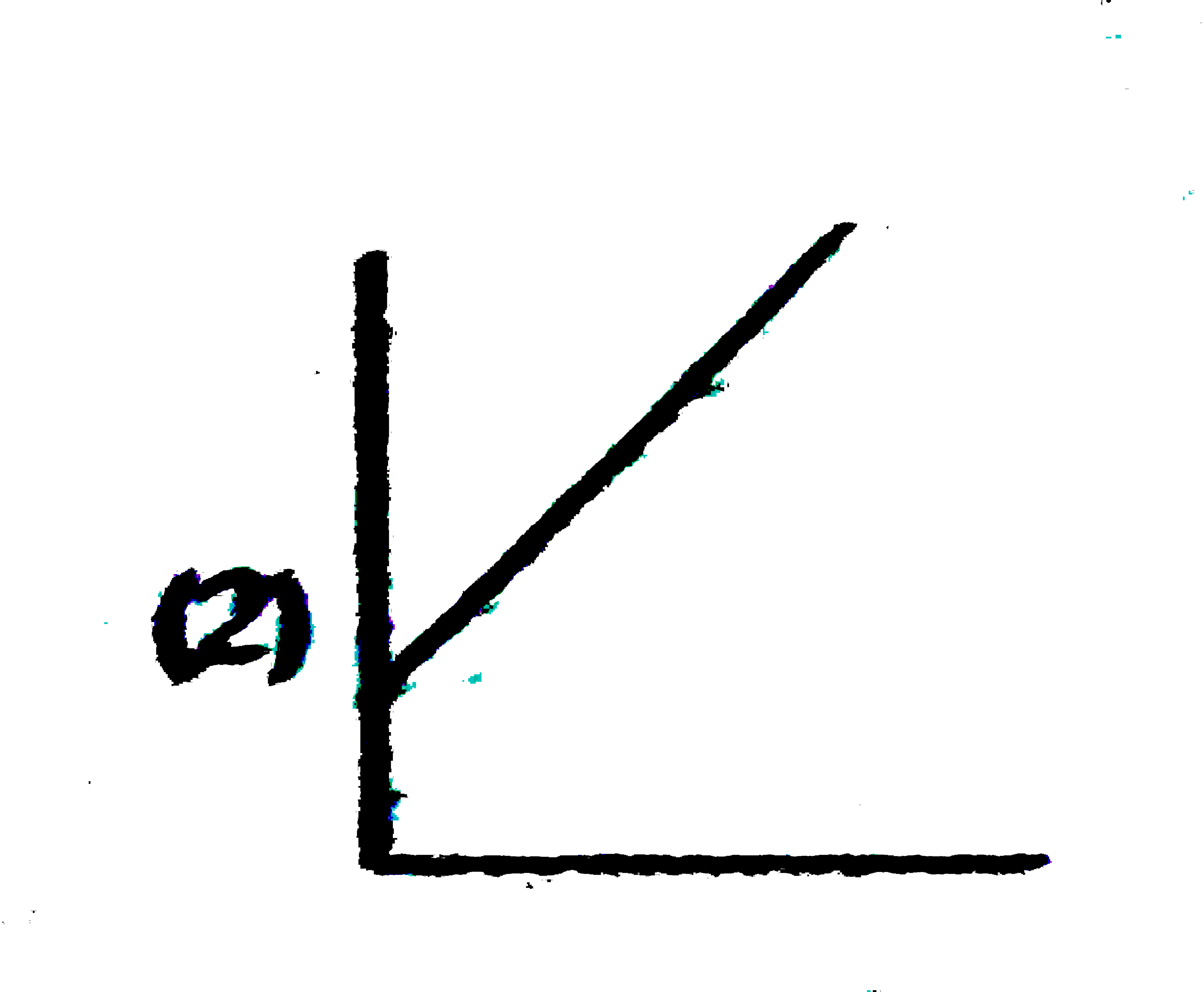
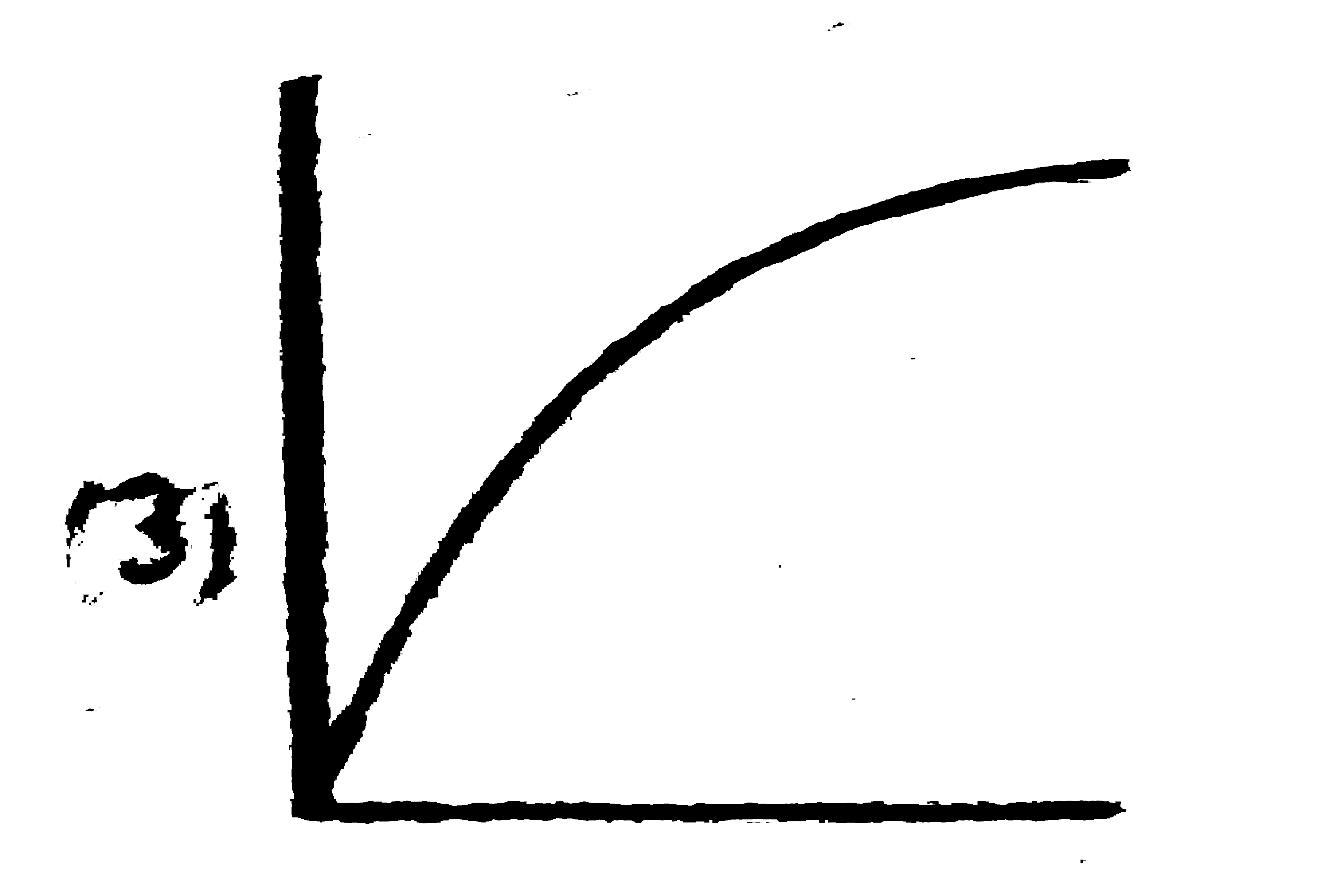
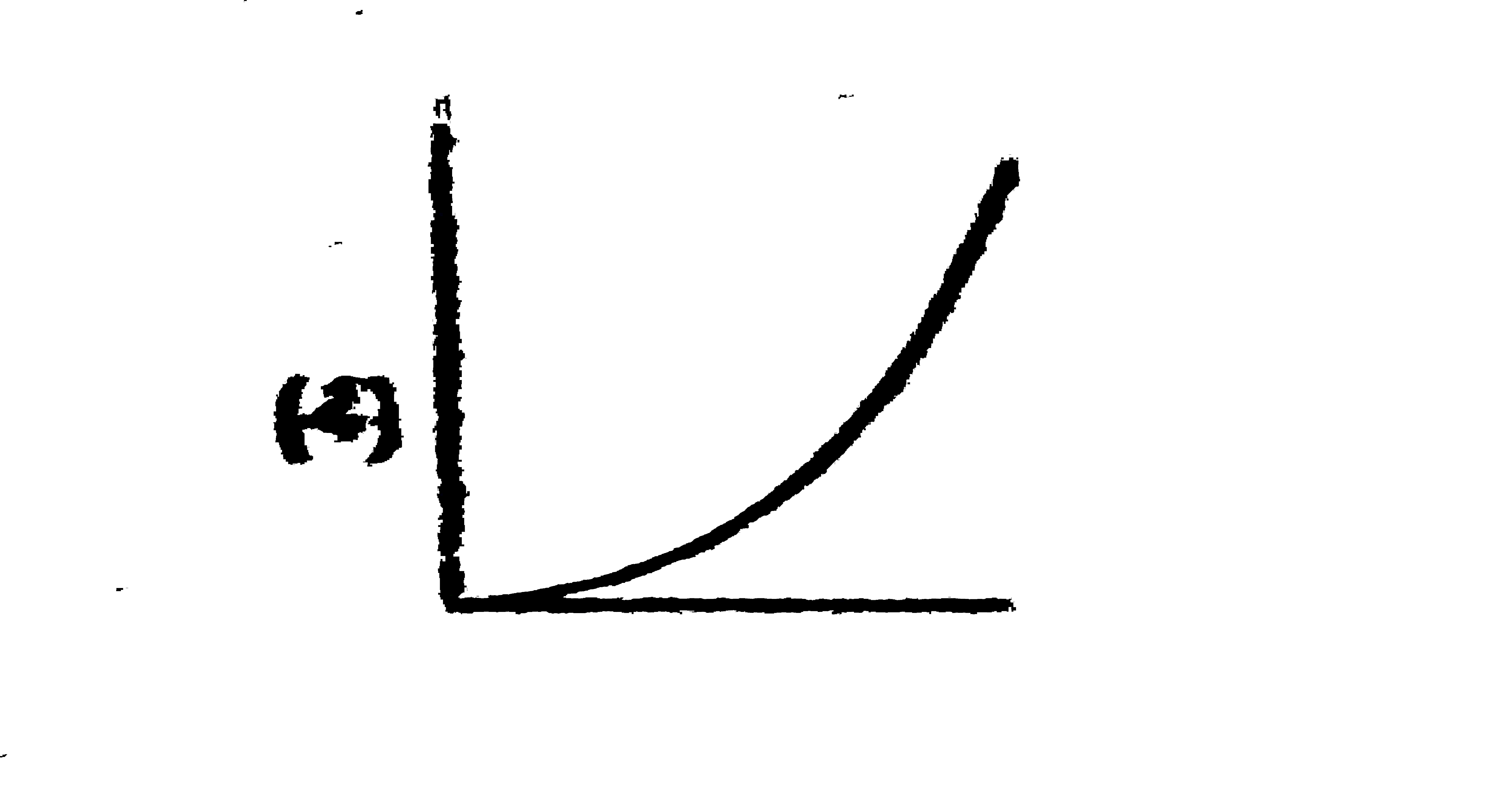
The variation of `(p)/((x//m))` as a function of `p` when Langmuir's isotherm valid is `:`
A
B
C
D
Text Solution
AI Generated Solution
The correct Answer is:
To solve the question regarding the variation of \(\frac{p}{\frac{x}{m}}\) as a function of \(p\) when Langmuir's isotherm is valid, we will follow these steps:
### Step 1: Understand Langmuir's Isotherm
Langmuir's adsorption isotherm describes how the amount of gas adsorbed on a solid surface varies with pressure at a constant temperature. The equation is given by:
\[
\frac{x}{m} = \frac{a p}{1 + b p}
\]
where:
- \(x\) = amount of gas adsorbed,
- \(m\) = mass of the adsorbent,
- \(p\) = pressure,
- \(a\) and \(b\) are constants.
### Step 2: Rearrange the Equation
We need to express \(\frac{p}{\frac{x}{m}}\) in terms of \(p\). From the Langmuir equation, we can rearrange it as follows:
\[
\frac{x}{m} = \frac{a p}{1 + b p}
\]
Taking the reciprocal gives:
\[
\frac{1}{\frac{x}{m}} = \frac{1 + b p}{a p}
\]
### Step 3: Express \(p\) in Terms of \(\frac{x}{m}\)
Now, we can express \(\frac{p}{\frac{x}{m}}\):
\[
\frac{p}{\frac{x}{m}} = \frac{p}{\frac{a p}{1 + b p}} = \frac{(1 + b p)}{a}
\]
### Step 4: Simplify the Expression
This simplifies to:
\[
\frac{p}{\frac{x}{m}} = \frac{1}{a} + \frac{b}{a} p
\]
### Step 5: Identify the Graph Characteristics
The equation \(\frac{p}{\frac{x}{m}} = \frac{1}{a} + \frac{b}{a} p\) is in the form of \(y = mx + c\), where:
- \(y\) is \(\frac{p}{\frac{x}{m}}\),
- \(x\) is \(p\),
- \(m\) (slope) is \(\frac{b}{a}\),
- \(c\) (y-intercept) is \(\frac{1}{a}\).
This indicates that the graph is a straight line with a positive slope.
### Step 6: Conclusion
The variation of \(\frac{p}{\frac{x}{m}}\) as a function of \(p\) when Langmuir's isotherm is valid will yield a straight line graph.
The curve drawn below shows the variations of P as a function of 1//V for a fixed mass and temperature of an ideal gas. It follows from the curve that:
The variation of radial probability density R^2 (r) as a function of distance r of the electron from the nucleus for 3p orbital: (A)(a) (b) (b) (c) (d)
If p(x) is a polynomial function and p(4)=0 , then which statement is true?
If p(x) is a polynomial function and p(-1)=3, which statement is true?
IF p and q are in direct variation of x, y and z in the table given below:
Consider the adsorption isotherm given below and interpret the variation in the extent of adsorption (x/m) when a. Temperature increased at constant pressure. b. Pressure increases at constant temperature.
If x/m is the mass of adsorbate adsorbed per unit mass of adsorbent, P is the pressure of the adsorbate gas ,a and b are constant ,which of the following represent "Langmuir adsorption isotherm"?
In a chemical equilibrium, K_p = K_c is valid if
S(P) =1/2P + 40 D(P) = 220-P The quantity of a product supplied and the quantity of the product demanded in an economic market are functions of the price of the product. The functions above are the estimated supply and demand functions for a certain product. The function S P( ) gives the quantity of the product supplied to the market when the price is P dollars, and the function D P( ) gives the quantity of the product demanded by the market when the price is P dollars. How will the quantity of the product supplied to the market change if the price of the product is increased by $10 ?
S(P) =1/2P + 40 D(P) = 220-P The quantity of a product supplied and the quantity of the product demanded in an economic market are functions of the price of the product. The functions above are the estimated supply and demand functions for a certain product. The function S P( ) gives the quantity of the product supplied to the market when the price is P dollars, and the function D P( ) gives the quantity of the product demanded by the market when the price is P dollars. At what price will the quantity of the product supplied to the market equal the quantity of the product demanded by the market?