Home
Class 12
PHYSICS
In the system in the figure m(1)gtm(2) s...


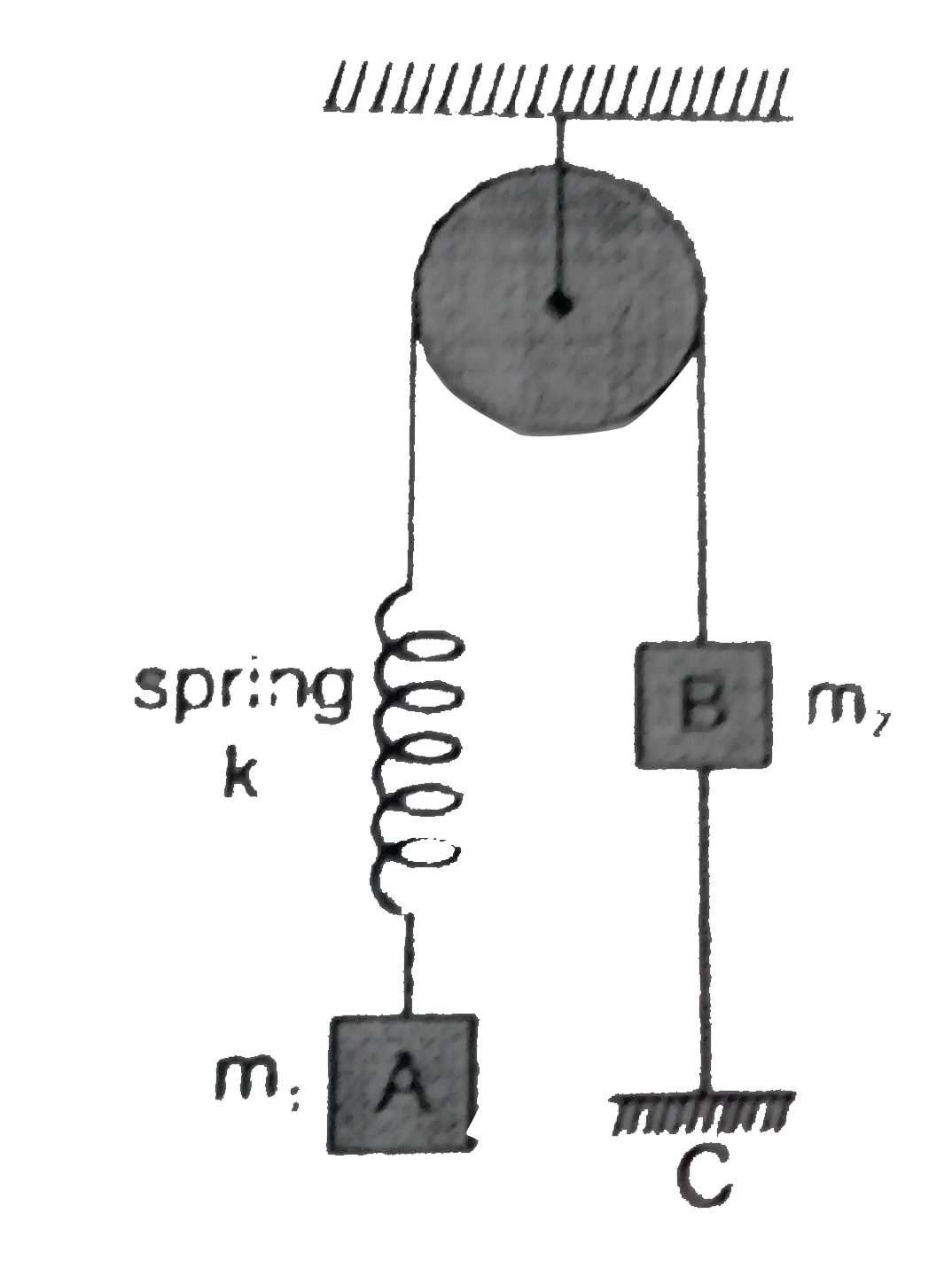
In the system in the figure `m_(1)gtm_(2)` system is held at rest by thread `BC`. Just after the thread BC is burnt:

A

acceleration of `m_(2)` will be upwards

B

magnitude of acceleration of both blocks will be equal to `((m_(1)+m_(2))/(m_(1)+m_(2)))g`

C

acceleration of `m_(1)` will be equal to zero

D

magnitude of acceleration of two blocks will be non-zro and unequal.

Text Solution

Verified by Experts

The correct Answer is:
A, C


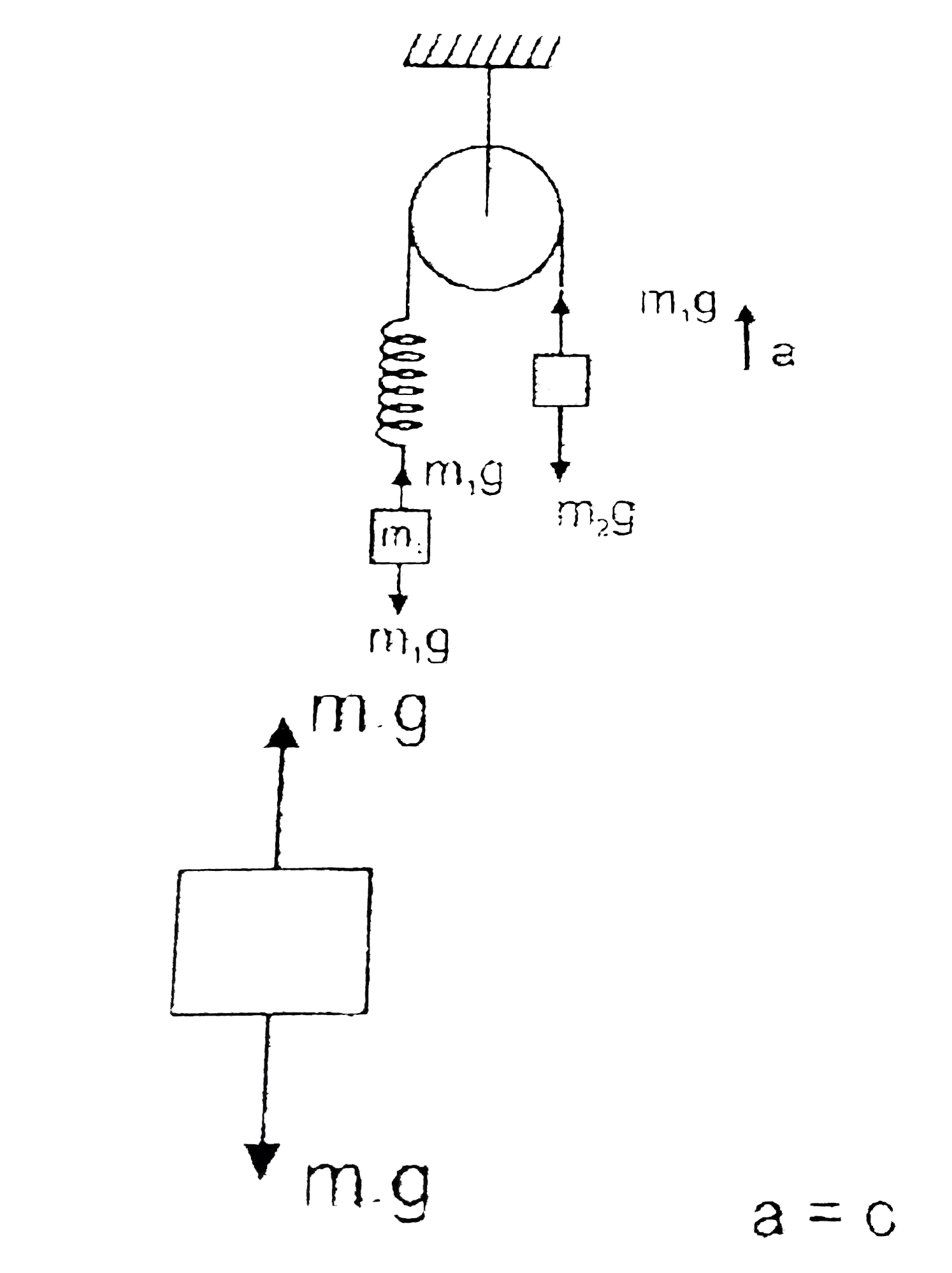
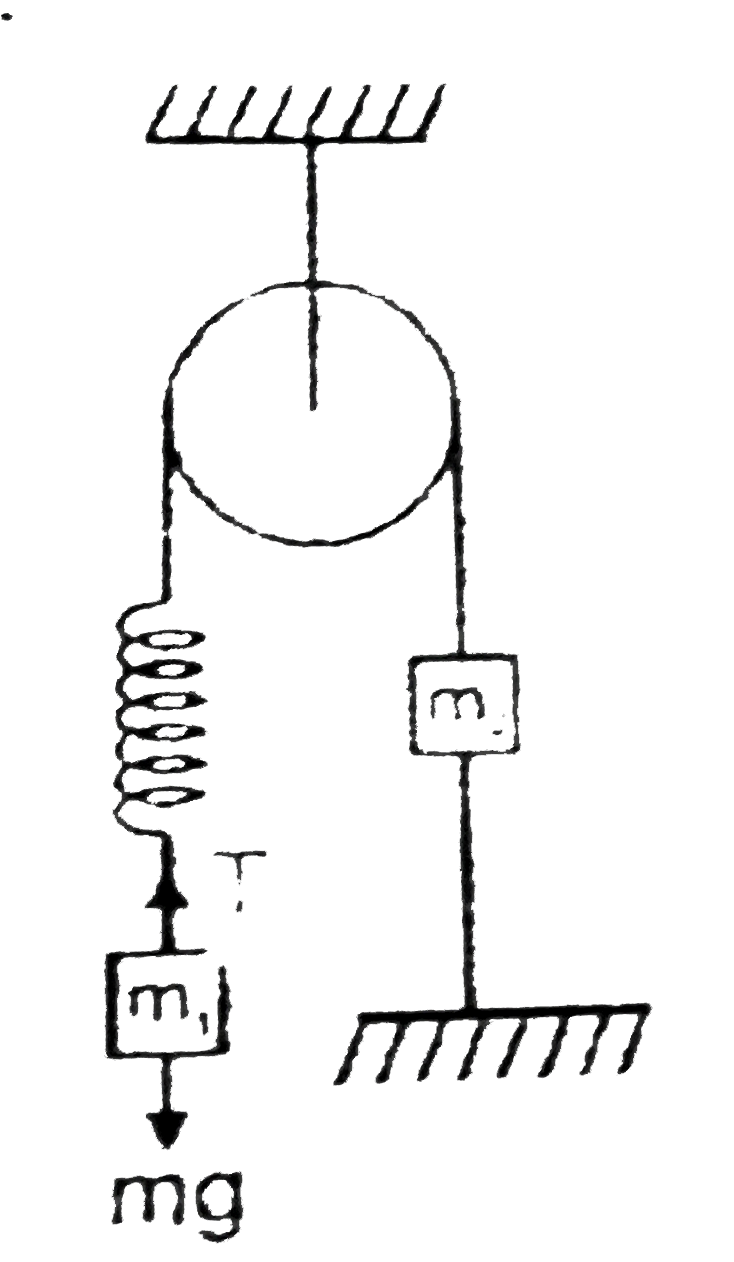
When thred is burnt, tension in spring remains same `=m_(1)g`.
`m_(1)g-m_(2)gm_(2)a`
`g=((m_(1)-m_(2))/(m_(2)))` `a=` upwards
for `m_(1)` `a=0`
Promotional Banner

Similar Questions

Explore conceptually related problems

In the system shown in figure m_(1) gt m_(2) . System is held at rest by thread BC. Just after the thread BC is burnt.

In the system shown in fig. m_(1) gt m_(2) . The system is held at rest by thread BC. Now thread BC is burnt. Answer the following: Just after burning the thread, what is the acceleration of m_(2) ?

In the system shown in fig. m_(1) gt m_(2) . The system is held at rest by thread BC. Now thread BC is burnt. Answer the following: Before burnig the thread, what are the tensions in spring and thread BC, respectively?

Find the mass m in the figure for the system to be at rest

The system shown in the figure is in equilibrium at rest. The spring and string are massless Now the string is cut. Find the acceleration of the blocks just after the string is cut.

A block A of mass 8 kg is placed on a frictionless horizontal table. A thread tied to it passes over a frictionless pulley and carries a body B of mass 2 kg at the other end. Find the acceleration of the system. Also find the tension in the thread. If the thread is cut into two and tied to the ends of a spring of forceconstant 1600N/m, find the amount of stretching of the spring. Neglect the mass of thread and of spring (g = 9.8 m//s^(2))

In the system shown in the figure , a bead of mass m can slide on the string. There is friction beween the bead and the string. Block B has mass equal to twice that of the bead. The system is released from rest with lenth l=18.75m of the string hanging below the bead. Assuming the pulley and string to be massless. Find the distance (in meter) moved by the block B before the bead slips out of the thread.

A smooth block of mass m is held stationary on a smooth wedge of mass M and inclination theta as shown in figure .If the system is released from rest , then the normal reaction between the block and the wedge is

Three masses m_(1) ,m_(2) and m_(3) are attached to a string -pulley system as shown . All the three masses are held at rest and then released If m_(3) remains at rest , then

In the arrangement shown in the figure (m_(A))/(m_(B))=(2)/(3) and the ratio of density of block B and the liquid is 2:1 The system is released from rest. Then