Home
Class 12
CHEMISTRY
How many of the following compounds are ...


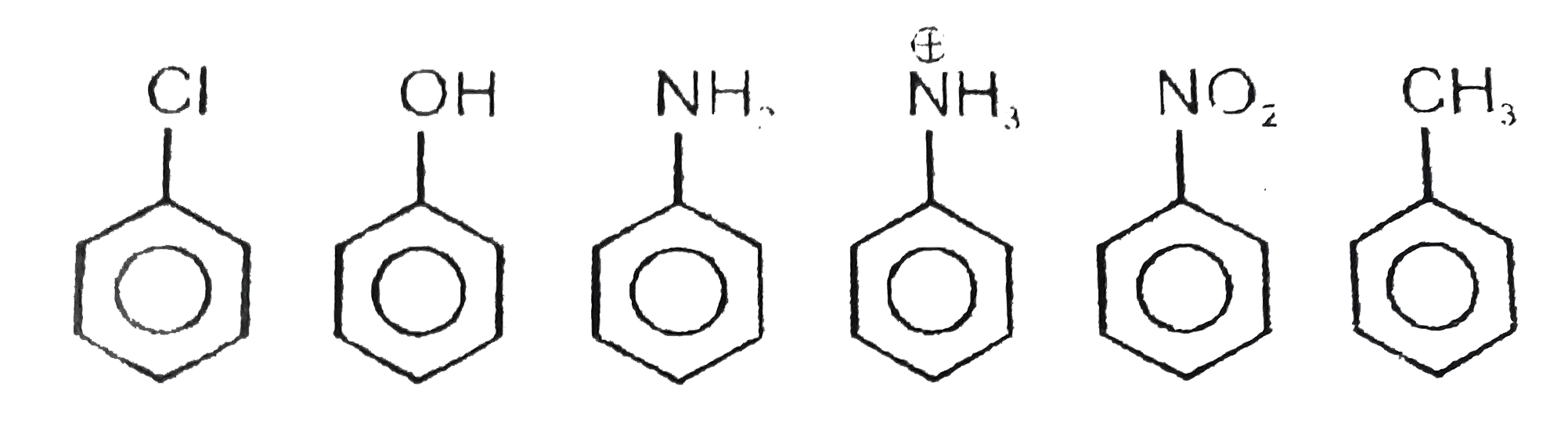
How many of the following compounds are more reactive than benzene towards electrophilic substitution.

Text Solution

Verified by Experts

The correct Answer is:
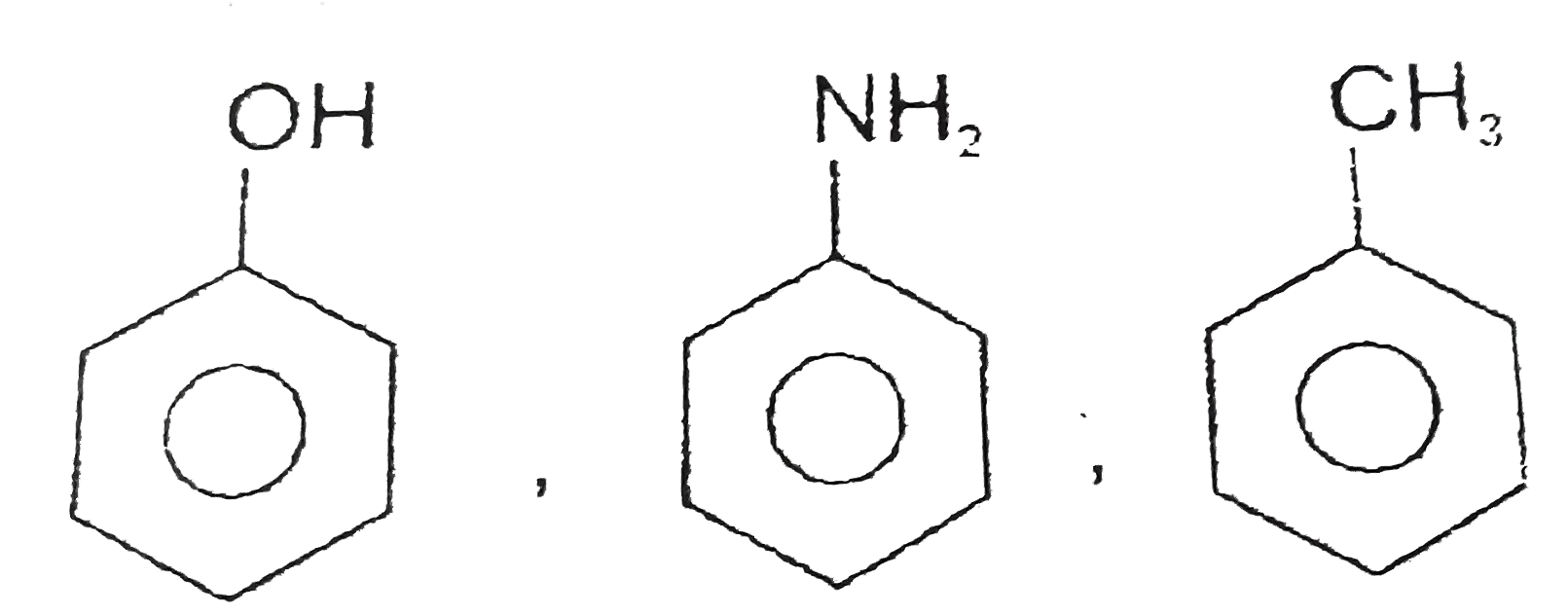
3


Are more reactive than benzene towards electrophilic substitution.
Promotional Banner

Topper's Solved these Questions

  • TEST PAPERS

    RESONANCE ENGLISH|Exercise PT-01|30 Videos
  • TEST PAPERS

    RESONANCE ENGLISH|Exercise Pt-02|30 Videos
  • TEST PAPERS

    RESONANCE ENGLISH|Exercise PART - III CHEMISTRY|20 Videos
  • SURFACE CHEMISTRY

    RESONANCE ENGLISH|Exercise Section - 5|1 Videos
  • TEST SERIES

    RESONANCE ENGLISH|Exercise CHEMISTRY|50 Videos

Similar Questions

Explore conceptually related problems

Among the following compounds, the decreasing order of reactivity towards electrophilic substitution is

How many of these compounds are more reactive towards electrophilic substitution reaction than toluene. Phenol, Anlline, Anisole, Benzaldehyde, Chorobenzene,

Which of the folliwng compounds is the most reactive towards electrophilic substitution reaction?

The correct order of reactivity towards electrophilic substitution is

Consider the following compounds: the correct order towards electrophilic substitution reaction is

Arrange the following compounds in order of increasing reactivity towards nucleophilic substitution:

Which of the following compounds is most reactive in electrophilic aromatic substitution?

Among the following compounds the one that is most reactive towards electrophilic nitration is

Among the following compounds the one that is most reactive towards electrophilic nitration is

RESONANCE ENGLISH-TEST PAPERS-Chemistry
  1. When is mixed and reacted with (Br(2))/(KOH) then how many products a...

    Text Solution

    |

  2. How many electron in K (Z =19) have n = 2, l = 1 ?

    Text Solution

    |

  3. How many of the following compounds are more reactive than benzene tow...

    Text Solution

    |

  4. In a diatomic molecule the bond distance is 1 xx 10^(-8) cm. Its dipol...

    Text Solution

    |

  5. Two types FXF angles are presnet in which of the following molecule (X...

    Text Solution

    |

  6. Which one of the following compounds is a peroxide ?

    Text Solution

    |

  7. Which of the following is thermally stable carbonate?

    Text Solution

    |

  8. Which of the following statements is correct with respect to the metal...

    Text Solution

    |

  9. The electrode potentials for Cu^(2+) (aq) +e^(-) rarr Cu^+ (aq) ...

    Text Solution

    |

  10. During electrolysis of an aqueous solution of CuSO(4) using copper ele...

    Text Solution

    |

  11. Densities of diamond and graphite are 3.5g//mL and 2.3g//mL Delta(r)H...

    Text Solution

    |

  12. How many electron in K (Z =19) have n = 3, l = 1 ?

    Text Solution

    |

  13. At least how many half-lives should elapse for a 1^(st) order reaction...

    Text Solution

    |

  14. Which of the following does not represent a first order reation?

    Text Solution

    |

  15. How many electron in Na (Z =11) have n = 2, l = 0 ?

    Text Solution

    |

  16. How many electron in Na (Z =11) have n = 3, l = 0 ?

    Text Solution

    |

  17. dz^(2) orbital has:

    Text Solution

    |

  18. How many electron in Na (Z =11) have n = 2, l = 1 ?

    Text Solution

    |

  19. How many electron in Al (Z =13) have n = 3, l = 0 ?

    Text Solution

    |

  20. Ag and Au are extracted by leaching their ores with a dilute solution ...

    Text Solution

    |

