Home
Class 12
CHEMISTRY
Identify A,C(6)H(11)N, for which the giv...

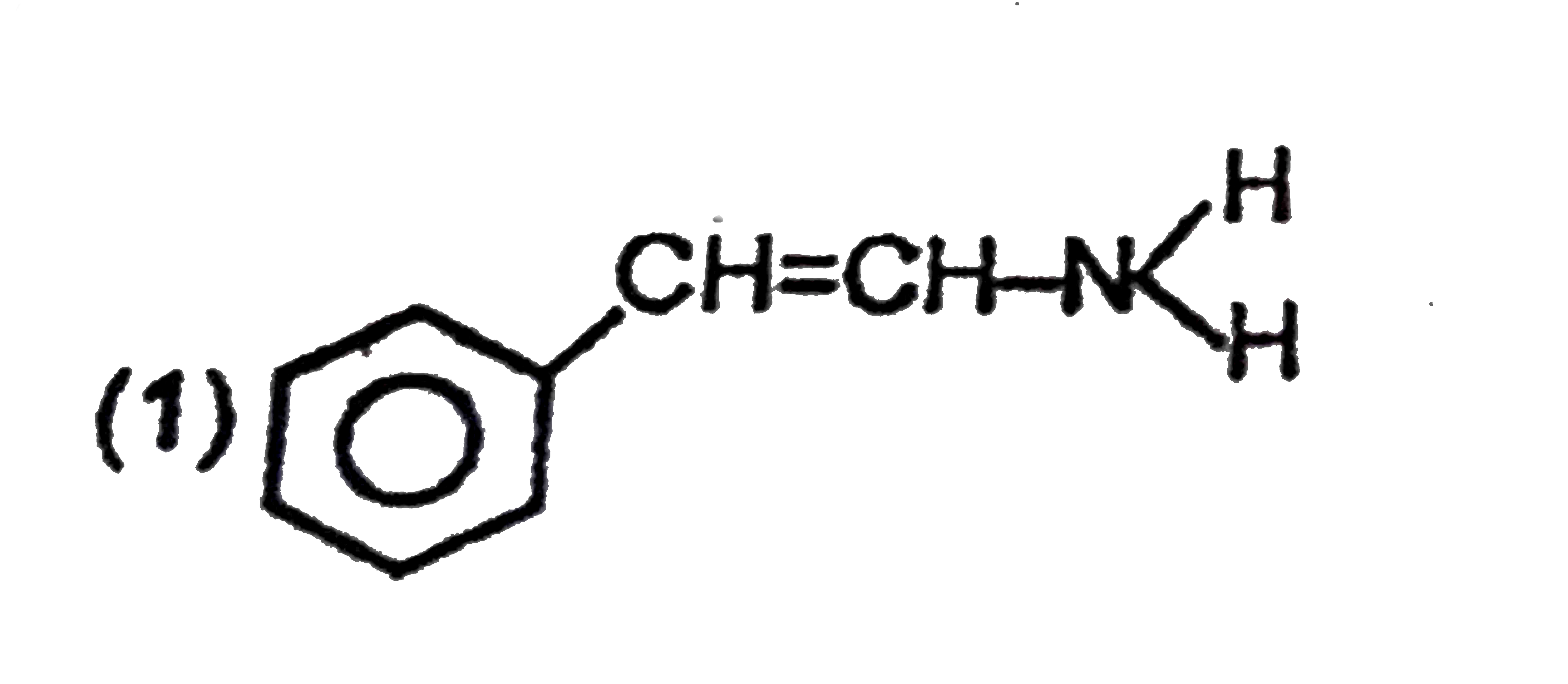
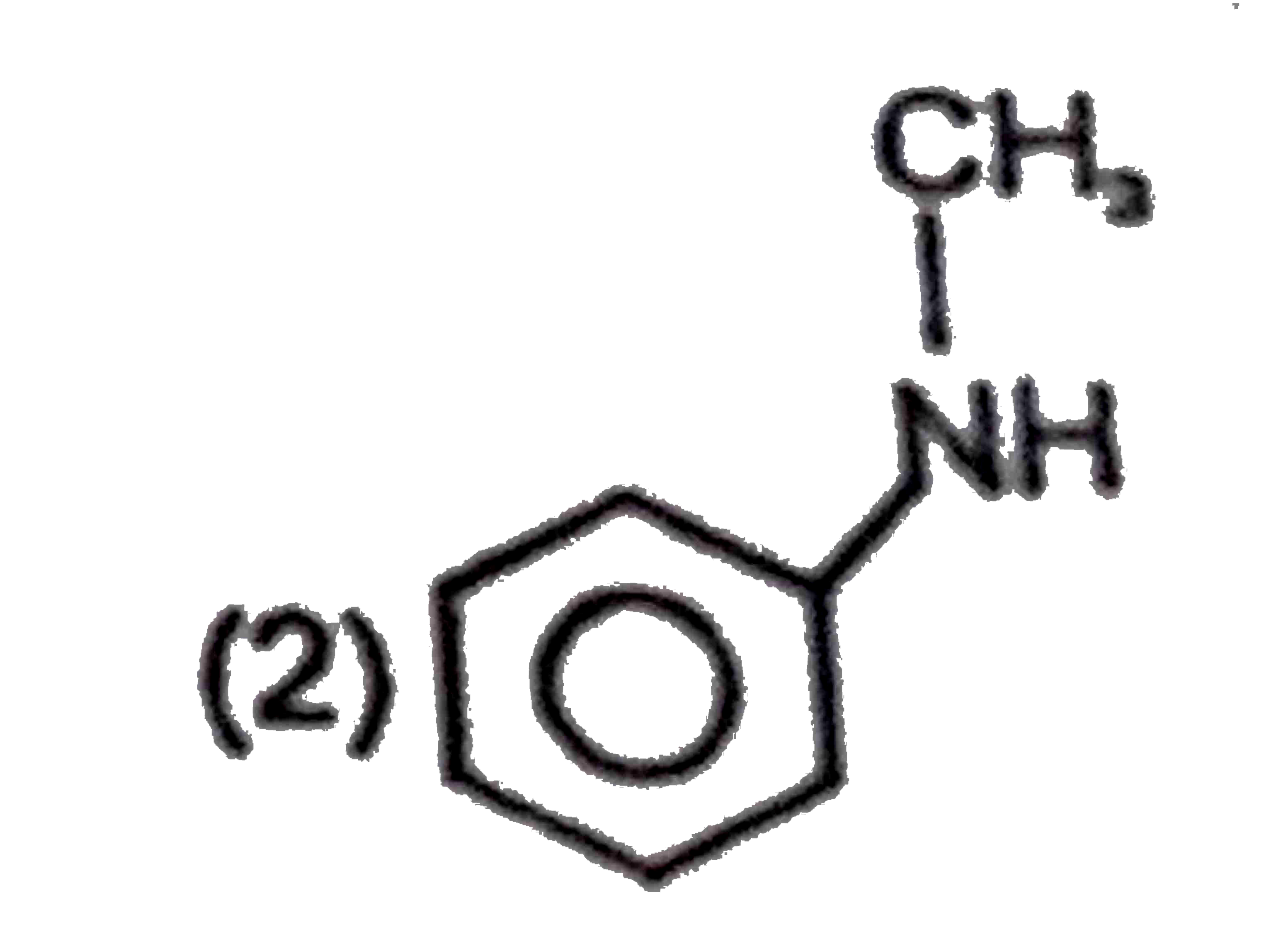
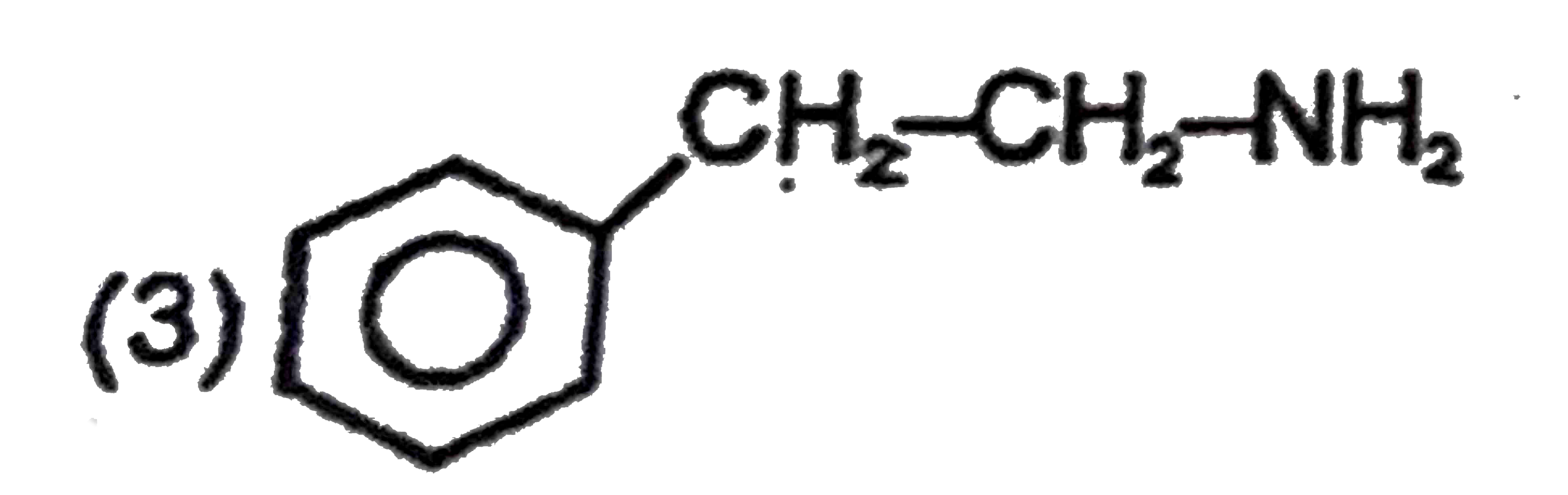
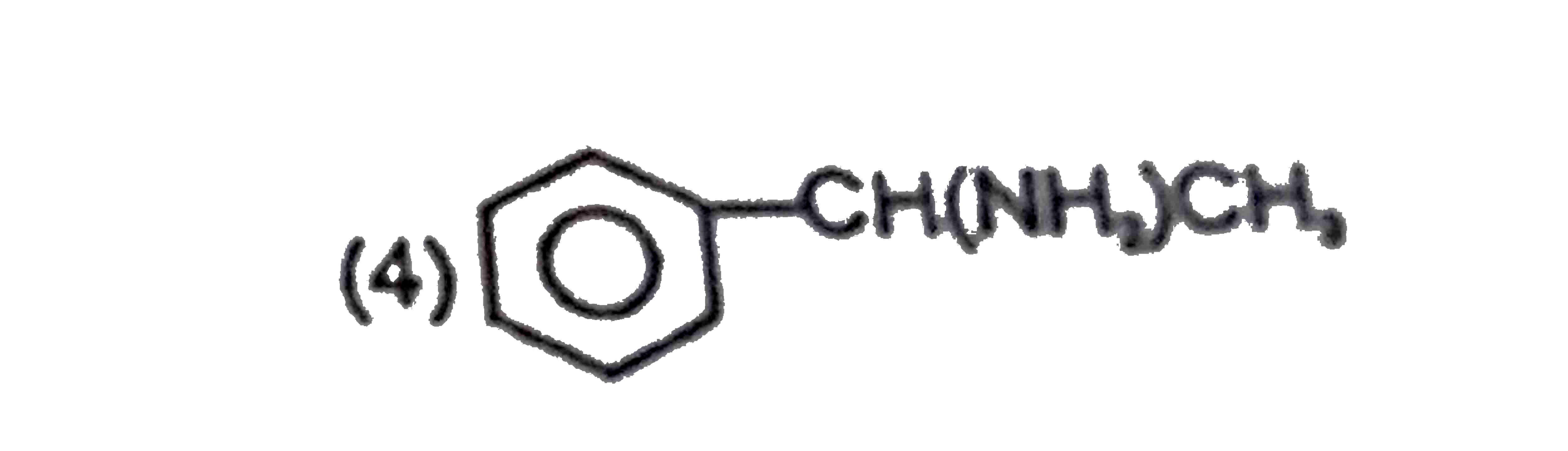
Identify `A,C_(6)H_(11)N`, for which the given information is availabel .
`(i)"Baeyer reagent - No test "(ii)Ph-SO_(2)Clrarr "acidic compound soluble in "KOH`
`(ii)" Dissolves in aq. HCl "(iv)"Optically active"`

A

B

C

D

Text Solution

Verified by Experts

The correct Answer is:

4

Only `(4)` gives the above characteristic tests.
Promotional Banner

Topper's Solved these Questions

  • NITROGEN CONTAINING COMPOUNDS

    RESONANCE ENGLISH|Exercise ORGANIC CHEMISTRY(Nitrogen containing Compounds)|30 Videos
  • NITROGEN & OXYGEN FAMILY

    RESONANCE ENGLISH|Exercise Part-III Practice Test-2 (JEE (Advanced Pattern))|23 Videos
  • NUCLEAR CHEMISTRY

    RESONANCE ENGLISH|Exercise STAGE-II|1 Videos

Similar Questions

Explore conceptually related problems

Compound (A), C_(8)H_(6)NOBr , is optically active. Reduction of (A) gives (B) which reacts with nitrouos acid to form (C), dihydric alcohol. Benzene sulphonyl chloride reacts with (B) to give a product soluble in NaOH. Hydrolysis of (A) gives (D) which is an optically active acid. (A) does not give any precipitate with aqueous AgNO_(3) . Controlled oxidation of (A) gives monobromo benzoic acid. Compound (A) on reaction with Br_(2)//Fe gives only one compound. Identify (A), (B), (C), and (D).

Three compounds A,B and C all have molecular formula C_(5)H_(8) All the compound rapidly decolourise Br_(2) in C Cl_(4) . All three give a position test with Baeyer's reagent. And all the three are soluble in cold conc. H_(2)SO_(4) . Compound A gives a precipitate when treated with ammonical AgNO_(3) solution. but compounds B and C do not compounds A and B both yield pentane (C_(5)H_(12)) when they are treated with excess H_(2) in the presence of Pt catalyst. Under these conditions, compound C absorbs only one mole of H_(2) and gives a product with the formula C_(5)H_(10) On oxidation with hot acidified KMnO_4, B gave acetic acid and CH_3CH_2COOH. Identify compounds A, B, and C.

A hydrocarbon 'A' (C_(4)H_(8)) on reaction HCl gives a compound 'B', (C_(4)H_(9)Cl) which on reaction with 1 mol of NH_(3) gives compounds 'C' (C_(4)H_(11)N) . On reacting with NaNO_(2) and HCl followed by treatment with water compound 'C' yields an optically active alcohol, 'D'. Ozonolysis of 'A' given 2mols of acetyldehyde. Identify compound 'A' to 'D'. Explain the reaction involved.

Which out of the following is : ( a) the weakest acid (b) the strongest acid ? (i) C_(2)H_(5)OH (ii) CH_(3)COOH (iii) C_(6)H_(5)OH (iv) H_(2)O

Compound A is chiral and has the molecular formula C_(8)H_(11)N . When A reacts nitrous acid then occurs a brisk evolution of N_(2) gas. A dissolves in aqueous HCl. What is the identity of A ?

Identify correct order of pH of the given solutions at 25^(@)C (I) NH_(4)Cl " " (II) Na_(2)CO_(3) " " (III) K_(2)SO_(4)

An optically inactive compound (A) having molecular formula C_(4)H_(11)H on treatment with HNO_(2) gave an alconot (B) which on heating with conc. H_(2)SO_(4) at 440 k gave an alkene ( C) . ( C) on treatment with HBr gave an optically active compound (D ) having molecular formula C_(4)H_(9)Br Identify (A) ,(B) ,(C) and (D).

Carbene intermediates are produced by the photolysis of diazomethane (CH_2N_2) or kenene (CH_2 = C = O) . They are also produced by the reaction of CHX_3 with base or by Simmons-Smith reaction. There are two types of carbenes, singlet and triplet. They are so called due to their spin state. An optically active alkene (I) with lowest molecular mass on hydrogenation gives optically inactive alkene, but on insertion of methylene carbene ( : CH_2) in (I) , it gives optically active compound (II) . The compounds (I) and (II) are : .

RESONANCE ENGLISH-NITROGEN CONTAINING COMPOUNDS-ORGANIC CHEMISTRY(Nitrogen containing Compounds)
  1. The uncertainties in position and the velocity of a particle are 10^(-...

    Text Solution

    |

  2. In the diazotisation of anline with sodium nitrite and hydrochloride a...

    Text Solution

    |

  3. Starting from propanoic acid, the following reaction were carried acid...

    Text Solution

    |

  4. In the reaction, C(6)H(5)NH(2)underset(0-5^(@)C)overset(NaNO(2)+HCl)...

    Text Solution

    |

  5. In the given reaction product P is :

    Text Solution

    |

  6. P ( major product ), P is

    Text Solution

    |

  7. Identify A,C(6)H(11)N, for which the given information is availabel . ...

    Text Solution

    |

  8. An optically inactive amine (A) is methylated with excess of CH(3)I an...

    Text Solution

    |

  9. The product P formed in the given reaction sequence is .

    Text Solution

    |

  10. Identify the correct statement.

    Text Solution

    |

  11. Which statement is incorrect.

    Text Solution

    |

  12. What will be the major product when 2-Aminopropane is treated with nit...

    Text Solution

    |

  13. Which of the following product (s) will be obtained when isopropylamin...

    Text Solution

    |

  14. Which of the following compounds will give N(2)(g) on treatment with H...

    Text Solution

    |

  15. Compound (x)(m.f=C(7)H(8)N), on reaction with NaNO(2) and conc. HCl at...

    Text Solution

    |

  16. Pyridine is less basic than triethylamine because

    Text Solution

    |

  17. The reagents are

    Text Solution

    |

  18. Arrange following Amines for rate of reaction with CHCl(3)+KOH ?

    Text Solution

    |

  19. Which of the following is correct order of basic strength for the give...

    Text Solution

    |

  20. Which nitrogen atom is most basic ?

    Text Solution

    |
