Text Solution
Verified by Experts
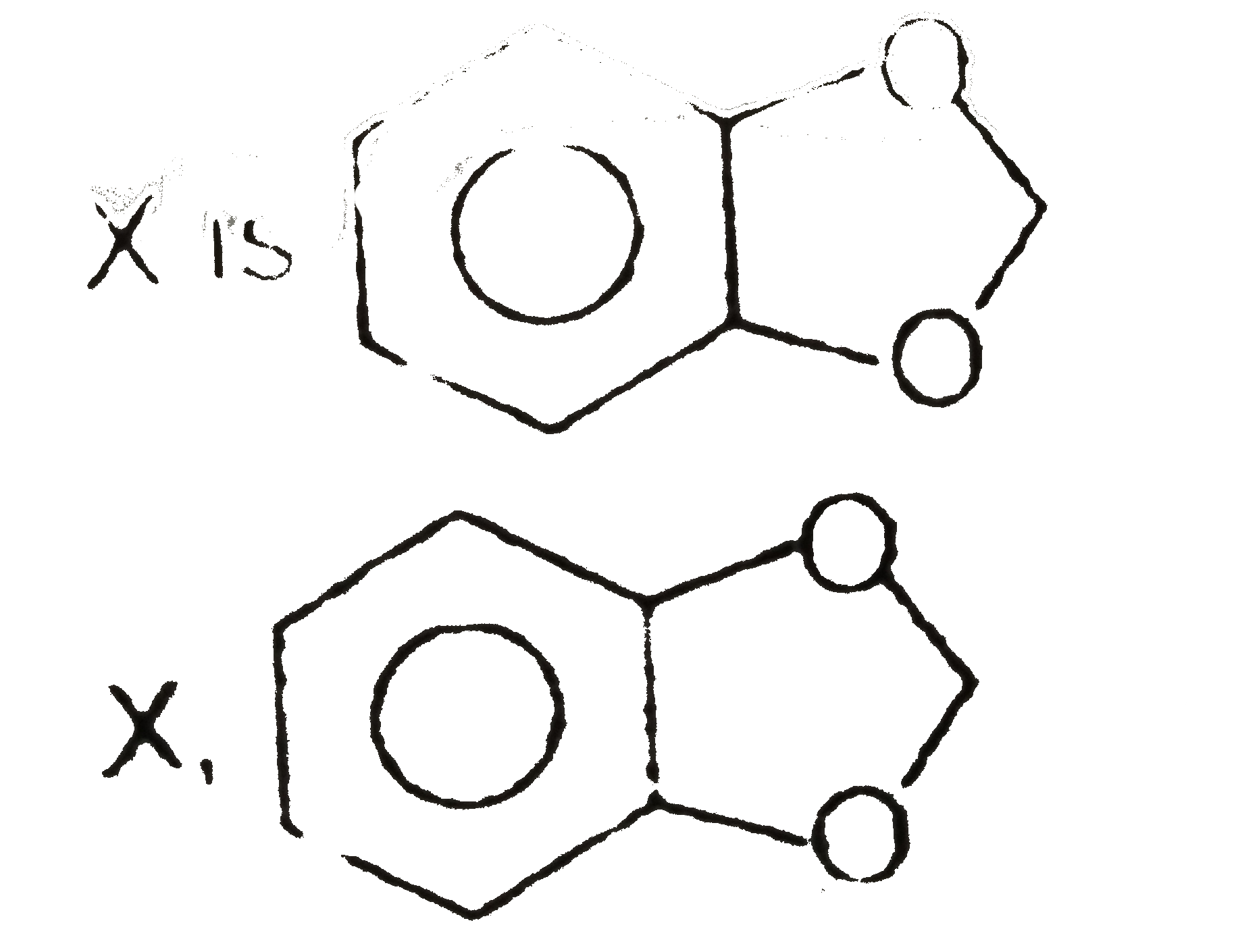
The correct Answer is:



Similar Questions
Explore conceptually related problems
Recommended Questions
- An organic compound (X) has molecular formula C(7)H(6)O(2) and it do...
Text Solution
|
- An aromatic compound of molecular formula C(6)H(4)Br(2) was nitreated ...
Text Solution
|
- A compound (X) with the molecular formula C(3)H(8)O can be oxidized to...
Text Solution
|
- An organic compound (X) has molecular formula C(7)H(6)O(2) and it do...
Text Solution
|
- Compound (A)C(7)H(8)O is insoluble in aqueous NaHCO(3) and dissolves i...
Text Solution
|
- Compound (A)C(7)H(8)O is insoluble in aqueous NaHCO(3) and dissolves i...
Text Solution
|
- A compound X with moleuclar formula C(3)H(8)O can be oxidized to a com...
Text Solution
|
- A compound X with molecular formula C(3)H(8)O can be oxidised to a com...
Text Solution
|
- Compound 'X' with the molecular formula C(3)H(8)O on vigronous ox...
Text Solution
|