Home
Class 12
CHEMISTRY
The compound X(C(7)H(9)N) reacts with be...

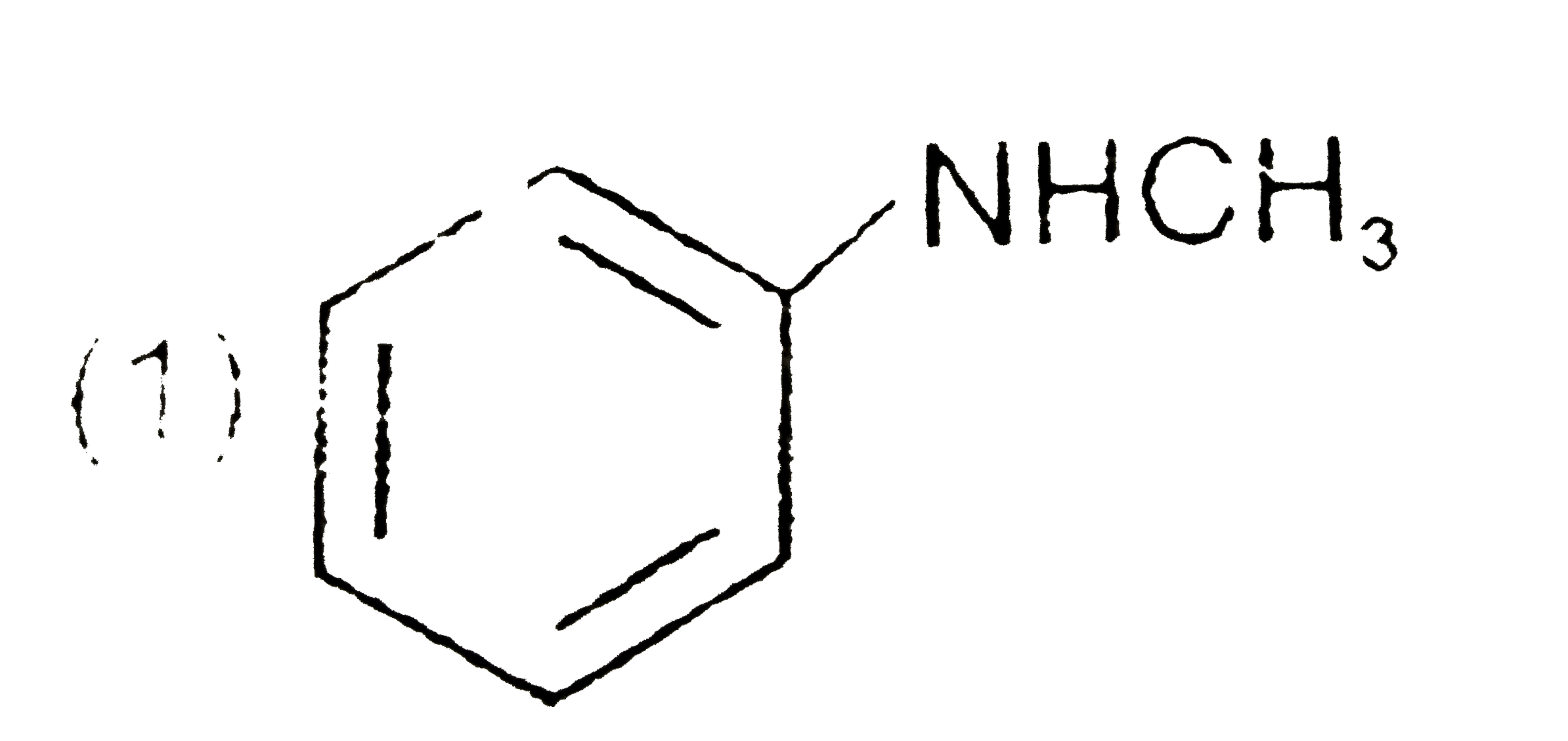
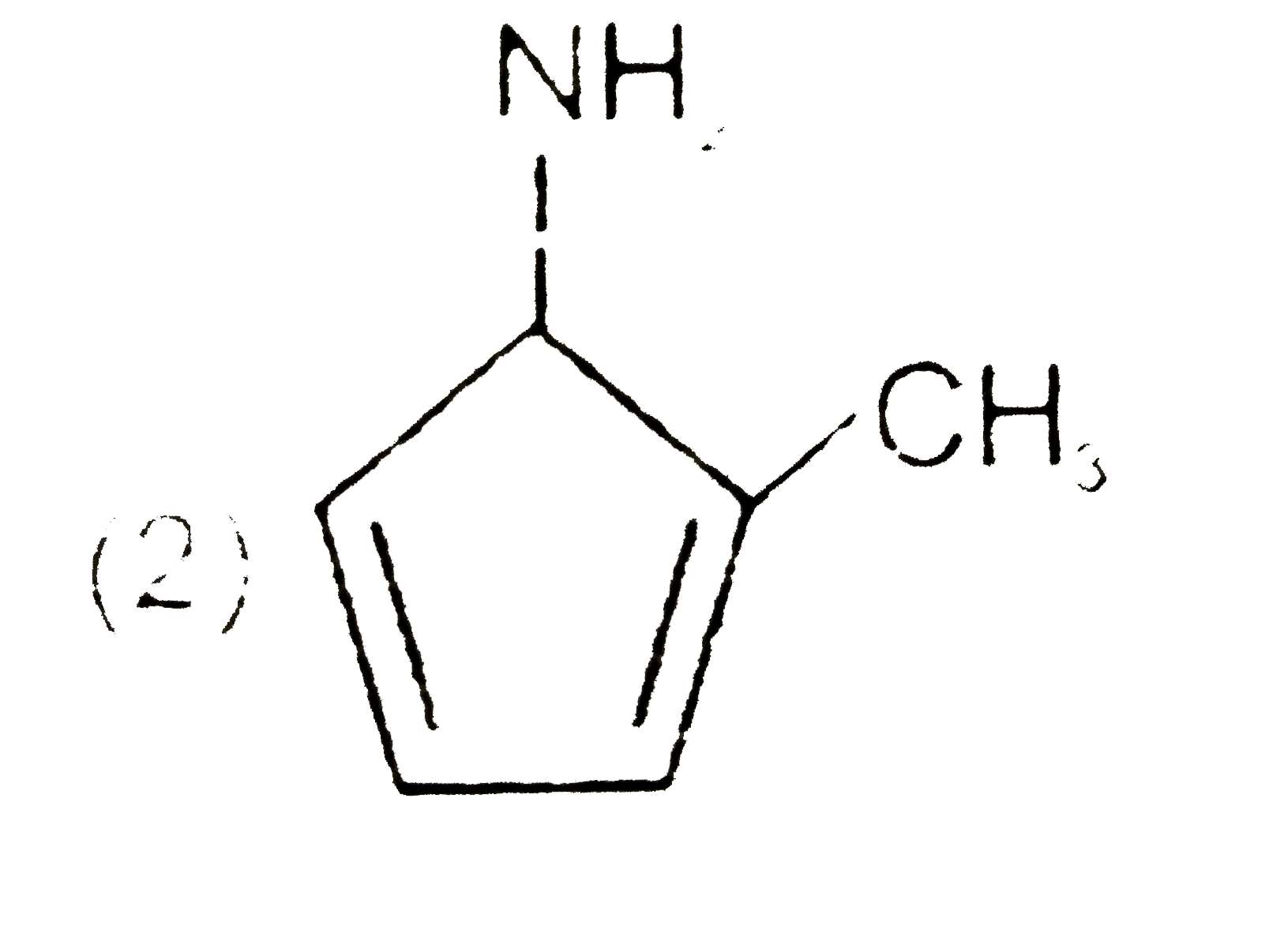
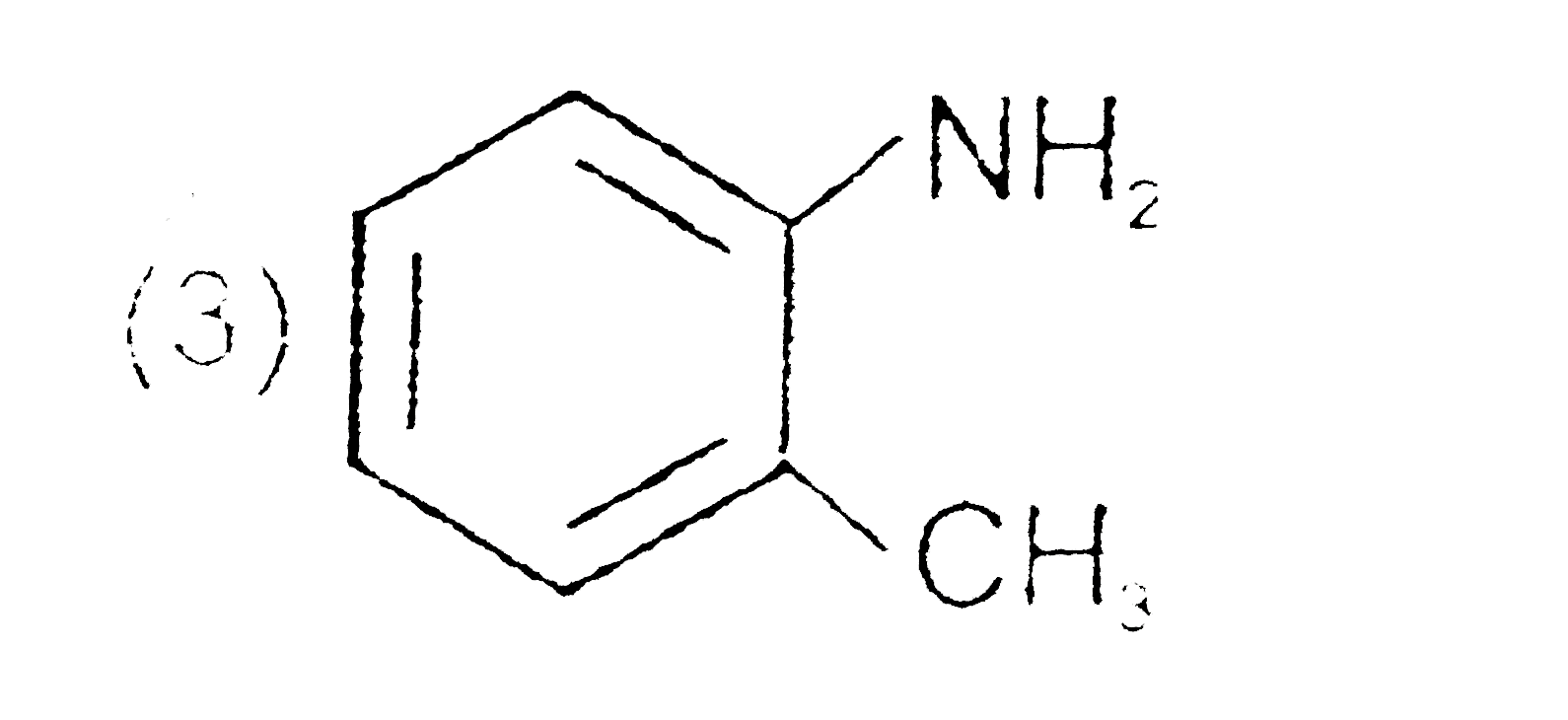
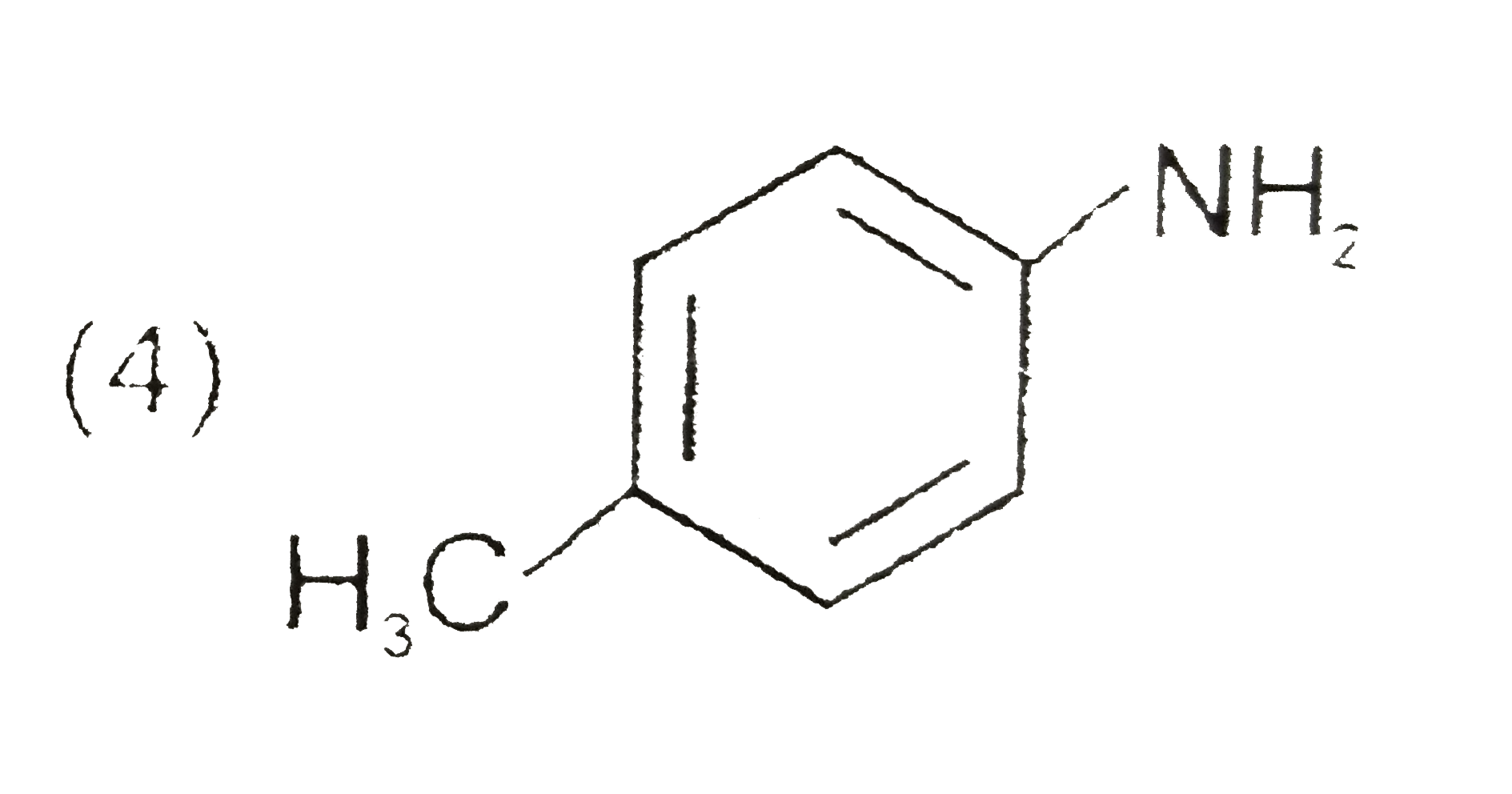
The compound `X(C_(7)H_(9)N)` reacts with benzensulfonyl chloride to give `Y(C_(13)H_(13)NO_(2)S)` which is insoluble in alkali. The compound X is-

A

B

C

D

Text Solution

AI Generated Solution

The correct Answer is:

To solve the problem, we need to identify the compound X (C₇H₉N) that reacts with benzene sulfonyl chloride to form compound Y (C₁₃H₁₃NO₂S), which is insoluble in alkali. ### Step-by-Step Solution: 1. **Understanding the Reaction**: - The reaction involves compound X (C₇H₉N) reacting with benzene sulfonyl chloride (C₆H₅SO₂Cl). This is a typical reaction involving amines and sulfonyl chlorides, known as the Hinsberg test, which can help distinguish between primary, secondary, and tertiary amines. 2. **Analyzing the Products**: - The product Y (C₁₃H₁₃NO₂S) formed from this reaction is stated to be insoluble in alkali. - According to the Hinsberg test: - Primary amines yield products that are soluble in alkali. - Secondary amines yield products that are insoluble in alkali. - Tertiary amines do not react with the reagent. 3. **Determining the Type of Amine**: - Since the product Y is insoluble in alkali, we can conclude that compound X must be a secondary amine. 4. **Finding the Structure of X**: - The molecular formula of X is C₇H₉N. - A secondary amine can be represented as R₂NH, where R groups are hydrocarbon chains or rings. - To satisfy the formula C₇H₉N, we can consider possible structures. One likely candidate is N-ethyl aniline (C₆H₅NHCH₂CH₃), which has a total of 7 carbons, 9 hydrogens, and 1 nitrogen. 5. **Verifying the Reaction**: - When N-ethyl aniline reacts with benzene sulfonyl chloride, it will form N-ethyl benzene sulfonamide (C₆H₅SO₂N(CH₂CH₃)), which is indeed C₁₃H₁₃NO₂S. - This product is consistent with the information given about Y being insoluble in alkali. 6. **Conclusion**: - Therefore, the compound X is N-ethyl aniline (C₇H₉N). ### Final Answer: The compound X is N-ethyl aniline (C₇H₉N).

To solve the problem, we need to identify the compound X (C₇H₉N) that reacts with benzene sulfonyl chloride to form compound Y (C₁₃H₁₃NO₂S), which is insoluble in alkali. ### Step-by-Step Solution: 1. **Understanding the Reaction**: - The reaction involves compound X (C₇H₉N) reacting with benzene sulfonyl chloride (C₆H₅SO₂Cl). This is a typical reaction involving amines and sulfonyl chlorides, known as the Hinsberg test, which can help distinguish between primary, secondary, and tertiary amines. 2. **Analyzing the Products**: ...
Promotional Banner

Similar Questions

Explore conceptually related problems

A compound (X) having the molecfular formula C_(3)H_(9)N reacts with benzenesulphonyl chloride to form a solild insoluble in alkali is . The compound (X) is

A colours substance 'A' (C_(6)H_(7)) is sparingly soluble in water and gives a water soluble comound 'B' on treating with mineral acid. On reaction wih CHCl_(3) and alcoholic potash 'A' produces an obnoxious smell due to the formation of compound 'C'. Reaction of 'A' with benzensulphonyl chloride gives compound 'D' which is soluble in alkali. WIth NaNO_(2) and HCl, 'A' forms compound 'E' which reacts with phenol in alkaline medium to give an orange dye 'F'. Identify compounds 'A' to'F'.

Give the structure of (A) (explanations are not required). A (C_3H_9N) reacts with bezenesulphonyl chloride to give a solid insoluble in alkali'.

A compound A having molecular formula (C_3 H_9 N) on treatment with benzenesulfonyl chloride gives an insoluble solid. Identify A

A compound Z with molecular formula C_(3)H_(9)N reacts with C_(6)H_(5)SO_(2)Cl to give a solid, insoluble in alkali. Identify Z.

An organic compound (A) (C_(5)H_(7)OCl) reacts rapidly with ethanol to give (B) (C_(7)H_(12)O_(2)) . (A) also reacts with water to produce an acid which reacts with bromine to give (C ) (C_(5)H_(8)Br_(2)O_(2)) . (B) on boiling with H_(2)SO_(4) forms an acid (D). When (D) is oxidised with KMnO_(4) an acid (E ) (C_(4)H_(6)O_(3)) is produced. On mild heating, (E ) gives (F) (C_(3)H_(6)O) which cannot be oxidised by ammoniacal AgNO_(3) . Identify the compounds (A) to (F).
