Home
Class 12
CHEMISTRY
Write the number of intermediate which i...


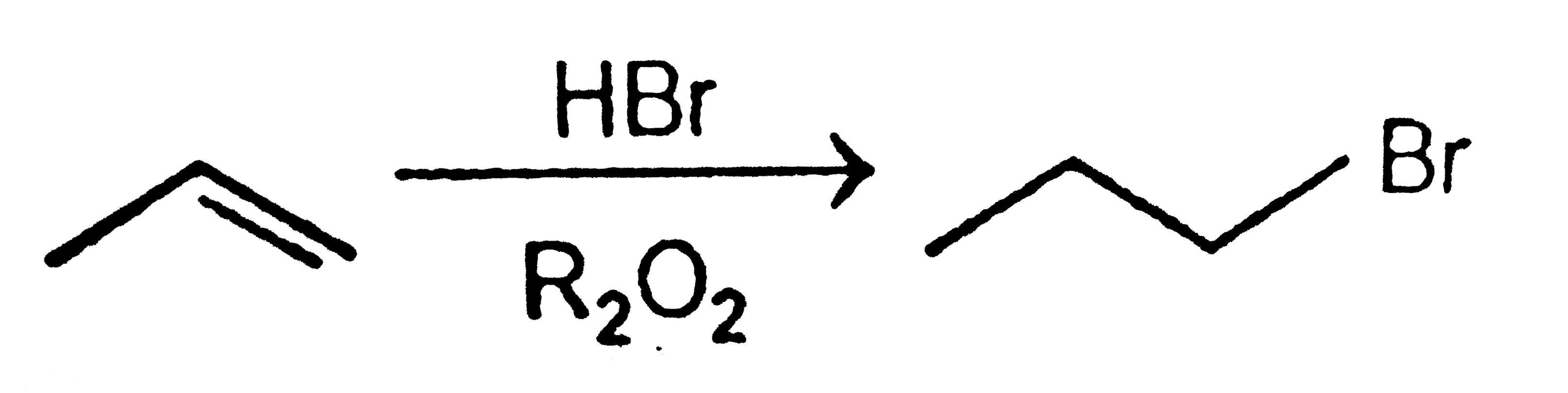
Write the number of intermediate which is involved in the given reaction is:
1. For Carbocation
2. For Free radical
3. For Carbanion
4. For Cyclicbrominium ion

A

Carbocation

B

Free radical

C

Carbanion

D

Cyclicbrominium ion

Text Solution

Verified by Experts

The correct Answer is:

B

NA
Promotional Banner

Similar Questions

Explore conceptually related problems

Number of electrons involved in the reaction when 0.1 mol NH_(3) dissolved in water

Reaction intermdiates are short lived species and are highly reactive. They are formed by heterolytic and homolytic bond fission. There are various types of reaction intermediates in which the most important are carbocation , carbanion and free radical. Carbocation is an organic species in which carbon have positive charge and six electrons in its outermost shell. The stability of carbocation can be increased by positive inductive effect, hyperconjugation and delocalisation. If alpha -atom with respect to carbocation has one or more lone pair of electron then lone pair of electron strongly stabilises the carbocation due to octet completion. Species in which carbon have negative charge is called carbanion. Carbanion carries three bond pairs and one lone pair. The stability of carbanion can be increased by negative inductive effect, negative mesomeric effect and delocalisation. Free radical is a species which have seven electrons in its outermost shell. The stability of free radical can be increased by hyperconjugation and delocalisation. The stability order of following carbocations is

Which of the following reaction mechanism doe not involves carbocation as an intermediate ?

Reaction intermdiates are short lived species and are highly reactive. They are formed by heterolytic and homolytic bond fission. There are various types of reaction intermediates in which the most important are carbocation , carbanion and free radical. Carbocation is an organic species in which carbon have positive charge and six electrons in its outermost shell. The stability of carbocation can be increased by positive inductive effect, hyperconjugation and delocalisation. If alpha -atom with respect to carbocation has one or more lone pair of electron then lone pair of electron strongly stabilises the carbocation due to octet completion. Species in which carbon have negative charge is called carbanion. Carbanion carries three bond pairs and one lone pair. The stability of carbanion can be increased by negative inductive effect, negative mesomeric effect and delocalisation. Free radical is a species which have seven electrons in its outermost shell. The stability of free radical can be increased by hyperconjugation and delocalisation. The stability order of following free radicals is: C_(6)H_(5)underset(I)CH_(2)overset(*)CH_(2)" "CH_(3)underset(II)CH_(2)overset(*)CH_(2)" "underset(" "III)(C_(6)H_(5))overset(*)CH_(2)" "underset(IV)(CH_(3)^(*)

Reaction intermdiates are short lived species and are highly reactive. They are formed by heterolytic and homolytic bond fission. There are various types of reaction intermediates in which the most important are carbocation , carbanion and free radical. Carbocation is an organic species in which carbon have positive charge and six electrons in its outermost shell. The stability of carbocation can be increased by positive inductive effect, hyperconjugation and delocalisation. If alpha -atom with respect to carbocation has one or more lone pair of electron then lone pair of electron strongly stabilises the carbocation due to octet completion. Species in which carbon have negative charge is called carbanion. Carbanion carries three bond pairs and one lone pair. The stability of carbanion can be increased by negative inductive effect, negative mesomeric effect and delocalisation. Free radical is a species which have seven electrons in its outermost shell. The stability of free radical can be increased by hyperconjugation and delocalisation. Which of the following is the most stable carbanion intermediate ?

Which of the following reactions involve carbanion enolalte as reactive intermediate?

The reaction intermediates involved in the addition of HBr to propene in the presence of an organic peroxide are (a) free radicals (b)carbocations (c)carbanions (d)carbenes

Number of electron involved in the reduction of Cr_(2)O_(7)^(2-) ion in acidic solution to Cr^(3+) is:

Number of electron involved in the reduction of Cr_(2)O_(7)^(2-) ion in acidic solution of Cr^(3+) is

Which of the following reactions are completed through free radical intermediate ?
