

Home
Class 12
CHEMISTRY
Which of the folllowing ion will be arom...

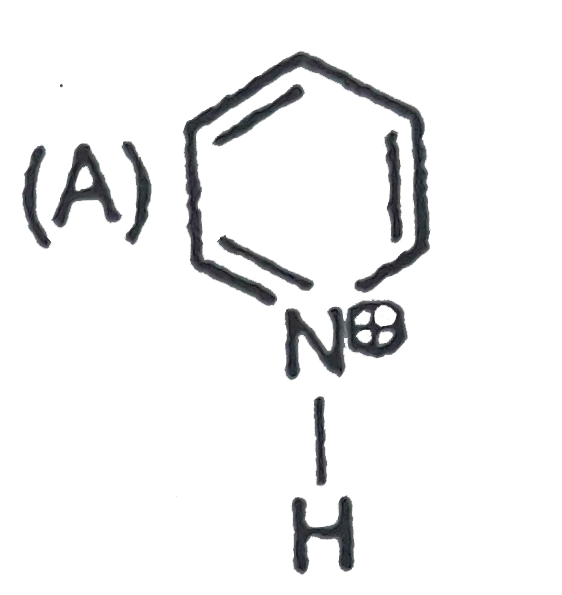
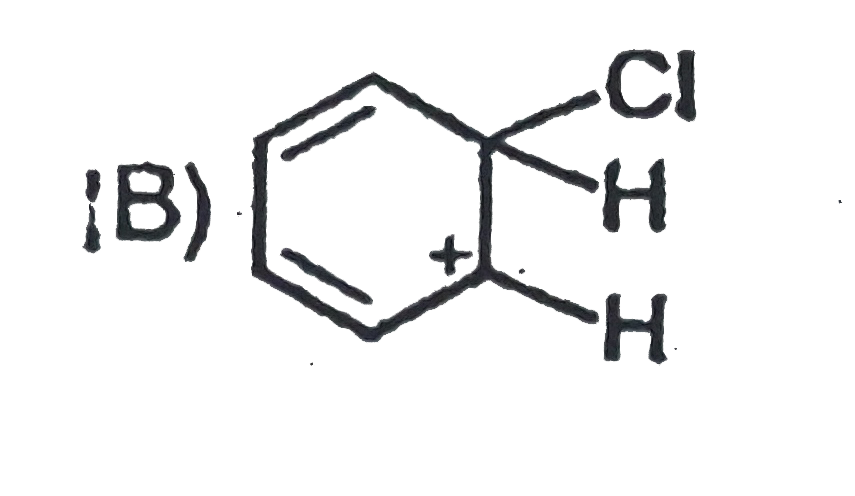
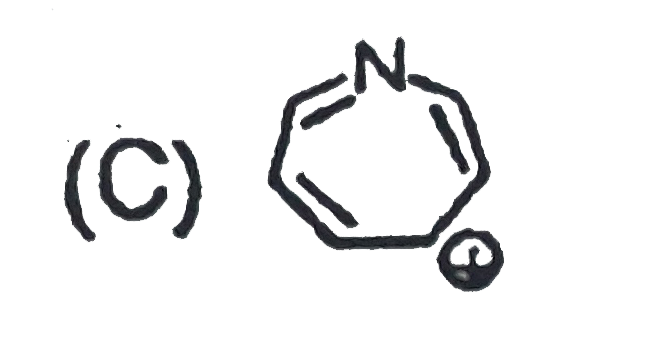
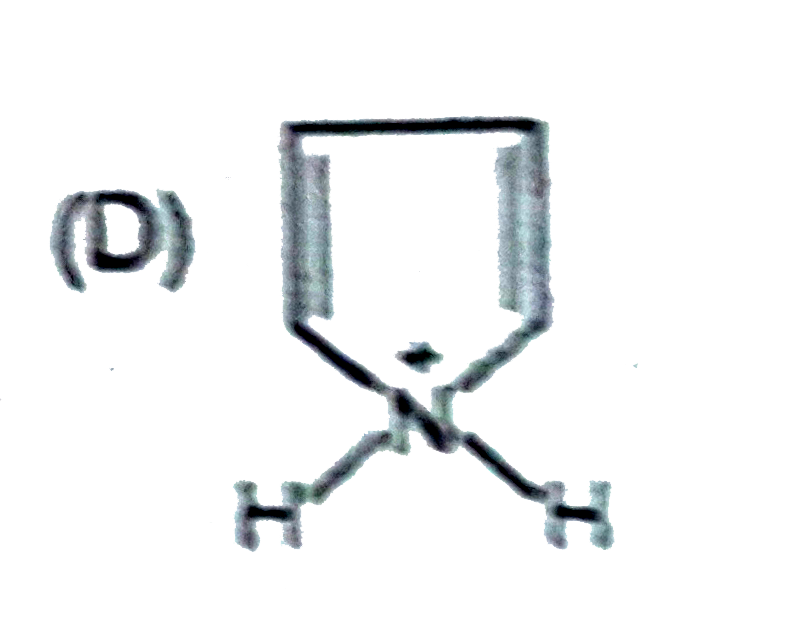
Which of the folllowing ion will be aromatic in nature ?

A

B

C

D

Text Solution

AI Generated Solution

The correct Answer is:
To determine which of the following ions is aromatic in nature, we need to follow these steps: ### Step 1: Understand Aromaticity A compound is considered aromatic if it meets the following criteria: 1. It must be cyclic. 2. It must be planar (or nearly planar). 3. It must be fully conjugated (p-orbitals must overlap). 4. It must follow Huckel's rule, which states that the compound must have \(4n + 2\) π electrons, where \(n\) is a non-negative integer. ### Step 2: Identify the Ions We need to examine the given options (though they are not listed here, we will consider common aromatic ions). The pyridinium ion is a common example of an aromatic ion. ### Step 3: Analyze the Pyridinium Ion - The pyridinium ion (C5H5N) is a six-membered ring containing five carbon atoms and one nitrogen atom. - It is cyclic, planar, and fully conjugated. - The nitrogen atom contributes one lone pair, but when it becomes a pyridinium ion (C5H5N+), it loses that lone pair and becomes positively charged. - The remaining π electrons from the five carbon atoms contribute to a total of 6 π electrons, which fits Huckel's rule (\(4n + 2\) where \(n=1\)). ### Step 4: Conclusion Since the pyridinium ion meets all the criteria for aromaticity, it is indeed aromatic in nature. Therefore, the correct options that indicate aromatic ions are A and C, both being pyridinium ions. ### Final Answer The ions that are aromatic in nature are option A and option C (both pyridinium ions). ---

To determine which of the following ions is aromatic in nature, we need to follow these steps: ### Step 1: Understand Aromaticity A compound is considered aromatic if it meets the following criteria: 1. It must be cyclic. 2. It must be planar (or nearly planar). 3. It must be fully conjugated (p-orbitals must overlap). 4. It must follow Huckel's rule, which states that the compound must have \(4n + 2\) π electrons, where \(n\) is a non-negative integer. ...
Promotional Banner

Topper's Solved these Questions

  • QUALITATIVE ANALYSIS PART 1

    RESONANCE ENGLISH|Exercise A.L.P|39 Videos
  • SOLID STATE

    RESONANCE ENGLISH|Exercise PHYSICAL CHEMITRY (SOLID STATE)|45 Videos

Similar Questions

Explore conceptually related problems

Which of the following species will be aromatic ?

Which of the following is non - aromatic in nature ?

Which of the following is anti - aromatic in nature ?

Which one of the following ion is aromatic ?

Which of the following in not aromatic in nature?

Match the folllowing:

Which of the following is anti-aromatic in nature?

Which of the following species is aromatic :

RESONANCE ENGLISH-RANK BOOSTER-All Questions
  1. Which of the following reactions give alkylation product :

    Text Solution

    |

  2. The following conversion reaction can be carried out by using reacti...

    Text Solution

    |

  3. Which of the folllowing ion will be aromatic in nature ?

    Text Solution

    |

  4. Statement-1:Benzene and ethene both give reactions with electrophillic...

    Text Solution

    |

  5. Statement-1: Statement-2:Coplanar arrangement of three rings is flu...

    Text Solution

    |

  6. Statement-1:Polyacylation in benzene does not occur during Friedal Cra...

    Text Solution

    |

  7. Mole fraction of ethyl alcohol in aqueous ethyl alcohol (C2H5OH) solut...

    Text Solution

    |

  8. Mole fraction of ethyl alcohol in aqueous ethyl alcohol (C2H5OH) solut...

    Text Solution

    |

  9. Mole fraction of ethyl alcohol in aqueous ethyl alcohol (C2H5OH) solut...

    Text Solution

    |

  10. The general electrophilic substitution reaction (replacement of H. by ...

    Text Solution

    |

  11. The general electrophilic substitution reaction (replacement of H. by ...

    Text Solution

    |

  12. The product U is

    Text Solution

    |

  13. Which of the following will not be the product when S on reaction with...

    Text Solution

    |

  14. The compound C8H9Cl(A) on treatments with KCN followed by hydrolysis g...

    Text Solution

    |

  15. The compound C8H9Cl(A) on treatments with KCN followed by hydrolysis g...

    Text Solution

    |

  16. The compound C8H9Cl(A) on treatments with KCN followed by hydrolysis g...

    Text Solution

    |

  17. Mole fraction of ethyl alcohol in aqueous ethyl alcohol (C2H5OH) solut...

    Text Solution

    |

  18. Hydration of 3-phenylbut-1-ene in dil H(2)So(4) will give mainly :

    Text Solution

    |

  19. The number of atoms in 0.3mole of Na are?

    Text Solution

    |

  20. The number of atoms in 0.7mole of Na are?

    Text Solution

    |