Home
Class 12
CHEMISTRY
Which carbonyl group is protonated most ...

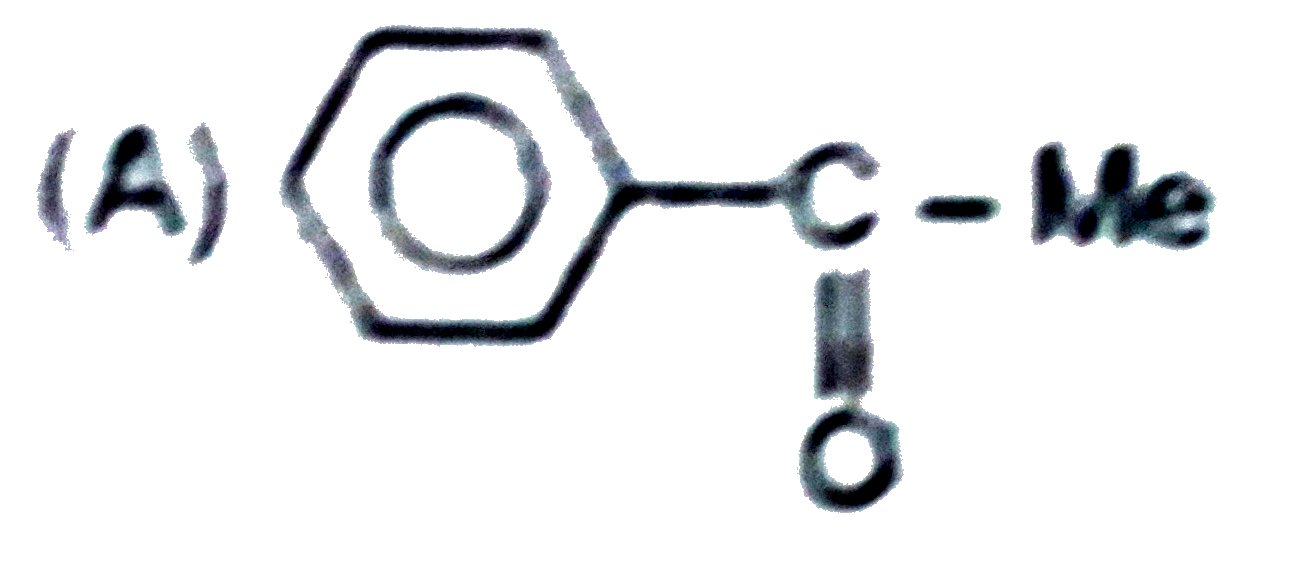
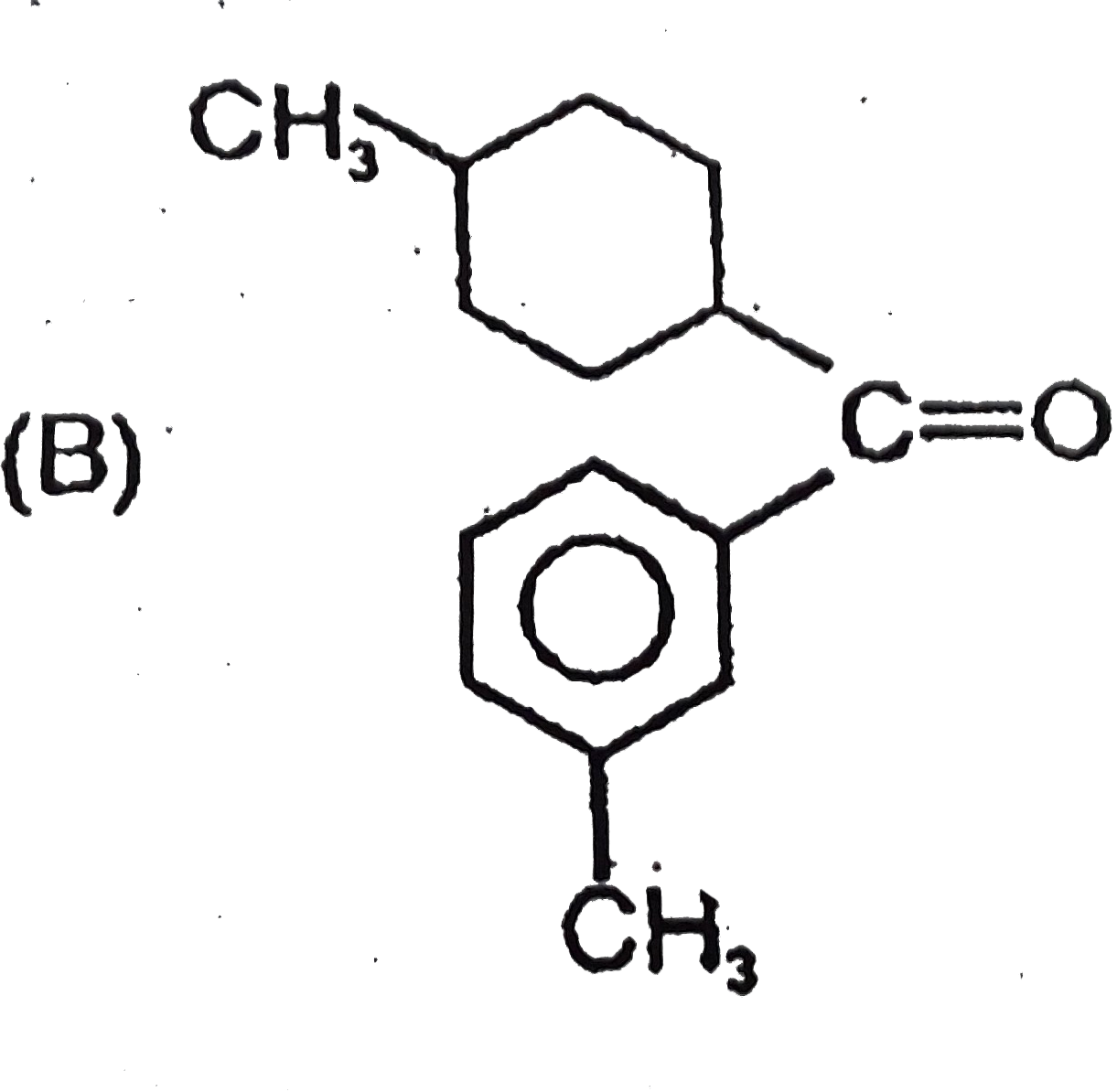
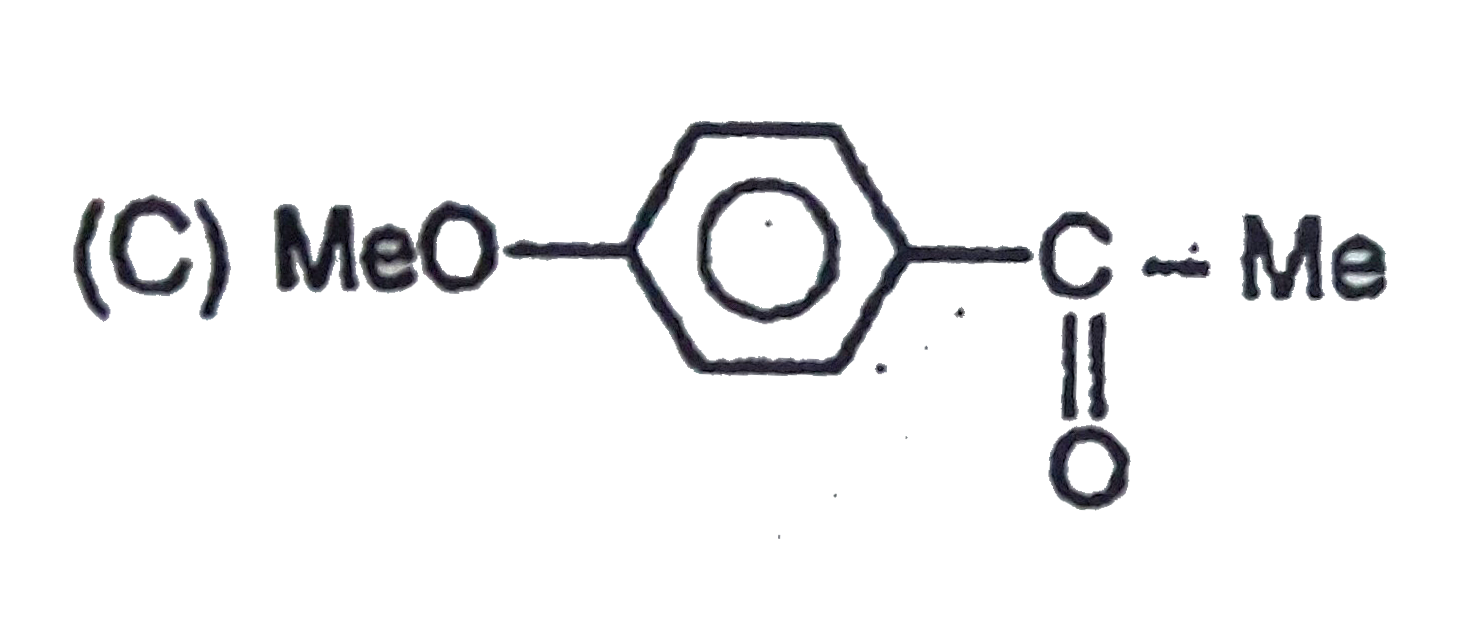
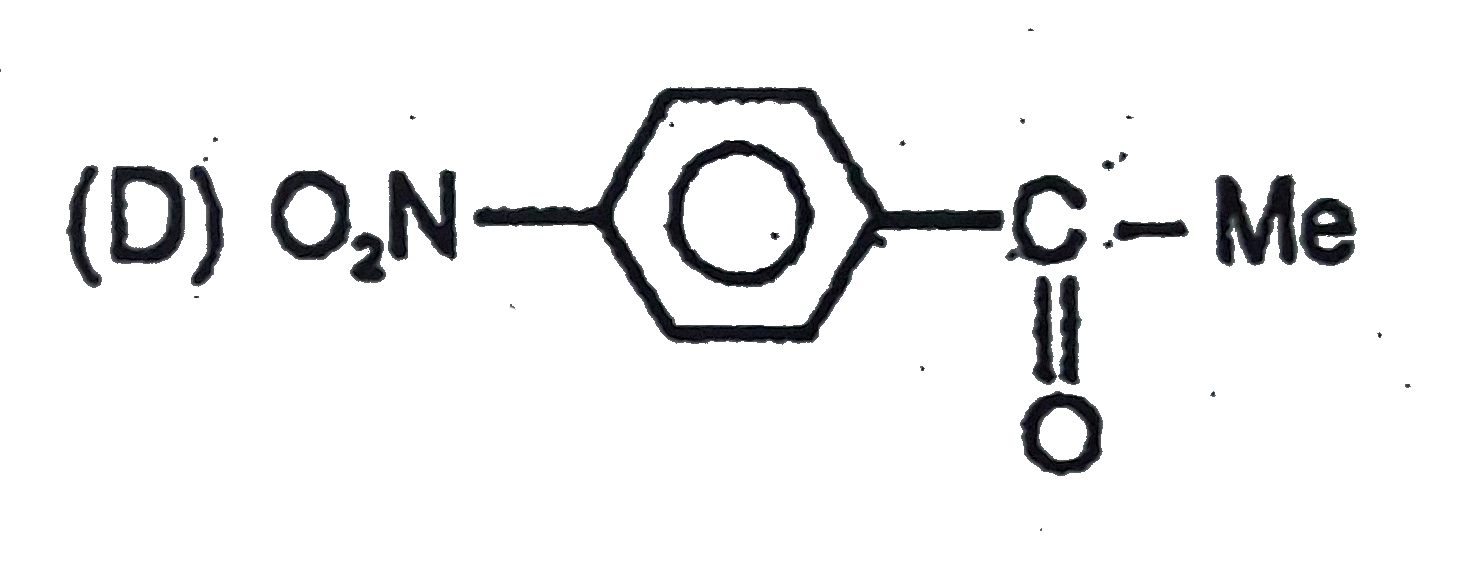
Which carbonyl group is protonated most readily in acidic solution, but gives nucleophilic addition by `NH_4NH-Ph` least readily ?

A

B

C

D

Text Solution

AI Generated Solution

The correct Answer is:

To solve the question, we need to analyze the stability of the carbocation formed upon protonation of different carbonyl groups and their reactivity towards nucleophilic addition by phenylhydrazine (NH4-NHPh). ### Step-by-Step Solution: 1. **Identify the Carbonyl Groups**: We need to consider the different carbonyl groups presented in the options. Let's denote them as A, B, C, and D for simplicity. 2. **Protonation of Carbonyl Groups**: When a carbonyl group (C=O) is protonated in an acidic solution, it forms a more electrophilic species. The stability of the resulting carbocation (formed after protonation) is crucial for determining which carbonyl group is protonated most readily. 3. **Evaluate Carbocation Stability**: - **Option A**: Contains a benzene ring. The carbocation formed here is moderately stable due to resonance. - **Option B**: Contains a methyl group (CH3). The +I effect from the methyl group stabilizes the carbocation, making it more stable than Option A. - **Option C**: Contains an O-Me (methoxy) group. The +M effect from the lone pair on the oxygen significantly stabilizes the carbocation, making it the most stable among the options. - **Option D**: Contains a nitro group (NO2). The -M effect from the nitro group destabilizes the carbocation, making it the least stable. 4. **Conclusion on Protonation**: Based on the stability of the carbocations formed, Option C (with the O-Me group) is protonated most readily due to the high stability of the carbocation formed. 5. **Nucleophilic Addition Reaction**: Now, we need to consider the nucleophilic addition of NH4-NHPh to these carbonyl groups. The more electron-dense the carbonyl carbon is, the less readily it will undergo nucleophilic attack. - In Option C, the presence of the O-Me group increases electron density at the carbonyl carbon due to the +M effect, making it less susceptible to nucleophilic attack. 6. **Final Answer**: Therefore, the carbonyl group that is protonated most readily (Option C) also gives nucleophilic addition by NH4-NHPh the least readily. ### Final Answer: **Option C** is the carbonyl group that is protonated most readily in acidic solution but gives nucleophilic addition by NH4-NHPh least readily.

To solve the question, we need to analyze the stability of the carbocation formed upon protonation of different carbonyl groups and their reactivity towards nucleophilic addition by phenylhydrazine (NH4-NHPh). ### Step-by-Step Solution: 1. **Identify the Carbonyl Groups**: We need to consider the different carbonyl groups presented in the options. Let's denote them as A, B, C, and D for simplicity. 2. **Protonation of Carbonyl Groups**: ...
Promotional Banner

Topper's Solved these Questions

  • QUALITATIVE ANALYSIS PART 1

    RESONANCE ENGLISH|Exercise A.L.P|39 Videos
  • SOLID STATE

    RESONANCE ENGLISH|Exercise PHYSICAL CHEMITRY (SOLID STATE)|45 Videos

Similar Questions

Explore conceptually related problems

Which among the following is most reactive to give nucleophilic addition?

Which one of the following will most readily be dehydrated in acidic condition?

The halogen compound which most readily undergoes nucleophilic substitution is

Aldehyde, ketone, acid and acid derivatives contain gtC=O group. Aldehyde and ketones gives nucleop addition reactions where as acid and acid derivatives gives nucleophilic addition followed by ellmination reaction Nucleophilic addition reactions followed by ellimination of acid derivatives is known as acyl substitution reacts This subsitution reaction takes places by formation of tertrahedral intermediate. Which one of the following is least reactive compound for nucleophilic acyl substitution.

Aldehyde, ketone, acid and acid derivatives contain gtC=O group. Aldehyde and ketones gives nucleop addition reactions where as acid and acid derivatives gives nucleophilic addition followed by ellmination reaction Nucleophilic addition reactions followed by ellimination of acid derivatives is known as acyl substitution reacts This subsitution reaction takes places by formation of tertrahedral intermediate. Which of the following compounds has very poor leaving group?

Aldehydes and ketones are amphoteric. Thus they can act both as acids and bases. Under acidic conditions, the carbon of the protonated canbonyl group is much more electrophilic, reacting even with weak nucleopphilie. Carbonyl compound gives nucleophilic addition reaction. In this reaction the nucleophilic attack proceeds the elecrophilic attack. Carbonyl compounds gives nucleophilic addition with

Which of the following compounds will most readily be dehydrated to give alkene under acidic condition ?

Aldehydes and ketones are amphoteric. Thus they can act both as acids and bases. Under acidic conditions, the carbon of the protonated canbonyl group is much more electrophilic, reacting even with weak nucleopphilie. Carbonyl compound gives nucleophilic addition reaction. In this reaction the nucleophilic attack proceeds the elecrophilic attack. Which of these statements are correct?

Aldehydes and ketones are amphoteric. Thus they can act both as acids and bases. Under acidic conditions, the carbon of the protonated canbonyl group is much more electrophilic, reacting even with weak nucleopphilie. Carbonyl compound gives nucleophilic addition reaction. In this reaction the nucleophilic attack proceeds the elecrophilic attack. Which of the statements are//is correct?

RESONANCE ENGLISH-RANK BOOSTER-All Questions
  1. Give the correct set for the product which can be obtained by the hydr...

    Text Solution

    |

  2. Calculate the mass of iron which will be converted into its oxide (Fe3...

    Text Solution

    |

  3. Which carbonyl group is protonated most readily in acidic solution, bu...

    Text Solution

    |

  4. PhCOCHBr(2)overset(OH^(-))toAoverset(OH^(-))toBoverset(H^(+))toC The...

    Text Solution

    |

  5. The product of the following reaction is

    Text Solution

    |

  6. Which step is not feasible in the following loop ?

    Text Solution

    |

  7. How will you prepare Aspirin from Salicylic Acid ? Give two uses of As...

    Text Solution

    |

  8. PhCHO+(CH3CO)2Ooverset(CH3COONa)toAoverset(HBr)toB The product B is

    Text Solution

    |

  9. The number of stereoisormeric products fromed in the following reactio...

    Text Solution

    |

  10. In which of the following compound O^18 exchange can be observed on ke...

    Text Solution

    |

  11. What will be the product of the following reaction

    Text Solution

    |

  12. The possible number of stereoisomers of the product of following react...

    Text Solution

    |

  13. What is hemiacetal form ? Give an example in each case ?

    Text Solution

    |

  14. Calculate the mass of iron which will be converted into its oxide (Fe3...

    Text Solution

    |

  15. Calculate the mass of iron which will be converted into its oxide (Fe3...

    Text Solution

    |

  16. Complete the following reaction

    Text Solution

    |

  17. Text Solution

    |

  18. How much amount of CaCO3 in gram having percentage purity 50 per cent ...

    Text Solution

    |

  19. A gas cylinder was found unattended in a public place. The investigati...

    Text Solution

    |

  20. How much amount of CaCO3 in gram having percentage purity 50 per cent ...

    Text Solution

    |
