Home
Class 12
CHEMISTRY
Which of the following compounds after c...

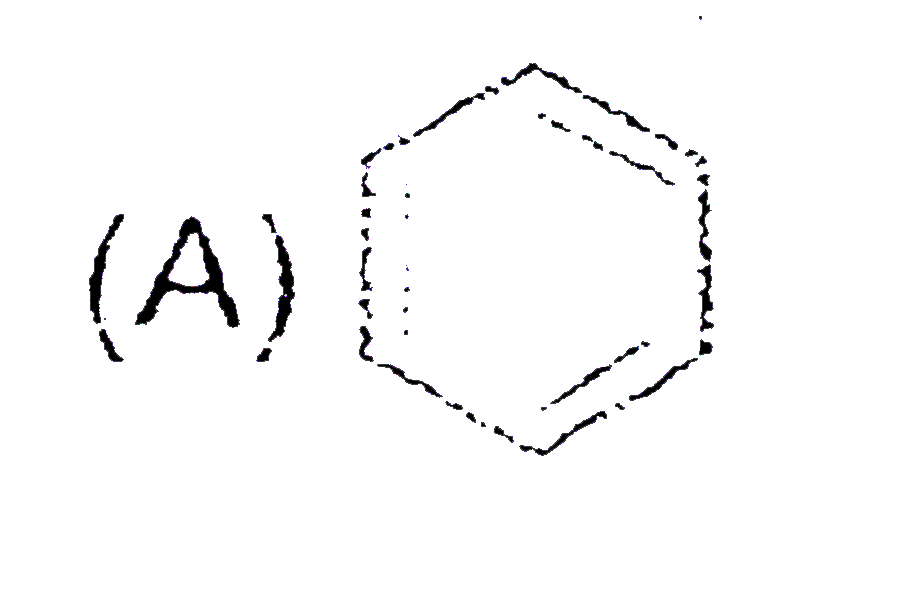
Which of the following compounds after complete hydrogenation will form three monochloro structural isomeric products ?

A

B

`CH_(3)-underset(CH_(3))underset(|)(CH)-underset(CH_(2))underset(||)(C )-CH_(3)`

C

D

`HC-=C-overset(C -= CH )overset(|)(CH)-C-=CH`

Text Solution

AI Generated Solution

The correct Answer is:

To determine which compound will form three monochloro structural isomeric products after complete hydrogenation, we can follow these steps: ### Step 1: Identify the Compound We need to identify the compound from the options provided that, upon complete hydrogenation, will yield a saturated hydrocarbon (alkane) with the potential for three distinct monochloro derivatives. ### Step 2: Perform Complete Hydrogenation Complete hydrogenation of an unsaturated compound (like an alkene or alkyne) converts it into a saturated compound (alkane). For example, if we have a compound like an alkene, it will convert to hexane (C6H14) after hydrogenation. ### Step 3: Structure of the Resulting Alkane After hydrogenation, we will have a straight-chain alkane. For instance, if the compound is 1-hexene, the resulting product after hydrogenation will be hexane (C6H14). ### Step 4: Identify Possible Monochloro Derivatives Now we need to identify the positions where chlorine can be substituted on the hexane molecule. The positions are as follows: - Chlorine can be substituted at the 1st carbon (C1). - Chlorine can be substituted at the 2nd carbon (C2). - Chlorine can be substituted at the 3rd carbon (C3). ### Step 5: Check for Structural Isomerism When chlorine is substituted at C1, C2, and C3, we need to check if these substitutions yield unique structural isomers: 1. **1-chlorohexane** (Cl at C1) 2. **2-chlorohexane** (Cl at C2) 3. **3-chlorohexane** (Cl at C3) Substituting chlorine at C4 would yield a compound that is structurally identical to 2-chlorohexane due to symmetry, and substituting at C5 would yield a compound that is identical to 1-chlorohexane. Thus, we only have three distinct structural isomers. ### Conclusion The compound that, after complete hydrogenation, forms three monochloro structural isomeric products is option C. ---

To determine which compound will form three monochloro structural isomeric products after complete hydrogenation, we can follow these steps: ### Step 1: Identify the Compound We need to identify the compound from the options provided that, upon complete hydrogenation, will yield a saturated hydrocarbon (alkane) with the potential for three distinct monochloro derivatives. ### Step 2: Perform Complete Hydrogenation Complete hydrogenation of an unsaturated compound (like an alkene or alkyne) converts it into a saturated compound (alkane). For example, if we have a compound like an alkene, it will convert to hexane (C6H14) after hydrogenation. ...
Promotional Banner

Topper's Solved these Questions

  • STRUCTURAL IDENTIFICATION

    RESONANCE ENGLISH|Exercise Advanced level Problems (Part-III)|12 Videos
  • STRUCTURAL IDENTIFICATION

    RESONANCE ENGLISH|Exercise Advanced level Problems (Part-I)|29 Videos
  • STEREOISOMERISM

    RESONANCE ENGLISH|Exercise EXERCISE (PART III : PRACTICE TEST-2 (IIT-JEE (ADVANCED PATTERN))|23 Videos
  • SURFACE CHEMISTRY

    RESONANCE ENGLISH|Exercise Section - 5|1 Videos

Similar Questions

Explore conceptually related problems

Total number of monochloro structure products

Which of the following compound show optical isomerism?

Which of the following compound show optical isomerism?

which of the following compound will show stereo isomerism?

Which of the following compounds display geomertical isomerism ?

Which of the following compounds shows geometrical isomerism ?

Which of the following compound will show optical isomerism

Which of the following compounds exhibits linkage isomerism?

RESONANCE ENGLISH-STRUCTURAL IDENTIFICATION-Advanced level Problems (Part-II)
  1. A hydrogen on oxidative ozonlysis produces Oxalic acid and Butanedioic...

    Text Solution

    |

  2. Farnesence is a compound found in the waxy coating of apples. On hydro...

    Text Solution

    |

  3. A compound P(C(5)H(6)) gives positive Bayer test and on hydrogentation...

    Text Solution

    |

  4. In compound A (C30H60O)following tests are observed negatively, A can ...

    Text Solution

    |

  5. Compound I and II can be distinguished by using reagent. underset("4...

    Text Solution

    |

  6. Which of the following test will not be given by , (Squaric acid)

    Text Solution

    |

  7. Which of the following compounds after complete hydrogenation will for...

    Text Solution

    |

  8. A organic compound having molecular formula C(3)H(4), react with sodiu...

    Text Solution

    |

  9. Compound P Liberates H(2) gas with Na metal. P gives the precipitate w...

    Text Solution

    |

  10. True statements is//are :

    Text Solution

    |

  11. C(6)H(15)O(6)(P) underset(Zn, H(2)O)overset(O(3))rarrC(4)H(8)O(4)(Q) u...

    Text Solution

    |

  12. In how many reactions CO(2) gas is released out after reaction with Na...

    Text Solution

    |

  13. How many alkenes, alkynes and alkadienes can be hydrogenated to form I...

    Text Solution

    |

  14. 20 g of non-electrolyte, non-volatile solute (C(x)H(2x)O(6)) when diss...

    Text Solution

    |

  15. Structure of Ascorbic acid as represented as follows. How many of...

    Text Solution

    |

  16. Observe the following compounds Number of coumpound which can gi...

    Text Solution

    |

  17. 'n' number of alkenes yield 2,2,3,4,4-pentamethyl-pentane on catalytic...

    Text Solution

    |

  18. A compound (P) having molecular formula C(6)H(10) contains two DU. It ...

    Text Solution

    |

  19. A compound (P) having molecular formula C(6)H(10) contains two DU. It ...

    Text Solution

    |

  20. Which of the following is not functional group isomer of cyclopentanon...

    Text Solution

    |
