Home
Class 11
CHEMISTRY
C(s)hArr2A(g)+B(s) If the dissociation...

`C(s)hArr2A(g)+B(s)`
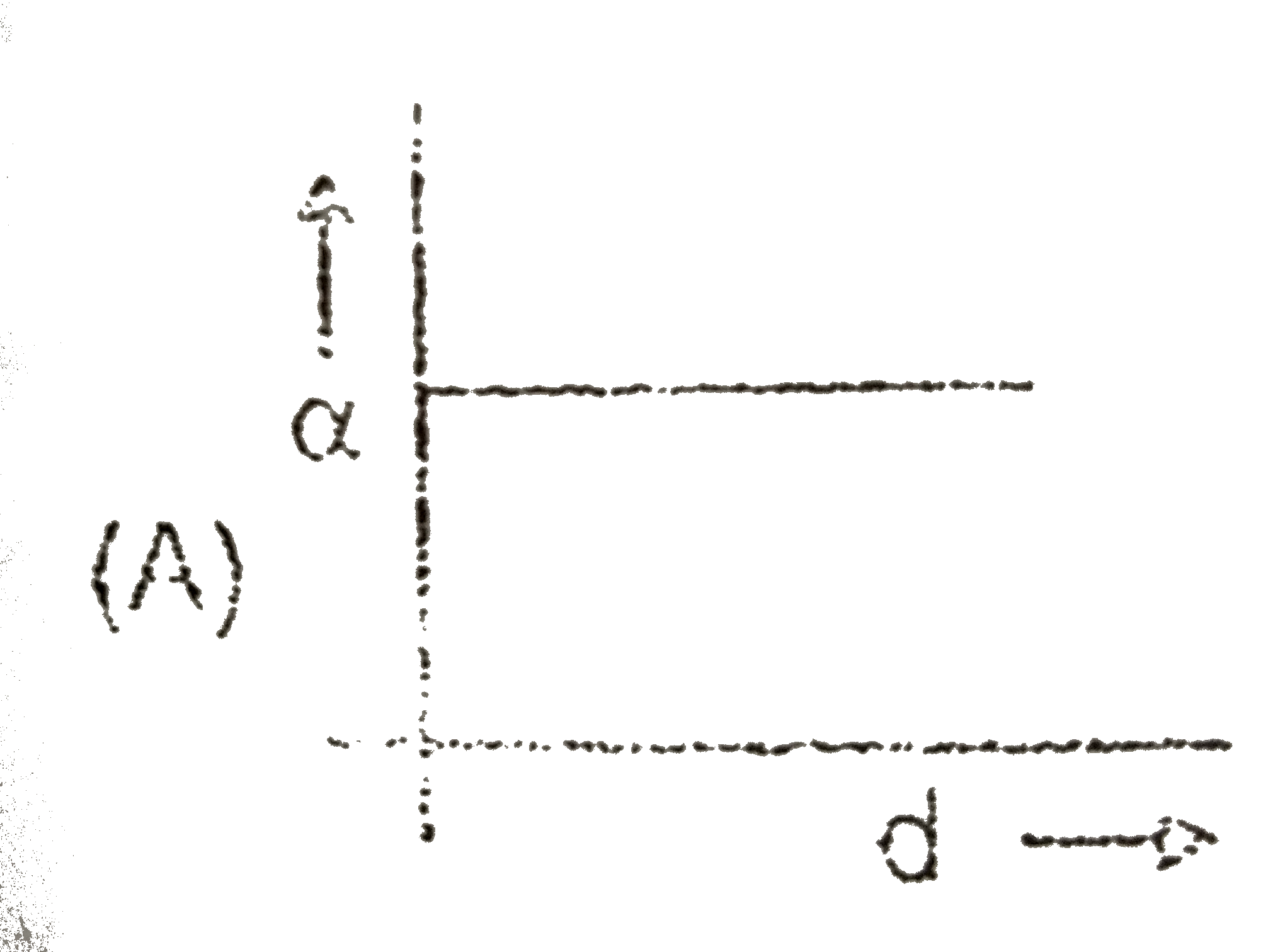
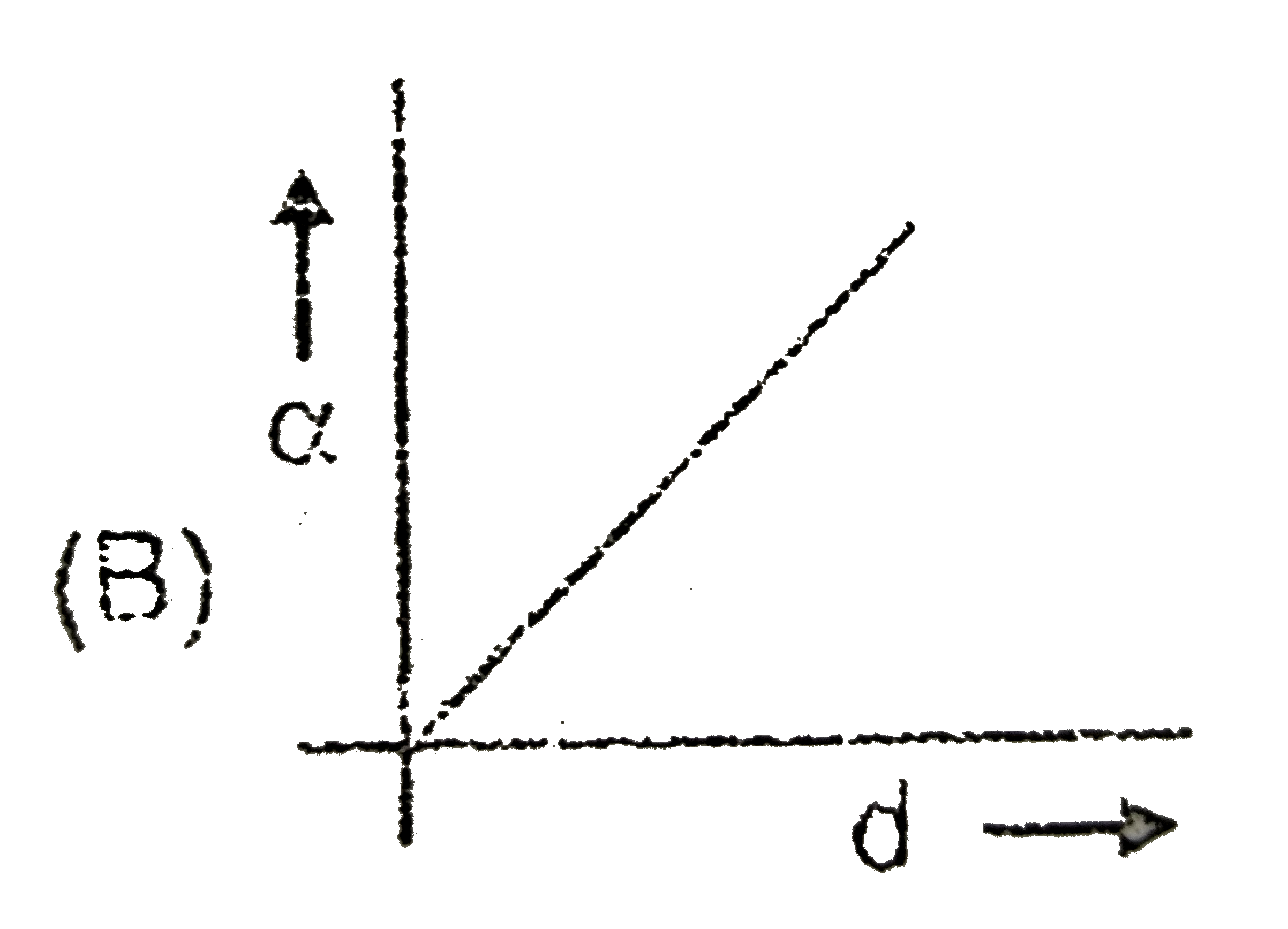
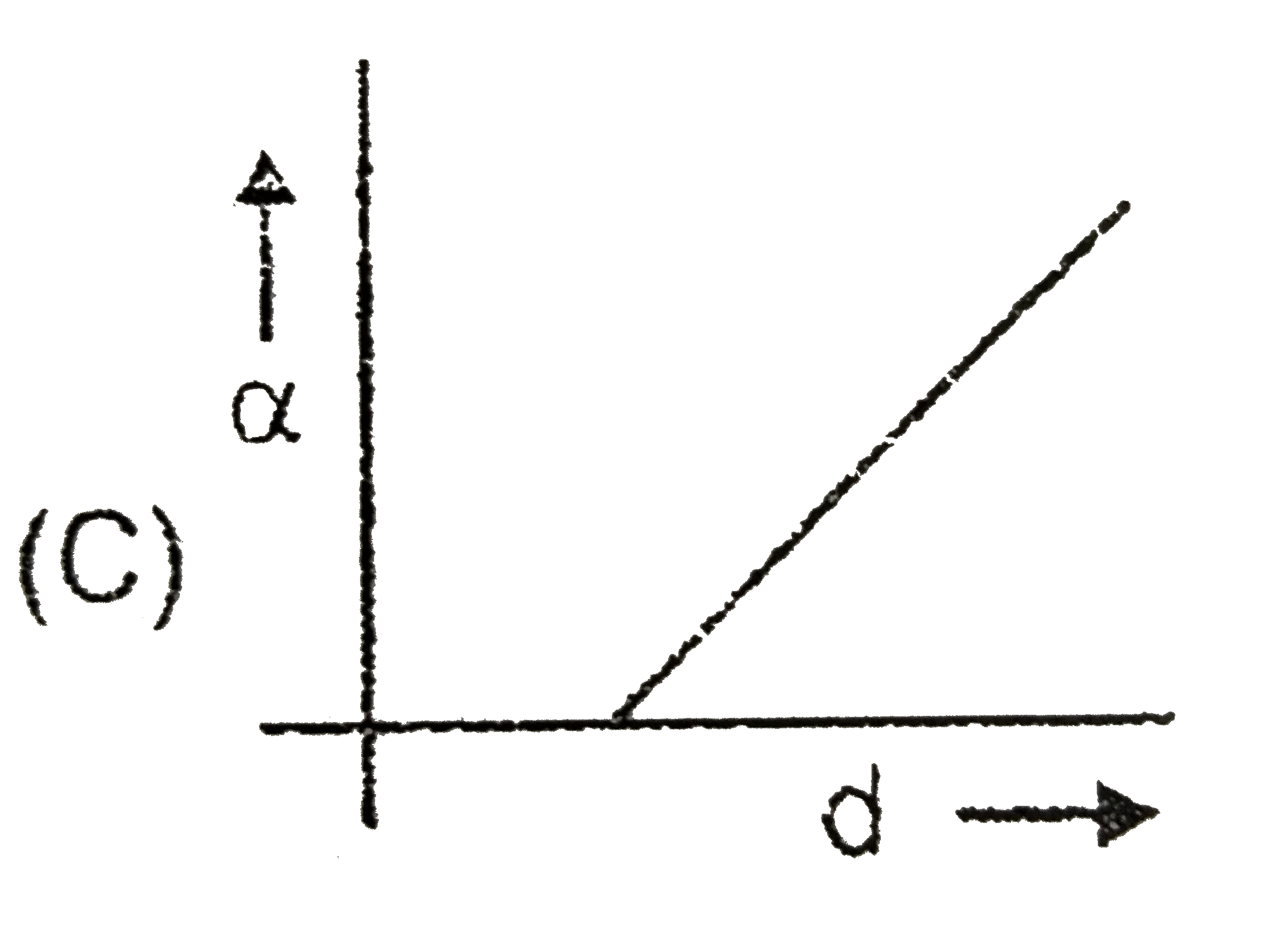
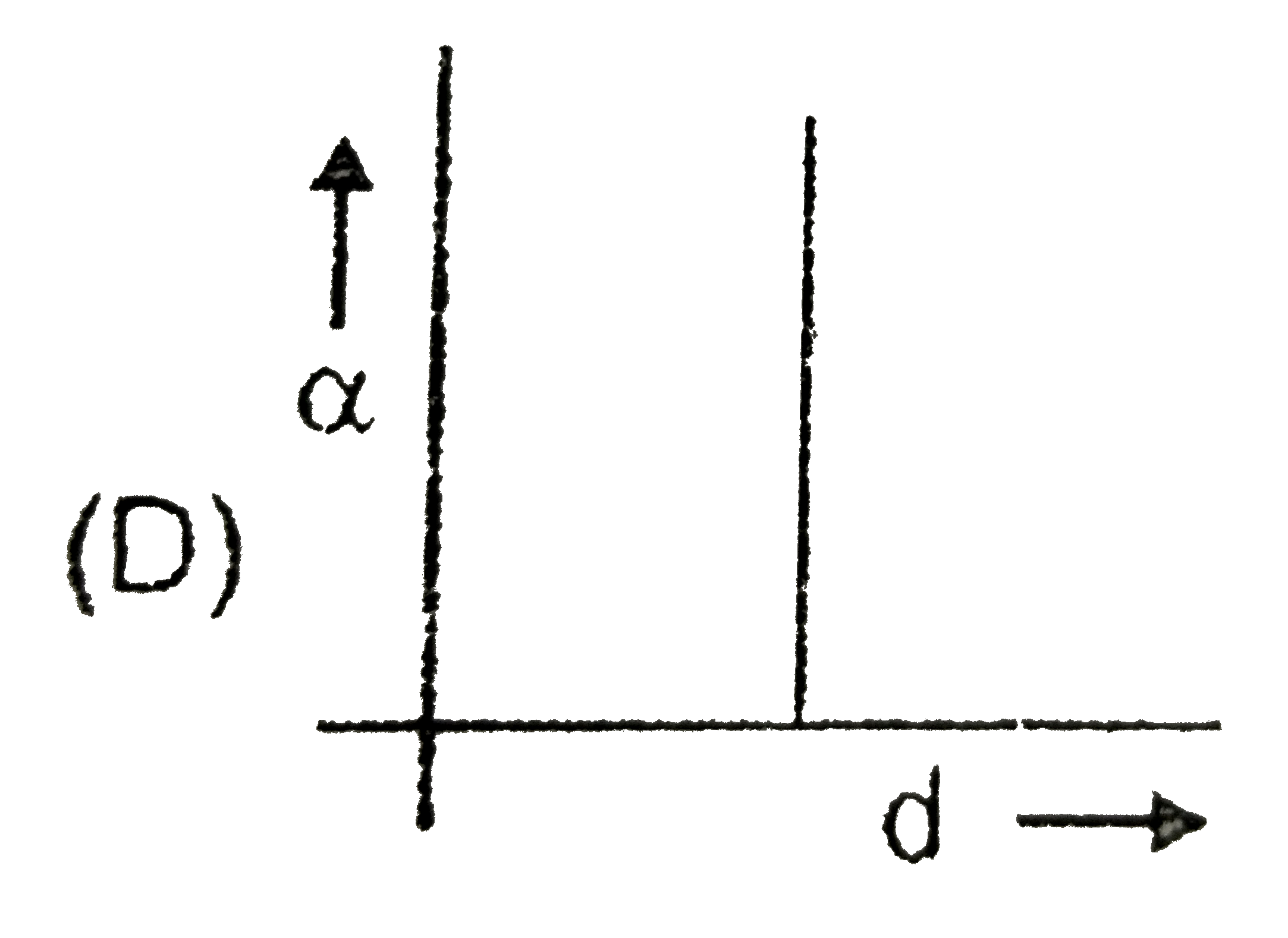
If the dissociation of `C(s)` is `alpha` and `d` is the density of the gaseous mixture in the container. Initially container have only `C(s)` and the reaction is carried at constant temperature and pressure.

A

B

C

D

Text Solution

AI Generated Solution

The correct Answer is:

To solve the problem, we need to analyze the dissociation of solid carbon (C) into gaseous A and solid B, considering the dissociation fraction (α) and the density (D) of the gaseous mixture. ### Step-by-Step Solution: 1. **Understanding the Reaction**: The reaction is given as: \[ C(s) \rightleftharpoons 2A(g) + B(s) \] Here, C is in solid state, A is in gaseous state, and B is also in solid state. 2. **Initial Conditions**: Initially, the container only contains solid C. Let’s denote the initial amount of C as \( n_0 \). 3. **Dissociation of C**: If the dissociation of C is α, then the amount of C that dissociates is \( \alpha n_0 \). Therefore, the amount of C remaining after dissociation is: \[ n_C = n_0 - \alpha n_0 = n_0(1 - \alpha) \] 4. **Formation of A and B**: From the stoichiometry of the reaction, for every mole of C that dissociates, 2 moles of A are produced. Thus, the moles of A produced are: \[ n_A = 2\alpha n_0 \] The amount of solid B formed is equal to the amount of C that dissociated: \[ n_B = \alpha n_0 \] 5. **Total Moles in the Gaseous Mixture**: Since B is solid and does not contribute to the gas phase, the total moles in the gaseous phase is just the moles of A: \[ n_{gas} = n_A = 2\alpha n_0 \] 6. **Density of the Gaseous Mixture**: The density (D) of the gaseous mixture is given by the formula: \[ D = \frac{m_{gas}}{V} \] where \( m_{gas} \) is the mass of the gas and \( V \) is the volume. The mass of the gas is: \[ m_{gas} = n_A \times M_A = 2\alpha n_0 M_A \] Thus, the density can be expressed as: \[ D = \frac{2\alpha n_0 M_A}{V} \] 7. **Conclusion on Density**: Since the reaction is carried out at constant temperature and pressure, the volume (V) can be expressed using the ideal gas law: \[ PV = n_{gas}RT \] Substituting \( n_{gas} \): \[ V = \frac{2\alpha n_0 RT}{P} \] Now substituting V back into the density equation gives: \[ D = \frac{2\alpha n_0 M_A P}{2\alpha n_0 RT} = \frac{M_A P}{RT} \] This shows that the density D is independent of α, as it remains constant regardless of the dissociation of C. ### Final Answer: The density of the gaseous mixture remains constant as α increases.

To solve the problem, we need to analyze the dissociation of solid carbon (C) into gaseous A and solid B, considering the dissociation fraction (α) and the density (D) of the gaseous mixture. ### Step-by-Step Solution: 1. **Understanding the Reaction**: The reaction is given as: \[ C(s) \rightleftharpoons 2A(g) + B(s) ...
Promotional Banner

Topper's Solved these Questions

  • CHEMICAL EQUILIBRIUM

    RESONANCE ENGLISH|Exercise Advanced Level Problems (Part-2)(Section-2)|6 Videos
  • CHEMICAL EQUILIBRIUM

    RESONANCE ENGLISH|Exercise Advanced Level Problems (Part-2)(Section-3)|6 Videos
  • CHEMICAL EQUILIBRIUM

    RESONANCE ENGLISH|Exercise Advanced Level Problems (Part-1)|31 Videos
  • CHEMICAL BONDING

    RESONANCE ENGLISH|Exercise ORGANIC CHEMISTRY(Fundamental Concept )|6 Videos
  • D & F-BLOCK ELEMENTS & THEIR IMPORTANT COMPOUNDS

    RESONANCE ENGLISH|Exercise Match the column|1 Videos

Similar Questions

Explore conceptually related problems

At constant pressure the r.m.s. velocity c is related to density d as

Consider the following statements : (I)An increase in pressure (caused by decrease in volume) at equilibrium results in increase in molar concentration of each gasous substances involved. (II)An increase in pressure (caused by decrease in volume) at equilibrium results in increase in no. of moles of each gaseous substance involved. (III)For the reaction A(s)hArr B(g)+C(g) at constant temperature, total pressure at equilibrium (of B(g) & C(g)) is not affected by changing the volume of container. (IV) H_2O(l)hArrH_2O(g) on temperature increase K of this reaction is increased. Tick the correct statement(s)

There are two closed containers A and B. Container A contains PCl_5 gas at 25^@C temperature and 1 bar pressure. Container B contains equilibrium mixture of gases obtained by partial decomposition of PCl_(5) (g) at the same temperature and pressure. Assuming that initially equal mole of PCl_(5) (g) at same temperature and pressure . Assuming that initially equal moles of PCl_(5) were taken into the containers ( before decomposition ), the gases are allowed to effuse through a pinhole in the containers, Which container will show higher rate of effusion ? Justify .

State the S.I. and C.G.S. units of density. How are they related ?

Show that K_p for the reaction, 2H_2S(g) hArr 2H_2(g) +S_2(g) is given by the expression K_p=(alpha^3P)/((2+alpha)(1-alpha)^2) where alpha is the degree of dissociation and P is the total equilibrium pressure. Calculate K_c of the reaction if alpha at 298 k and 1 atm . pressure is 0.055.

The equilibrium constant for the reaction 2A+2B hArr 2C+2D is 200 . The equilibrium constant for the reaction A+B hArr C+D , at the same temperature is ………..

Express the relationship between the C.G.S. and S.I. units of density.

Two solid compounds A and B dissociate into gaseous products at 20^(@)C as a. A(s) hArr A'(s)+H_(2)S(g) b. B(s) hArr B'(g)+H_(2)S(g) At 20^(@)C pressure over excess solid A is 50 mm and that over excess solid B is 68 mm. Find: a. The dissociation constant of A and B b. Relative number of moles of A' and B' in the vapour phase over a mixture of the solids A and B. c. Show that the total pressure of gas over the solid mixture would be 84.4 mm.

Two solid A "and" B are present in two different container having same volume and same temperature following equilibrium are established: In container (1)A(s)hArrD(g)+C(g)P_(T)=40 "atm at equilibrium" In container (2)B(s)hArrE(g)+F(g)P_(T)=60 "atm at equilibrium" If excess of A "and" B are added to a third container having double the volume and at same temperature then, the total pressure of this container at equilibrium is:

Write the unit of equilibrium constant (K_c) for the given reaction. BaCO_3(s) hArr BaO(s) +CO_2(g)
