Home
Class 11
CHEMISTRY
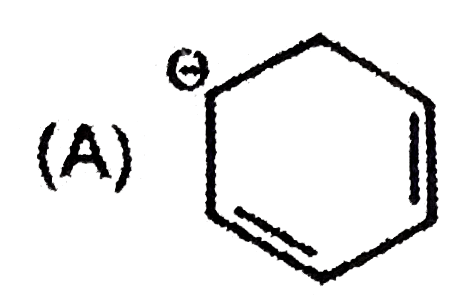
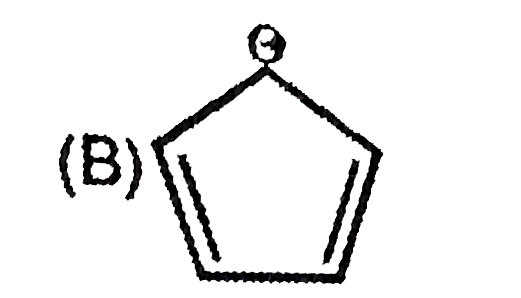
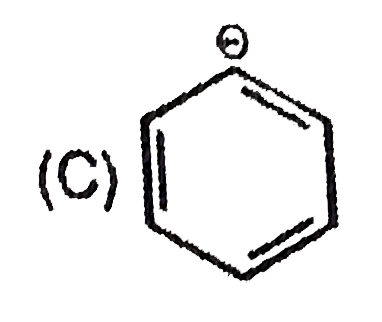
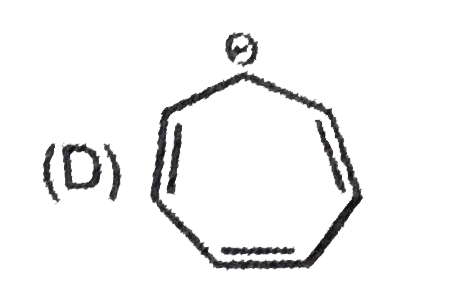
The most stable ion is ....

The most stable ion is .

A

B

C

D

Text Solution

Verified by Experts

The correct Answer is:

B
Promotional Banner

Topper's Solved these Questions

  • GENERAL ORGANIC CHEMISTRY II

    RESONANCE ENGLISH|Exercise Part-III: Match the Column|2 Videos
  • GENERAL ORGANIC CHEMISTRY II

    RESONANCE ENGLISH|Exercise Part-I : Only One Option Correct Type|22 Videos
  • GENERAL ORGANIC CHEMISTRY II

    RESONANCE ENGLISH|Exercise Exercise-1|20 Videos
  • GASEOUS STATE

    RESONANCE ENGLISH|Exercise ORGANIC CHEMISTRY(Hydrocarbon)|18 Videos
  • GENERAL ORGANIC CHEMISTRY-I

    RESONANCE ENGLISH|Exercise PART-III : PRACTICE TEST-19|1 Videos

Similar Questions

Explore conceptually related problems

The most stable anion is:

Use the data given in Q.8 and find out the most stable ion in its reduced form.

Using the data given below: E_(Cr_(2)O_(7)^(2-)|Cr^(3+))^(@)=1.33V E_(Cl_(2)|Cl^(-))^(@)=1.36V E_(MnO_(4)^(-)|Mn^(2+))^(@)=1.51V E_(Cr^(3+)|Cr)=-0.74V Find the most stable ion in its reduced forms

Use the data to answer the following and also justify giving rason: {:(," "Cr," "Mn," "Fe," "Co),(E_(M^(2+)//M)^0,-0.91,-1.18,-0.44,-0.28),(E_(M^(3+)//M^(2+))^0,-0.41,+1.57,+0.77,+1.97):} ( a) Which is a stronger redusing agent in aqueous medium Cr^(2+) or Fe^(2+) and why ? ( b) Which is the most stable ion in +2 oxidartion and why ?

The most stable oxides of nitrogen will be :

Nucleophilic substitution reactions generally expressed as Nu^(-) +R-L rarr R-Nu +L^(-) Where Nu^(-) rarr Nucleophile , R-L rarr substrate, L rarr leaving group The best leaving groups are those that become the most stable ions after they depart. since most leaving group leave as a negatibe ion, the best leaving groups are those ions that stabilize a negative charge most effectively. A good leaving group should be (a) electron-withdrawing to polarize the carbon (b) stable once it has left (not a strong base) (c) polaristable to maintain partial bonding with the carbon in the transition state (both S_(N)1 and S_(N)2) . This bonding helps to stabilise the transition state and reduces the activation energy. Among the following which is false statement?

Nucleophilic substitution reactions generally expressed as Nu^(-) +R-L rarr R-Nu +L^(-) Where Nu^(-) rarr Nucleophile , R-L rarr substrate, L rarr leaving group The best leaving groups are those that become the most stable ions after they depart. since most leaving group leave as a negatibe ion, the best leaving groups are those ions that stabilize a negative charge most effectively. A good leaving group should be (a) electron-withdrawing to polarize the carbon (b) stable once it has left (not a strong base) (c) polaristable to maintain partial bonding with the carbon in the transition state (both S_(N)1 and S_(N)2) . This bonding helps to stabilise the transition state and reduces the activation energy. Among the following which is feasible?

Nucleophilic substitution reactions generally expressed as Nu^(-) +R-L rarr R-Nu +L^(-) Where Nu^(-) rarr Nucleophile , R-L rarr substrate, L rarr leaving group The best leaving groups are those that become the most stable ions after they depart. since most leaving group leave as a negatibe ion, the best leaving groups are those ions that stabilize a negative charge most effectively. A good leaving group should be (a) electron-withdrawing to polarize the carbon (b) stable once it has left (not a strong base) (c) polaristable to maintain partial bonding with the carbon in the transition state (both S_(N)1 and S_(N)2) . This bonding helps to stabilise the transition state and reduces the activation energy. (I) CI^(-) (II) CH_(3)O^(-) (III) CH_(3)S^(-) (IV) I^(-) The correct order of increasing leaving group capability of above anions

RESONANCE ENGLISH-GENERAL ORGANIC CHEMISTRY II-Part-II Only One Option Correct Type
  1. In which of the following pairs of carbarion the first one is more sta...

    Text Solution

    |

  2. Arrange the followinng carbocations in decreasing order of stability

    Text Solution

    |

  3. The most stable ion is .

    Text Solution

    |

  4. Arrange the following carbanions in increasing order of stability:

    Text Solution

    |

  5. Among the following, the paramagnetic species is:

    Text Solution

    |

  6. The stability of given free radicals in decreasing order is (i) CH(3...

    Text Solution

    |

  7. Which of the following is the correct order of stability of free radic...

    Text Solution

    |

  8. Most stable radical among the following is :

    Text Solution

    |

  9. Arrange the following radicals in decreasing order of their stability.

    Text Solution

    |

  10. Least stable radical among the following is :

    Text Solution

    |

  11. The most stable carbocation is

    Text Solution

    |

  12. The most stable carbocation is:

    Text Solution

    |

  13. Which of the following shows the correct order of decreasing stability...

    Text Solution

    |

  14. Which of the following is the arranged more stable carbocation of the ...

    Text Solution

    |

  15. Most stable rearranged form of given carbocations is:

    Text Solution

    |

  16. Which of the following in the rearranged in the rearranged more stable...

    Text Solution

    |

  17. The correct basic strength order of following anions is:

    Text Solution

    |

  18. Which of the following shows the correct order of decreasing basicity ...

    Text Solution

    |

  19. Find the order of basic strength .(If R=Me) ? (I) R(4)N^(+)OH^(-) " ...

    Text Solution

    |

  20. Which of the following cannot be a base?

    Text Solution

    |
