Home
Class 11
CHEMISTRY
The most stable carbocation is:...

The most stable carbocation is:

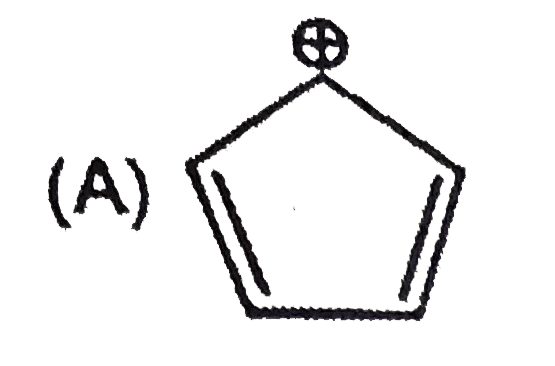
A

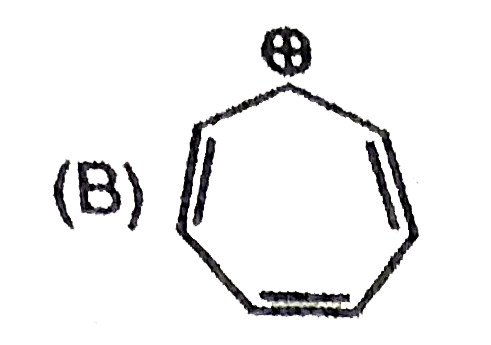
B

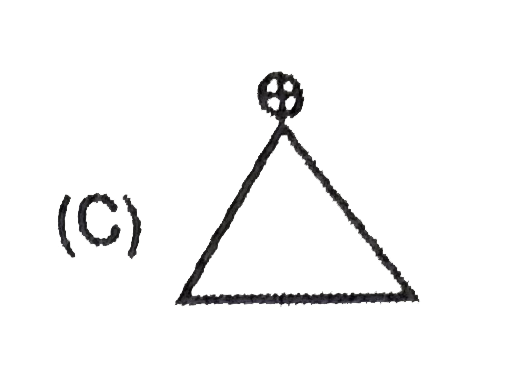
C

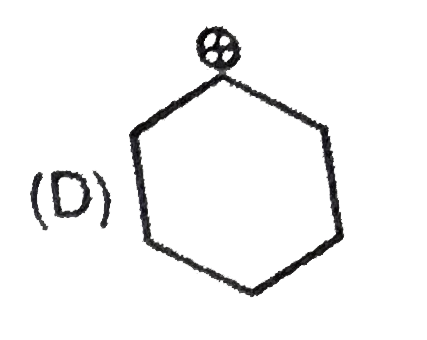
D

Text Solution

AI Generated Solution

The correct Answer is:

To determine the most stable carbocation from the given options, we need to analyze the structures and stability factors of each carbocation. Here’s a step-by-step solution: ### Step 1: Identify the Structures We have four carbocations (let's label them A, B, C, and D). Each structure has a positive charge located at different positions and different types of rings or chains. ### Step 2: Analyze Carbocation A - **Structure**: A five-membered ring with a positive charge. - **Stability Factors**: The positive charge can participate in resonance due to the presence of double bonds. However, it follows a four π-electron system, which is anti-aromatic. Anti-aromatic compounds are generally less stable. ### Step 3: Analyze Carbocation B - **Structure**: A six-membered ring with a positive charge. - **Stability Factors**: This structure has a six π-electron system, making it aromatic. Aromatic compounds are highly stable due to resonance. Additionally, the presence of multiple double bonds allows for more resonance structures, enhancing stability. ### Step 4: Analyze Carbocation C - **Structure**: A three-membered ring with a positive charge. - **Stability Factors**: This structure has significant ring strain due to its small size, making it highly unstable. The positive charge in a strained ring is less stable. ### Step 5: Analyze Carbocation D - **Structure**: A six-membered carbocation. - **Stability Factors**: This carbocation can exhibit stability through hyperconjugation. However, it does not have the same level of resonance stabilization as carbocation B. ### Step 6: Compare Stability - Carbocation A is anti-aromatic and thus less stable. - Carbocation B is aromatic and has the most resonance structures, making it the most stable. - Carbocation C is highly unstable due to ring strain. - Carbocation D has stability through hyperconjugation but is less stable than B. ### Conclusion The most stable carbocation is **B** due to its aromatic nature and the ability to form more resonance structures.
Promotional Banner

Topper's Solved these Questions

  • GENERAL ORGANIC CHEMISTRY II

    RESONANCE ENGLISH|Exercise Part-III: Match the Column|2 Videos
  • GENERAL ORGANIC CHEMISTRY II

    RESONANCE ENGLISH|Exercise Part-I : Only One Option Correct Type|22 Videos
  • GENERAL ORGANIC CHEMISTRY II

    RESONANCE ENGLISH|Exercise Exercise-1|20 Videos
  • GASEOUS STATE

    RESONANCE ENGLISH|Exercise ORGANIC CHEMISTRY(Hydrocarbon)|18 Videos
  • GENERAL ORGANIC CHEMISTRY-I

    RESONANCE ENGLISH|Exercise PART-III : PRACTICE TEST-19|1 Videos

Similar Questions

Explore conceptually related problems

Select the most stable carbocation:

Whichis the most stable carbocation ?

Among the following the most stable carbocation

The most stable carbocation amongst the following is

overset("Reaction")to Rearranged most stable Carbocation is

Which of the following is the most stable carbocation?

Which amongst the following is the most stable carbocation?

Which of the following is the most stable carbocation here ?

Which is the most stable carbocation among the following ?

Which of the following alcohols will give the most stable carbocation during dehydration ?

RESONANCE ENGLISH-GENERAL ORGANIC CHEMISTRY II-Part-II Only One Option Correct Type
  1. Least stable radical among the following is :

    Text Solution

    |

  2. The most stable carbocation is

    Text Solution

    |

  3. The most stable carbocation is:

    Text Solution

    |

  4. Which of the following shows the correct order of decreasing stability...

    Text Solution

    |

  5. Which of the following is the arranged more stable carbocation of the ...

    Text Solution

    |

  6. Most stable rearranged form of given carbocations is:

    Text Solution

    |

  7. Which of the following in the rearranged in the rearranged more stable...

    Text Solution

    |

  8. The correct basic strength order of following anions is:

    Text Solution

    |

  9. Which of the following shows the correct order of decreasing basicity ...

    Text Solution

    |

  10. Find the order of basic strength .(If R=Me) ? (I) R(4)N^(+)OH^(-) " ...

    Text Solution

    |

  11. Which of the following cannot be a base?

    Text Solution

    |

  12. Select the basic strength order of following molecules ?

    Text Solution

    |

  13. Among the following compounds the strongest acid is:

    Text Solution

    |

  14. Which of the following is not correct decreasing k(a) order .

    Text Solution

    |

  15. Which of the following acids has the smallest value of dissociation co...

    Text Solution

    |

  16. Find the strongest acid among the following compounds is:

    Text Solution

    |

  17. Which of the following options shows the correct order of decreasing a...

    Text Solution

    |

  18. Arrange increasing order of acidic strength of following dibasic acids...

    Text Solution

    |

  19. Arrange above phenol in increasing order of pK(a) value:

    Text Solution

    |

  20. Order of K(a) of following acids is:

    Text Solution

    |
