Home
Class 11
CHEMISTRY
Which of the following will most readily...

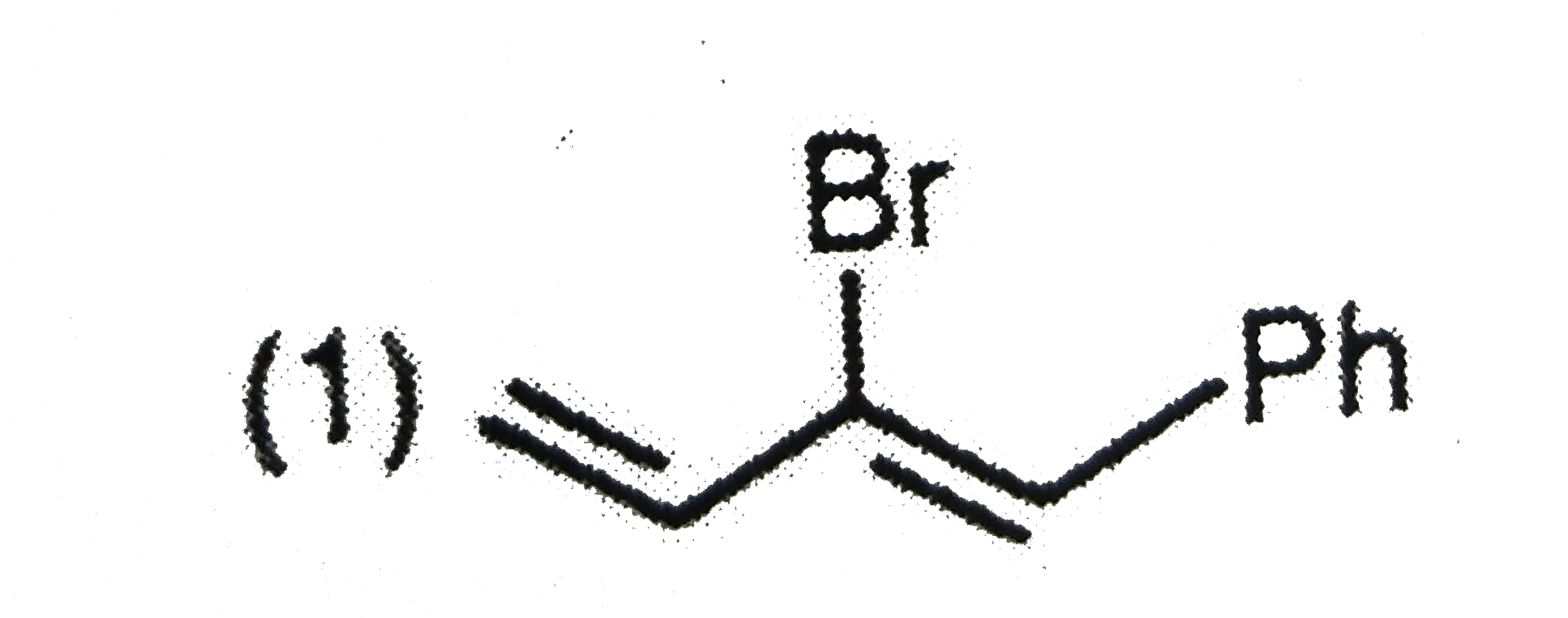
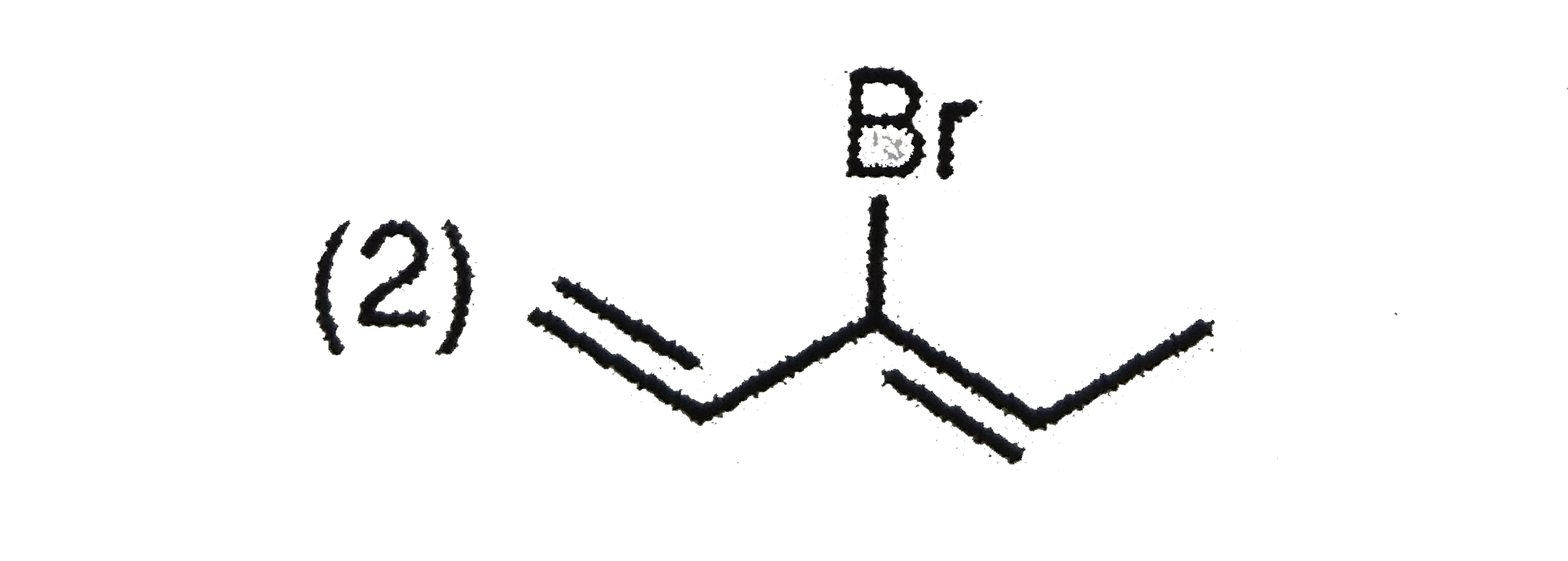
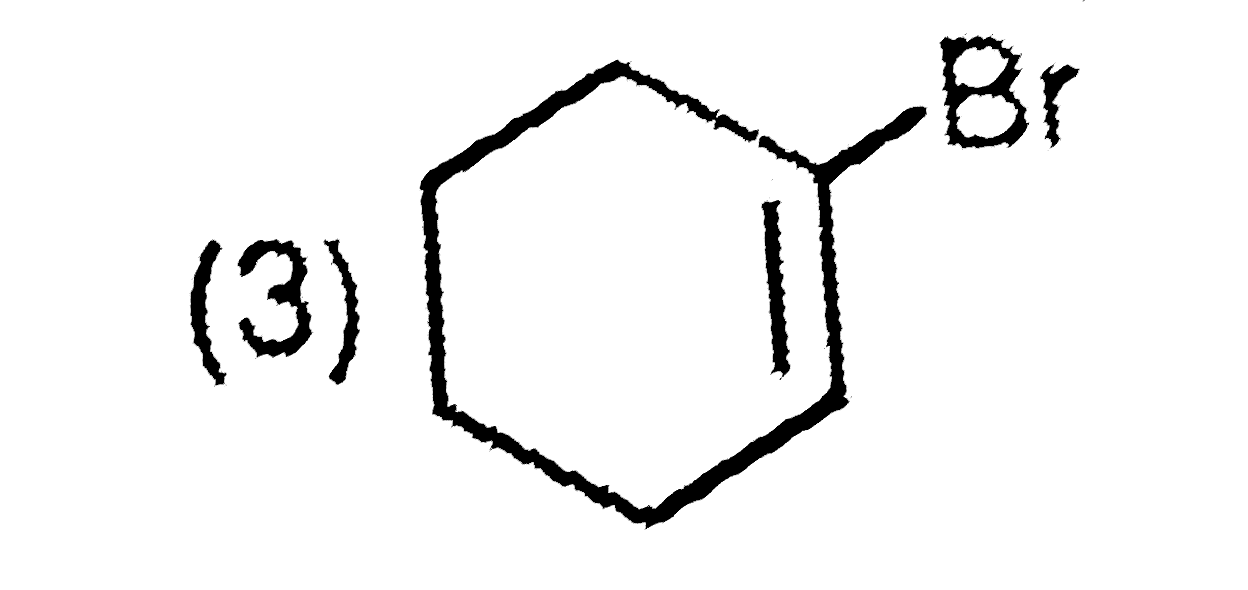
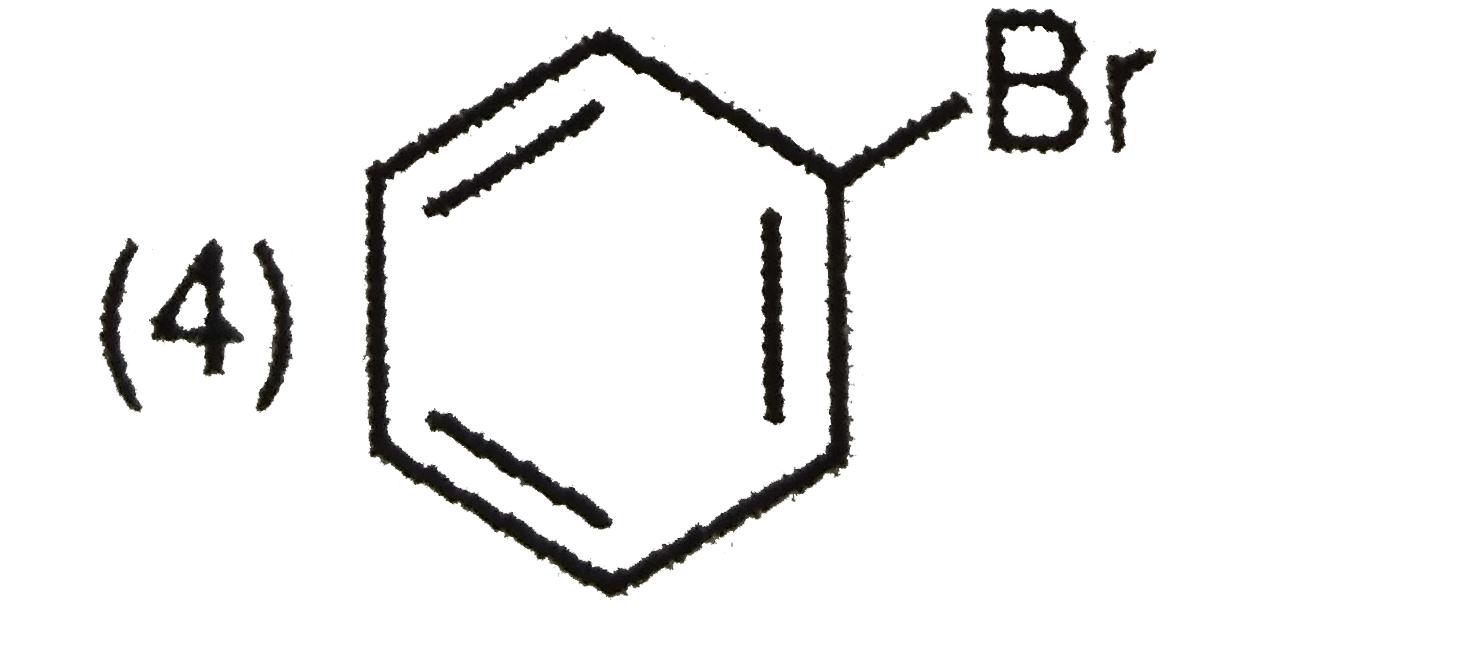
Which of the following will most readily give the dehydrohalogenation product ?

A

B

C

D

Text Solution

AI Generated Solution

The correct Answer is:

To determine which compound will most readily undergo dehydrohalogenation, we need to analyze the stability of the resulting alkyne after the removal of HBr from each option. Dehydrohalogenation involves the elimination of a hydrogen atom and a halogen atom (in this case, bromine) from a compound, typically resulting in the formation of a double or triple bond. ### Step-by-Step Solution: 1. **Understanding Dehydrohalogenation**: - Dehydrohalogenation refers to the elimination of HBr (hydrogen bromide) from an alkyl halide, leading to the formation of a double bond (alkene) or a triple bond (alkyne). 2. **Analyzing the First Compound**: - The first compound has a bromine atom attached to a carbon that is part of a conjugated system (multiple double bonds). - The presence of resonance in this compound stabilizes the resulting alkyne after the removal of HBr. - The alpha hydrogen (the hydrogen adjacent to the bromine) is removed, leading to the formation of a stable alkyne. 3. **Analyzing the Second Compound**: - The second compound also has a bromine atom and some conjugation, but it is less extensive than in the first compound. - While it can undergo dehydrohalogenation, the resulting alkyne is less stable due to the lower degree of resonance compared to the first compound. 4. **Analyzing the Third Compound**: - The third compound is cyclohexene with a bromine atom. - The sp2 hybridized hydrogen adjacent to the bromine can be removed, but the resulting alkyne lacks resonance stabilization, making it less favorable than the first compound. 5. **Analyzing the Fourth Compound**: - The fourth compound is bromobenzene. - The removal of HBr leads to the formation of benzyne, which is known to be unstable. - Due to this instability, this compound is not likely to undergo dehydrohalogenation readily. 6. **Conclusion**: - After analyzing all options, the first compound is the most stable due to resonance, making it the most likely to undergo dehydrohalogenation readily. - Therefore, the correct answer is **Option A**.
Promotional Banner

Topper's Solved these Questions

  • ORGANIC REACTION MECHANISMS-IV

    RESONANCE ENGLISH|Exercise APSP PART-1|30 Videos
  • ORGANIC REACTION MECHANISMS-IV

    RESONANCE ENGLISH|Exercise APSP PART-2|17 Videos
  • ORGANIC REACTION MECHANISMS-IV

    RESONANCE ENGLISH|Exercise Exercise-3 Part-2 JEE (MAIN ) OFFLINE PROBLEMS|10 Videos
  • ORGANIC REACTION MECHANISMS - II

    RESONANCE ENGLISH|Exercise APSP Part - 3|22 Videos
  • PERIODIC TABLE & PERIODICITY

    RESONANCE ENGLISH|Exercise ORGANIC CHEMISTRY(BASIC CONCEPTS)|27 Videos

Similar Questions

Explore conceptually related problems

Which of the following will react most readily with HI ?

Which of the following is maximum reactive for dehydrohalogenation :-

Which of the following will readily loose H^(-) ?

Which of the following will readily loose H^(-) ?

Which of the following will be readily soluble I water ?

Which one of the following will most readily be dehydrated in acidic condition?

Which of the following reaction is expected to readily give a hydrocarbon product in good yield ?

Which one of the following compounds will be most readily dehydrated?
