Home
Class 11
CHEMISTRY
A unsaturated hydrocarbons (P) on reduct...

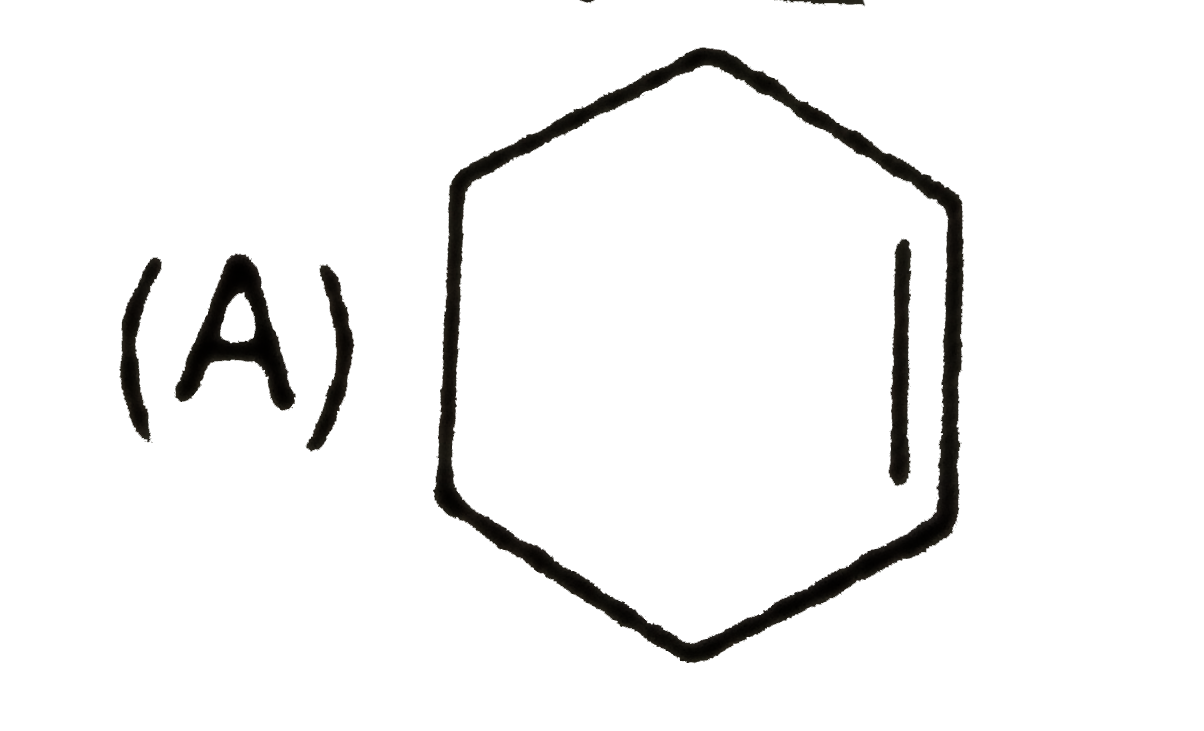
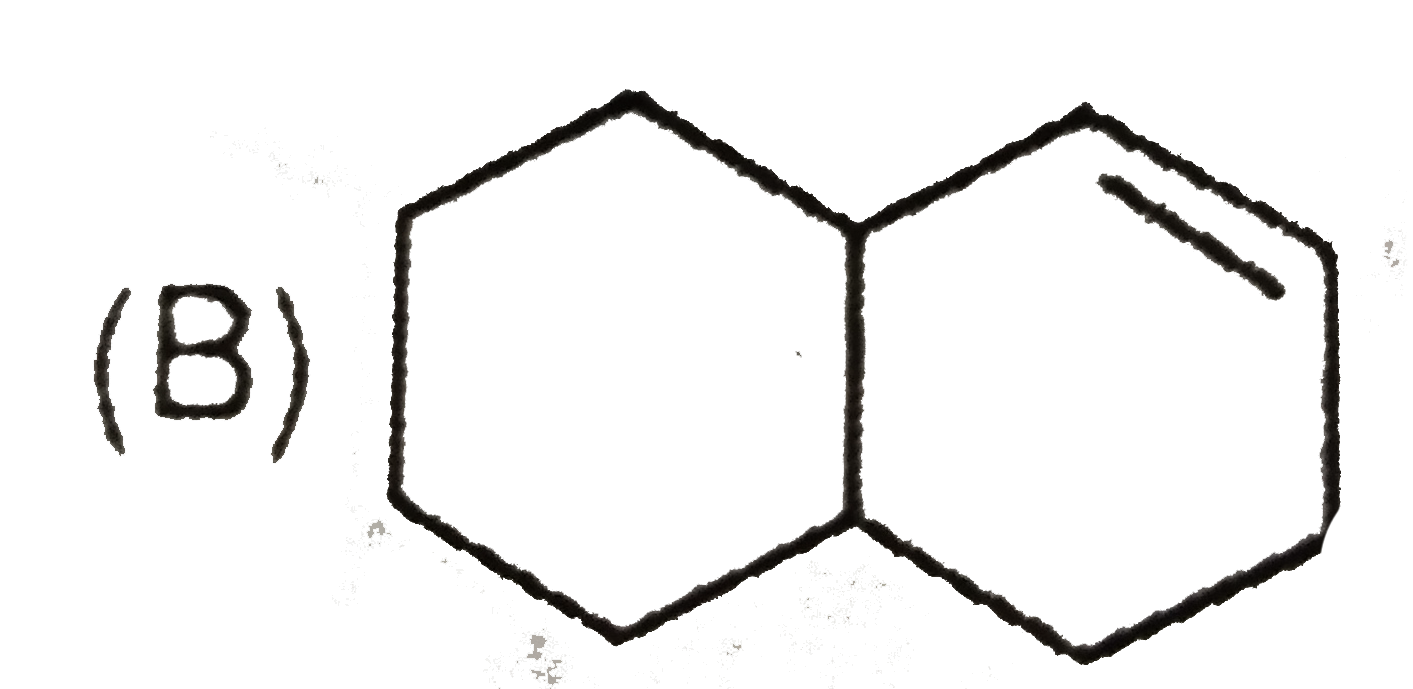
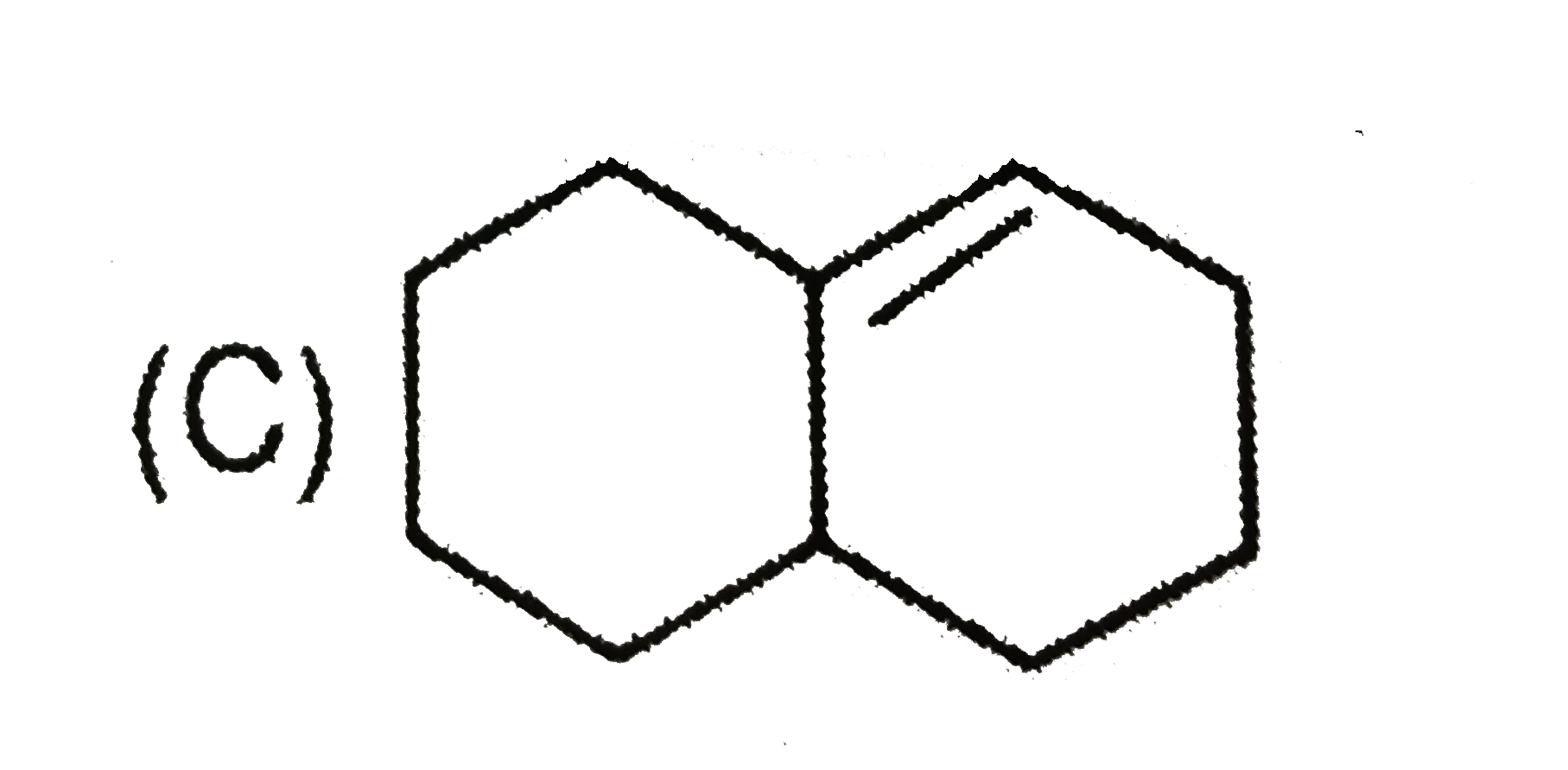
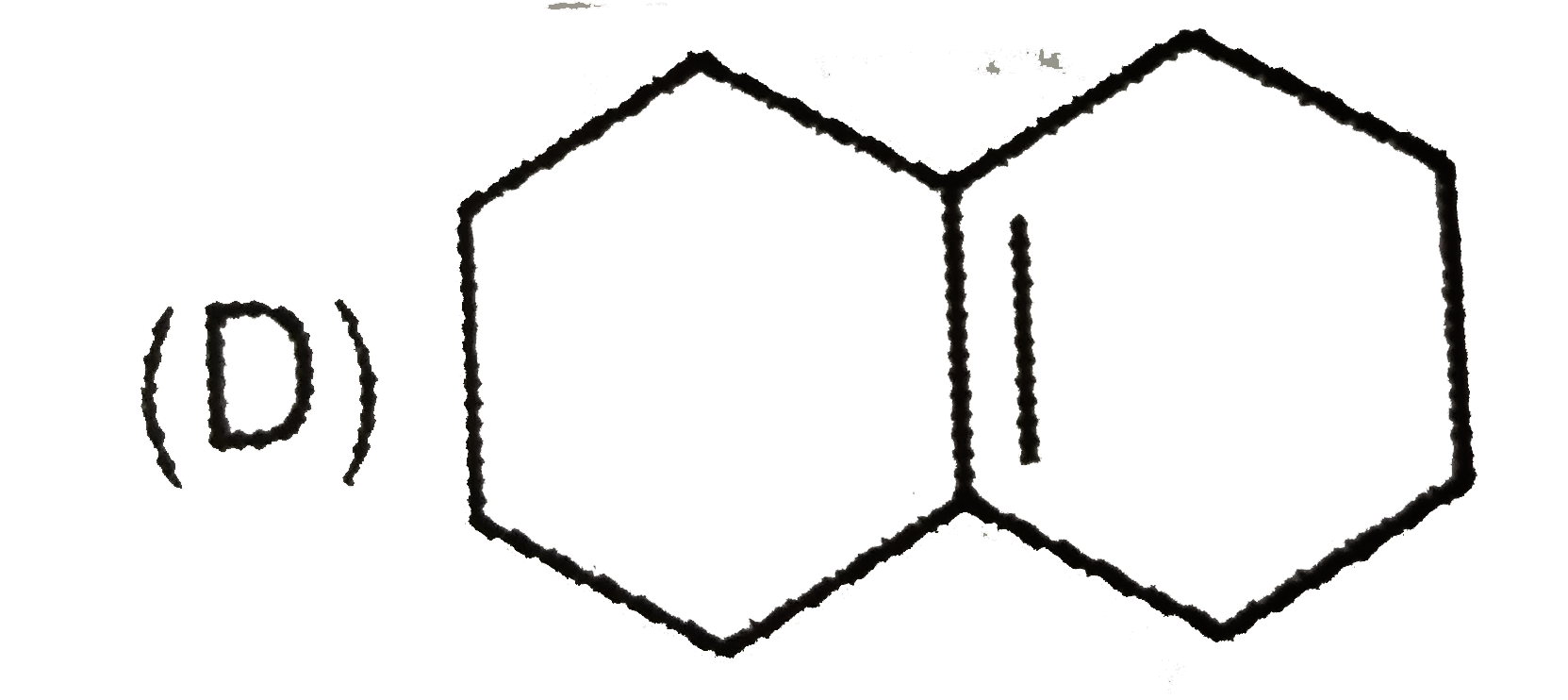
A unsaturated hydrocarbons (P) on reductive ozonolysis produce an dicarbonyl compound (Q).(Q) can form precipitate with 2,4-DNP but no with Tollen's reagent. Identify the structure of P

A

B

C

D

Text Solution

AI Generated Solution

The correct Answer is:

To solve the problem step by step, we will analyze the information provided and identify the structures of the unsaturated hydrocarbon (P) and the dicarbonyl compound (Q). ### Step 1: Understanding the Reaction The problem states that an unsaturated hydrocarbon (P) undergoes reductive ozonolysis to produce a dicarbonyl compound (Q). Reductive ozonolysis typically cleaves double bonds in alkenes to form carbonyl compounds (aldehydes or ketones). ### Step 2: Analyzing Compound Q We know that compound Q can form a precipitate with 2,4-DNP (2,4-dinitrophenylhydrazine), which indicates that Q is a carbonyl compound (either an aldehyde or a ketone). However, Q does not react with Tollen's reagent, which is used to test for aldehydes. This means that Q must be a ketone, as ketones do not react with Tollen's reagent. ### Step 3: Identifying the Structure of Q Since Q is a ketone, we can represent it as RC(=O)R', where R and R' are hydrocarbon chains or groups. ### Step 4: Analyzing Compound P Next, we need to identify the structure of the unsaturated hydrocarbon P that would yield the ketone Q upon ozonolysis. The ozonolysis of an alkene typically results in the formation of carbonyl compounds at the sites of the double bond. ### Step 5: Evaluating Possible Structures for P We will evaluate the possible structures of P based on the information given: 1. **Option A**: A cyclic compound with a double bond. This would likely produce two carbonyl groups upon ozonolysis, which would lead to a compound that reacts with both 2,4-DNP and Tollen's reagent, hence not fitting our criteria. 2. **Option B**: A compound with two cyclic rings connected by a double bond. This would also produce two aldehyde groups upon ozonolysis, which would react with both 2,4-DNP and Tollen's reagent, thus not fitting. 3. **Option C**: A compound with a bridge and a double bond. This would yield both an aldehyde and a ketone upon ozonolysis, which would react with 2,4-DNP and Tollen's reagent, hence not fitting. 4. **Option D**: A compound with two six-membered rings and a double bond. Upon ozonolysis, this would yield a ketone and would react positively with 2,4-DNP but not with Tollen's reagent, fitting our criteria perfectly. ### Conclusion Based on the analysis, the structure of the unsaturated hydrocarbon P is represented by **Option D**. ### Summary of Steps 1. Identify that Q is a ketone since it reacts with 2,4-DNP but not with Tollen's reagent. 2. Analyze the possible structures of P based on the ozonolysis reaction. 3. Evaluate each option to determine which one produces a ketone that meets the criteria.
Promotional Banner

Topper's Solved these Questions

  • STRUCTURAL IDENTIFICATION & PRACTICAL ORGANIC CHEMISTRY

    RESONANCE ENGLISH|Exercise Part-II INTEGER|8 Videos
  • STRUCTURAL IDENTIFICATION & PRACTICAL ORGANIC CHEMISTRY

    RESONANCE ENGLISH|Exercise Comprehension|4 Videos
  • STRUCTURAL IDENTIFICATION & PRACTICAL ORGANIC CHEMISTRY

    RESONANCE ENGLISH|Exercise Part-III Match the column|1 Videos
  • SOLID STATE

    RESONANCE ENGLISH|Exercise Part- IV|21 Videos
  • THERMODYNAMIC & THERMOCHEMISTRY

    RESONANCE ENGLISH|Exercise INORGANIC CHEMISTRY(P-Block Elements)|26 Videos

Similar Questions

Explore conceptually related problems

Q. The structure of compound P is:

Compounds P (C_6H_10) does not have any geometrical isomer.On ozonolysis, two products R(C_3H_4O) and Q(C_3H_6O) are formed.R gives negative iodoform test while Q responds positively towards I_2//NaOH solution.S, another isomer of P is an unsymetrical alkene and on ozonolysis produces T(C_6H_(10_7)) which also gives a yellow precipitate with l_2//NaOH solution and also positive test with Tollen's reagent Which of the following does not represent any of the molecules amongst P,Q,R,S & T.

An unsaturated hydrocarbon 'A' adds two molecules of H_(2) and on reductive ozonolysis gives butane-1, 4-dial, ethanal and propanone. Give the structure of 'A' , write its IUPAC name and explain the reactions involved.

Compound (P) forms a precipitate with AgNO_(3) . The precipitate dissolves in excess reagent (P). (P) cannot be:

Observe the following sequence of reations P shows geometrical isomersm.Q gives positive Tollen's test and the oxidation product of Tollen's test followed by acidification is the strongest acid among its all position isomers. R gives positive lab tests with 2,4-DNP, Fehling solution and I_2//NaOH reagents. Identify the structure of R.

Unknown compound (A) C_(5)H_(10)O give positive test with 2,4 - DNP but negative test with Tollen's reagent. It also give yellow precipitate with I_(2)//NaOH . (A) is :

An organic compound (P) on reductive ozonolysis gives one mole each of acetaldehyde, formaldehyde and carbon dioxide, the compound can be

Observe the following sequence of reations P shows geometrical isomersm.Q gives positive Tollen's test and the oxidation product of Tollen's test followed by acidification is the strongest acid among its all position isomers. R gives positive lab tests with 2,4-DNP, Fehling solution and I_2//NaOH reagents. What could be the structure of Q ?
