Home
Class 11
CHEMISTRY
An organic compound with 68.9 % of C an...

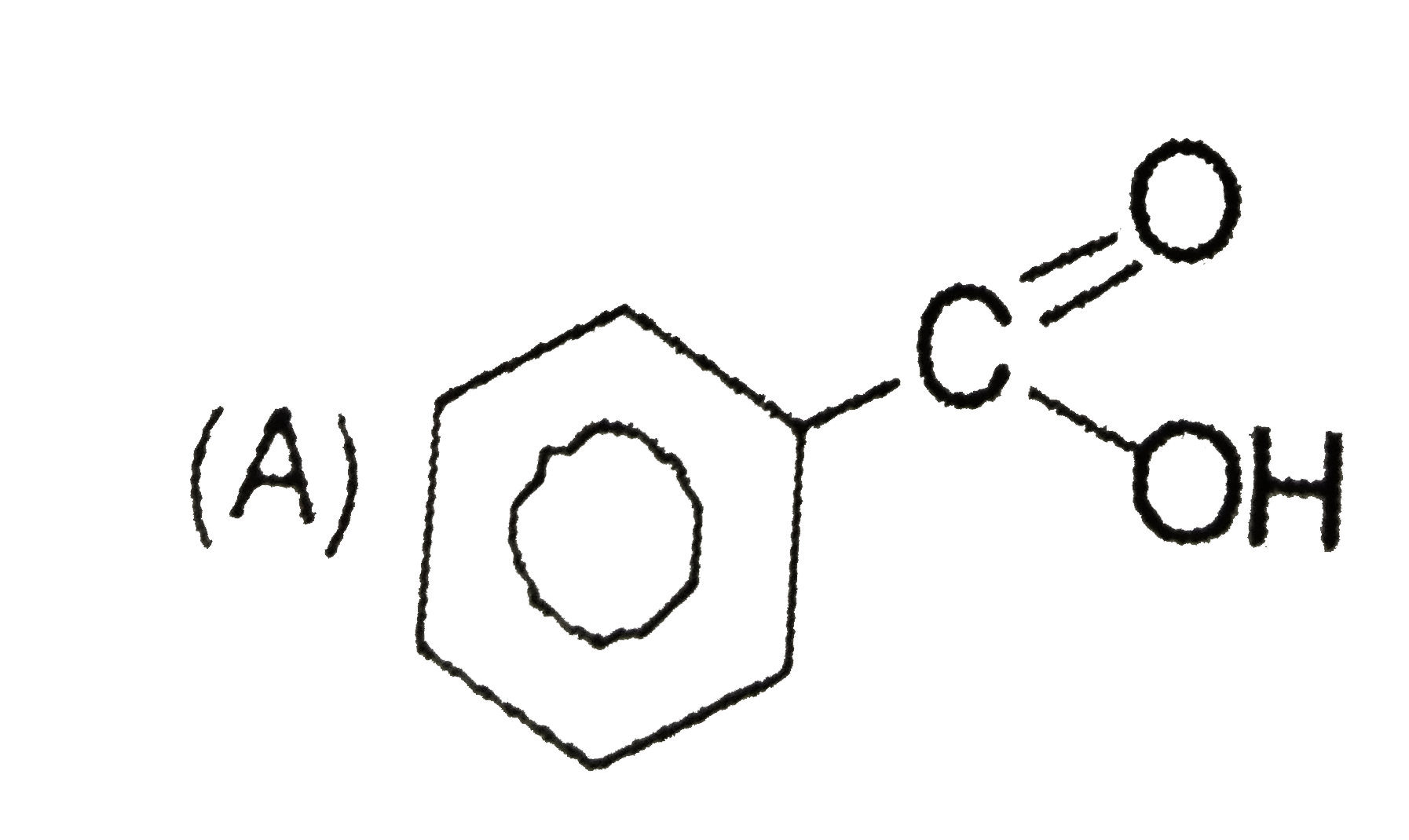
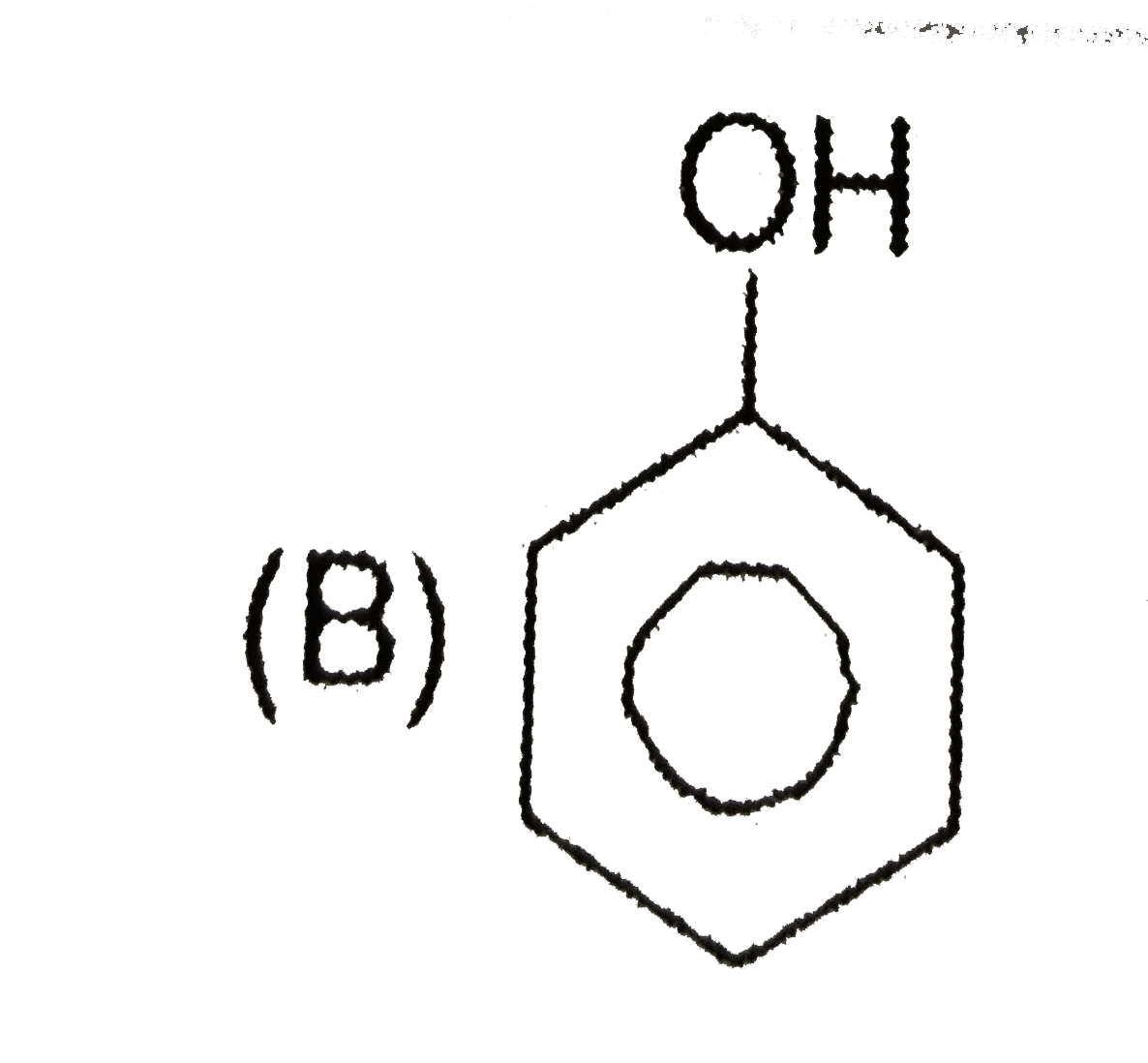
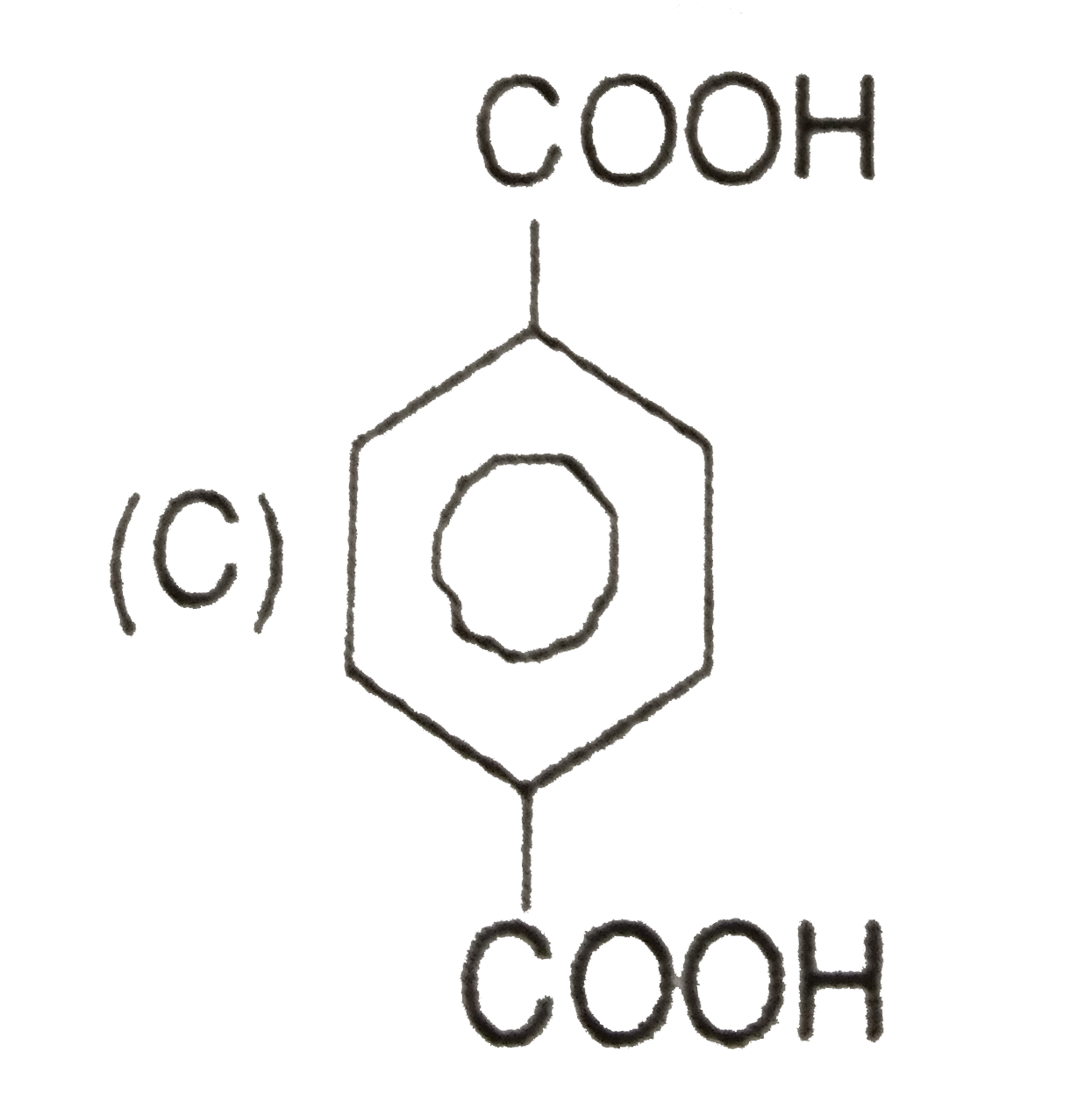
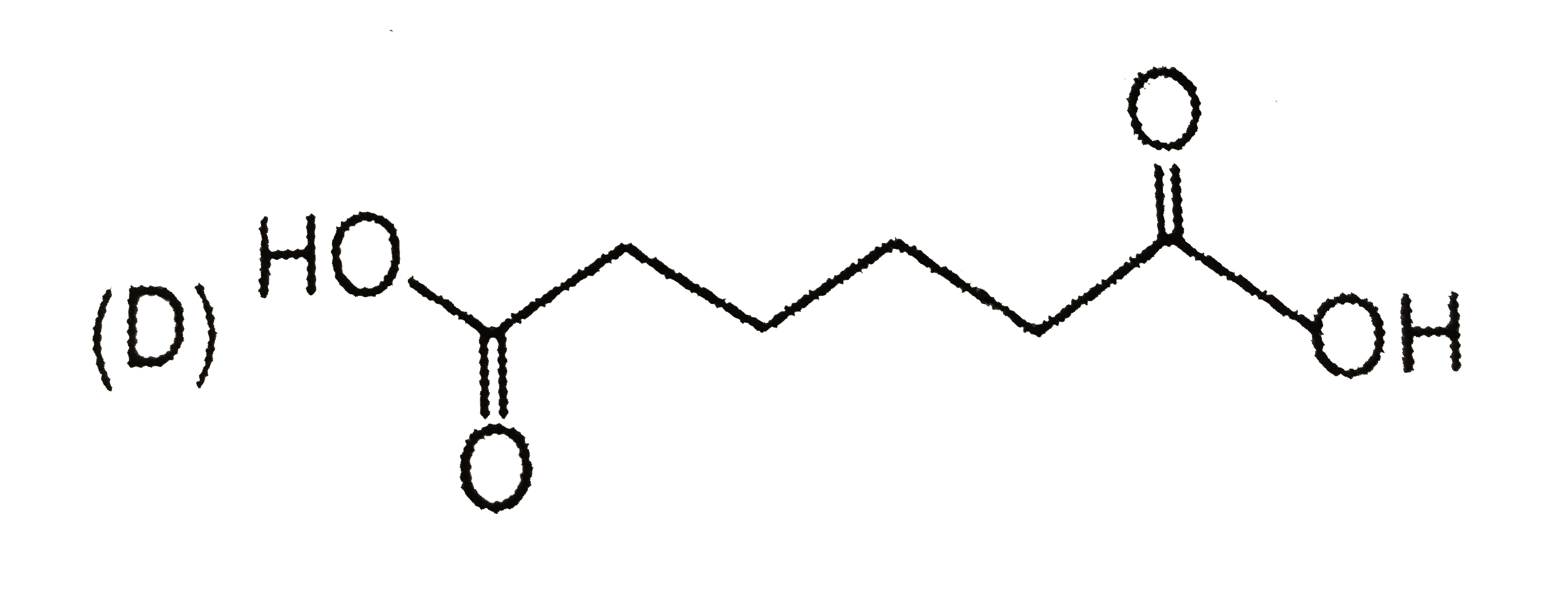
An organic compound with 68.9 % of C and 4.92 % of H, is aromatic and gives `CO_(2)` with `NaHCO_(3)`. The organic compound is

A

B

C

D

Text Solution

AI Generated Solution

The correct Answer is:

To solve the problem of identifying the organic compound with the given percentage composition and properties, we can follow these steps: ### Step 1: Determine the percentage of oxygen Given: - Percentage of Carbon (C) = 68.9% - Percentage of Hydrogen (H) = 4.92% To find the percentage of Oxygen (O), we can use the formula: \[ \text{Percentage of O} = 100 - (\text{Percentage of C} + \text{Percentage of H}) \] Calculating: \[ \text{Percentage of O} = 100 - (68.9 + 4.92) = 100 - 73.82 = 26.18\% \] ### Step 2: Calculate the number of moles of each element Using the molar masses: - Molar mass of Carbon (C) = 12 g/mol - Molar mass of Hydrogen (H) = 1 g/mol - Molar mass of Oxygen (O) = 16 g/mol Calculating the number of moles: - Moles of C = \( \frac{68.9}{12} = 5.74 \) - Moles of H = \( \frac{4.92}{1} = 4.92 \) - Moles of O = \( \frac{26.18}{16} = 1.63 \) ### Step 3: Find the simplest whole number ratio To find the simplest ratio, we divide each mole value by the smallest number of moles calculated (which is 1.63): - Ratio of C = \( \frac{5.74}{1.63} \approx 3.5 \) - Ratio of H = \( \frac{4.92}{1.63} \approx 3 \) - Ratio of O = \( \frac{1.63}{1.63} = 1 \) ### Step 4: Convert to whole numbers Since we have a fractional value (3.5), we can multiply all ratios by 2 to convert them to whole numbers: - C: \( 3.5 \times 2 = 7 \) - H: \( 3 \times 2 = 6 \) - O: \( 1 \times 2 = 2 \) Thus, the empirical formula is \( C_7H_6O_2 \). ### Step 5: Identify the compound The compound is aromatic and gives CO2 with NaHCO3, indicating it contains a carboxylic acid group. The structure that fits \( C_7H_6O_2 \) is benzoic acid (C6H5COOH). ### Conclusion The organic compound is **benzoic acid (C7H6O2)**. ---
Promotional Banner

Topper's Solved these Questions

  • STRUCTURAL IDENTIFICATION & PRACTICAL ORGANIC CHEMISTRY

    RESONANCE ENGLISH|Exercise Part-II INTEGER|8 Videos
  • STRUCTURAL IDENTIFICATION & PRACTICAL ORGANIC CHEMISTRY

    RESONANCE ENGLISH|Exercise Comprehension|4 Videos
  • STRUCTURAL IDENTIFICATION & PRACTICAL ORGANIC CHEMISTRY

    RESONANCE ENGLISH|Exercise Part-III Match the column|1 Videos
  • SOLID STATE

    RESONANCE ENGLISH|Exercise Part- IV|21 Videos
  • THERMODYNAMIC & THERMOCHEMISTRY

    RESONANCE ENGLISH|Exercise INORGANIC CHEMISTRY(P-Block Elements)|26 Videos

Similar Questions

Explore conceptually related problems

Which compound give CO_(2) with NaHCO_(3) ?

An organic compound (A) contatns 20% C, 46.66% N and 6.66% H. It gave NH3 gas on heating with NaOH. The organic compound (A) could be

An organic compound with C =40 % and H= 6.7% will have the empirical formula

How many of the following compounds give CO_(2) on reaction with NaHCO_(3)

Compound which can give effevescences with NaHCO_(3) .

A compounds contains 69.5% oxygen and 30.5 % nitrogen and its molecular weight is 92. The formula of that compound is :-

Find the empirical formula and the molecular formula of an organic compound from the data given below : C = 75.92%, H = 6.32% and N = 17.76% The vapour density of the compound is 39.5 [C = 12, H = 1, N= 14]

An organic compound containes C=74.0%, H=8.65% and N=17.3% . Its empirical formul ais

An organic compound contains 66% C and 13.3% H . Its vapour density is 37 . The possible number of isomers of resonance is not correct?

An organic compound made of C,H and N contains 20% nitrogen. Its minimum molecular weight is:
