Home
Class 11
CHEMISTRY
Compound A(C6H(12)) does not absorb H(2)...

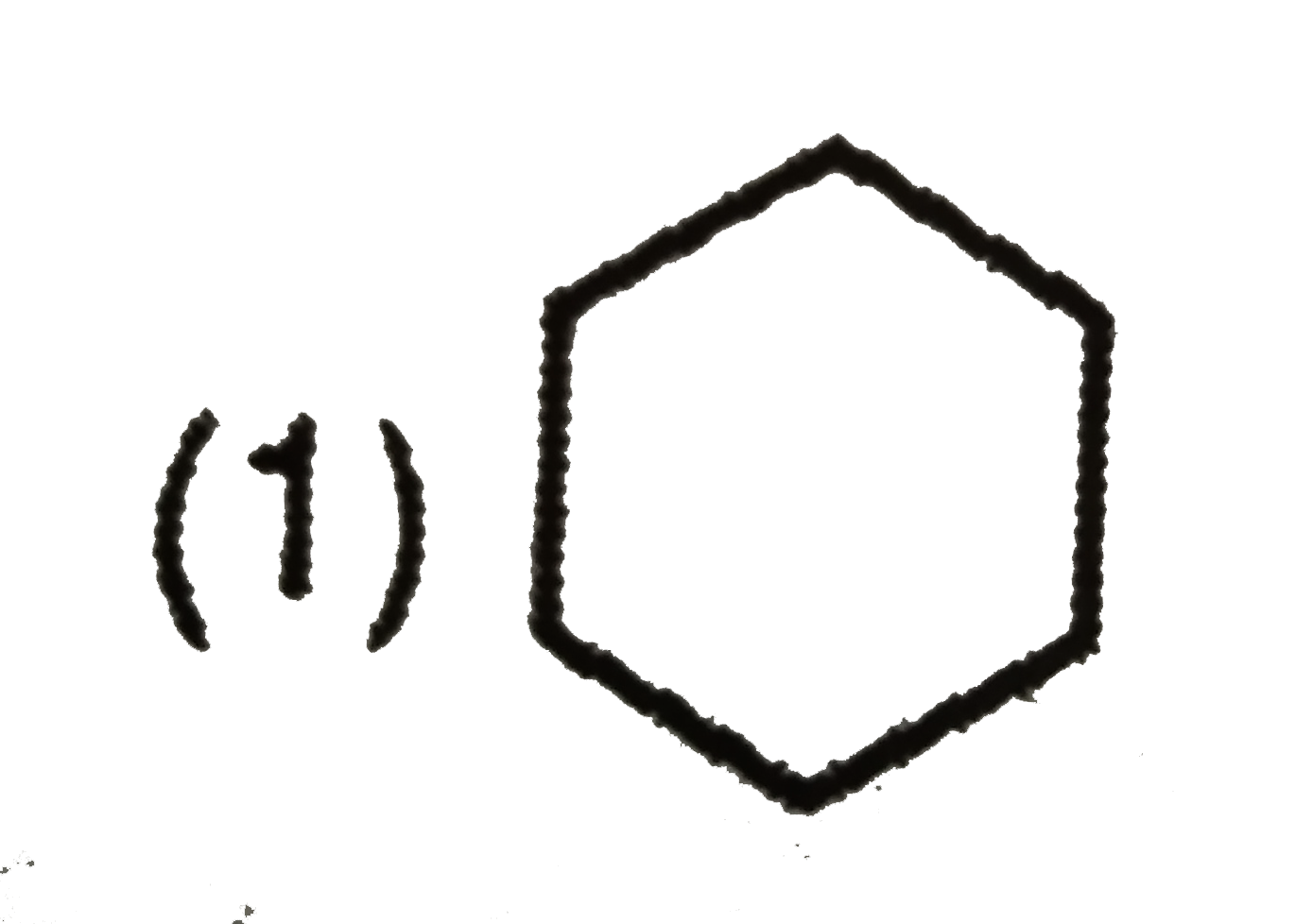
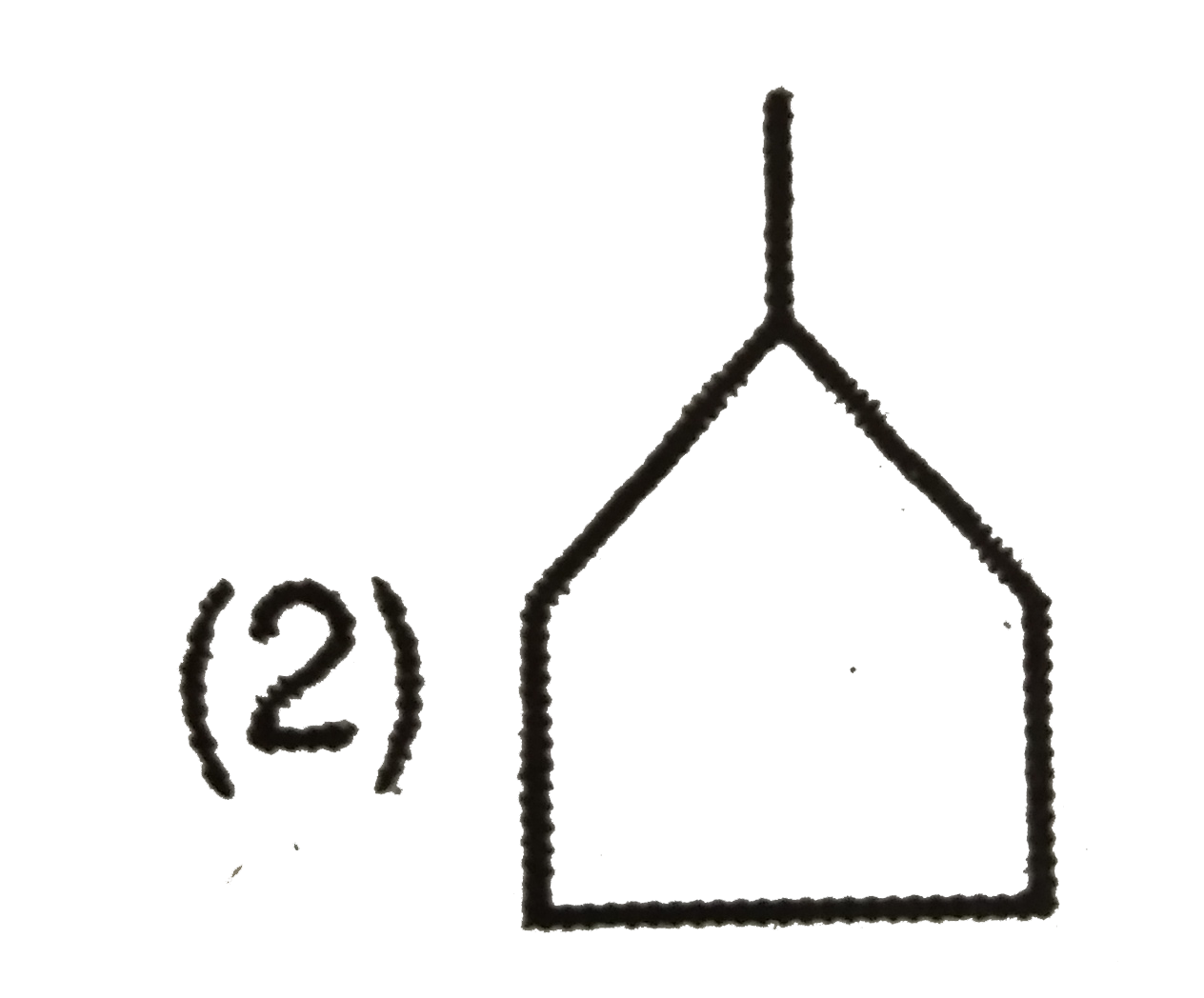
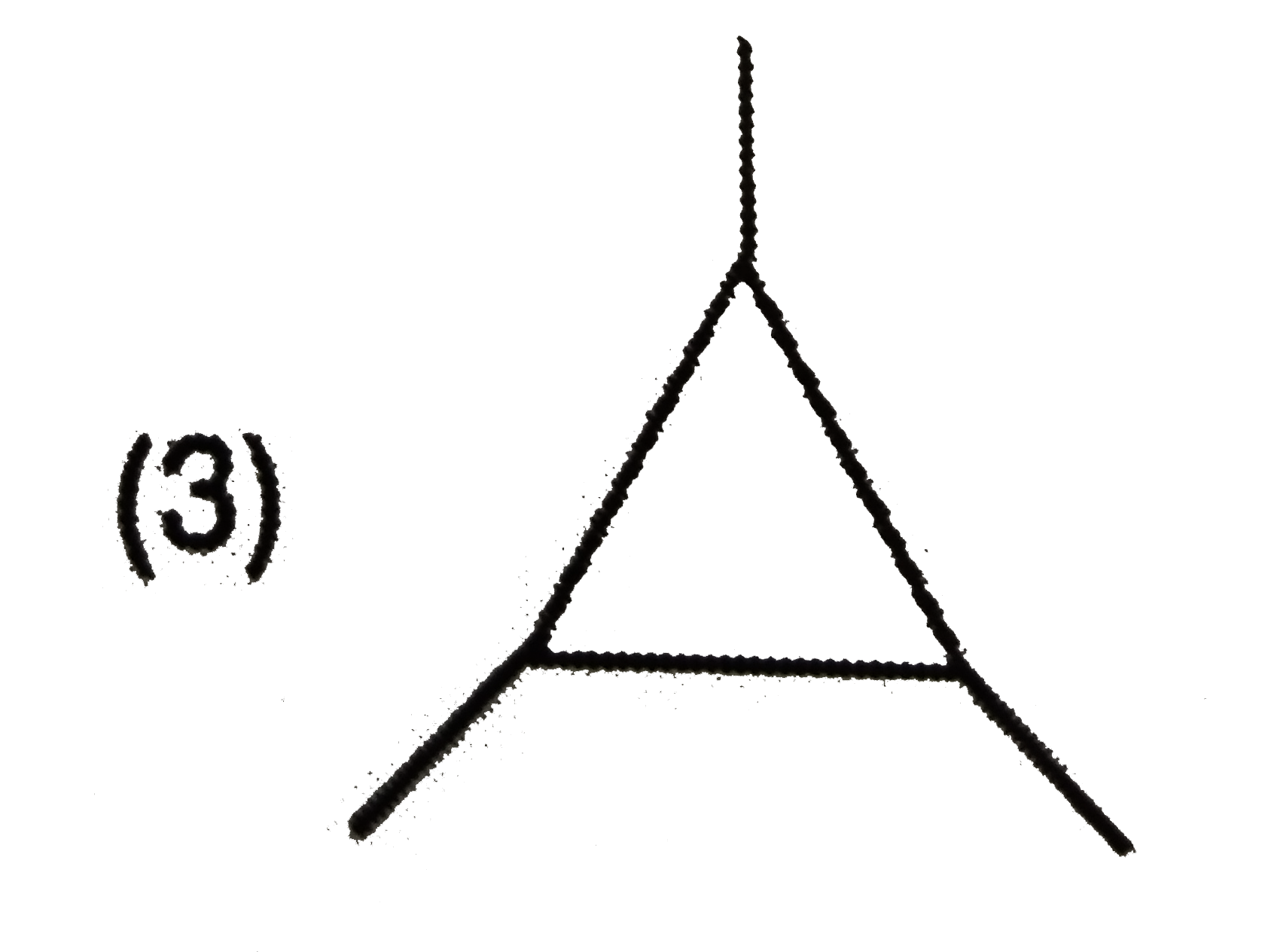
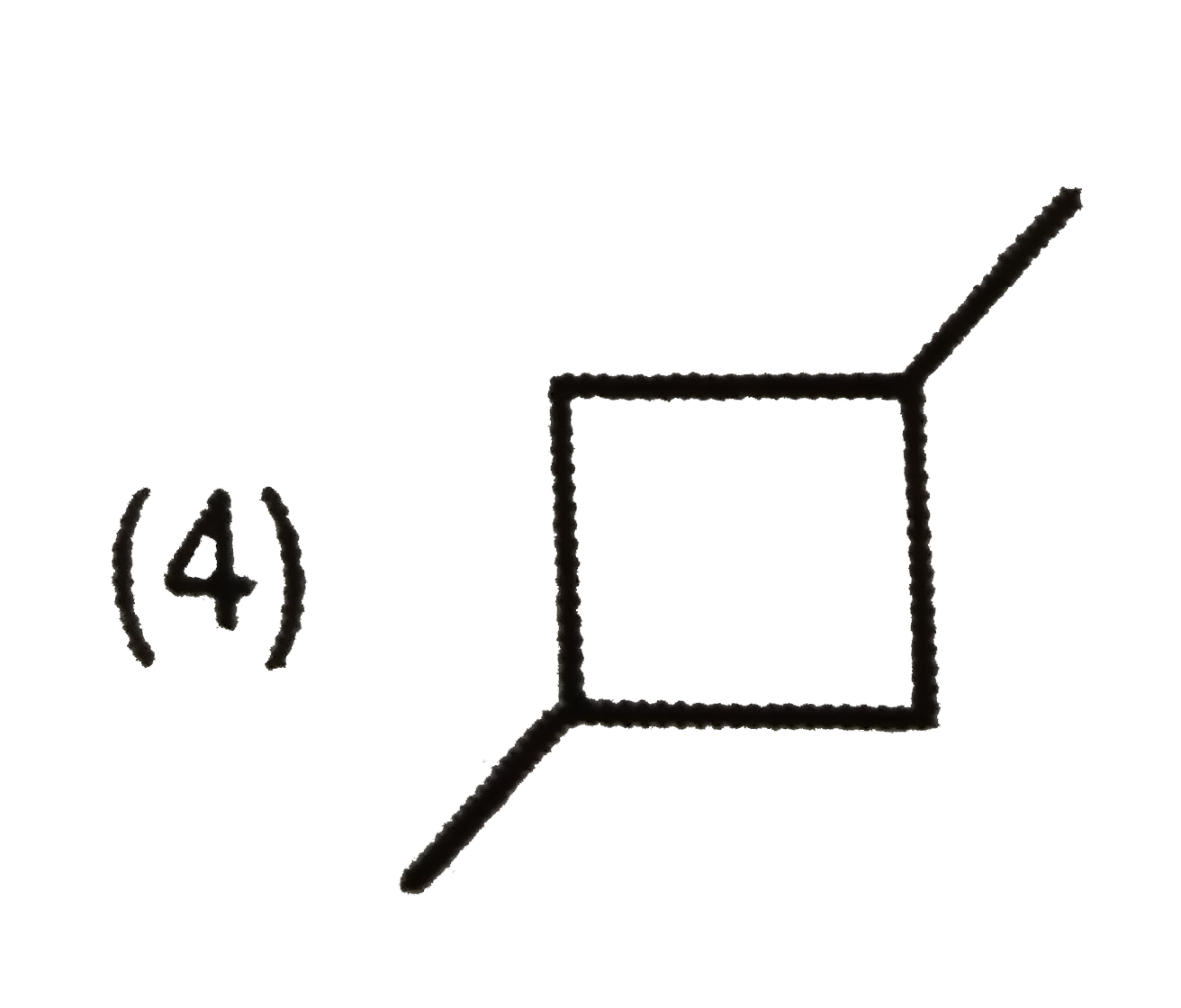
Compound `A(C_6H_(12))` does not absorb `H_(2)` in presence of Ni. It forms two monochloro isomers on photochemical chlorination . Its structure can be

A

B

C

D

Text Solution

AI Generated Solution

The correct Answer is:

To solve the problem regarding compound A (C₆H₁₂), we will analyze the information provided step by step. ### Step 1: Analyze the Molecular Formula The molecular formula of compound A is C₆H₁₂. This indicates that it is an alkene or a cycloalkane because it has the general formula CₙH₂ₙ for alkenes or CₙH₂ₙ for cycloalkanes. The fact that it does not absorb H₂ in the presence of nickel suggests that it is not an alkene, as alkenes typically undergo hydrogenation. **Hint:** Remember that alkenes can be hydrogenated, while cycloalkanes cannot. ### Step 2: Determine the Structure of Compound A Since compound A does not absorb H₂, it is likely a cycloalkane. The only cycloalkane with the formula C₆H₁₂ is cyclohexane (C₆H₁₂). **Hint:** Consider the properties of cycloalkanes and their saturation levels. ### Step 3: Photochemical Chlorination The problem states that compound A forms two monochloro isomers upon photochemical chlorination. In the case of cyclohexane, chlorination can occur at various positions, but due to the symmetry of the cyclohexane ring, there are only two distinct positions for substitution that lead to unique isomers. **Hint:** Identify the positions on the cyclohexane ring where chlorine can be substituted to form different isomers. ### Step 4: Identify the Monochloro Isomers In cyclohexane, the two unique monochloro isomers can be formed by substituting chlorine at: 1. One of the carbons in the ring (e.g., C1). 2. Another carbon in the ring that is not adjacent to the first substitution (e.g., C3). These substitutions yield two distinct isomers due to the different spatial arrangements of the chlorine atom. **Hint:** Visualize the cyclohexane structure to see how substituents can lead to different isomers. ### Conclusion Based on the analysis: - Compound A is cyclohexane (C₆H₁₂). - It does not absorb H₂ in the presence of nickel. - It forms two distinct monochloro isomers upon photochemical chlorination. Thus, the structure of compound A can be concluded to be cyclohexane. ### Final Answer The structure of compound A is cyclohexane (C₆H₁₂).

To solve the problem regarding compound A (C₆H₁₂), we will analyze the information provided step by step. ### Step 1: Analyze the Molecular Formula The molecular formula of compound A is C₆H₁₂. This indicates that it is an alkene or a cycloalkane because it has the general formula CₙH₂ₙ for alkenes or CₙH₂ₙ for cycloalkanes. The fact that it does not absorb H₂ in the presence of nickel suggests that it is not an alkene, as alkenes typically undergo hydrogenation. **Hint:** Remember that alkenes can be hydrogenated, while cycloalkanes cannot. ### Step 2: Determine the Structure of Compound A ...
Promotional Banner

Topper's Solved these Questions

  • STRUCTURAL IDENTIFICATION & PRACTICAL ORGANIC CHEMISTRY

    RESONANCE ENGLISH|Exercise Part-III|27 Videos
  • STRUCTURAL IDENTIFICATION & PRACTICAL ORGANIC CHEMISTRY

    RESONANCE ENGLISH|Exercise Additional theory|4 Videos
  • STRUCTURAL IDENTIFICATION & PRACTICAL ORGANIC CHEMISTRY

    RESONANCE ENGLISH|Exercise Jee main|6 Videos
  • SOLID STATE

    RESONANCE ENGLISH|Exercise Part- IV|21 Videos
  • THERMODYNAMIC & THERMOCHEMISTRY

    RESONANCE ENGLISH|Exercise INORGANIC CHEMISTRY(P-Block Elements)|26 Videos

Similar Questions

Explore conceptually related problems

Compound A C_(6)H_(12) forms two monochloro isomers on photochemical chlorination. Its structure can be :

An alkane C_(6)H_(14) gives two monochloro derivatives on chlorination. Its possible structure is

A compound (P) having molecular formula C_(6)H_(10) contains two DU . It yields Q(C_(6)H_(12)) when reacts with excess of H_(2) of the presence of Ni . On ozonolysis P gives cyclopentanone and compound Y . Identify the structure of the compound P

Read the following passage carefully and answer the questions : CH_(2)=CH-underset(H_(1)C)underset(|)(C )=underset(CH_(3))underset(|)(C )-CH=CH_(2) , How many total monochloro structure isomers obtained on chlorination of product (N) .

Among the isomeric alkanes formula C_(5)H_(12) , identify the one that on photochemical chlorination yields only monochloro derivative.

A compound (P) having molecular formula C_(6)H_(10) contains two DU . It yields Q(C_(6)H_(12)) when reacts with excess of H_(2) of the presence of Ni . On ozonolysis P gives cyclopentanone and compound Y . The compound Q gives the number of of monochlorination products

C_12H_10 is an aromatic compound which on ozonolysis gives mixture of Glyoxal and 2-Oxopropanedial in ratio 3:2 it structure can be :

RESONANCE ENGLISH-STRUCTURAL IDENTIFICATION & PRACTICAL ORGANIC CHEMISTRY-APSP
  1. Which of the following is not a condensation polymer?

    Text Solution

    |

  2. How many isomeric structural alkene on catalytic hydrogenation gives 3...

    Text Solution

    |

  3. Compound A(C6H(12)) does not absorb H(2) in presence of Ni. It forms t...

    Text Solution

    |

  4. Which alkyne will give 3-Ethyl heptane on catalytic hydrogenation.

    Text Solution

    |

  5. Compound 'A' gives and precipitate with Cu(2)Cl(2)//NH(4)OH solution a...

    Text Solution

    |

  6. An organic compound does not react appreciably with Lucas reagent but ...

    Text Solution

    |

  7. Which of the following compounds will give a positive iodoform test ?

    Text Solution

    |

  8. The following two compounds I and II can be distinguished by using rea...

    Text Solution

    |

  9. which of the compound give iodoform when react with IO^(-) (hypoiodit...

    Text Solution

    |

  10. How many structural isomeric ketones having molecular formula (C(5)H(1...

    Text Solution

    |

  11. Which of the structural isomeric ketones having molecular formula (C(5...

    Text Solution

    |

  12. can be distinguish by

    Text Solution

    |

  13. (x) C(7)H(12)underset(Me(2)S)overset(O(3))rarrP+Q Compound P respond...

    Text Solution

    |

  14. Total number of monochloro structure products

    Text Solution

    |

  15. Yellow precipitate obtained during the test of halogen by lassaigne's...

    Text Solution

    |

  16. A research scholar get a mixture of three product during an experiment...

    Text Solution

    |

  17. How many alcohols give immediate turbidity with Lucas reagent having m...

    Text Solution

    |

  18. Which of the following compound can give test with Tollen's reagent an...

    Text Solution

    |

  19. Which is incorrect match with respect to the reagent used for lab test...

    Text Solution

    |

  20. How many hydrocarbons having molecular mass 68 can give white precipit...

    Text Solution

    |
