Home
Class 12
PHYSICS
Find the mutual inductance of two concen...

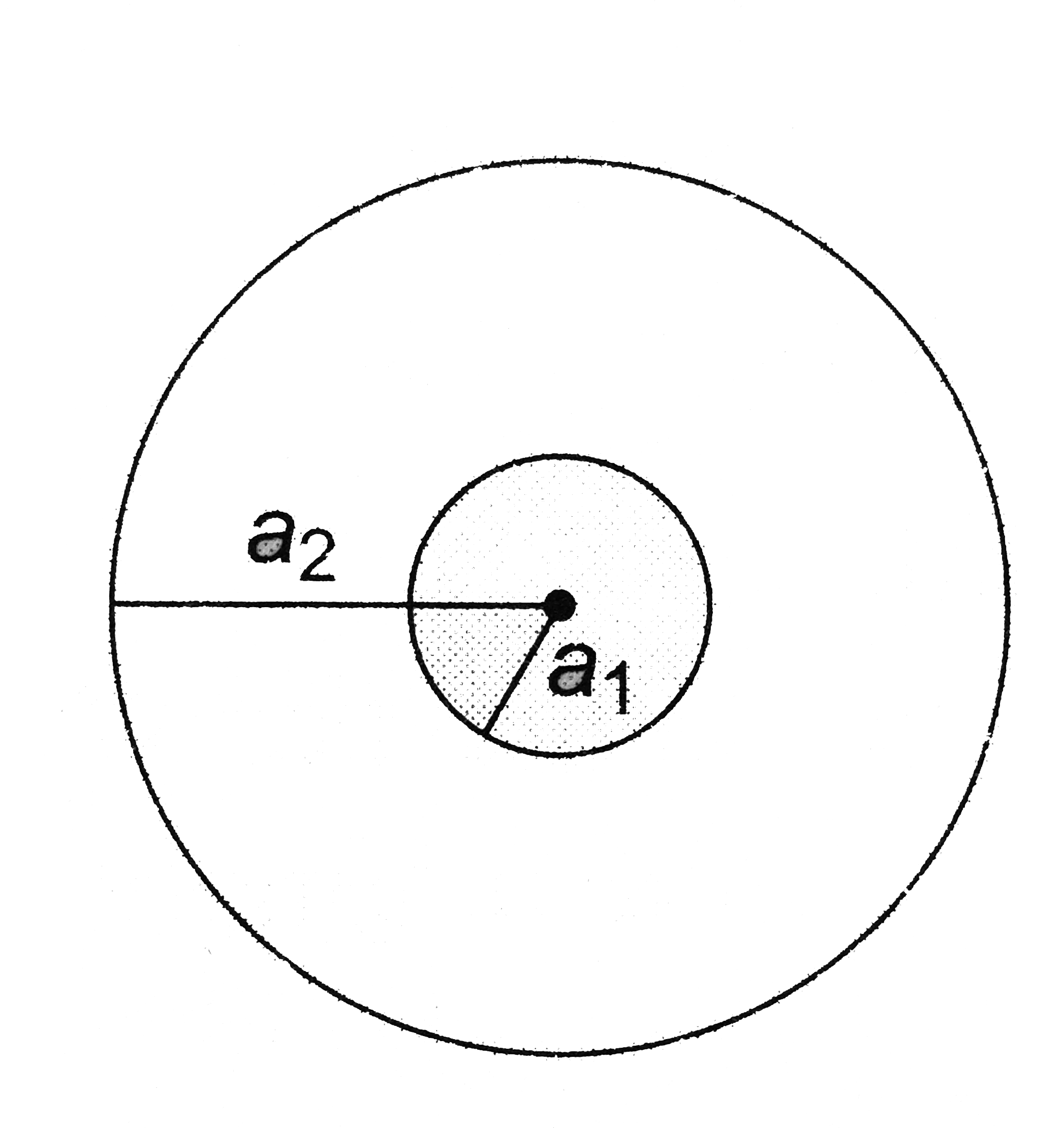
Find the mutual inductance of two concentric coils of radii `a_(1)` and `a_(2)(a_(1) lt lt a_(2))` if the planes of the coils are same.

Text Solution

Verified by Experts

Let a current I flow in coil of radius `a_(2)`.
Magnetic field at the centre of coil `=(mu_(0)i)/(2a_(2))pia_(1)^(2)`
`or Mi=(mu_(0)i)/(2a_(2))pia_(1)^(2) or M=(mu_(0)pia_(1)^(2))/(2a_(2))`
Promotional Banner

Similar Questions

Explore conceptually related problems

Find the mutual inductance of two concentric coils of radii a_(1) and a_(2)(a_(1) lt lt a_(2)) if the planes of the coils are perpendicular.

Find the mutual inductance of two concentric coils of radii a_(1) and a_(2)(a_(1) lt lt a_(2)) if the planes of the coils make an angle theta with each other.

If a_(1)=5 and a_(n)=1+sqrt(a_(n-1)), find a_(3) .

Let a_(1),a_(2),a_(3),a_(4),a_(5) be a five term geometric sequence satisfies the condition 0 lt a_(1) lt a_(2) lt a_(3) lt a_(4) lt 100 , where each term is an integar . Then the number of five terms in geometric progression are

Two convex lenses of same focal length but of aperture A_(1) and A_(2)(A_(2) lt A_(1)) are used as the objective lenses in two astronomical telescope having identical eye pieces. What is the ratio of their resolving power ? Which telescope will you prefer and why ? Give reason.

Find a_(1) and a_(9) if a_(n) is given by a_(n) = (n^(2))/(n+1)

If a_(1)=1, a_(2)=1, and a_(n)=a_(n-1)+a_(n-2) for n ge 3, find the first 7 terms of the sequence.

Let us consider the binomial expansion (1 + x)^(n) = sum_(r=0)^(n) a_(r) x^(r) where a_(4) , a_(5) "and " a_(6) are in AP , ( n lt 10 ). Consider another binomial expansion of A = root (3)(2) + (root(4) (3))^(13n) , the expansion of A contains some rational terms T_(a1),T_(a2),T_(a3),...,T_(am) (a_(1) lt a_(2) lt a_(3) lt ...lt a_(m)) The value of a_(m) is

Let us consider the binomial expansion (1 + x)^(n) = sum_(r=0)^(n) a_(r) x^(r) where a_(4) , a_(5) "and " a_(6) are in AP , ( n lt 10 ). Consider another binomial expansion of A = root (3)(2) + (root(4) (3))^(13n) , the expansion of A contains some rational terms T_(a1),T_(a2),T_(a3),...,T_(am) (a_(1) lt a_(2) lt a_(3) lt ...lt a_(m)) The value of sum_(i=1)^(n) a_(i) is

If a_(n+1)=a_(n-1)+2a_(n) for n=2,3,4, . . . and a_(1)=1 and a_(2)=1 , then a_(5) =
