Text Solution
Verified by Experts
The correct Answer is:



Similar Questions
Explore conceptually related problems
Recommended Questions
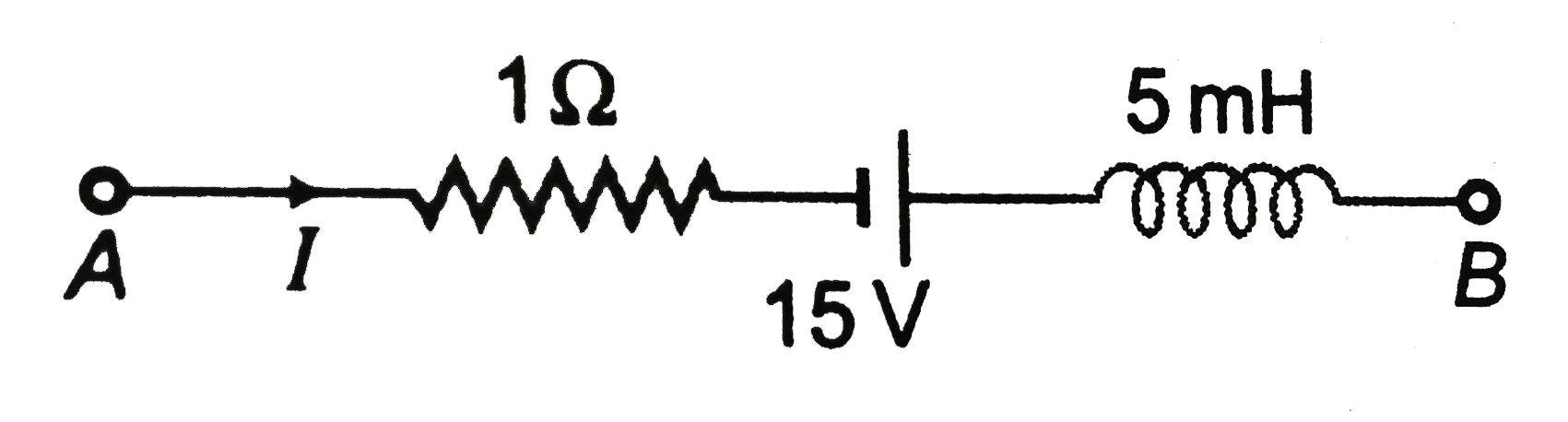
- The network shown in the figure is a part of complete circuit. What is...
Text Solution
|
- The network shown in the figure is a part of complete circuit. What is...
Text Solution
|
- In figure, if the current i decreases at a rate alpha then VA-VB is
Text Solution
|
- The network shown in the figure is part of a complete circuit. If at a...
Text Solution
|
- The network shown in Fig. is a part of a complete circuit.What is the ...
Text Solution
|
- निम्न चित्र में यदि परिपथ में किसी क्षण धारा I = 5A है ...
Text Solution
|
- The network shown in the figure is part of a complete circuit instant ...
Text Solution
|
- In the circuit shown in the figure , no current flows through the 8 Ω ...
Text Solution
|
- If the instantaneous change on the capacitor is 100muC and current thr...
Text Solution
|