
Home
Class 12
CHEMISTRY
An unknown substance (P) shows optical a...

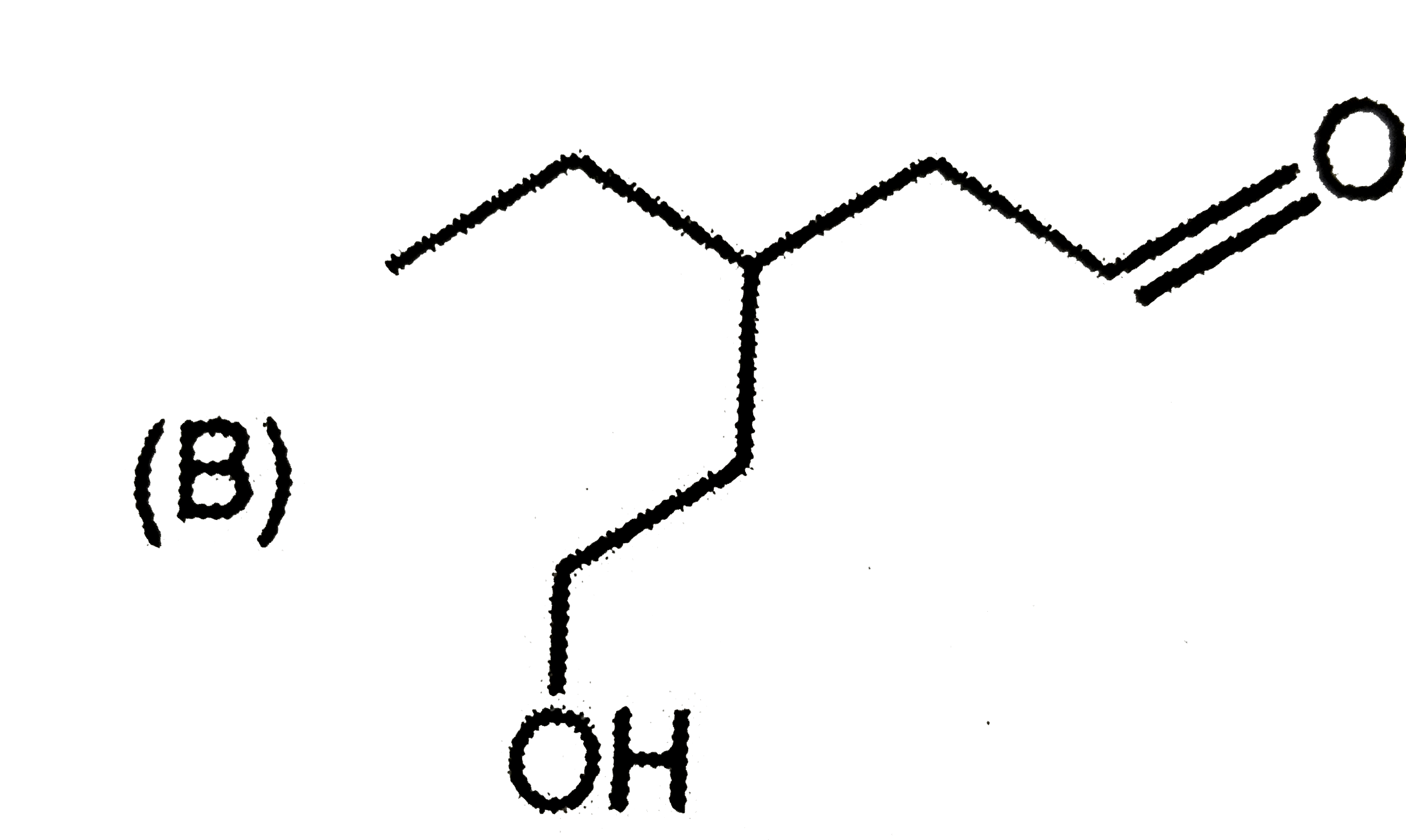
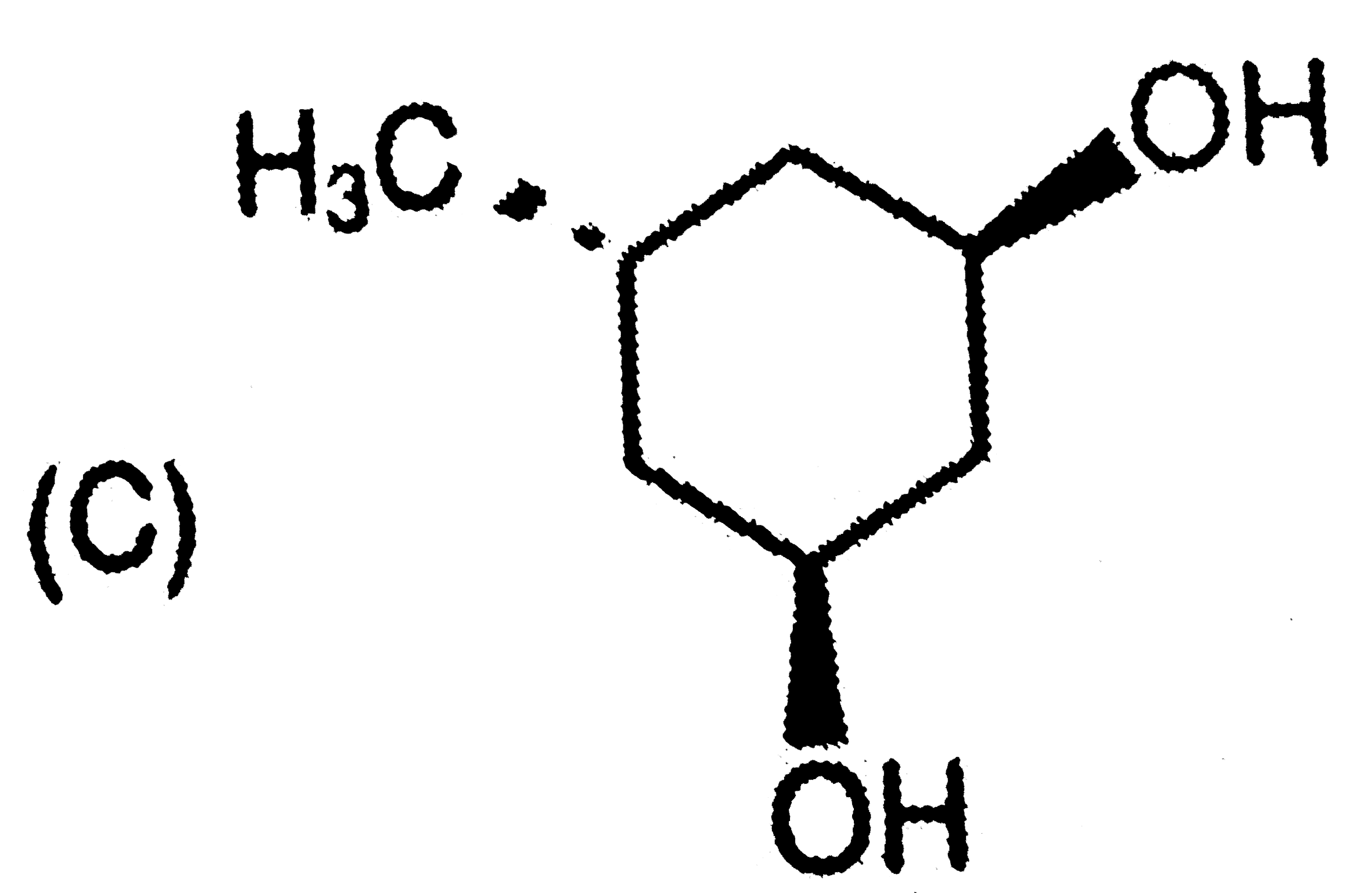
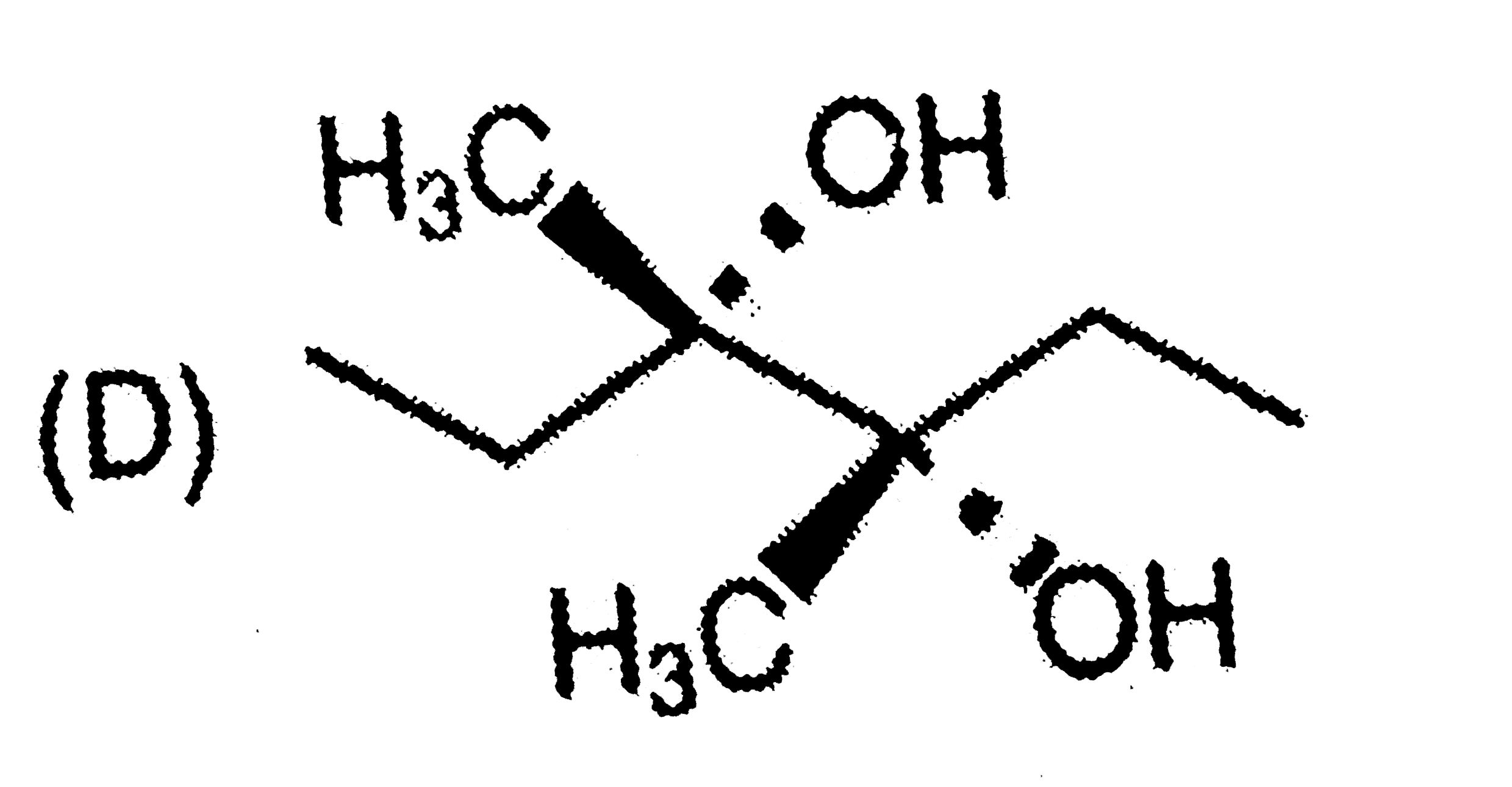
An unknown substance (P) shows optical activity. This optical activity disappears on treatment of (P) with acidified `KMnO_(4)` (which produces Q), or with heated copper (which produces R). (P) Produces silver mirror with Tollen's reagent, thereby producing (S). (S) is chiral. Based on this information, answer the following questions :
(P) may be-

A

B

C

D

Text Solution

AI Generated Solution

The correct Answer is:

To solve the problem step by step, we need to analyze the information provided about the unknown substance (P) and the reactions it undergoes. ### Step 1: Identify the characteristics of substance P - **Optical Activity**: Substance P shows optical activity, indicating it is likely a chiral compound. - **Reactions with Acidified KMnO4 and Copper**: The optical activity disappears when P is treated with acidified KMnO4 or heated with copper, suggesting that these reactions convert P into achiral products (Q and R). - **Reaction with Tollen's Reagent**: P produces a silver mirror with Tollen's reagent, indicating that P is likely an aldehyde or a reducing sugar. ### Step 2: Determine the structure of P Given that P is optically active and reacts with Tollen's reagent, it is likely an aldehyde with a chiral center. A suitable candidate for P could be a compound like 2-butanol or a similar structure with a chiral center. ### Step 3: Reaction with Acidified KMnO4 When P is treated with acidified KMnO4, it undergoes oxidation. The expected product (Q) would be a carboxylic acid or a ketone, depending on the structure of P. If we assume P is a chiral aldehyde, it could be oxidized to a carboxylic acid. ### Step 4: Reaction with Heated Copper Heating with copper typically leads to the oxidation of aldehydes to carboxylic acids. Therefore, R would also be a carboxylic acid if P is an aldehyde. ### Step 5: Reaction with Tollen's Reagent Since P produces a silver mirror with Tollen's reagent, it confirms that P is indeed an aldehyde. The reaction with Tollen's reagent would yield a chiral alcohol (S) upon reduction. ### Step 6: Identify the chirality of S The product S is chiral, which aligns with the information given. This suggests that the structure of S must have a chiral center. ### Conclusion Based on the analysis, substance P could be a chiral aldehyde such as 2-butanol or a similar compound. The reactions lead to the formation of achiral products Q and R, and a chiral product S. The final answer is that (P) may be **2-butanol** or a similar chiral aldehyde.

To solve the problem step by step, we need to analyze the information provided about the unknown substance (P) and the reactions it undergoes. ### Step 1: Identify the characteristics of substance P - **Optical Activity**: Substance P shows optical activity, indicating it is likely a chiral compound. - **Reactions with Acidified KMnO4 and Copper**: The optical activity disappears when P is treated with acidified KMnO4 or heated with copper, suggesting that these reactions convert P into achiral products (Q and R). - **Reaction with Tollen's Reagent**: P produces a silver mirror with Tollen's reagent, indicating that P is likely an aldehyde or a reducing sugar. ### Step 2: Determine the structure of P ...
Promotional Banner

Topper's Solved these Questions

  • STEREOISOMERISM

    RESONANCE ENGLISH|Exercise EXERCISE (PART II : NATIONAL STANDARD EXAMINATION IN CHEMISTRY (NSEC) STAGE-1)|55 Videos
  • SOLUTIONS

    RESONANCE ENGLISH|Exercise Advabced Level Problems (PART-2)|35 Videos
  • STRUCTURAL IDENTIFICATION

    RESONANCE ENGLISH|Exercise Advanced level Problems (Part-III)|12 Videos

Similar Questions

Explore conceptually related problems

The I. E_(1) . And the I.E_(2) in kJ mol^(-1) of a few elements designated by P,Q,R,S are shown below: Based on the above information, answer the following questions. Q. Which represents a noble gas?

The I. E_(1) . And the I.E_(2) in kJ mol^(-1) of a few elements designated by P,Q,R,S are shown below: Based on the above information, answer the following questions. Q. Which represents a noble gas?

The I. E_(1) . And the I.E_(2) in kJ mol^(-1) of a few elements designated by P,Q,R,S are shown below: Based on the above information, answer the following questions. Q. Which represents a noble gas?

The I. E_(1) . And the I.E_(2) in kJ mol^(-1) of a few elements designated by P,Q,R,S are shown below: Based on the above information, answer the following questions. Q. Which of the element is likely to be reactive metal?

The I. E_(1) . And the I.E_(2) in kJ mol^(-1) of a few elements designated by P,Q,R,S are shown below: Based on the above information, answer the following questions. Q. Which of the element is likely to be reactive metal?

The I. E_(1) . And the I.E_(2) in kJ mol^(-1) of a few elements designated by P,Q,R,S are shown below: Based on the above information, answer the following questions. Q. Which of the element is likely to be reactive metal?

The I. E_(1) . And the I.E_(2) in kJ mol^(-1) of a few elements designated by P,Q,R,S are shown below: Based on the above information, answer the following questions. Q. Which of the elements is likely to be reactive non-metal?

A unsaturated hydrocarbons (P) on reductive ozonolysis produce an dicarbonyl compound (Q).(Q) can form precipitate with 2,4-DNP but no with Tollen's reagent. Identify the structure of P

Consider the following elements with their period number and valence electrons. {:("Elements","Period number","Total valence"e^(-)),(P,2,4),(Q,2,6),(R,3,7),(S,3,3),(T,3,6),(U,3,4):} According to the given informations, answer the following questions : Choose incorrect statement :

Consider the following elements with their period number and valence electrons. {:("Elements","Period number","Total valence"e^(-)),(P,2,4),(Q,2,6),(R,3,7),(S,3,3),(T,3,6),(U,3,4):} According to the given informations, answer the following questions : Choose the correct statement :

RESONANCE ENGLISH-STEREOISOMERISM-EXERCISE (PART III : PRACTICE TEST-2 (IIT-JEE (ADVANCED PATTERN))
  1. Which conformation of Bicyclo [2, 2, 2]-octane is more stable?

    Text Solution

    |

  2. In the given energy graph for cyclohexane, the point "B" represent.

    Text Solution

    |

  3. Identify the most stable stereoisomer :

    Text Solution

    |

  4. Molecular formula of smallest ester which contain one chiral carbon is...

    Text Solution

    |

  5. Correct the following names : 2-ol-2, 3-dimethylbutane

    Text Solution

    |

  6. Which statement(s) is/are correct for the given reaction and compounds...

    Text Solution

    |

  7. Intra-molecular H-bonding is possible in which of the following.

    Text Solution

    |

  8. Which of the following statement(s) is/are correct ?

    Text Solution

    |

  9. Which of the following compounds can show Optical isomerism as well as...

    Text Solution

    |

  10. Which of the following compound will show geometrical isomerism?

    Text Solution

    |

  11. Which of the following statement(s) is/are true about the following co...

    Text Solution

    |

  12. An organic compound P exists in two enantiomeric forms, which have spe...

    Text Solution

    |

  13. Total number of meso forms possible for 1,2,3,4 -Tetrachlorocyclobutan...

    Text Solution

    |

  14. If "A" is total number of meso compounds and "B" is total number of op...

    Text Solution

    |

  15. Sum of total no. of stereoisomers (A) and total no. of fractions (B) f...

    Text Solution

    |

  16. Which of the following carbonyl compound will give two products after ...

    Text Solution

    |

  17. Total number of stereoisomers of truxillic acid are :

    Text Solution

    |

  18. An unknown substance (P) shows optical activity. This optical activity...

    Text Solution

    |

  19. An unknown substance (P) shows optical activity. This optical activity...

    Text Solution

    |

  20. How will you Convert Phenol to Aniline?

    Text Solution

    |
