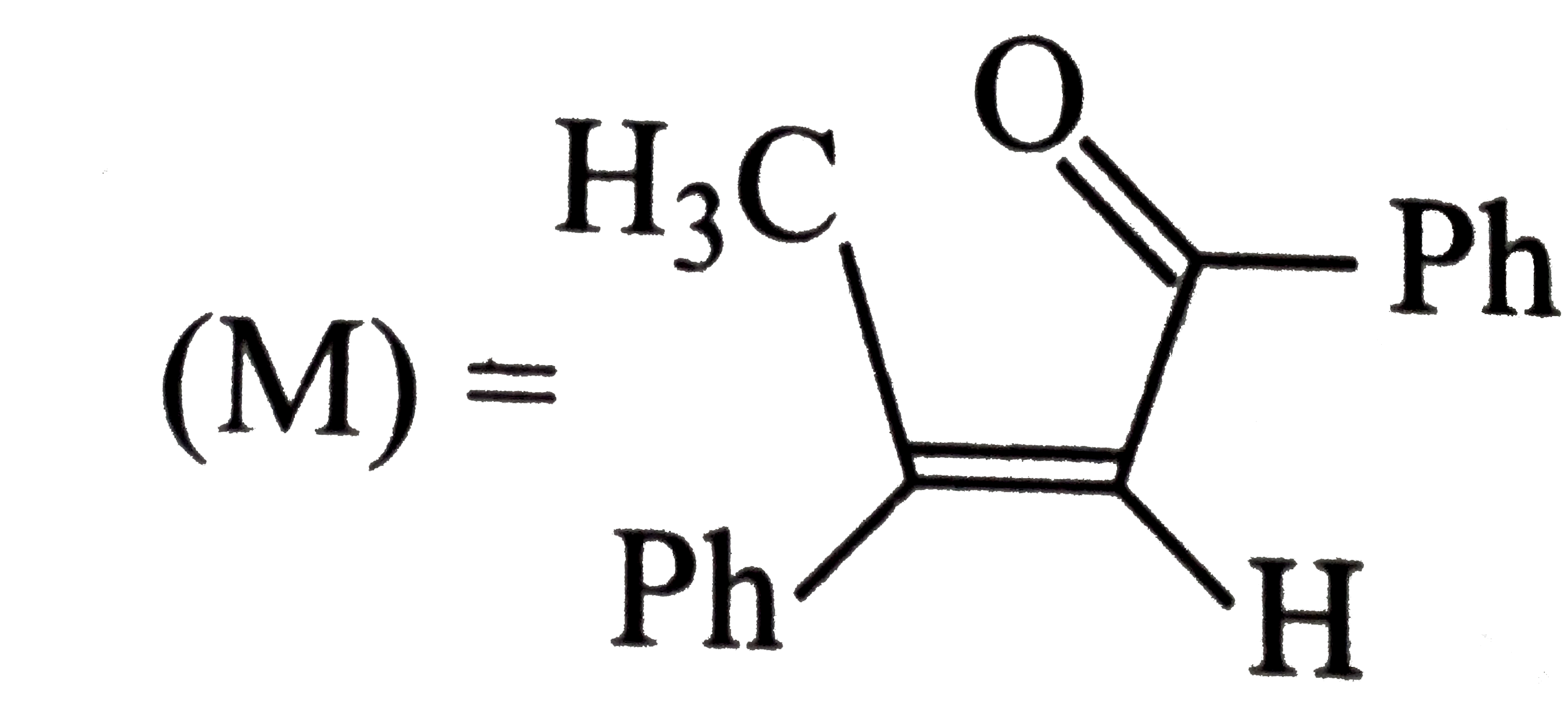
A
B
C
D
Text Solution
Verified by Experts
The correct Answer is:



Topper's Solved these Questions
CARBONYL COMPOUNDS (ALDEHYDES & KETONES ) & CARBOXYLIC ACID
RESONANCE ENGLISH|Exercise PART- IV|13 VideosCARBONYL COMPOUNDS (ALDEHYDES & KETONES ) & CARBOXYLIC ACID
RESONANCE ENGLISH|Exercise Exercise-3|1 VideosCARBONYL COMPOUNDS (ALDEHYDES & KETONES ) & CARBOXYLIC ACID
RESONANCE ENGLISH|Exercise Exercise-2 Part-I|1 VideosBIOMOLECULES & POLYMER
RESONANCE ENGLISH|Exercise ORGANIC CHEMISTRY(Biomolecules & Polymer)|34 VideosCHEMICAL KINETICS
RESONANCE ENGLISH|Exercise PHYSICAL CHEMITRY (CHEMICAL KNIETICS & RADIOACTIVITY)|49 Videos
Similar Questions
Explore conceptually related problems
RESONANCE ENGLISH-CARBONYL COMPOUNDS (ALDEHYDES & KETONES ) & CARBOXYLIC ACID -Part-I
- A tertiary alcohol (H) upon acid-catalysed dehydration gives a product...
Text Solution
|
- A teritary alcohol H upon acid catalysed dehydration gives a product I...
Text Solution
|
- A tertiary alcohol (H) upon acid-catalysed dehydration gives a product...
Text Solution
|
- A carbonyl compound P. which gives positive iodoform test, undergoes r...
Text Solution
|
- A carbonyl compound P. which gives positive iodoform test, undergoes r...
Text Solution
|
- A carbonyl compound P. which gives positive iodoform test, undergoes r...
Text Solution
|
- Match each of the compounds given in ColumnI with reaction (s) that t...
Text Solution
|
- In the scheme given below, the total number of intramolecular aldol co...
Text Solution
|
- Two aliphatic aldehydes (P) and (Q) react in the presence of aqueous K...
Text Solution
|
- Two aliphatic aldehydes (P) and (Q) react in the presence of aqueous K...
Text Solution
|
- Two aliphatic aldehydes P and Q react in th presence of aqueous k(2)CO...
Text Solution
|
- Match the reactions in Column I with appropriate types of steps/reacti...
Text Solution
|
- The number of aldol reaction(s) that occurs in the given transformatio...
Text Solution
|
- In the following reaction sequence, the compound J is an interemedia...
Text Solution
|
- In the following reaction sequence, the compound J is an interemedia...
Text Solution
|
- After completion of the reactions (I and II), the organic compounds in...
Text Solution
|
- Among P,q,R and S, the aromatic compound(s) is /are:
Text Solution
|
- The major product of the following reaction is:
Text Solution
|
- In the following reactions, the product S is
Text Solution
|
- The major product of the following reactions sequence is
Text Solution
|