Home
Class 12
CHEMISTRY
An organic acid P (C(11)H(12)O(2)) can ...

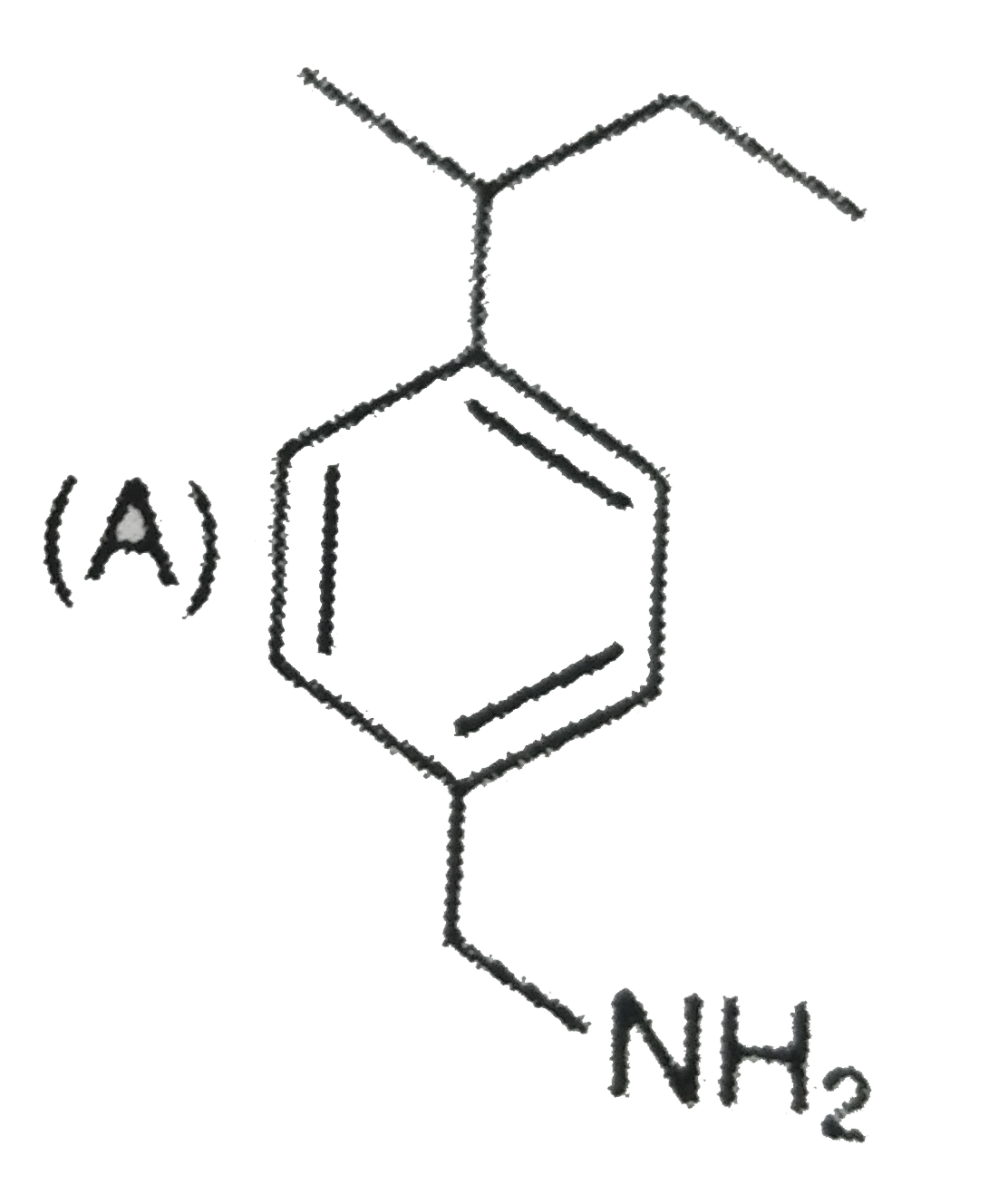
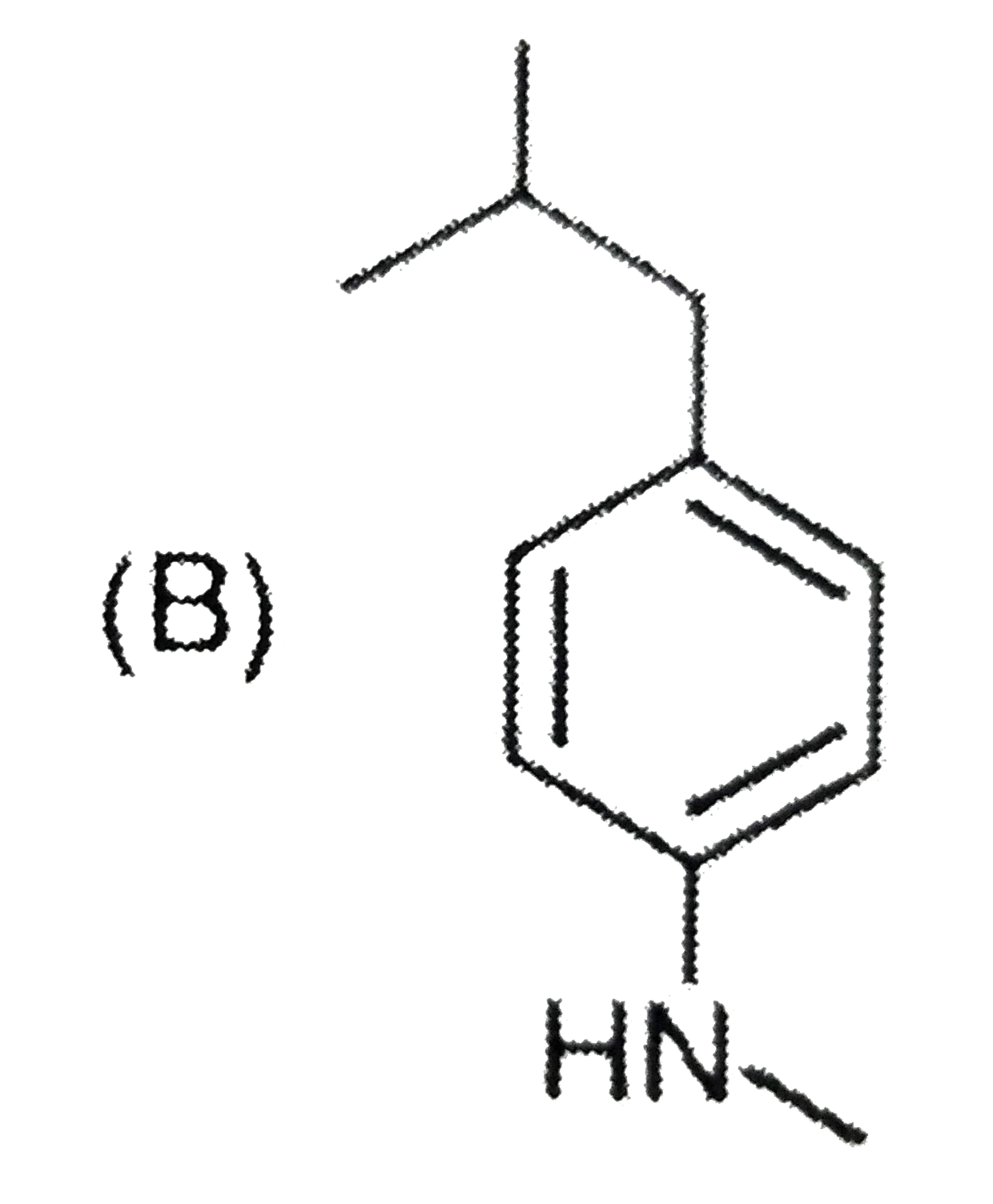
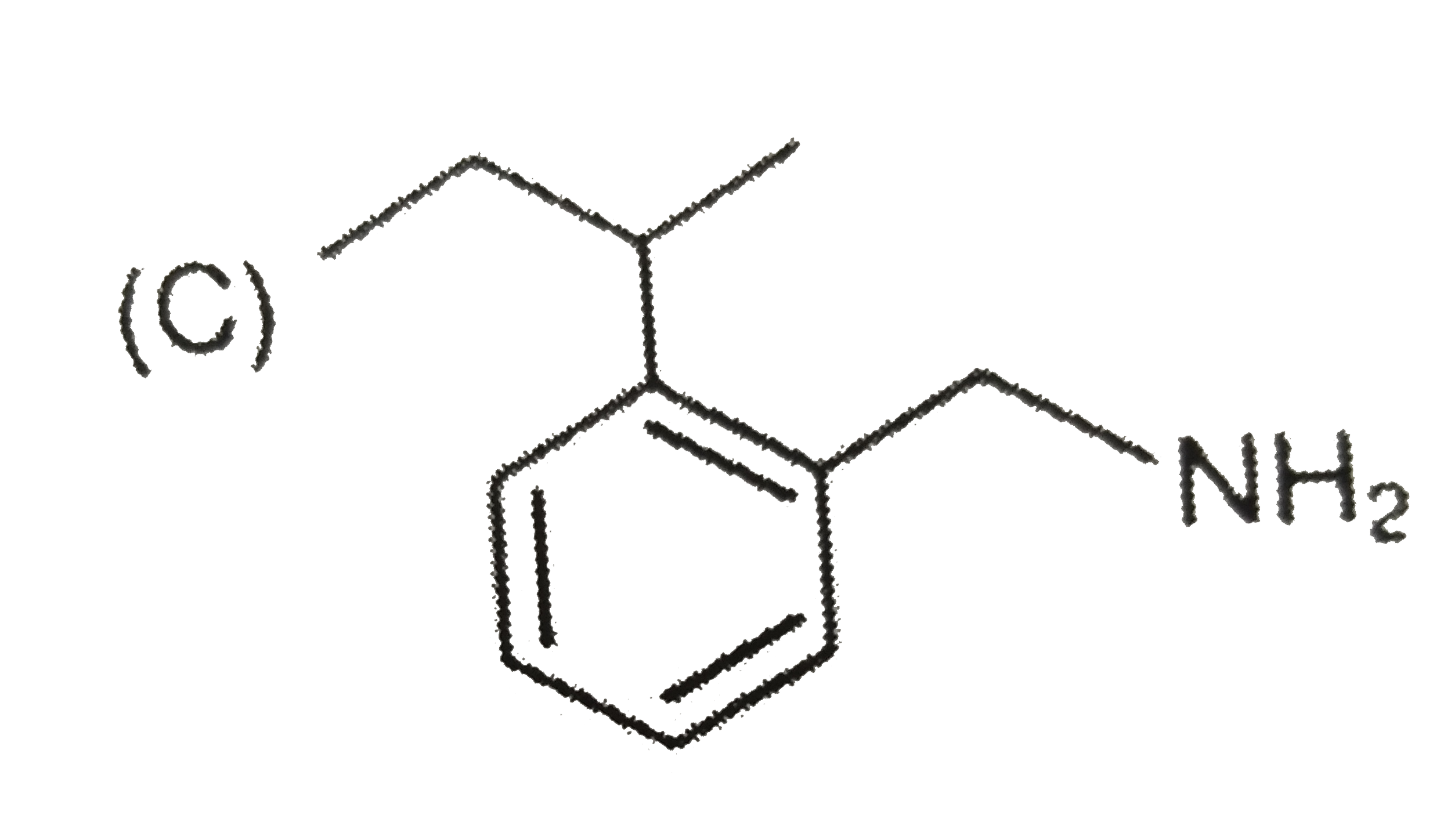
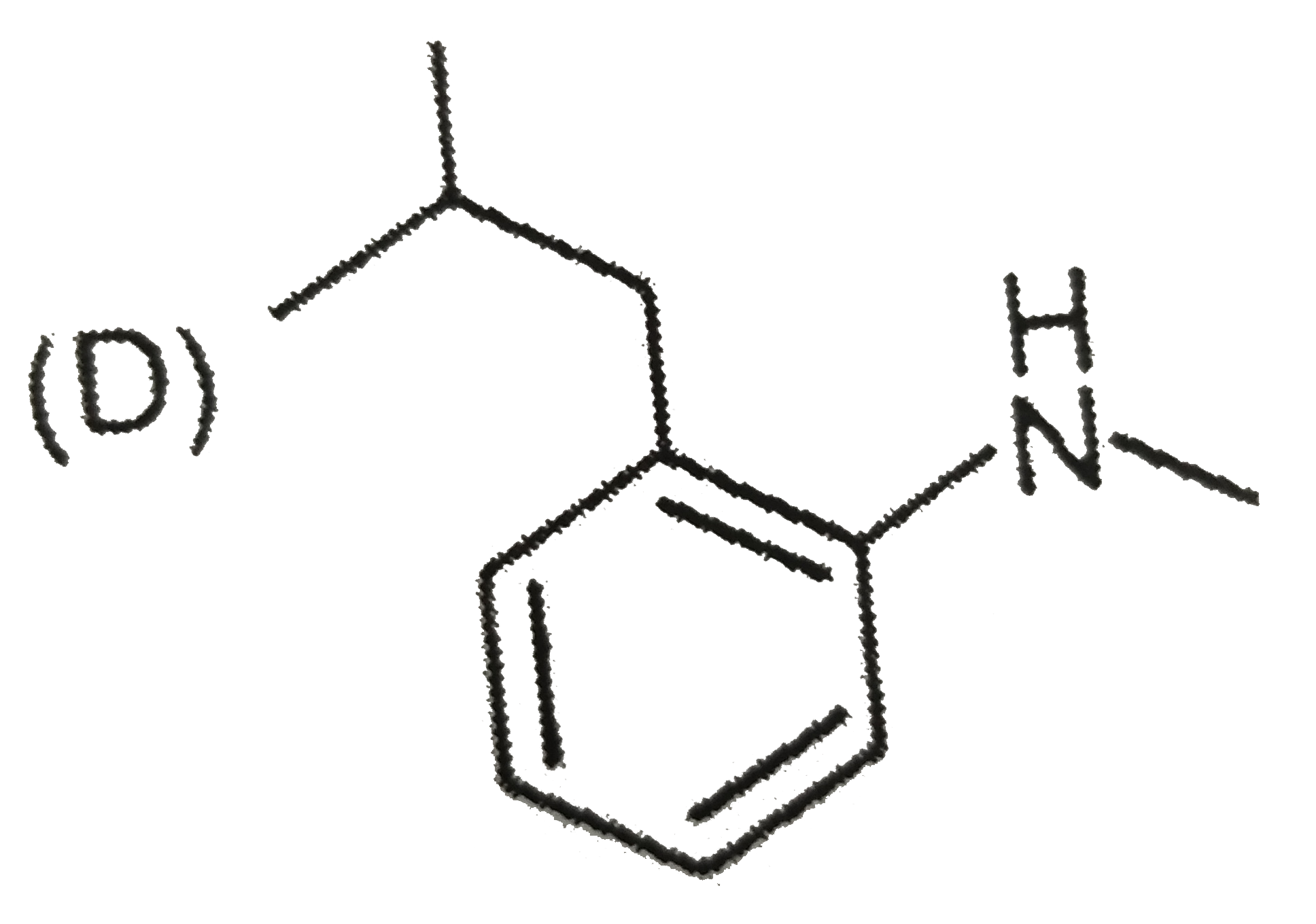
An organic acid P `(C_(11)H_(12)O_(2))` can easily be oxidized to a dibasic acid which reacts with ethyleneglycol to produce a polymer dacron. Upon ozonolysis, P gives an aliphatic ketone as one of the products. P undergoes the following reaction sequences to furnish R via Q. The compound P also undergoes another set of reactions to produce S.
The compound S is

A

B

C

D

Text Solution

AI Generated Solution

The correct Answer is:

To solve the problem step by step, we need to identify the organic acid P (C11H12O2) and the compounds R, Q, and S based on the given information. ### Step 1: Identify the structure of compound P Given that P is an organic acid with the formula C11H12O2, we can deduce that it likely contains a benzene ring and a carboxylic acid group (-COOH). The presence of 12 hydrogen atoms suggests that it might have a substituent on the benzene ring. **Hint:** Look for a structure that includes a benzene ring and a carboxylic acid group. ### Step 2: Oxidation of compound P The problem states that P can be easily oxidized to a dibasic acid. This suggests that P may have a substituent that can be oxidized to form another carboxylic acid group. The dibasic acid formed will have two -COOH groups. **Hint:** Consider the possibility of a para-substituted benzoic acid structure for P. ### Step 3: Formulation of the dibasic acid When oxidized, the compound P forms a dibasic acid with two carboxylic acid groups. Since it is mentioned that it reacts with ethylene glycol to produce Dacron, we can conclude that the dibasic acid is likely terephthalic acid (1,4-benzenedicarboxylic acid). **Hint:** Identify common dibasic acids that can react with ethylene glycol. ### Step 4: Ozonolysis of compound P The problem states that upon ozonolysis, P gives an aliphatic ketone as one of the products. This indicates that P must have a double bond that can be cleaved by ozonolysis to form a ketone. **Hint:** Look for a structure that contains a double bond adjacent to the benzene ring. ### Step 5: Determine compound R and Q The sequence of reactions leads to the formation of compounds R and Q. Based on the reactions mentioned, we can infer that R is likely an amide or an amine derivative formed from P after several transformations. **Hint:** Consider the functional groups that can be formed from the oxidation and subsequent reactions of P. ### Step 6: Identify compound S The problem mentions that P undergoes another set of reactions to produce S. Given that S is likely a product of the reactions involving amine or amide derivatives, we can deduce that S could be an aromatic amine or an amide. **Hint:** Think about the possible products that can be formed from the reactions involving amines or amides. ### Conclusion Based on the above deductions, we can summarize: - Compound P is likely a para-substituted benzoic acid. - Compound R is an amine or amide derivative. - Compound S is likely an aromatic amine or an amide. ### Final Answer The compound S is likely an aromatic amine or an amide derivative formed from the reactions of P.
Promotional Banner

Topper's Solved these Questions

  • CARBONYL COMPOUNDS (ALDEHYDES & KETONES ) & CARBOXYLIC ACID

    RESONANCE ENGLISH|Exercise PART- IV|13 Videos
  • CARBONYL COMPOUNDS (ALDEHYDES & KETONES ) & CARBOXYLIC ACID

    RESONANCE ENGLISH|Exercise Exercise-3|1 Videos
  • CARBONYL COMPOUNDS (ALDEHYDES & KETONES ) & CARBOXYLIC ACID

    RESONANCE ENGLISH|Exercise Exercise-2 Part-I|1 Videos
  • BIOMOLECULES & POLYMER

    RESONANCE ENGLISH|Exercise ORGANIC CHEMISTRY(Biomolecules & Polymer)|34 Videos
  • CHEMICAL KINETICS

    RESONANCE ENGLISH|Exercise PHYSICAL CHEMITRY (CHEMICAL KNIETICS & RADIOACTIVITY)|49 Videos

Similar Questions

Explore conceptually related problems

Compound 'P' that undergoes the sequence of reactions given below to give the product Q is

An acyclic hydrocarbon P, having molecular formula C_6H_10 , gave acetone as the only organic product through the following sequence of reactions, in which Q is an intermediate organic compound. The structure of compound Q is

An acyclic hydrocarbon P, having molecular fromula C_(6)H_(10) gave acetone as the only organic product through the followig sequence of reaction in which Q is an intermediate organicn compound The structure of the compound Q is

An acyclic hydrocarbon P, having molecular fromula C_(6)H_(10) gave acetone as the only organic product through the followig sequence of reaction in which Q is an intermediate organicn compound The structure of compound P is

An acyclic hydrocarbon P, having molecular fromula C_(6)H_(10) gave acetone as the only organic product through the followig sequence of reaction in which Q is an intermediate organicn compound The structure of compound P is

Aniline reacts with mixed acid conc. HNO_(3) and conc. H_(2)SO_(4) at 288 K to give P (51 %), Q (47%) and R (2%). The major product(s) of the following reaction sequence is (are)

Two aliphatic aldehydes P and Q react in th presence of aqueous k_(2)CO_(3) to give compound R, which upon treatment with HCN provides compound S. On acidification and heatingm,S gives the product shown below: The compound S is

Consider the following sequence of reactions, if A is sulphuric acid, then give the answer of following questions Q. In which of the following compound S-atom is sp^(2) hybridised:

Compound (A) has molecular formula C_(5)H_(12)O . It liberates H_(2) gas on reaction with Na-Metl. It also rotates plane of P.P.L (Plane polarised light). On oxidation with P.C.C (Pyridinum chloro chromate), compound (A) forms a ketone. It undergoes in following reaction scheme Compound (C ) on Photochlorination gives six monochloroderivaties. Structure of compound (B) is?

A compound (P) having molecular formula C_(6)H_(10) contains two DU . It yields Q(C_(6)H_(12)) when reacts with excess of H_(2) of the presence of Ni . On ozonolysis P gives cyclopentanone and compound Y . The compound Q gives the number of of monochlorination products

RESONANCE ENGLISH-CARBONYL COMPOUNDS (ALDEHYDES & KETONES ) & CARBOXYLIC ACID -Part-I
  1. Treatment of benzene with CO/HCl in the presence of anhydrous "AlCl"(3...

    Text Solution

    |

  2. An organic acid P (C(11)H(12)O(2)) can easily be oxidized to a dibasic...

    Text Solution

    |

  3. An organic acid P (C(11)H(12)O(2)) can easily be oxidized to a dibasi...

    Text Solution

    |

  4. Which of the following will be products of following reaction ?

    Text Solution

    |

  5. Under Wolff-Kishner reduction conditions, the conversion which may be ...

    Text Solution

    |

  6. An organic compound having molecular formula C(3)H(6)O does not react ...

    Text Solution

    |

  7. In the given reaction sequence Ph-CH(2)-CHO overset(NaOH)to overset(...

    Text Solution

    |

  8. Among the following compounds, which will react with acetone to give a...

    Text Solution

    |

  9. Consider following intramolecular aldol condensation reaction X c...

    Text Solution

    |

  10. The compound X on treatment with acidified K(2)Cr(2)O(7) gives compoun...

    Text Solution

    |

  11. What is the final products (B) of this reaction sequences ?

    Text Solution

    |

  12. Cannizzaro reaction does not take place with

    Text Solution

    |

  13. Which of the following does not give haloform reaction:

    Text Solution

    |

  14. Synthesis of an ester involves the reaction of alcohols with

    Text Solution

    |

  15. When phenyl magnesium bromide reacts with t-butanol the product would ...

    Text Solution

    |

  16. Products A of the above reactions is

    Text Solution

    |

  17. In the reaction sequence CH(3)-overset(O)overset(||)(C)-H-underset(...

    Text Solution

    |

  18. on reductive ozonolysis yeilds

    Text Solution

    |

  19. A cyanohydrin of a compound X on hydrolysis gives lactic acid. The X i...

    Text Solution

    |

  20. Which of the following will not undergo aldol condensation?

    Text Solution

    |
