Home
Class 12
CHEMISTRY
Cannizzaro reaction does not take place ...

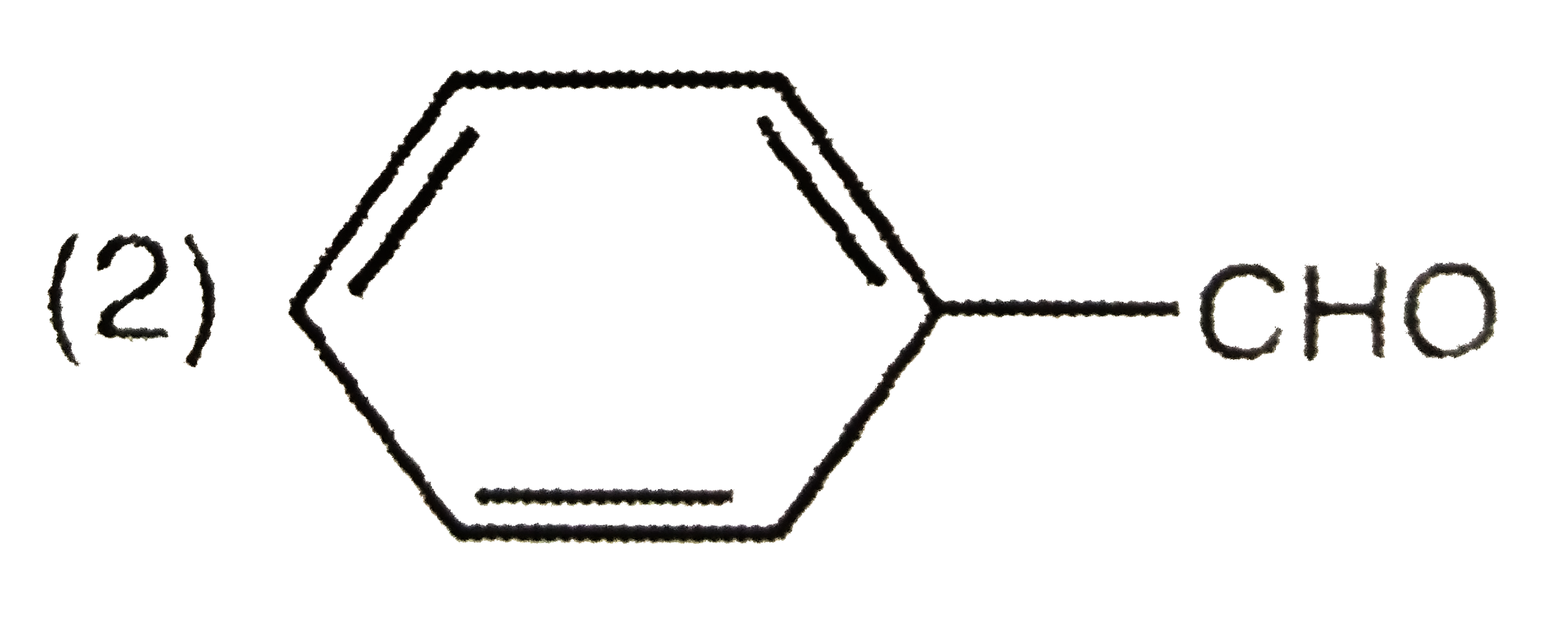
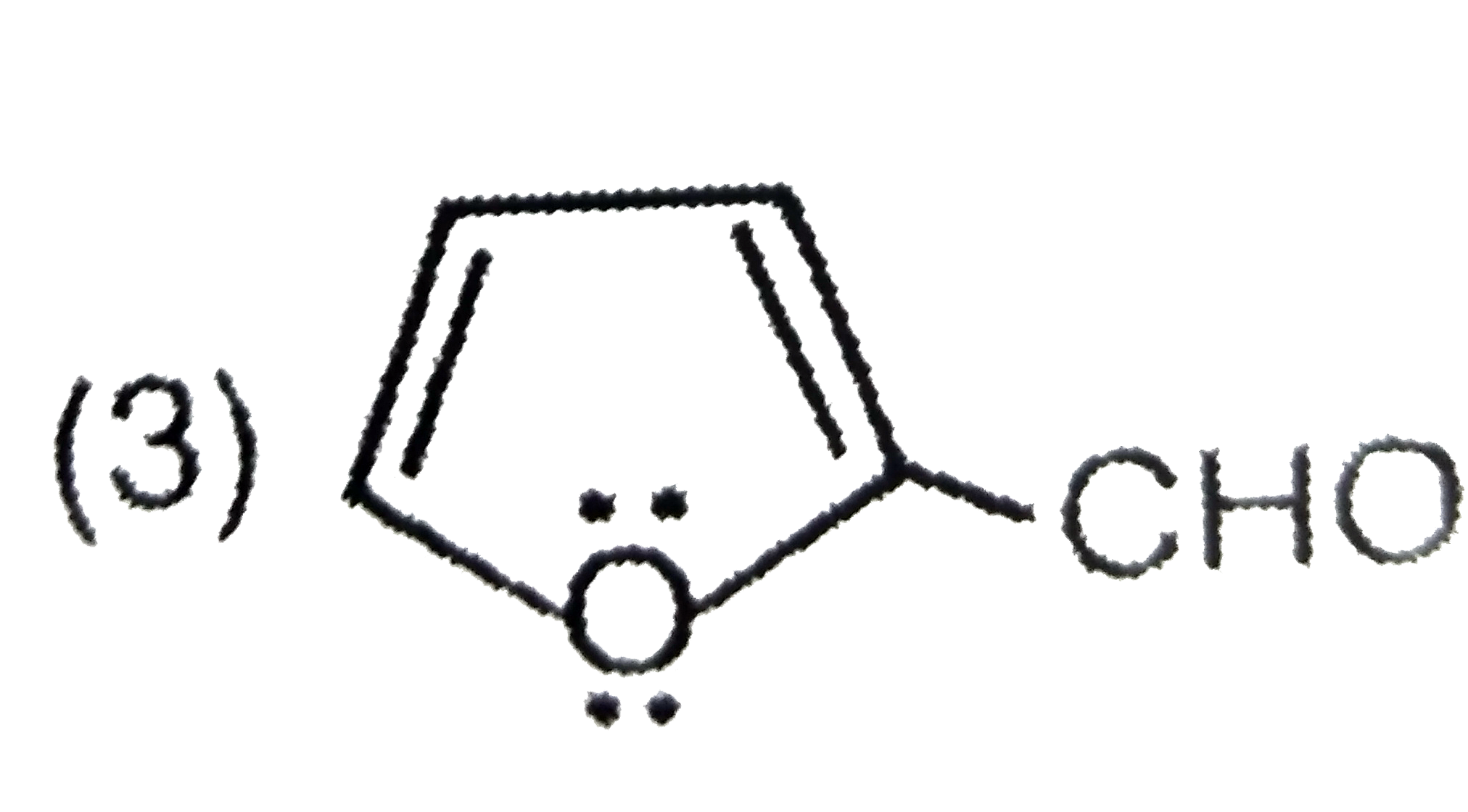
Cannizzaro reaction does not take place with

A

`(CH_(3))_(3)C CHO`

B

C

D

`CH_(3)CHO`

Text Solution

AI Generated Solution

The correct Answer is:

To determine which compound does not undergo the Cannizzaro reaction, we first need to understand the conditions under which this reaction occurs. ### Step-by-Step Solution: 1. **Understanding the Cannizzaro Reaction**: - The Cannizzaro reaction is a redox reaction that occurs in aldehydes that lack alpha hydrogen atoms. In this reaction, one molecule of aldehyde is oxidized to a carboxylic acid, while another molecule is reduced to an alcohol. 2. **Identifying Aldehydes**: - Aldehydes are compounds with the functional group -CHO. The general structure can be represented as RCHO, where R is a hydrocarbon group. 3. **Alpha Hydrogen Concept**: - Alpha hydrogens are the hydrogen atoms attached to the carbon adjacent to the carbonyl carbon (C=O). For the Cannizzaro reaction to occur, the aldehyde must not have any alpha hydrogens. 4. **Examples of Aldehydes**: - Formaldehyde (HCHO) and benzaldehyde (C6H5CHO) are examples of aldehydes that do not have alpha hydrogens and can undergo the Cannizzaro reaction. - On the other hand, acetaldehyde (CH3CHO) has alpha hydrogens (the three hydrogens on the methyl group) and therefore does not undergo the Cannizzaro reaction. 5. **Conclusion**: - The compound that does not undergo the Cannizzaro reaction is acetaldehyde (CH3CHO) due to the presence of alpha hydrogens. ### Final Answer: **Acetaldehyde (CH3CHO) does not undergo the Cannizzaro reaction.**

To determine which compound does not undergo the Cannizzaro reaction, we first need to understand the conditions under which this reaction occurs. ### Step-by-Step Solution: 1. **Understanding the Cannizzaro Reaction**: - The Cannizzaro reaction is a redox reaction that occurs in aldehydes that lack alpha hydrogen atoms. In this reaction, one molecule of aldehyde is oxidized to a carboxylic acid, while another molecule is reduced to an alcohol. 2. **Identifying Aldehydes**: ...
Promotional Banner

Topper's Solved these Questions

  • CARBONYL COMPOUNDS (ALDEHYDES & KETONES ) & CARBOXYLIC ACID

    RESONANCE ENGLISH|Exercise PART- IV|13 Videos
  • CARBONYL COMPOUNDS (ALDEHYDES & KETONES ) & CARBOXYLIC ACID

    RESONANCE ENGLISH|Exercise Exercise-3|1 Videos
  • CARBONYL COMPOUNDS (ALDEHYDES & KETONES ) & CARBOXYLIC ACID

    RESONANCE ENGLISH|Exercise Exercise-2 Part-I|1 Videos
  • BIOMOLECULES & POLYMER

    RESONANCE ENGLISH|Exercise ORGANIC CHEMISTRY(Biomolecules & Polymer)|34 Videos
  • CHEMICAL KINETICS

    RESONANCE ENGLISH|Exercise PHYSICAL CHEMITRY (CHEMICAL KNIETICS & RADIOACTIVITY)|49 Videos

Similar Questions

Explore conceptually related problems

Cannizzaro's reaction

Cannizzaro reaction is not given by

The light reaction does not take place in

Which of the following reaction does not take place at cathode ?

Cannizzaro's reaction is not given by

If hydrogen and oxygen are mixed and kept in the same vessel at room temperature, the reaction does not take place to form water because

RESONANCE ENGLISH-CARBONYL COMPOUNDS (ALDEHYDES & KETONES ) & CARBOXYLIC ACID -Part-I
  1. The compound X on treatment with acidified K(2)Cr(2)O(7) gives compoun...

    Text Solution

    |

  2. What is the final products (B) of this reaction sequences ?

    Text Solution

    |

  3. Cannizzaro reaction does not take place with

    Text Solution

    |

  4. Which of the following does not give haloform reaction:

    Text Solution

    |

  5. Synthesis of an ester involves the reaction of alcohols with

    Text Solution

    |

  6. When phenyl magnesium bromide reacts with t-butanol the product would ...

    Text Solution

    |

  7. Products A of the above reactions is

    Text Solution

    |

  8. In the reaction sequence CH(3)-overset(O)overset(||)(C)-H-underset(...

    Text Solution

    |

  9. on reductive ozonolysis yeilds

    Text Solution

    |

  10. A cyanohydrin of a compound X on hydrolysis gives lactic acid. The X i...

    Text Solution

    |

  11. Which of the following will not undergo aldol condensation?

    Text Solution

    |

  12. PhCHO +(CH(3)CO)(2)O overset((1)CH(3)COONa)underset((2)"hydrolysis", D...

    Text Solution

    |

  13. What will be the product of the following reaction Ph-underset(Me)un...

    Text Solution

    |

  14. In the following conversion Which of the following reagents is su...

    Text Solution

    |

  15. The major products formed in the reaction C(6)H(5)CHO+CH(3)NO(2) ove...

    Text Solution

    |

  16. For the following acids the rate of decarboxylation on heating would b...

    Text Solution

    |

  17. R-overset(O)overset(||)(C)-Cl overset(NH(3))toNH(4)Cl+(X) overset(P(4)...

    Text Solution

    |

  18. Which element in group 15 does not show allotropy .

    Text Solution

    |

  19. Starting from propanoic acid, the following reactions were carried out...

    Text Solution

    |

  20. Which of the following acid remains unaffected on heating ?

    Text Solution

    |
