

Home
Class 12
PHYSICS
A long cylindrical tube carries a highly...

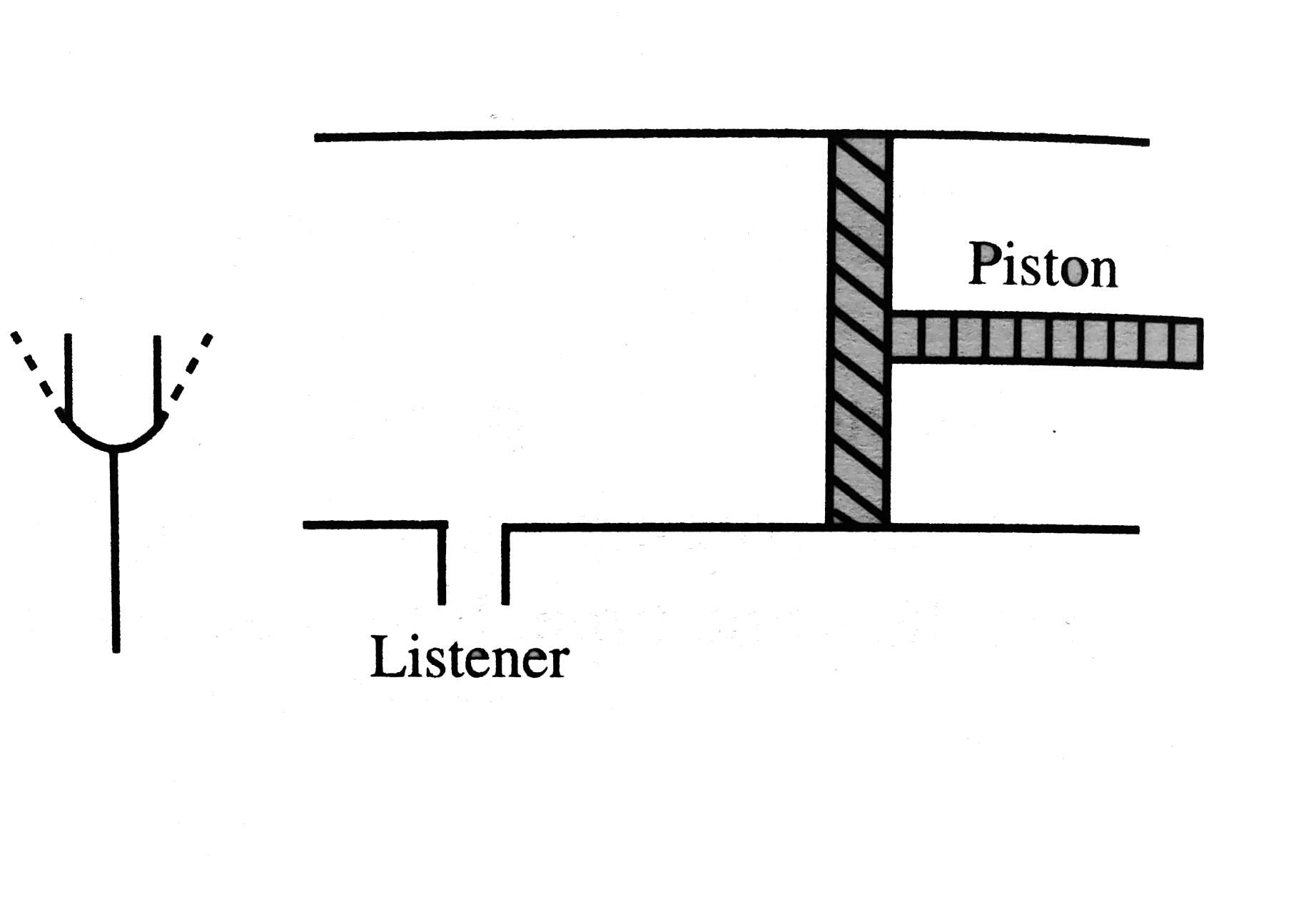
A long cylindrical tube carries a highly polished piston and has a side opening . A tuning fork of frequency `n` is sounded at the open end of the tube . The intensity of the sounded heard by the listener changes if the piston is moved in or out. At a particular position of the piston he hears a maximum sound . When the piston is moved through a distance of `9 cm`, the intensity of sound becomes minimum. If the speed of sound is `360 m//s`, the value of `n` is

Promotional Banner

Similar Questions

Explore conceptually related problems

In Quincke's experiment the sound detected is changed from a maximum to a minimum when the sliding tube is moved through a distance of 2.50 cm. Find the frequency of sound if the speed of sound in air is 340 m s^-1 .

A tuning fork of frequency 500 H_(Z) is sounded on a resonance tube . The first and second resonances are obtined at 17 cm and 52 cm . The velocity of sound is

A tuning fork of frequency 250 Hz is vibrating at one end of a tube as shown in the figure. If maximum sound is heard at the other end, then the velocity of the waves will be

Vibrating tuning fork of frequency n is placed near the open end of a long cylindrical tube. The tube has a side opening and is fitted with a movable reflecting piston. As the piston is moved through 8.75 cm , the intensity of sound changes from a maximum to minimum. If the speed of sound is 350 m//s . Then n is

A vibrating tuning fork of frequency n is placed near the open end of a long cylindrical tube. The tube has a side opening and is also fitted with a movable reflecting piston. As the piston is moved through 8.75 cm, the intensity of sound just changes from a maximum to minimum. If the speed of sound is 350 metre per second, the value of n is N^3 then N is.

A tuning fork of frequency n is held near the open end of tube, the tube is adjusted until resonance occurs. If the two shortest lengths to produce resonance are L_1 and L_2 , then the speed of the sound is

A tuning fork of frequency 90 Hz is sounded and moved towards an observer with a speed equal to one - tenth the speed of sound. The note heard by the observer will have a frequency

If l_(1) and l_(2) are the lengths of air column for the first and second resonance when a tuning fork frequency n is sounded on a resonance tube, there the distance of the antinode from the top end of resonance tube is