Home
Class 11
MATHS
Statement-1: The quadrilateral whose ver...

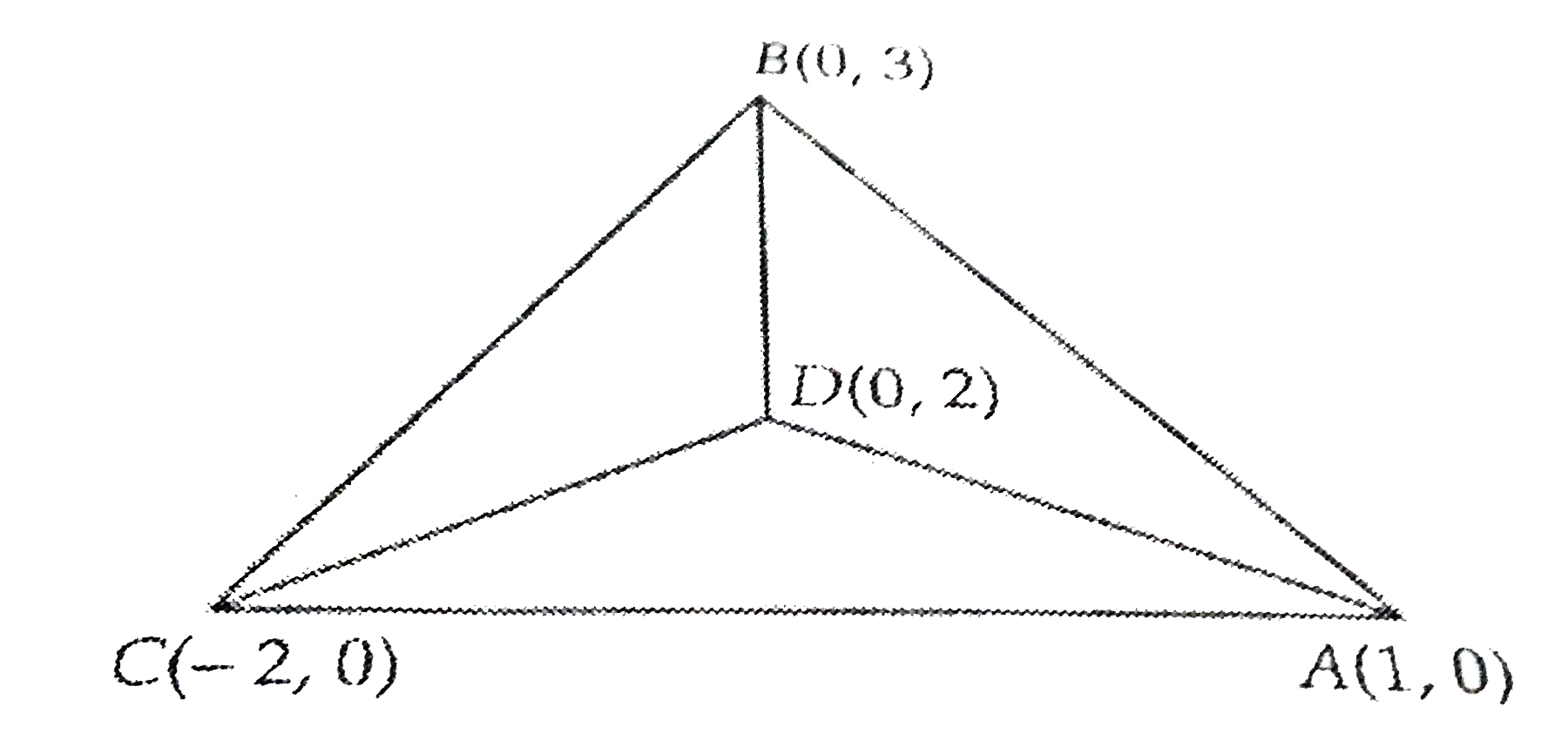
Statement-1: The quadrilateral whose vertices (in order) are A(1,0), B(0,3) , C(-2,0) and D(0,2) cannot be convex.
Statement-2: A quadrilateral ABCD ( in order is) is convex if when any diagonal is taken then the remaining vertices must be on the opposite sides of it.

A

Statement-1 is True, Statement-2 is True, Statement-2 is a correct explanation for Statement-1

B

Statement-1 is True, Statement-2 is True, Statement-2 not a correct explanation for Statement-1

C

Statement-1 is True, Statement-2 is False.

D

Statement-1 is False, Statement-2 is True

Text Solution

Verified by Experts

The correct Answer is:
A

Statement-2 is correct the because ifn one angle, say D of the equadrilaterial ABCD which is not convex is more thant `180^(@)`, then B and D lie on the same side of the diagonal AC.
Statement-2 is true. Also, statement-2 is a correct explanation for statement-1
Promotional Banner

Topper's Solved these Questions

  • CARTESIAN CO-ORDINATE SYSTEM

    OBJECTIVE RD SHARMA ENGLISH|Exercise Exercise|27 Videos
  • CARTESIAN CO-ORDINATE SYSTEM

    OBJECTIVE RD SHARMA ENGLISH|Exercise Section I - Solved Mcqs|29 Videos
  • BINOMIAL THEOREM AND ITS APPLCIATIONS

    OBJECTIVE RD SHARMA ENGLISH|Exercise Chapter Test|58 Videos
  • DETERMINANTS

    OBJECTIVE RD SHARMA ENGLISH|Exercise Chapter Test|30 Videos

Similar Questions

Explore conceptually related problems

Find the area of the quadrilateral whose vertices taken in order are A (-5,-3) B(-4,-6)C(2,-1) and D (1,2).

Find the area of the quadrilateral whose vertices are : (-4, 5), (0, 7), (5, -5) and (-4, -2)

Find the area of quadrilateral ABCD, whose vertices are A(-4,8),B(-3,-4),C(0,-5)and D(5,6).

Find the area of the triangle whose vertices are (2,3,0) , (2,1,1) and (0,0,6)

Find the area of the quadrilateral whose vertices, taken in order, are (– 4, – 2), (– 3, – 5), (3, – 2) and (2, 3).

Find the area of a rhombus ABCD whose vertices are A(3,0) ,B(4,5),C(-1,4) and D(-2,-1)

Find the equation of the medians of DeltaABC whose vertices are A(1,0) , B(2,4) and C(3,2) .

Find the area of the quadrilateral A B C D having vertices A(1,1),B(7,-3),C(12 ,2), and D(7, 21)dot

Show that the quadrilateral with vertices (3, 2), (0, 5), (-3, 2), (0, -1) is square.

If the area of the quadrilateral ABCD whose vertices are A(1, 1), B(7, -3), C(12, 2) and D(7, 21) is Delta . Find the sum of the digits of Delta .

