

Home
Class 12
PHYSICS
The orbit of Pluto is much more eccentri...

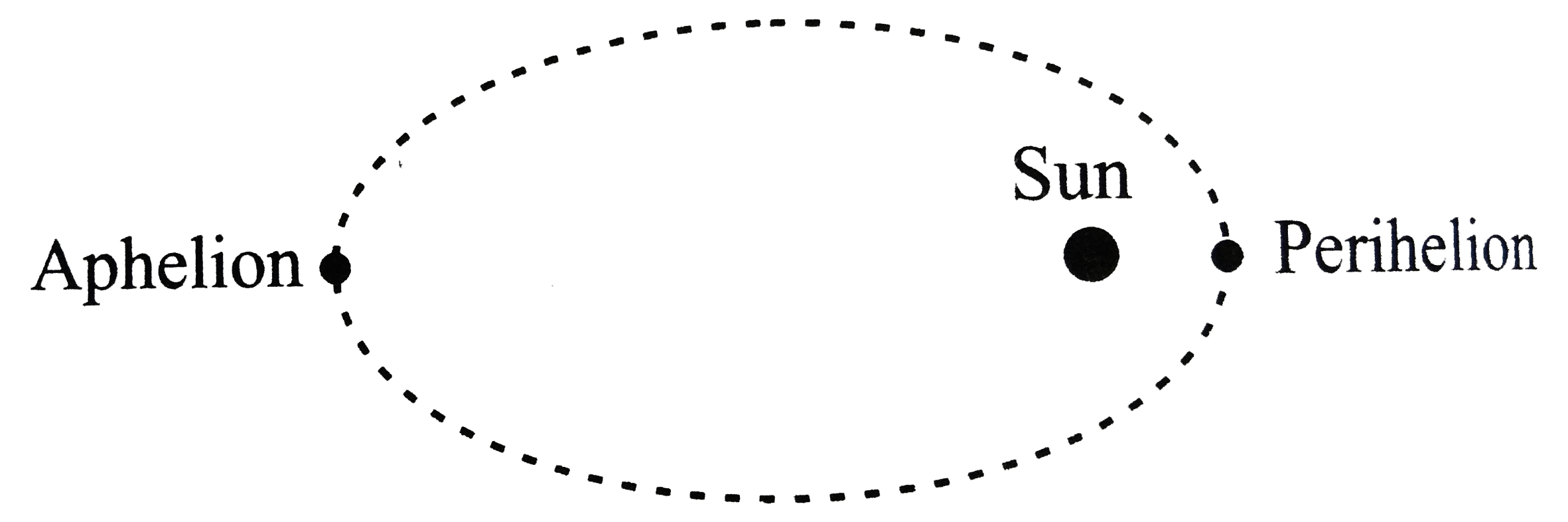
The orbit of Pluto is much more eccentric than the orbits of the other planets. That is, instead of being nearly circular, the orbit is noticeably elliptical. The point in the orbit nearest to the Sun is called the perihelion and the point farthest from the Sun is called the aphelion.

At perihelion, the gravitational potential energy of Pluto in its orbit has

Promotional Banner

Similar Questions

Explore conceptually related problems

The orbit of Pluto is much more eccentric than the orbits of the other planets. That is, instead of being nearly circular, the orbit is noticeably elliptical. The point in the orbit nearest to the Sun is called the perihelion and the point farthest from the Sun is called the aphelion. At perihelion, the mechanical energy of Pluto's orbit has

The orbit of Pluto is much more eccentric than the orbits of the other planets. That is, instead of being nearly circular, the orbit is noticeably elliptical. The point in the orbit nearest to the sun is called the perihelion and the point farthest from the sun is called the aphelion. At perihelion, the mechanical energy of Pluto’s orbit has

The orbit of Pluto is much more eccentric than the orbits of the other planets. That is, instead of being nearly circular, the orbit is noticeably elliptical. The point in the orbit nearest to the Sun is called the perihelion and the point farthest from the Sun is called the aphelion. As Pluto moves from the perihelion to the aphelion, the work done by gravitational pull of Sun on Pluto is

The orbit of Pluto is much more eccentric than the orbits of the other planets. That is, instead of being nearly circular, the orbit is noticeably elliptical. The point in the orbit nearest to the sun is called the perihelion and the point farthest from the sun is called the aphelion. As Pluto moves from the perihelion to the aphelion, the work done by gravitational pull of Sun on Pluto is

A planet moving in a circular orbit around the sun at a distance, 4times theaverage distance of the earth from the sun will complete one revolution in

A planet is revolving in an elliptical orbit around the sun. Its closest distance from the sun is r and the farthest distance is R. If the velocity of the planet nearest to the sun be v and that farthest away from the sun be V. then v/V is

All planets move in elliptical orbits with the sun situtated at one of the forci of the ellipse the point at wihich the planet is closest to the sun is